The Fearless Champion: 15 Fascinating Facts About Casey Stoner
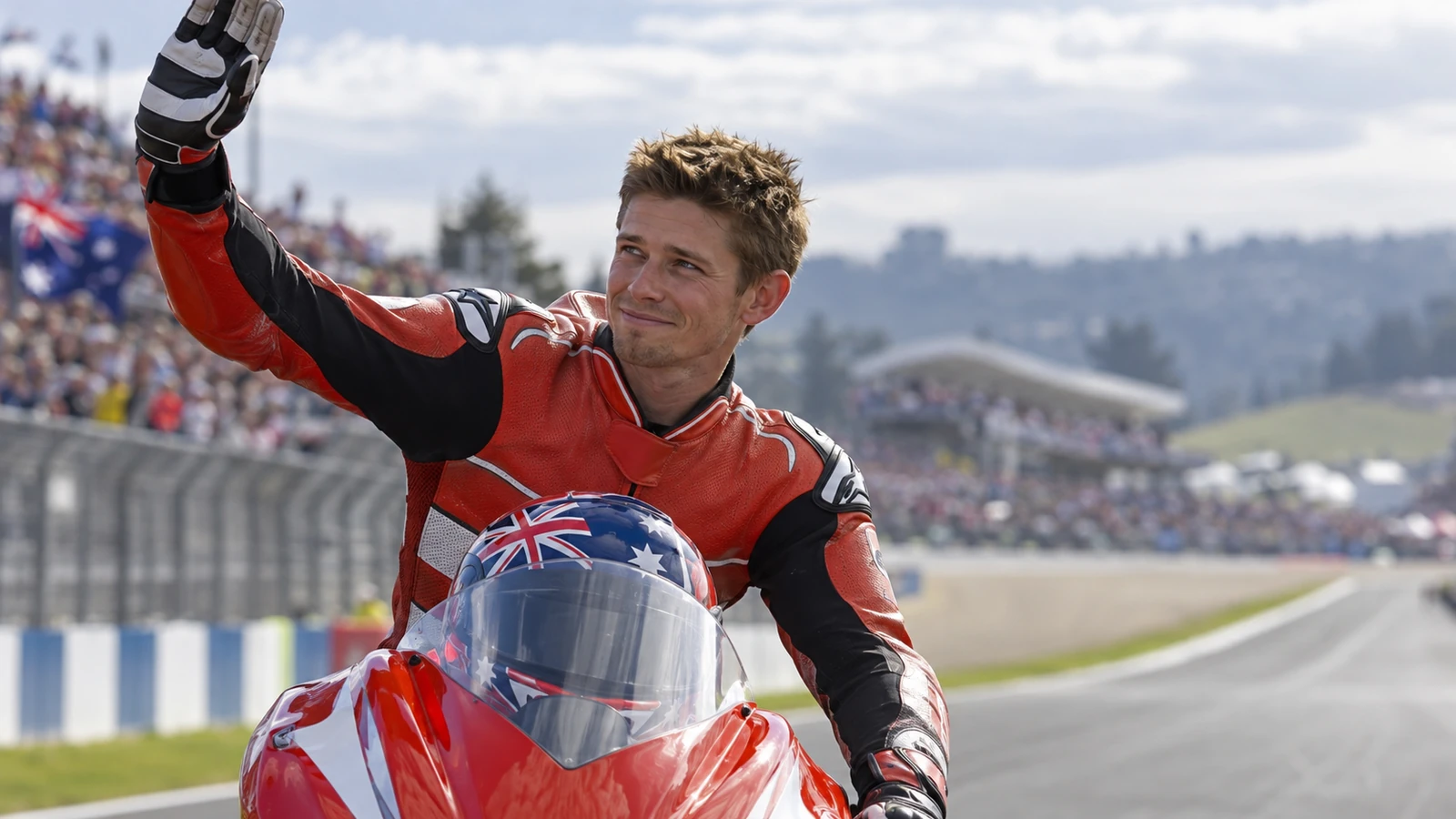
Casey Stoner stands as one of the most naturally gifted and uncompromising motorcycle racers in grand prix history. Renowned for his fearless sliding riding technique, the Australian phenom conquered two MotoGP World Championships with two different manufacturers before walking away at the peak of his career at age 27. From leaving home as a teenager to taming Ducati's most difficult machines, his career is full of extraordinary moments. Here are 15 fascinating facts about the life, career, and legacy of Casey Stoner.
1. Early Dominance on Dirt Tracks
Casey Stoner was born in Southport, Queensland, in October 1985 and demonstrated extraordinary riding ability almost as soon as he could walk. By the age of four, he was already competing in dirt track races with the Mike Hatcher Motorcycle Club on the Gold Coast. Before he reached his mid-teens, Stoner had collected over 100 state and national dirt track titles across Australia. His family recognized his generational talent early on and dedicated their lives to supporting his racing ambitions. To hone his speed, Stoner frequently entered up to five different age classes in a single race weekend, winning nearly all of them.
2. Leaving Australia for the United Kingdom at 14
Despite his dominant dirt track record, Australian road racing regulations prohibited riders under the age of 16 from competing on tarmac circuits. Unwilling to delay his career trajectory, Stoner’s parents made the radical decision to sell their home and business to move to the United Kingdom in 2000. Under British regulations, a 14-year-old rider could legally compete in official road racing competitions. The family lived in a caravan in England while traveling between European race tracks on a tight budget. Their immense personal and financial gamble paid off when Stoner immediately began winning local championships and caught the eye of international team managers.
3. Immediate Impact in His MotoGP Debut
After climbing through the 125cc and 250cc feeder classes, Casey Stoner made his premier MotoGP debut in 2006 riding for the LCR Honda team. He made an instant impression on the grand prix paddock by qualifying on pole position in only his second MotoGP appearance at the Losail Circuit in Qatar. Although he suffered several crashes throughout his rookie season due to pushing the front tyre beyond its limits, his sheer raw speed was unmistakable. Stoner finished his debut season eighth overall in the championship standings, proving he belonged among the world's elite racers. His performances convinced factory teams that he possessed true world championship potential.
4. Ducati’s Historic Maiden World Title in 2007
In 2007, Stoner made the career-defining move to the factory Ducati Marlboro team to ride the newly introduced 800cc Desmosedici GP7. The Ducati motorcycle possessed immense straight-line horsepower but was widely considered notoriously difficult and aggressive to handle through corners. While team-mates struggled to tame the machine, Stoner adapted his style to ride around its flaws, winning ten races that year. He secured Ducati's very first MotoGP World Championship title in commanding fashion, ending a 33-year title drought for Italian motorcycle manufacturers. This achievement established his reputation as one of the most naturally gifted riders in motorsport history.
5. Young Australian of the Year Recognition
Following his record-breaking championship win with Ducati, Stoner received widespread recognition beyond the motorsport community. In early 2008, he was named the Young Australian of the Year, a prestigious national honor celebrating outstanding young citizens. The award highlighted not only his athletic brilliance but also his resilience in moving overseas at a young age to pursue his dreams. Australian prime ministers and sports icons praised his work ethic and commitment to international excellence. Despite receiving such high honors, Stoner retained a notoriously quiet and private personality, always preferring track action over celebrity lifestyle.
6. Pioneering the Rear-Wheel Steering Technique
Stoner revolutionized modern motorcycle riding by perfecting a technique known as rear-wheel steering. While most riders relied heavily on the front tyre to turn the motorcycle, Stoner leaned the bike over and aggressively applied the throttle to make the rear tyre slide in a controlled drift. This maneuver rotated the motorcycle far quicker through corner mid-sections, allowing him to get upright and accelerate earlier down straightaways. Telemetry data revealed that Stoner could manipulate engine mapping and rear-wheel spin with pinpoint human accuracy, leaving rival engineers bewildered. His aggressive yet smooth sliding style became a benchmark that fundamentally changed how modern MotoGP bikes were ridden.
7. The Mysterious 2009 Illness and Lactose Intolerance
During the 2009 MotoGP season, Stoner began suffering from debilitating bouts of physical fatigue that left him severely exhausted after races. The mysterious condition caused him to vomit in his helmet and lose stamina, forcing him to miss three races mid-season to seek medical treatment. After extensive testing, medical specialists discovered that Stoner suffered from severe lactose intolerance, which caused chronic inflammation and energy depletion. Adjusting his diet helped him recover enough strength to return and win two of the season's final races. However, this health ordeal foreshadowed long-term physiological challenges that would follow him long after his career ended.
8. Unmatched Six-Year Dominance at Phillip Island
Stoner developed an incredible mastery over the fast and flowing Phillip Island Grand Prix Circuit, making the Australian Grand Prix his personal domain. From 2007 through 2012, Stoner won his home race six consecutive times, a feat unmatched by any other modern rider at that track. His ability to carry immense speed through high-speed swept corners like Turn 1 and Turn 3 was legendary among fans and fellow competitors. On every home race weekend, he consistently dominated every practice, qualifying session, and race lap. His final home victory in 2012 came during his farewell season, leaving an indelible mark on Australian motorsport history.
9. Dominant Honda Championship Comeback in 2011
After four successful seasons at Ducati, Stoner made a blockbuster move to Repsol Honda for the 2011 MotoGP season. Riding the highly refined Honda RC212V, Stoner delivered one of the most dominant individual seasons in modern grand prix racing history. He claimed nine race victories, 16 podium finishes out of 17 starts, and 12 pole positions throughout the campaign. He officially sealed his second MotoGP World Championship title on his 26th birthday in front of his ecstatic home crowd at Phillip Island. Stoner became one of the few elite riders to win premier class titles with two completely different motorcycle manufacturers.
10. Honored with Stoner Corner at Phillip Island
In October 2012, circuit management at Phillip Island decided to bestow a rare and permanent honor upon the Australian champion. Turn 3, a blistering fast, left-hand downhill sweeping corner taken at over 150 miles per hour, was officially renamed Stoner Corner. The renaming ceremony took place on Stoner’s 27th birthday, just days before his final home Grand Prix. Turn 3 was chosen specifically because it best showcased Stoner's unique riding technique of sliding the rear tire through high-speed turns. Today, Stoner Corner remains one of the most famous turn names in international motorsport.
11. Shock Retirement at the Peak of His Career
In May 2012, while reigning as world champion and leading the standings, Stoner stunned the sporting world by announcing he would retire at the end of the season. At just 27 years old, he was in the absolute prime of his physical capabilities and riding at the peak of his power. Stoner cited a growing dislike for the political nature of modern MotoGP, constant media scrutiny, and a desire to spend time with his young family. His decision shocked fans, sponsors, and rival riders who expected him to win championships for another decade. He walked away from multi-million dollar contract offers, holding firm to his personal values.
12. Brief Transition to V8 Supercars Racing
Following his retirement from two-wheeled grand prix racing, Stoner fulfilled a long-standing desire to try four-wheeled motorsport. In 2013, he signed with Triple Eight Race Engineering to race in the Dunlop V8 Supercar Series, the second-tier feeder series for Australia's top touring car championship. Driving a Holden Commodore, Stoner showcased impressive vehicle control and adapted rapidly to the demands of touring car competition. However, his stint in car racing was short-lived, lasting only a single season before he stepped away to focus on family life. He ultimately decided that full-time car racing did not provide the same passion as motorcycle competition.
13. High-Speed Role as an Elite Test Rider
Despite leaving competitive grand prix racing, Stoner's unmatched feedback and legendary speed kept him in high demand as a test rider. Between 2013 and 2018, he worked as a high-profile development test rider for both Honda and Ducati. During private testing sessions, Stoner regularly posted lap times fast enough to put him on the front row of actual MotoGP race grids. Engine technicians relied heavily on his extraordinary sensitivity to motorcycle balance and electronics when setting up new bikes for championship contenders. His testing contributions played a crucial role in developing championship-winning machinery for both factories.
14. Ongoing Battle with Chronic Fatigue Syndrome
Years after stepping away from full-time competition, Stoner revealed that he was fighting a severe health battle off the track. In late 2019, he disclosed that he had been diagnosed with Chronic Fatigue Syndrome (ME/CFS), a debilitating condition that left him with severe lack of energy. The illness severely limited his physical activity, leaving him unable to ride motorbikes, play golf, or maintain his former training regimen for extended periods. Stoner spoke publicly about the invisible illness to raise awareness and help others struggling with chronic condition management. His open dialogue highlighted the long-term physical toll that elite racing and intense stress can exert on an athlete's body.
15. Formal Induction as an Official MotoGP Legend
At the final race of the 2013 season in Valencia, Spain, Stoner was officially inducted into the FIM MotoGP Hall of Fame as a MotoGP Legend. He became the 20th rider in history to receive the sport’s highest individual honor, joining fellow Australian grand prix icons Mick Doohan and Wayne Gardner. Throughout his premier class career, Stoner accumulated 38 victory trophies, 69 podium finishes, and 39 pole positions across 115 starts. Legendary rivals like Valentino Rossi and Jorge Lorenzo praised Stoner as the most naturally gifted opponent they had ever raced against. His legacy as a pure, uncompromising racing talent remains legendary within international motorsport culture.
Sources & References
This AI-assisted post was rigorously curated and fact-checked for accuracy by:
 Martin Roháček
How fun was this article? 🤔
Tap a star to rate it
🧠 Quiz: How closely were you paying attention?
10 questions — all answers are in the article above!
Enjoyed these facts? There's more! 💌
Fresh fun facts in your inbox. No spam, ever.