The Unstoppable Trailblazer: 15 Fascinating Facts About Cathy Freeman
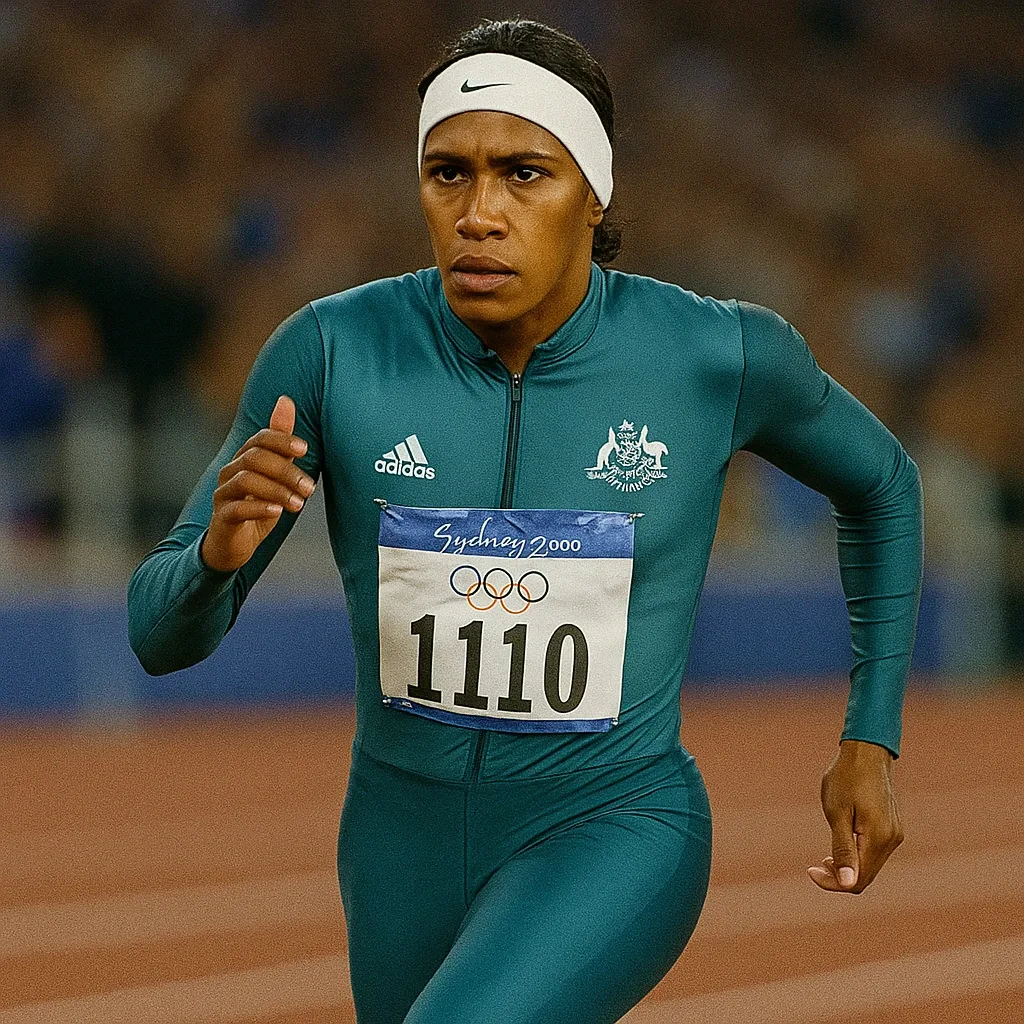
Cathy Freeman remains one of Australia’s most celebrated sporting icons and a global symbol of athletic excellence and cultural unity. From her early days running barefoot on regional Queensland grass tracks to lighting the Olympic cauldron in Sydney, her career was defined by extraordinary speed and quiet courage. Her historic victory in the 400-meter final at the 2000 Olympics captured the heart of a nation and broke barriers for First Nations athletes everywhere. Discover fifteen fascinating facts about the life, career, and lasting legacy of this trailblazing Olympic champion.
1. She Became a Commonwealth Champion at Just 16 Years Old
Cathy Freeman burst onto the international track and field scene at the 1990 Commonwealth Games in Auckland, New Zealand. Competing at just 16 years old, she ran a crucial leg in the Australian women's 4x100-meter relay team. The team sprinted to a thrilling victory, making Freeman the first Aboriginal Australian to win a Commonwealth Games gold medal. Her rapid rise was remarkable considering she had only recently entered elite national competition. This early success set the stage for a career defined by breaking barriers and redefining Australian athletics history.
2. Her Barefoot Beginnings Shaped Her Unique Running Style
Long before sprinting on world-class tartan tracks, Cathy Freeman trained barefoot on rough grass ovals in regional Queensland. Growing up in Mackay, her family could not always afford specialized athletic shoes, so she honed her speed through natural foot mechanics. Running barefoot helped build exceptional lower-leg strength and ankle stability that served her throughout her professional career. She frequently credited those early, unpretentious training sessions for instilling a raw love for running without unnecessary hardware. Even after acquiring high-tech footwear, the grounding experience of her childhood remained a core part of her athletic identity.
3. Her Dual-Flag Victory Lap Sparked a National Debate
At the 1994 Commonwealth Games in Victoria, Canada, Freeman won individual gold in both the 200-meter and 400-meter events. After her 400-meter triumph, she celebrated by draping both the Australian national flag and the Aboriginal flag over her shoulders. The act of political self-expression angered Arthur Tunstall, the Australian team chef de mission, who publicly reprimanded her for displaying an unofficial flag. Undeterred by official criticism, Freeman repeated the gesture after winning the 200-meter race a few days later. Her courageous act sparked widespread national conversation about Indigenous recognition and reconciliation back home in Australia.
4. She Almost Quit the Sport as a Frustrated Teenager
Despite her immense natural talent, Freeman faced severe emotional strain and systemic discrimination during her teenage years. At several points in her adolescence, the pressures of competing as a high-profile Indigenous athlete almost drove her to quit track and field entirely. Her family played a pivotal role in keeping her focused, particularly her stepfather Bruce Barber, who consistently encouraged her talent. They helped her channel her frustration into physical determination on the track rather than abandoning her dreams. Their unwavering support preserved a career that would ultimately transform the global perception of Australian sport.
5. She Earned Back-to-Back World Championship Titles
While her Olympic success is widely celebrated, Freeman was already the dominant global force in the 400 meters throughout the late 1990s. She secured her first individual world title at the 1997 World Athletics Championships in Athens, Greece, with a blazing performance. Two years later, she successfully defended her crown at the 1999 World Championships in Seville, Spain. These consecutive victories proved that her prowess extended far beyond single emotional moments or home-track advantages. By the time the 2000 Games arrived, she was undeniably the fastest 400-meter runner on the planet.
6. She Lit the Olympic Flame in a Historic Opening Ceremony
At the 2000 Sydney Olympics, Freeman was chosen to light the Olympic cauldron during the Opening Ceremony. Dressed in a silver fireproof suit, she stood atop a pool of water as a ring of fire ignited around her before ascending into the stadium. The moment was watched by billions of viewers worldwide and carried massive cultural significance for Indigenous Australians. Choosing an Aboriginal woman to ignite the flame symbolized a powerful message of reconciliation and unity for the host nation. It was a rare honor for an active athlete to light the cauldron while still preparing to compete in her primary event.
7. Her Futuristic Bodysuit Was Designed for Pure Aerodynamics
When Freeman stepped onto the track for the 400-meter final in Sydney, her attire instantly became legendary. She wore a custom-built, full-body suit featuring a hood that covered her head to reduce aerodynamic drag. Designed by Nike, the striking green, gold, and silver bodysuit took months of wind-tunnel research to perfect. Beyond its functional benefits, the suit became a visual icon that mirrored the high-stakes intensity of her mission. The image of Freeman poised in her sleek bodysuit remains one of the most recognizable photos in Olympic Games history.
8. She Became the First Aboriginal Athlete to Win Individual Olympic Gold
On September 25, 2000, Freeman carried the immense pressure of a hopeful nation in the Sydney 400-meter final. She executed a masterful tactical race, pulling away from the field in the home stretch to claim gold in 49.11 seconds. Her triumph made her the first Aboriginal Australian athlete to win an individual gold medal in Olympic history. The victory unleashed an unprecedented wave of national celebration across Australia. Following her victory, she once again carried both the Australian and Aboriginal flags during an emotional victory lap around the stadium.
9. Her Olympic Final Drew Record-Breaking Television Viewership
The 400-meter final at the Sydney Olympics stood as a historic cultural moment that brought an entire nation to a standstill. An estimated 8.8 million Australians tuned in to watch the race live on television, representing nearly half the country's population at the time. Commercial airlines even delayed departures so passengers and crew could watch the broadcast inside airport terminals. It remains one of the highest-rated television broadcasts in Australian history, surpassed only by major state funerals or crucial sporting deciders. The sheer volume of viewers demonstrated the unique unifying power Freeman held over the nation.
10. She Won Australian of the Year Honors Before Her Olympic Peak
In recognition of her athletic achievements and her powerful standing as a role model, Freeman was named Australian of the Year in 1998. This came eight years after she was named Young Australian of the Year in 1990 following her Commonwealth Games debut. Winning the nation's highest civilian honor while still an active competitor highlighted her cultural influence beyond sport. The award acknowledged her ongoing efforts to foster harmony between Indigenous and non-Indigenous Australians. It reinforced her status as a national icon long before her historic Olympic gold medal in Sydney.
11. She Was Named Laureus World Sportswoman of the Year
In 2001, Freeman's extraordinary accomplishments were acknowledged on the international stage at the Laureus World Sports Awards. She was named Laureus World Sportswoman of the Year, beating out top female athletes from around the globe. This prestigious award recognized both her dominant athletic performance in Sydney and her profound socio-cultural impact. The accolade placed her alongside global sporting legends like Tiger Woods, who also won awards that year. It cemented her legacy as not just an Australian icon, but a global legend of track and field.
12. Severe Injuries and Loss of Passion Led to Early Retirement
Following her Sydney triumph, Freeman took an extended break from competitive running to heal both physically and mentally. She returned to action for the 2002 Commonwealth Games in Manchester, where she helped win gold in the 4x400-meter relay. However, persistent thigh injuries and a waning desire for grueling elite training began to take their toll. In July 2003, at the age of 30, she officially announced her retirement from track and field. She candidly admitted that she no longer possessed the consuming passion required to compete at the absolute highest level.
13. She Founded a Foundation to Empower Indigenous Children
In 2007, Cathy Freeman translated her national platform into long-term community action by establishing the Cathy Freeman Foundation. The non-profit organization focuses on delivering educational programs to Indigenous children living in remote Australian communities, such as Palm Island. By partnering with local schools, the foundation aims to increase school attendance, literacy rates, and high school graduation numbers. Freeman believes that access to quality education is the single most powerful tool for closing the social gap facing First Nations youth. Her philanthropic work continues to transform thousands of young lives long after her athletic career ended.
14. Stadiums and Public Landmarks Bear Her Name Across Australia
To honor her lasting legacy, several major public landmarks and athletic venues across Australia have been named in her honor. In her hometown region, the Cathy Freeman Athletic Centre in Mackay stands as a tribute to her grass-roots origins. Additionally, Cathy Freeman Park at Sydney Olympic Park serves as a permanent gathering space adjacent to where she won gold. In 2023, the main grandstand at Sydney's Accor Stadium was officially renamed the Cathy Freeman Stand. These naming honors ensure that future generations of athletes remain connected to her heroic accomplishments.
15. Her Legacy Inspired a Generation of Indigenous Australian Athletes
Freeman’s pioneering success broke down barriers and paved the path for future generations of First Nations athletes in Australia. Before her rise, Indigenous representation in track and field at the highest level was severely limited due to systemic disadvantages. Her success demonstrated to young Indigenous Australians that they could achieve global greatness while remaining proud of their heritage. Athletes across multiple sports, from Australian rules football to tennis, frequently cite her as their ultimate childhood hero. Today, her legacy extends far beyond athletics as an enduring symbol of pride, resilience, and hope.
Sources & References
This AI-assisted post was rigorously curated and fact-checked for accuracy by:
 Martin Roháček
How fun was this article? 🤔
Tap a star to rate it
🧠 Quiz: How closely were you paying attention?
10 questions — all answers are in the article above!
Enjoyed these facts? There's more! 💌
Fresh fun facts in your inbox. No spam, ever.