
The Agile Alpine Climber: 15 Fascinating Facts About Chamois
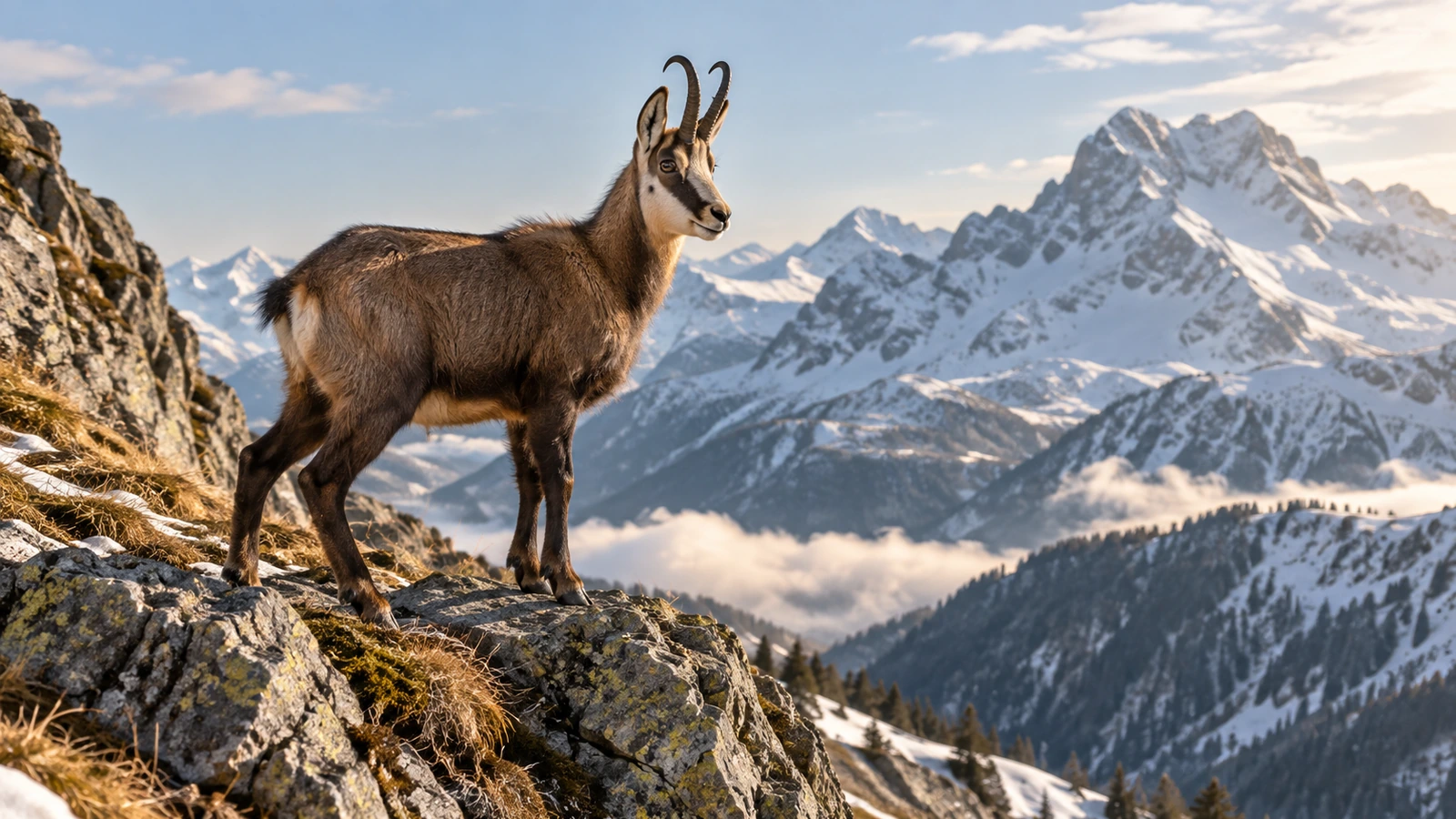
Native to the steep, rocky peaks of Europe and Asia Minor, the chamois is one of the most acrobatic mountain animals on Earth. Belonging to the goat-antelope family, these sure-footed mammals possess specialized hooves, oversized hearts, and remarkable behavioral adaptations designed for surviving extreme alpine environments. From secret stomach stones sought by medieval hunters to snow-sliding games played on icy ridges, discover the extraordinary world of the chamois.
1. Hunters Once Sought Chamois for "Magical" Stomach Stones
Historically, European hunters relentlessly pursued the chamois not just for meat or hides, but for valuable stomach stones called bezoars. These tightly packed balls of swallowed hair and indigestible plant fiber were highly prized in medieval and early modern medicine as universal antidotes to poison. Royal court physicians frequently set chamois bezoars into ornate gold amulets or powdered them into expensive potion mixtures. People believed that drinking a liquid infused with a chamois bezoar could instantly neutralize lethal toxins and cure deadly tropical fevers. While modern science has debunked these supernatural claims, the intense historical demand for chamois bezoars drove localized hunting crazes across the Alps.
2. Their Hooves Function Like High-Tech Climbing Shoes
Navigating near-vertical rock faces requires extraordinary anatomical engineering, and the chamois possesses one of the most sophisticated foot structures in the animal kingdom. Their split hooves feature hard, sharp outer edges that can bite into tiny granite crevices and slick mountain ice like climbing crampons. In contrast, the underside of each hoof consists of a soft, rubbery, concave pad that creates high friction against slippery stone. Furthermore, chamois can spread their two toes exceptionally wide, allowing them to clamp onto irregular terrain or use their feet as natural brakes when bounding downhill. This dual design enables the chamois to sprint down terrifyingly steep mountain slopes at speeds reaching fifty miles per hour.
3. Authentic "Shammy" Cloth Was Originally Made from Chamois Hide
Millions of modern drivers use soft, absorbent polishing cloths known colloquially as "shammies" to dry their vehicles without scratching the paint. This popular household item takes its name directly from the chamois (Rupicapra rupicapra), whose skin was traditionally processed into exceptionally soft leather. Traditional tanning methods used cod liver oil to treat chamois hides, creating a porous material capable of absorbing vast quantities of water and trapping micro-particles. Historically, optical instrument makers and jewelers also relied heavily on real chamois leather to polish delicate lenses and precious metals. Today, most commercial shammy towels are synthetic or made from sheepskin, but genuine mountain chamois hide remains the gold standard for traditional leather crafters.
4. Their Horns Are Permanent and Reveal Their Exact Age
Unlike deer species that shed and regrow their elaborate antlers every spring, chamois maintain a single pair of permanent horns for their entire lives. Both male and female chamois sprout slender, dark horns that grow straight upward before curving backward into sharp, distinct hooks. Because these horns consist of a living bony core covered in a keratin sheath, growth slows dramatically every winter when food becomes scarce. This seasonal pause leaves visible dark rings, known as annuli or growth rings, etched along the exterior surface of the horns. By counting these distinct annual ridges, wildlife biologists and field researchers can determine a wild chamois's exact age with remarkable precision.
5. Males Possess Potent Scent Glands Behind Their Horns
During the autumn breeding season, or rut, male chamois undergo striking physiological changes to establish dominance and attract females. Located directly behind their backward-hooked horns are specialized skin glands called Brunftfeigen or "rutting figs." These glands swell substantially during October and November, secreting a thick, pungent fluid rich in chemical signals. To mark their territory and warn rival bucks to stay away, males vigorously rub the backs of their heads against pine branches, shrubs, and exposed rock faces. This powerful scent trail communicates the male's health, age, and reproductive status across vast alpine distances without requiring constant physical combat.
6. An Oversized Heart Powers Their High-Altitude Sprints
Survival at elevations exceeding nine thousand feet requires an extraordinary cardiovascular system capable of operating in thin, oxygen-poor air. The chamois possesses a remarkably large heart relative to its body weight, weighing nearly twice as much as the heart of a domestic goat of similar size. In addition to this powerful circulatory pump, chamois blood contains an exceptionally high concentration of red blood cells and hemoglobin. This physiological adaptation allows their blood to absorb and transport oxygen with incredible efficiency during explosive physical exertion. Thanks to this biological supercharger, a chamois can charge up a steep alpine mountain face in minutes without succumbing to high-altitude exhaustion.
7. They Completely Change Fur Colors Between Seasons
Living in extreme alpine environments requires dynamic thermoregulation, which the chamois achieves by shedding and transforming its entire coat twice a year. During the sweltering summer months, chamois sport a short, light reddish-brown or chestnut-colored coat that reflects harsh ultraviolet solar radiation to keep them cool. As winter approaches, they shed this summer fur and grow a dense, double-layered winter coat that can turn almost jet-black. This dark pigmentation actively absorbs thermal energy from the low winter sun while a thick woolly undercoat traps insulating air pockets near the skin. This dual-season wardrobe allows the animal to endure sub-zero blizzards as effortlessly as scorching summer afternoons.
8. Chamois Live in Strict Matriarchal Societies
Social organization among chamois is heavily gender-segregated and ruled entirely by experienced adult females. Female chamois and their young offspring form tightly knit social herds or nursery groups that travel, feed, and rest together under the guidance of a dominant matriarch. This wise elder female decides when the herd moves between grazing pastures and stays on high alert for approaching danger. In stark contrast, mature adult males lead mostly solitary lives or form small bachelor groups in secluded alpine valleys during spring and summer. The reclusive males only approach the matriarchal herds during the late autumn rut when they compete fiercely for mating privileges.
9. They Stomp and Whistle to Warn Their Herd of Danger
When a chamois detects a hidden predator like a lynx, wolf, or golden eagle, it does not simply flee in silence. Instead, the watchful animal immediately alerts its entire herd through a combination of dramatic physical and vocal signals. The sentinel chamois stamps its front hooves forcefully against the ground, sending mechanical vibrations through the rock to capture the group's attention. Simultaneously, it forces air rapidly through its nostrils to produce a sharp, high-pitched whistling noise known as a "pfiff." This piercing alarm whistle echoes across mountain canyons, instantly signaling every nearby chamois to head toward steep, inaccessible cliffs for safety.
10. They Can Lower Their Metabolism to Survive Deep Snow
Alpine winters often blanket mountain pastures under deep snow, burying the grasses, herbs, and mosses that chamois rely on for nourishment. To survive extended periods without adequate food, chamois have evolved remarkable metabolic flexibility. When winter blizzards obscure their feeding grounds, they can significantly lower their resting metabolic rate and heart rate to conserve precious caloric energy. During these periods of enforced fasting, their bodies rely almost entirely on fat reserves stored during the plentiful summer and autumn months. By reducing physical movement and slowing their physiological processes, a healthy chamois can survive for weeks with minimal food intake until snow melts.
11. They Are "Goat-Antelopes" Rather Than True Goats
Despite their goat-like appearance and agile mountain-climbing habits, chamois are not classified as true goats within the genus Capra. Evolutionary biologists categorize chamois into the genus Rupicapra, which belongs to the tribe Caprini—a group often referred to as "goat-antelopes." This unique taxonomic position reflects a blend of evolutionary traits shared between ancestral antelopes and true mountain goats. There are two distinct living species: the Northern chamois (Rupicapra rupicapra), found across the Alps and Carpathians, and the Pyrenean chamois (Rupicapra pyrenaica), native to southwestern Europe. Both species display distinct skull features and horn curvatures that set them apart from domestic goats and wild ibex.
12. They Suffer from a Contagious Disease That Causes Blindness
One of the most devastating natural threats facing wild chamois populations is an infectious eye condition known as infectious keratoconjunctivitis. Caused primarily by the bacterium Mycoplasma conjunctivae, this highly contagious disease spreads rapidly through herds via contact or insects during warm summer months. The infection causes severe inflammation of the cornea and conjunctiva, leading to temporary or permanent blindness in one or both eyes. Because chamois depend heavily on visual precision to navigate treacherous mountain terrain, blinded animals frequently disorient themselves, wander into lowlands, or plummet over precipitous cliffs to their deaths. Fortunately, many individuals eventually build immunity and recover their sight if they survive the initial acute phase.
13. A Chamois Can Leap Six Feet Straight Up in the Air
Escaping apex predators on vertical mountain faces requires explosive muscle power and exceptional aerial coordination. The muscular hind legs of a chamois act like coiled springs, allowing the animal to launch itself nearly six feet (almost two meters) vertically into the air from a standing start. Horizontally, a bounding chamois can cover distances of over twenty feet (six meters) in a single leap across gaping mountain chasms. This astonishing leaping ability enables them to bound effortlessly over jagged boulder fields and clear wide crevasses that would stop predators in their tracks. Coupled with their sticky hooves, these athletic leaps make the chamois virtually uncatchable on steep terrain.
14. An Austrian Emperor Introduced Chamois to New Zealand
Although native to the rugged mountain ranges of Europe and Asia Minor, chamois have established a thriving non-native population thousands of miles away in New Zealand. In 1907, Austro-Hungarian Emperor Franz Joseph I gifted a small herd of eight chamois to the government of New Zealand. Released in the Southern Alps near Mount Cook, the animals adapted exceptionally well to the lush alpine flora and absence of native mammalian predators. Without natural carnivores to keep their numbers in check, the New Zealand chamois population exploded and spread rapidly across the South Island. Today, they are prized by game hunters but managed carefully by conservation authorities to prevent damage to fragile native subalpine vegetation.
15. Chamois Enjoy Sliding Down Snowbanks for Fun
While life in high mountain ecosystems is demanding, chamois regularly engage in behaviors that appear purely recreational. Wildlife observers and mountain guides frequently report seeing both young kids and fully grown adult chamois participating in playful snow-gliding. An individual will intentionally climb to the top of a smooth, snow-covered slope, sit back on its haunches or belly, and slide dozens of feet downhill like a toboggan. Upon reaching the bottom, the energetic animal often scampers straight back up to the top of the snowdrift to repeat the slide multiple times. Behavioral biologists believe this snow sliding helps young chamois build balance and agility while offering adults a stress-relieving play activity.
Sources & References
This AI-assisted post was rigorously curated and fact-checked for accuracy by:
 Martin Roháček
How fun was this article? 🤔
Tap a star to rate it
🧠 Quiz: How closely were you paying attention?
10 questions — all answers are in the article above!
Enjoyed these facts? There's more! 💌
Fresh fun facts in your inbox. No spam, ever.