1. There is Not Just a Single Species
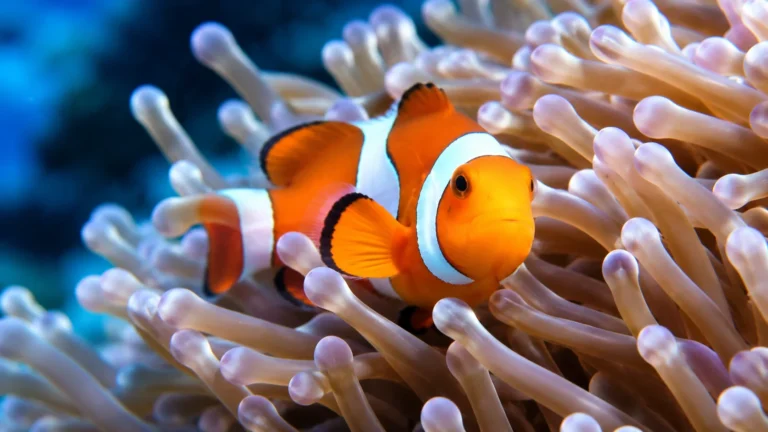
When people think of a clownfish, they universally picture a bright orange fish with three distinct white bands. However, the term clownfish actually refers to an entire biological subfamily called Amphiprioninae. There are roughly thirty entirely distinct, highly recognized species of anemonefish scattered across the globe, featuring a massive spectrum of colors ranging from solid black and bright yellow to deep, dark maroon.
2. They Are All Born Male
The reproductive biology of the clownfish is an absolute marvel of evolution. Every single clownfish that hatches from an egg is born as a biological male. They possess a highly rare, specialized genetic ability known as protandrous sequential hermaphroditism, meaning they have the physical capability to completely transition their biological sex from male to female later in their highly complex lives.
3. The Female is the Absolute Boss
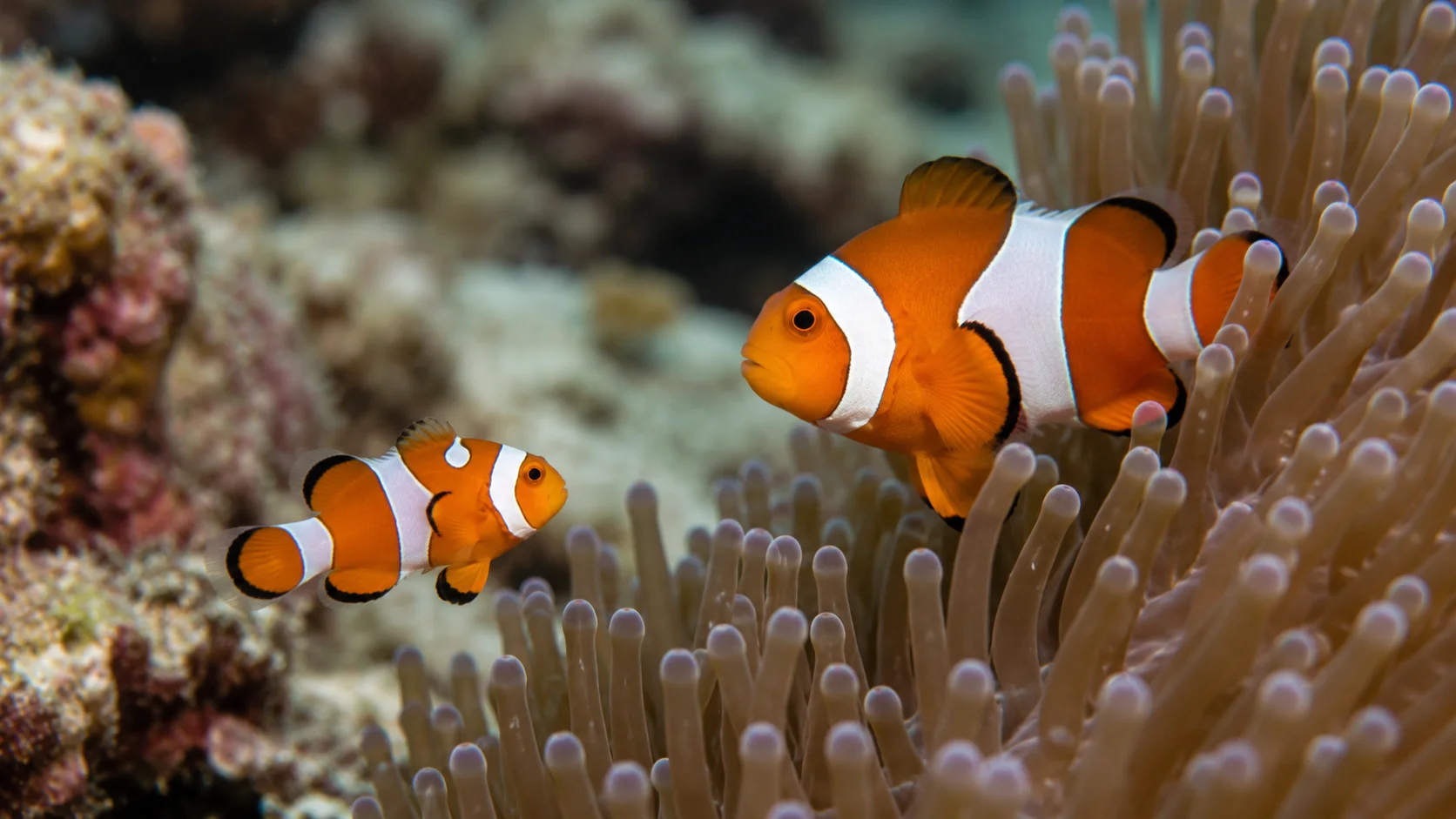
Within a single anemone, the social structure is incredibly strict and entirely dictated by physical size. The absolute largest, most dominant fish in the group is always the single breeding female. The second-largest fish is the designated breeding male. The rest of the inhabitants are significantly smaller, completely submissive, non-breeding males who must wait perfectly in line for their massive opportunity to move up the social ladder.
4. An Irreversible Metamorphosis
If the massive, dominant female of the anemone is eaten by a predator or dies of old age, the social hierarchy instantly shifts. The largest breeding male will rapidly undergo a complete, highly profound biological metamorphosis, permanently transforming his internal organs to become the new breeding female. This extreme biological change is completely irreversible; once a clownfish becomes female, she can never revert back to being male.
5. They Wear Biological Mucus Armor
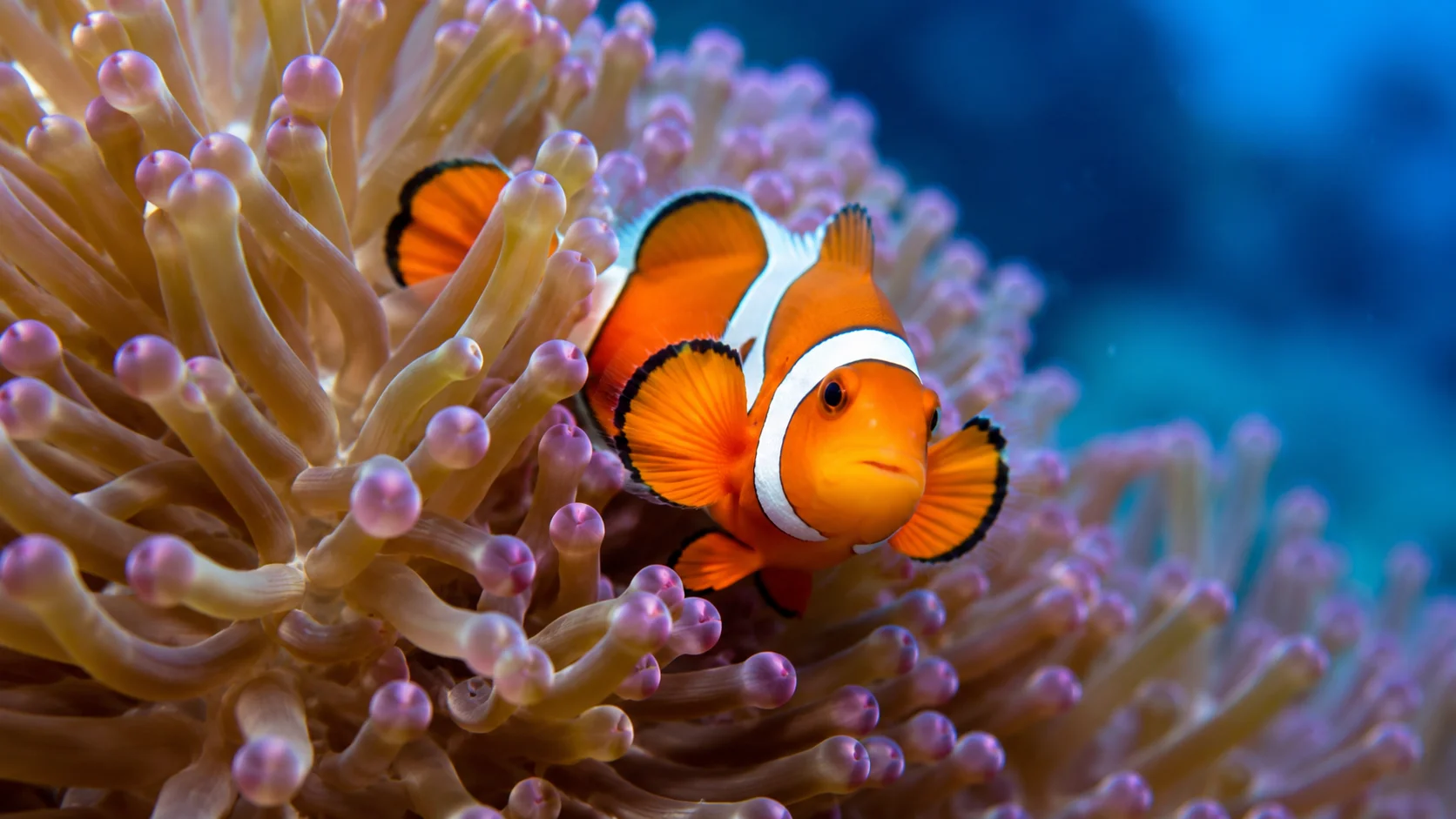
Sea anemones are highly lethal predators equipped with thousands of harpoon-like tentacles designed to instantly inject deadly neurotoxins into passing fish. To completely survive inside this venomous fortress, the clownfish secretes a highly specialized, sugary mucus coating completely over its scales. This chemical armor brilliantly tricks the anemone into thinking the fish is simply another one of its own tentacles, completely preventing the stinging cells from firing.
6. Highly Dedicated Single Fathers
In a massive reversal of traditional marine roles, the female clownfish is largely absent from parenting. After she lays a massive clutch of up to one thousand eggs near the rocky base of the anemone, she simply swims away. The male clownfish becomes an incredibly dedicated, highly protective single father. He spends several days aggressively guarding the nest, carefully eating infertile eggs, and actively fanning the clutch with his fins to constantly supply them with fresh oxygen.
7. Nighttime Breathing Dances
For decades, scientists believed the clownfish only utilized the anemone for highly selfish physical protection. However, researchers recently discovered that the relationship is profoundly mutual. At night, when the anemone naturally struggles to absorb oxygen from stagnant water, the clownfish performs a highly energetic, frenetic wriggling dance. This massive physical movement deeply aerates the tentacles, completely boosting the anemone’s oxygen consumption by an astonishing forty percent.
8. They Use Peer Pressure to Lose Stripes
A highly recent, deeply fascinating study by marine biologists revealed that juvenile clownfish physically alter their appearance based entirely on social anxiety. Baby tomato clownfish are born with multiple white stripes, but rapidly lose them as they age. Researchers discovered that juveniles will actively shed their extra stripes much faster when placed with older fish, using the plain, adult-approved appearance to cement their low-ranking status and avoid being aggressively evicted from the anemone.
9. They Speak in Pops and Clicks
Despite completely lacking human vocal cords, clownfish are incredibly noisy and highly communicative animals. They utilize a massive, highly complex acoustic vocabulary to constantly keep in touch with their anemone mates. By rapidly snapping their jaws and specialized pharyngeal teeth together, they emit a highly distinct series of sharp clicking, popping, and chirping noises to establish territorial dominance or aggressively warn off approaching threats.
10. Terrible Open-Water Swimmers
Despite being the absolute star of a massive movie about traveling across the vast ocean, a real clownfish is a remarkably poor, highly inefficient swimmer. They heavily rely on their pectoral fins in a clumsy, rowing motion to navigate the water. Because their top speed is incredibly low, a wild clownfish will almost never stray more than a few feet away from the absolute safety of its host anemone, completely avoiding the terrifying open ocean.
11. They Feed Their Hosts
The clownfish does not just mooch off the anemone for free rent; it completely acts as a highly aggressive, deeply devoted housekeeper and fertilizer. The tiny fish will fearlessly chase away massive butterflyfish that actively try to eat the anemones tentacles. Furthermore, the highly nitrogen-rich feces excreted by the clownfish completely act as a massive, highly potent organic fertilizer, actively supercharging the growth of the symbiotic algae living completely inside the anemone.
12. Deadly Living Bait
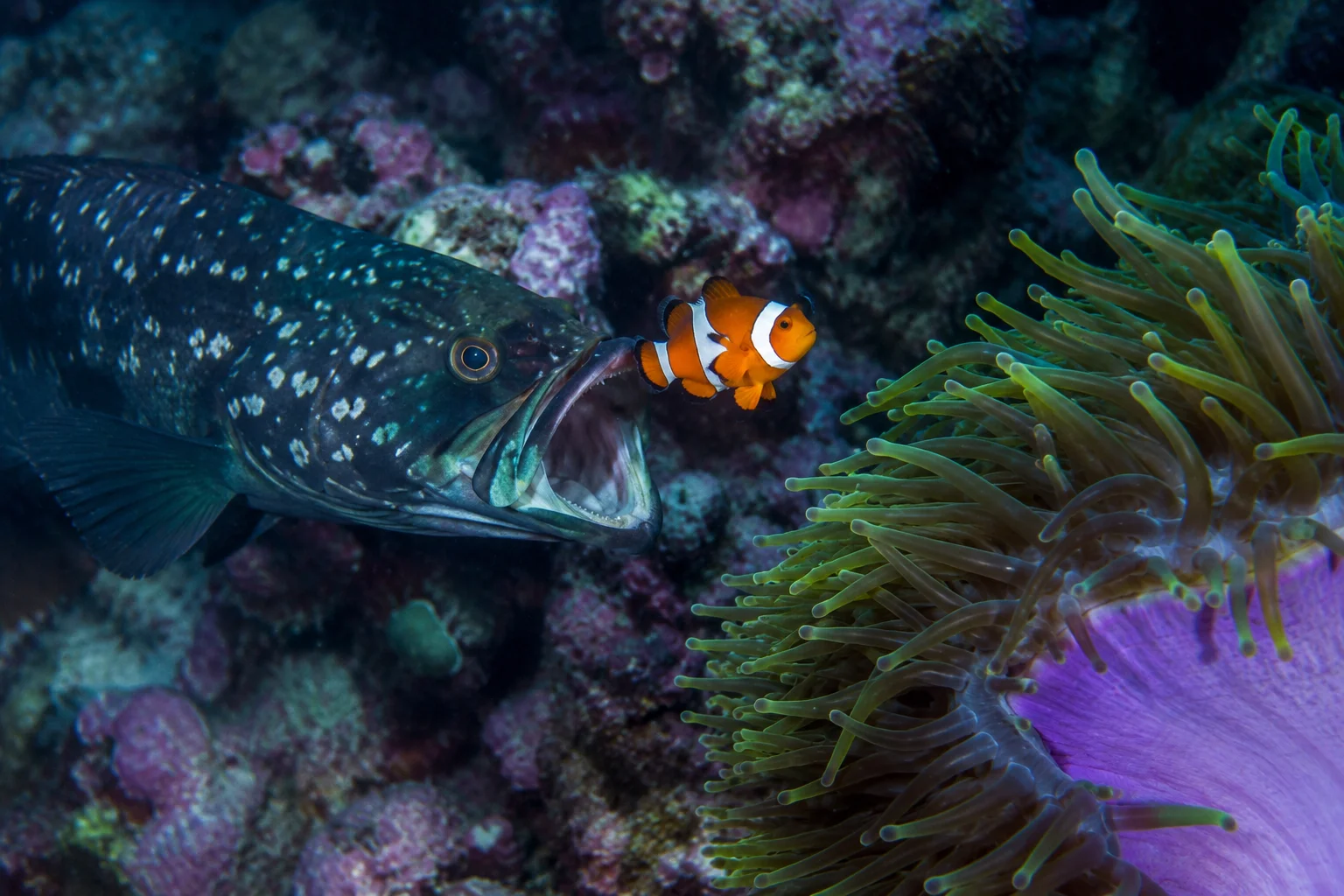
While their incredibly vibrant, highly contrasting orange and white stripes make them beautiful to look at, the coloration serves a highly deadly purpose on the reef. The clownfish frequently acts as highly visible, completely living bait. They will dart completely out of their anemone to actively lure larger, aggressive predatory fish. Once the massive predator lunges forward, it swims directly into the venomous tentacles of the anemone, becoming an instant meal.
13. Fearlessly Attacking Humans
Looking at their tiny, three-inch bodies, it is incredibly easy to assume clownfish are terrified, highly skittish animals. In biological reality, they are completely fearless and deeply aggressive. They are so fiercely territorial that if a massive, fully grown human scuba diver swims too close to their host anemone, the tiny fish will completely launch itself out of the tentacles to aggressively headbutt and actively attempt to bite the divers mask.
14. Absent From the Atlantic
If you are planning a massive scuba diving trip to the Caribbean Sea or the warm waters off the coast of Florida, you will completely fail to find a wild clownfish. The entire Amphiprioninae subfamily is completely geographically restricted. They are entirely endemic to the warm, shallow coral reefs and isolated lagoons of the Indian Ocean, the Red Sea, and the western Pacific Ocean, including the massive Great Barrier Reef.
15. Highly Opportunistic Omnivores
While they are frequently pictured gently nibbling on delicate sea plants, the clownfish is a highly opportunistic, utterly ruthless omnivore. They possess a completely indiscriminate digestive system built entirely for reef survival. They will happily consume floating algae, aggressively hunt tiny zooplankton, eat the parasitic isopods completely plucked off their host, and will frequently even consume the dead, completely severed tentacles of the anemone itself.
Sources and References
- https://www.nationalgeographic.com/science/article/clownfish-help-their-anemones-to-breathe-at-night
- https://www.smithsonianmag.com/smart-news/these-clownfish-lose-their-baby-stripes-in-response-to-peer-pressure-new-research-suggests-180988296/
- https://www.montereybayaquarium.org/animals-the-ocean/animals-a-to-z/clownfish