15 Surprising Facts About Cuttlefish
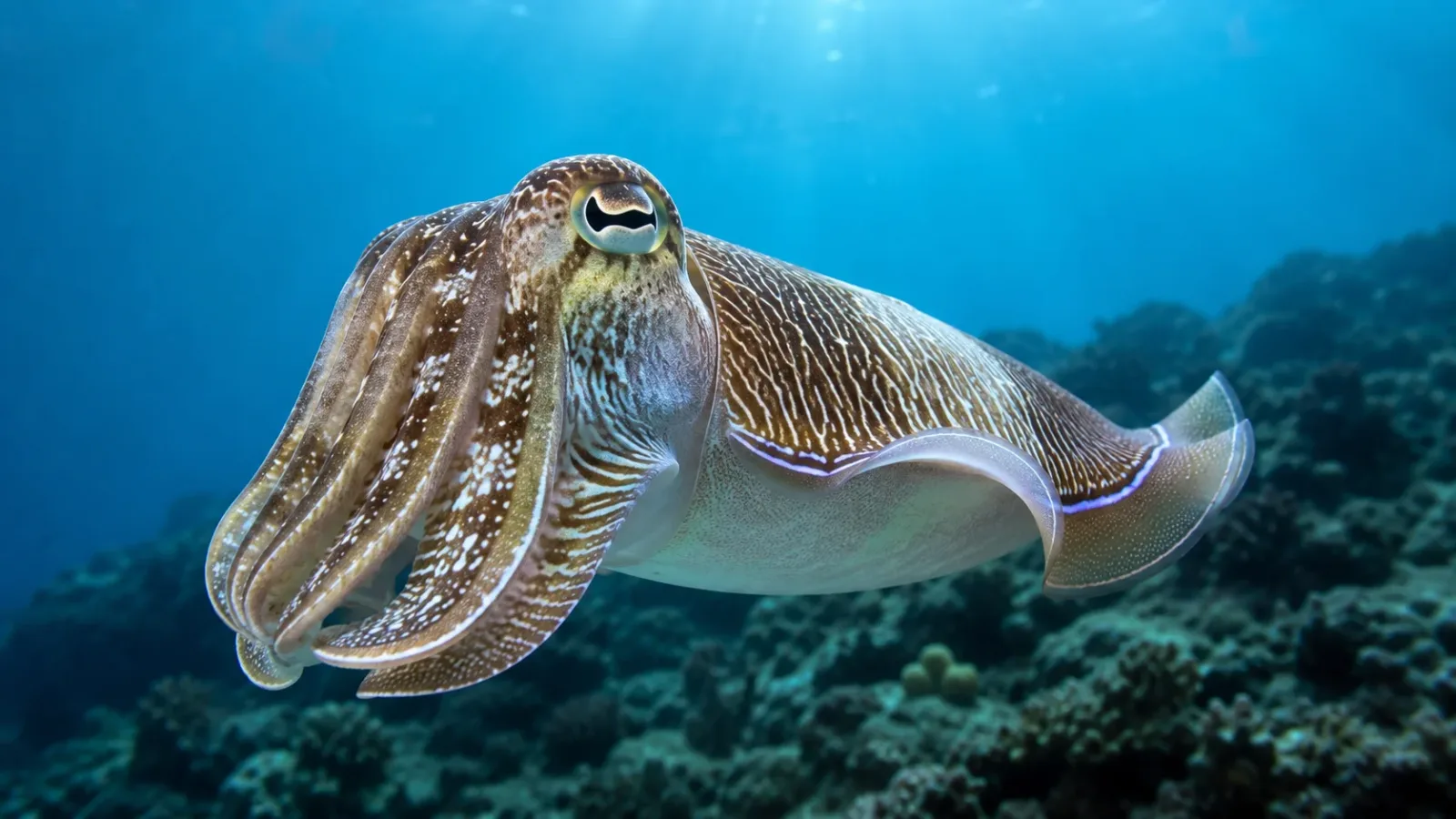
Cuttlefish are the true, shape-shifting wizards of the ocean. Though they might look like soft, floating aliens, they are actually highly active and incredibly smart hunters. From their strange, glowing colors to their built-in floating surfboards, cuttlefish break all the normal rules of sea life. Discover the highly trusted, fun truths behind the ocean’s greatest masters of disguise.
1. They Are Not Actually Fish
Despite having the word “fish” right in their name, cuttlefish are not fish at all. They are marine mollusks belonging to a group called cephalopods. This means they are actually spineless animals closely related to octopuses, squids, and even garden snails. They lack backbones entirely, which allows them to easily squeeze their soft bodies into tight, rocky hiding spots.
2. They Have “W” Shaped Pupils
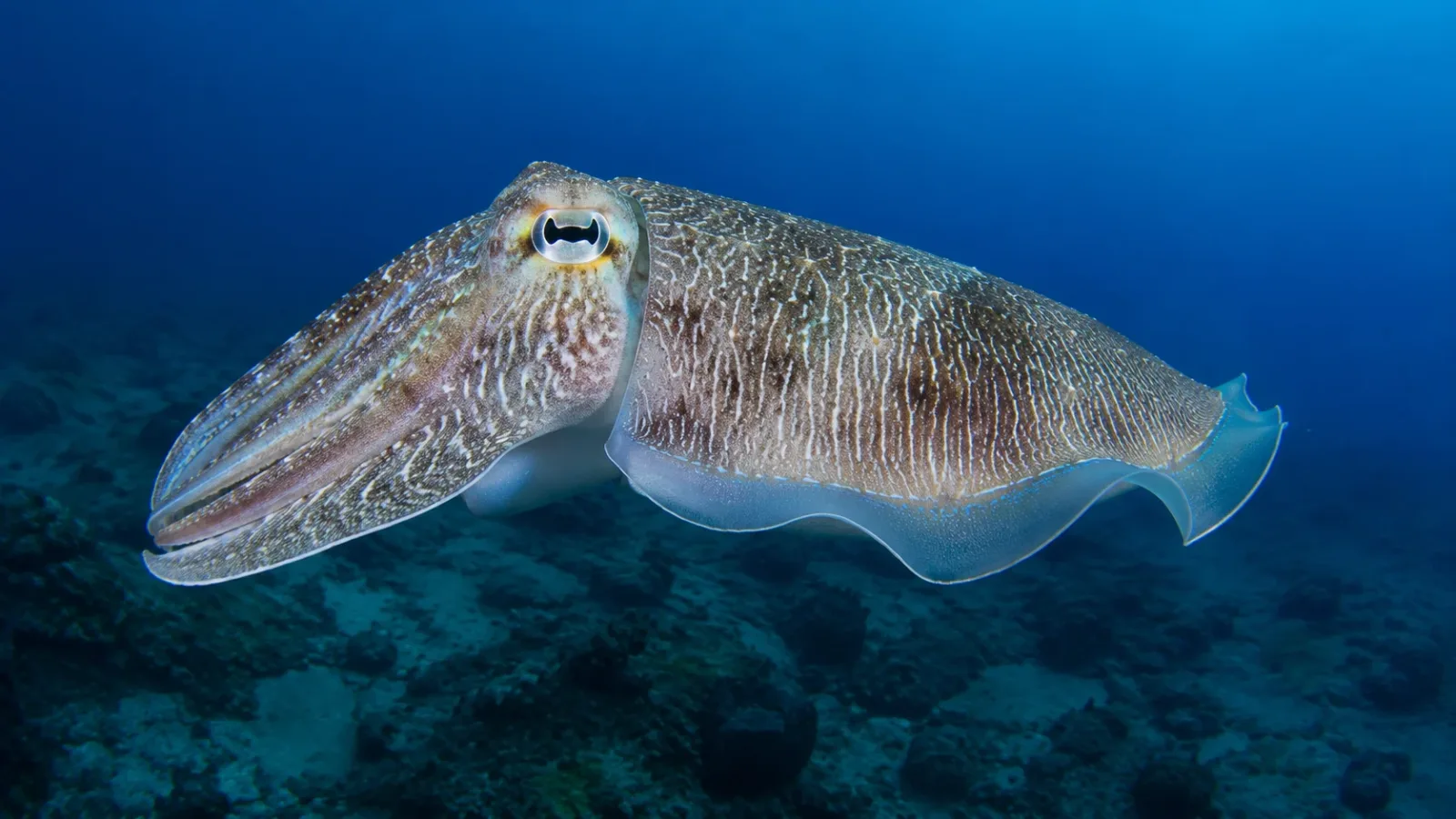
If you look closely at the eyes of a cuttlefish, you will see something truly strange. Instead of round pupils like a human, they have wavy, “W” shaped pupils. This special eye shape helps them control the exact amount of light entering their eyes in bright, shallow water, and it dramatically sharpens the contrast of the ocean floor, helping them spot hidden meals.
3. They Are Completely Colorblind
One of the most amazing facts in all of biology is that cuttlefish are entirely colorblind. They only see the ocean in shades of black, white, and gray. Yet, somehow, they can perfectly match the exact colors of the rocks, sand, and coral around them. Scientists believe their wavy pupils allow them to sense the way light bends and bounces, helping them match colors they cannot even see!
4. They Have Instant Color-Changing Skin
A cuttlefish can change its entire skin color and pattern in the blink of an eye. Their skin is packed with millions of tiny, color-filled sacs called chromatophores. By flexing tiny muscles around these sacs, the cuttlefish can instantly pull them wide open to show bright colors, or squeeze them shut to hide. They can even change the actual texture of their skin to mimic bumpy coral or smooth sand.
5. Sneaky Males Dress as Females
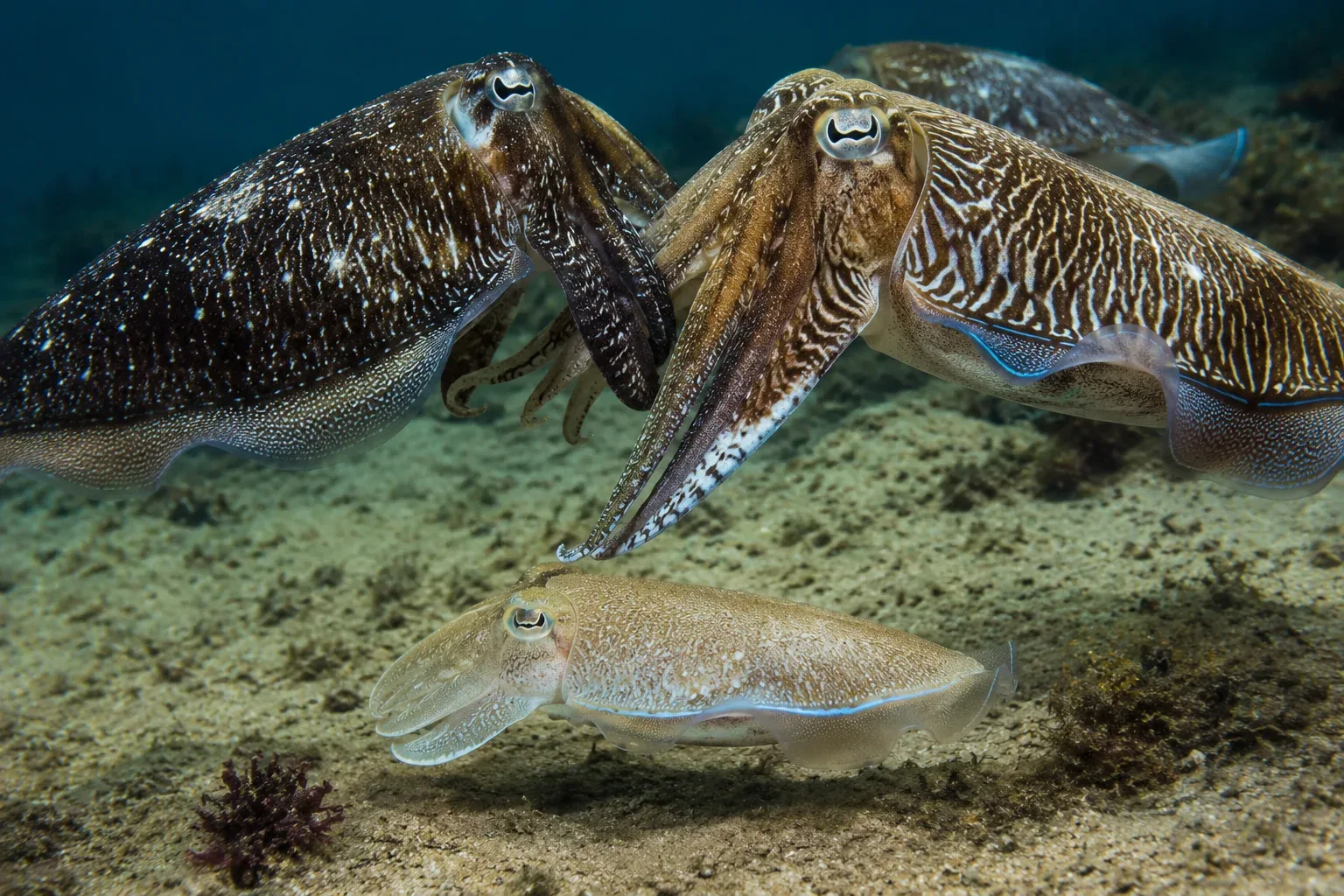
In the cuttlefish world, large males often fight each other to win over females. Smaller males know they cannot win a fight, so they use a brilliant trick. A small male will pull in his extra arms, change his skin to perfectly match a female’s colors, and peacefully swim right past the angry, fighting big males to quietly mate with the female!
6. They Have Three Hearts
Pumping blood through a soft, fast-moving body takes a lot of serious effort. To handle this, the cuttlefish is equipped with three separate hearts. Two of the hearts are entirely dedicated to pumping blood directly to their large gills to pick up fresh oxygen, while the third, central heart pumps that oxygen-rich blood to the rest of the body.
 Marine and Freshwater Animals
Twenty-five animals of the sea and rivers, from the largest creature ever to exist to a seahorse dad, each linked to its full 15-fact article.
See All Facts
Marine and Freshwater Animals
Twenty-five animals of the sea and rivers, from the largest creature ever to exist to a seahorse dad, each linked to its full 15-fact article.
See All Facts
7. Their Blood is Pale Blue
If a cuttlefish gets a bad scrape on the reef, it does not bleed red. Mammals have red blood because we use iron to carry oxygen. Cuttlefish use a special, copper-based protein in their blood called hemocyanin. When this copper-rich liquid touches oxygen, it instantly turns a cloudy, pale blue-green color.
8. They Have a Built-In Floating Shell
While an octopus has no hard parts except its beak, the cuttlefish has a thick, chalky shell hidden deep inside its body called the cuttlebone. This internal shell is full of tiny, gas-filled holes. The cuttlefish can easily add or remove liquid from these holes to perfectly control how high or low it floats in the water, working exactly like a submarine.
9. They Hypnotize Their Prey
When a cuttlefish spots a tasty crab, it does not always just rush in and grab it. Instead, they can turn their skin into a living television screen. They flash rapid, moving stripes of dark and light colors across their body that look exactly like a pulsing strobe light. This flashing pattern completely stuns and hypnotizes the crab, giving the cuttlefish time to strike.
10. They Pack Hidden Feeding Tentacles
A cuttlefish looks like it just has eight short arms around its face, but it is actually hiding a secret weapon. Tucked away tightly in special pouches under their eyes are two extra-long feeding tentacles. When a meal gets close enough, the cuttlefish shoots these two tentacles out at lightning speed to grab the prey with sticky suction cups.
11. The Flamboyant Cuttlefish is Toxic
While most cuttlefish try to blend in, the tiny flamboyant cuttlefish does the exact opposite. It flashes bright pink, yellow, and black colors as it slowly walks across the ocean floor. These bright, loud colors are a clear warning sign. The muscle tissue of the flamboyant cuttlefish is highly toxic, making it just as deadly to eat as the famous blue-ringed octopus.
12. They Shoot Brown Smoke Screens
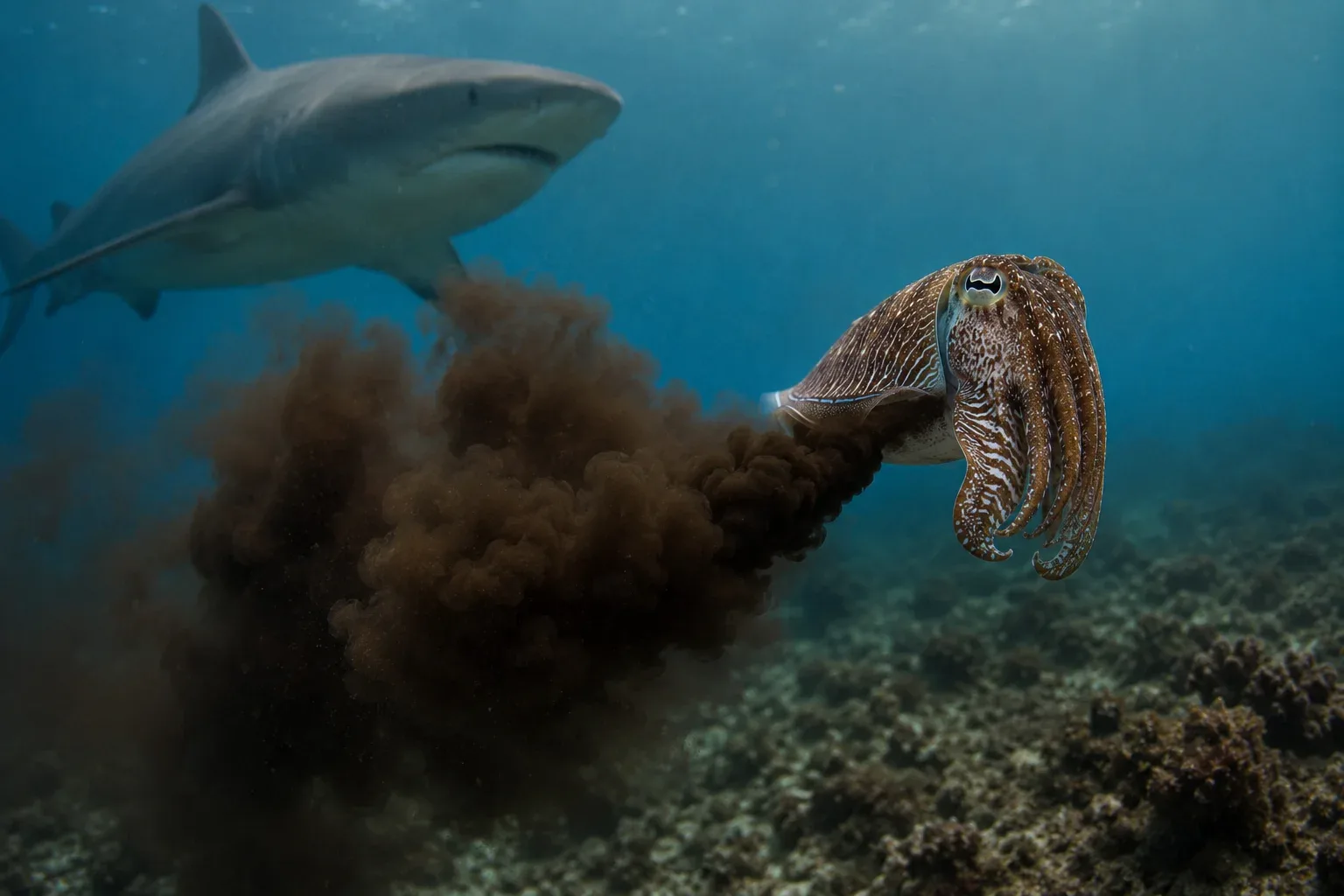
When a cuttlefish is scared by a hungry shark or dolphin, it uses its built-in ink sac to escape. It forcefully shoots out a thick, dark cloud of brown ink into the water. This acts as a perfect underwater smoke screen, confusing the predator’s eyes and sense of smell while the cuttlefish quickly swims away to safety.
13. They Gave Us the Color “Sepia”
That dark, brownish ink used by the common cuttlefish actually has a very famous history. Long ago, human artists and writers would harvest this natural ink to draw and write with. The scientific name for the common cuttlefish is Sepia officinalis, which is exactly where we get the name for the warm, brown “sepia” color tone we use in old photographs today!
14. They Use Jet Propulsion
Cuttlefish usually swim by gently rippling the soft, skirt-like fin that runs around the edge of their body. But when they are in serious danger and need to move fast, they use pure jet propulsion. They suck a large amount of water into their body cavity and aggressively squeeze it out through a small tube under their head, shooting themselves backward at great speed.
15. They Have Very Short Lives
Despite being incredibly smart and highly developed, cuttlefish live their lives in fast forward. Most cuttlefish species only live for about one to two years. The females spend massive amounts of energy laying big bunches of grape-shaped eggs in safe rocky spaces. After carefully hiding their eggs, the parents die very shortly after, leaving the babies to hatch and survive completely on their own.
Sources & References
This AI-assisted post was rigorously curated and fact-checked for accuracy by:
 Martin Roháček
How fun was this article? 🤔
Tap a star to rate it
🧠 Quiz: How closely were you paying attention?
10 questions — all answers are in the article above!
Enjoyed these facts? There's more! 💌
Fresh fun facts in your inbox. No spam, ever.