The Sonic Architect: 15 Fascinating Facts About Dr. Dre
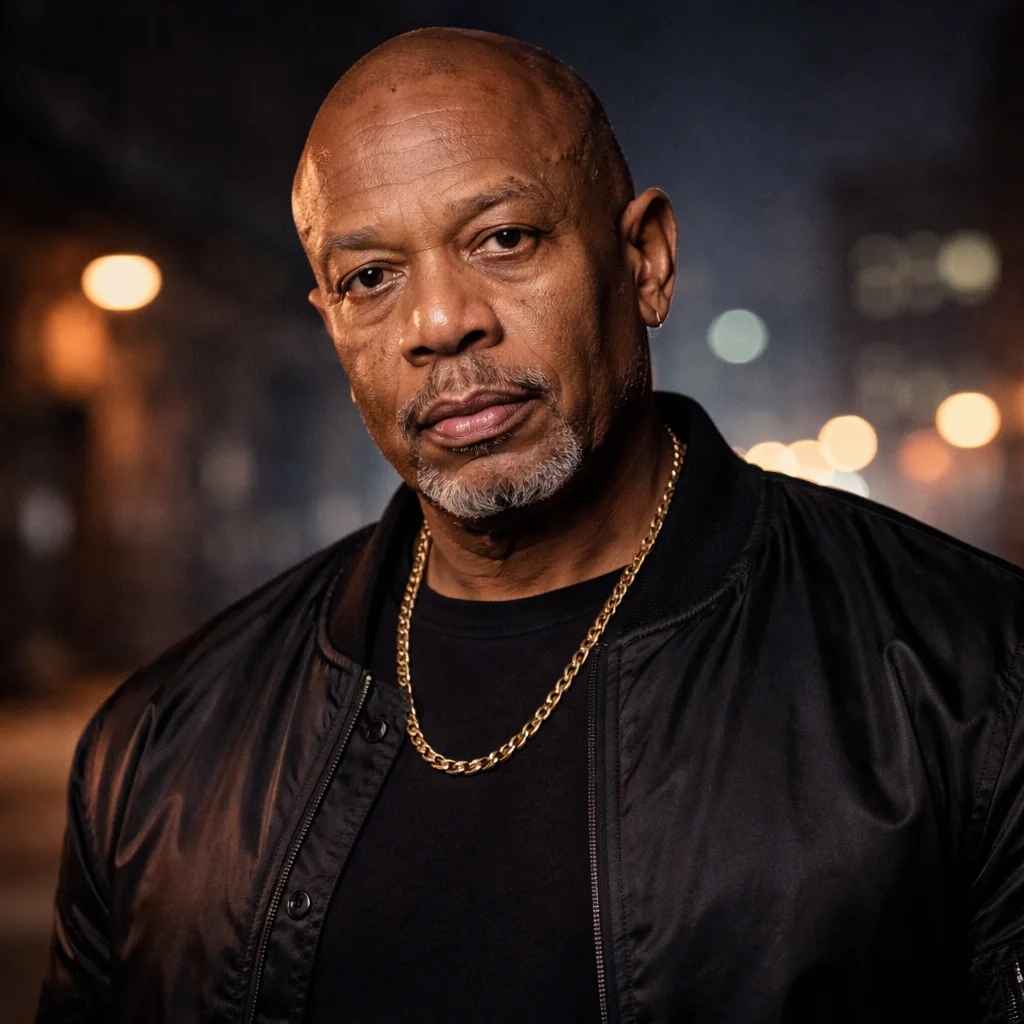
As the mastermind behind West Coast hip-hop, Dr. Dre transformed the global sound of modern music through his pioneering production, unmatched ear for talent, and legendary business ventures. From his early days in sequined suits with the World Class Wreckin' Cru to building a multi-billion-dollar empire with Beats Electronics, Andre Young has consistently rewritten the rules of entertainment. Delve into 15 fascinating, behind-the-scenes facts about the producer who brought world-changing artists into the spotlight.
1. His Stage Name Honors NBA Legend Julius Erving
Long before he became a rap icon, Andre Romelle Young adopted the moniker "Dr. Dre" as a nod to his favorite basketball star. He drew inspiration from Julius "Dr. J" Erving, a legendary NBA player renowned for his stylish dunks and court charisma. Combining his middle name with Erving's famous handle, Young crafted a distinct stage persona during his early DJ sets at the Eve After Dark club in Compton. The title "Doctor" reflected his growing reputation behind the turntables for surgically mixing tracks with flawless precision. This early branding decision laid the foundation for one of the most recognizable stage names in popular music.
2. He Wore Sequined Suits in World Class Wreckin' Cru
Prior to founding N.W.A. and launching gangsta rap into mainstream consciousness, Dr. Dre was a key member of the electro-hop group World Class Wreckin' Cru. During the mid-1980s, the group performed energetic dance tracks while dressed in flashy, sequined lace suits and eye-catching makeup. Early club hits like "Cruisin'" featured Dre's budding talent on synthesizers and drum machines long before his sound hardened into gangsta rap. Photos from this glam-electro era frequently resurfaced later in his career, contrasting sharply with his tough West Coast image. Despite the stark aesthetic shift, Dre's early group experience served as an essential training ground for his audio engineering skills.
3. The FBI Sent N.W.A. an Official Warning Letter
In 1989, assistant director of the FBI Milt Ahlerich took the unprecedented step of sending an official warning letter to Ruthless Records. The federal law enforcement agency expressed severe concern over N.W.A.'s fiery track "Fuck tha Police," claiming the song incited violence against police officers. Instead of intimidating the young group, the government intervention backfired spectacularly by generating massive national publicity. Major news outlets across the United States reported on the federal warning, cementing N.W.A.'s reputation as "The World's Most Dangerous Group." The controversy established Dr. Dre as a producer capable of creating music that reverberated at the highest levels of American politics.
4. He Architected the West Coast G-Funk Sound
In the early 1990s, Dr. Dre fundamentally revolutionized the sound of rap radio by pioneering the G-Funk subgenre on his solo debut, The Chronic. He drew heavily from 1970s Parliament-Funkadelic records, sampling slow, hypnotic grooves and laying them over booming basslines. Dre enriched these samples with live studio instrumentation, piercing high-pitched synthesizer leads, and soulful vocal harmonies. This laid-back, atmospheric sound shifted the entire epicenter of commercial hip-hop from New York to California. G-Funk quickly became the dominant musical aesthetic of 1990s popular culture, profoundly influencing producers worldwide.
5. He Walked Away from Millions at Death Row Records
Dr. Dre co-founded Death Row Records with Marion "Suge" Knight in 1991, quickly turning the label into a multimillion-dollar hit factory. However, by 1996, the company was increasingly embroiled in real-world gang violence, extortion, and criminal investigations. Recognizing that the dangerous environment threatened his life and creative output, Dre made the bold choice to leave the empire behind. In doing so, he forfeited his 50 percent ownership stake and left millions of dollars in back royalties on the table. He immediately launched Aftermath Entertainment, demonstrating that he valued creative control and safety over immediate wealth.
6. "California Love" Was Originally a Dr. Dre Solo Track
Tupac Shakur's smash hit "California Love" was never originally intended to feature the iconic West Coast rapper. Dr. Dre had already produced the beat and recorded two complete verses for his own planned solo project under Aftermath. When Suge Knight posted bail to secure Tupac's release from prison and sign him to Death Row, Dre offered the track as a welcome gift. Tupac quickly penned new verses, and the dynamic duo shot a blockbuster, post-apocalyptic music video inspired by Mad Max. The anthem went on to top the Billboard Hot 100 chart, creating one of the most enduring state anthems in music history.
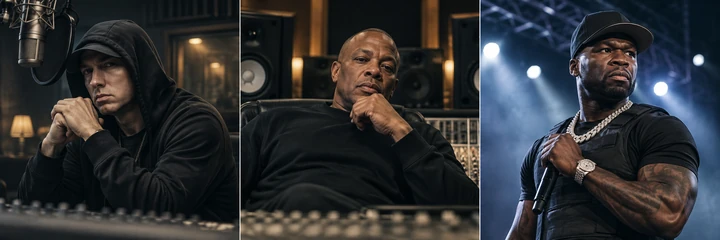 Hip-hop and Rap Legends
Explore the fascinating, hidden stories behind hip-hop's biggest icons. From billion-dollar boardrooms and Pulitzer Prizes to bizarre alter-egos and secret acting pasts, dive into the unexpected journeys of the rap legends who changed music forever.
See All Facts
Hip-hop and Rap Legends
Explore the fascinating, hidden stories behind hip-hop's biggest icons. From billion-dollar boardrooms and Pulitzer Prizes to bizarre alter-egos and secret acting pasts, dive into the unexpected journeys of the rap legends who changed music forever.
See All Facts
7. He Discovered Eminem from a Cassette on a Floor
In 1997, Interscope Records founder Jimmy Iovine discovered a demo cassette tape of Detroit rapper Eminem sitting on the floor of a garage office. Iovine played the tape for Dr. Dre, who was immediately blown away by the unknown artist's complex cadence and dark humor. Dre insisted on meeting the white rapper right away, brushing off music executives who doubted the newcomer's commercial potential. Within minutes of meeting in the studio, the pair began collaborating on what would become The Slim Shady LP. Their instant chemistry blossomed into one of the most successful mentor-protégé partnerships in music history.
8. He Cannot Read or Write Sheet Music
Despite producing dozens of multi-platinum records and setting industry standards for audio fidelity, Dr. Dre cannot read or write conventional sheet music. He constructs intricate multi-layered melodies and heavy bass patterns entirely by ear and intuition. To bring his complex ideas to life, Dre works alongside top session musicians, humming or singing parts while directing them on keyboards and guitars. He acts much like an orchestral conductor, fine-tuning the balance of every sound frequency until it meets his exacting standards. His hyper-acute hearing allows him to isolate subtle sonic flaws that traditional notation could never capture.
9. He Scrapped the Unreleased Mythical Album Detox
Following the massive success of his 1999 album 2001, Dr. Dre announced his final solo masterpiece, tentatively titled Detox. The project became the ultimate myth in modern music history, with fans eagerly anticipating its arrival for well over a decade. Dre spent countless studio hours recording hundreds of songs for the album alongside world-class guest vocalists. Ultimately, his uncompromising perfectionism led him to abandon the entire project because he felt it lacked cohesive excellence. He formally retired the concept in 2015, releasing the soundtrack album Compton instead as his ultimate musical statement.
10. He Produced 50 Cent’s Record-Breaking Debut Album
In 2002, Dr. Dre joined forces with Eminem to sign a rising Queens rapper named 50 Cent to Aftermath and Shady Records. Dre stepped behind the mixing console to executive produce 50 Cent's commercial debut, Get Rich or Die Tryin'. Working with incredible speed, Dre crafted iconic instrumental tracks, including the colossal lead single "In Da Club." The album shattered industry record sales by moving over 800,000 copies in its first week alone. This overwhelming commercial triumph established Aftermath Entertainment as an unbeatable powerhouse in 2000s popular music.
11. Apple Bought Beats Electronics for $3 Billion
Dr. Dre co-founded Beats Electronics alongside executive Jimmy Iovine in 2006 to revolutionize consumer headphone quality. Combining sleek aesthetic design with heavy bass tuning, Beats quickly captured the majority market share of premium hardware. In 2014, tech giant Apple acquired Beats Electronics and its companion streaming service for an astonishing $3 billion in cash and stock. The landmark transaction briefly elevated Dr. Dre to near-billionaire status and established him as rap music's most successful entrepreneur. It remains one of the largest acquisitions of a celebrity brand in corporate history.
12. He Donated $70 Million to USC for Innovation
Following the groundbreaking sale of Beats to Apple, Dr. Dre and Jimmy Iovine made a massive philanthropic investment in higher education. In 2013, the duo donated $70 million to the University of Southern California to establish a brand-new interdisciplinary program. The Jimmy Iovine and Andre Young Academy was designed to nurture young minds at the intersection of art, technology, and business strategy. Their goal was to train future entrepreneurs capable of solving complex modern challenges through cross-disciplinary skills. The gift stands as one of the single largest educational donations ever made by figures from the hip-hop community.
13. He Earned an Oscar Nomination for Straight Outta Compton
Dr. Dre served as a hands-on producer for the 2015 biographical drama film Straight Outta Compton, which documented N.W.A.'s rise and fall. The film offered an unvarnished look at police brutality, censorship, and the volatile inner dynamics of the group. Directed by F. Gary Gray, the movie was a runaway box-office hit, earning over $200 million worldwide. Critical acclaim culminated in an Academy Award nomination for Best Original Screenplay at the 88th Academy Awards. The project allowed Dre to preserve his group's legacy and introduce West Coast musical history to a global film audience.
14. He Survived a Brain Aneurysm Before the Super Bowl
In January 2021, Dr. Dre suffered a life-threatening brain aneurysm that landed him in the intensive care unit at Cedars-Sinai Medical Center in Los Angeles. While medical staff worked around the clock to treat him, Dre maintained his spirits and reassured worried fans via social media. He made a complete recovery after spending weeks under strict medical supervision and rehabilitation. Just one year later, in February 2022, he headlined the iconic Super Bowl LVI Halftime Show at SoFi Stadium. Featuring Eminem, Snoop Dogg, Mary J. Blige, Kendrick Lamar, and 50 Cent, the historic performance won three Primetime Emmy Awards.
15. He Bought Tom Brady's Custom $40 Million Mansion
Following his landmark deal with Apple, Dr. Dre expanded his luxury real estate portfolio by purchasing a sprawling estate in Brentwood, California. The 18,200-square-foot mansion was originally custom-designed and built by NFL star Tom Brady and supermodel Gisele Bündchen. Dre bought the eco-friendly, French Normandy-style chateau for $40 million almost immediately after it was listed for sale. The property boasts a castle-style moat, an infinity pool overlooking the Pacific Ocean, and custom limestone architecture. Dre later added a state-of-the-art music recording facility, turning the estate into a private creative compound.
Sources & References
This AI-assisted post was rigorously curated and fact-checked for accuracy by:
 Martin Roháček
How fun was this article? 🤔
Tap a star to rate it
🧠 Quiz: How closely were you paying attention?
10 questions — all answers are in the article above!
Enjoyed these facts? There's more! 💌
Fresh fun facts in your inbox. No spam, ever.