The Unforgettable Masterpiece: 15 Fascinating Facts About The Green Mile
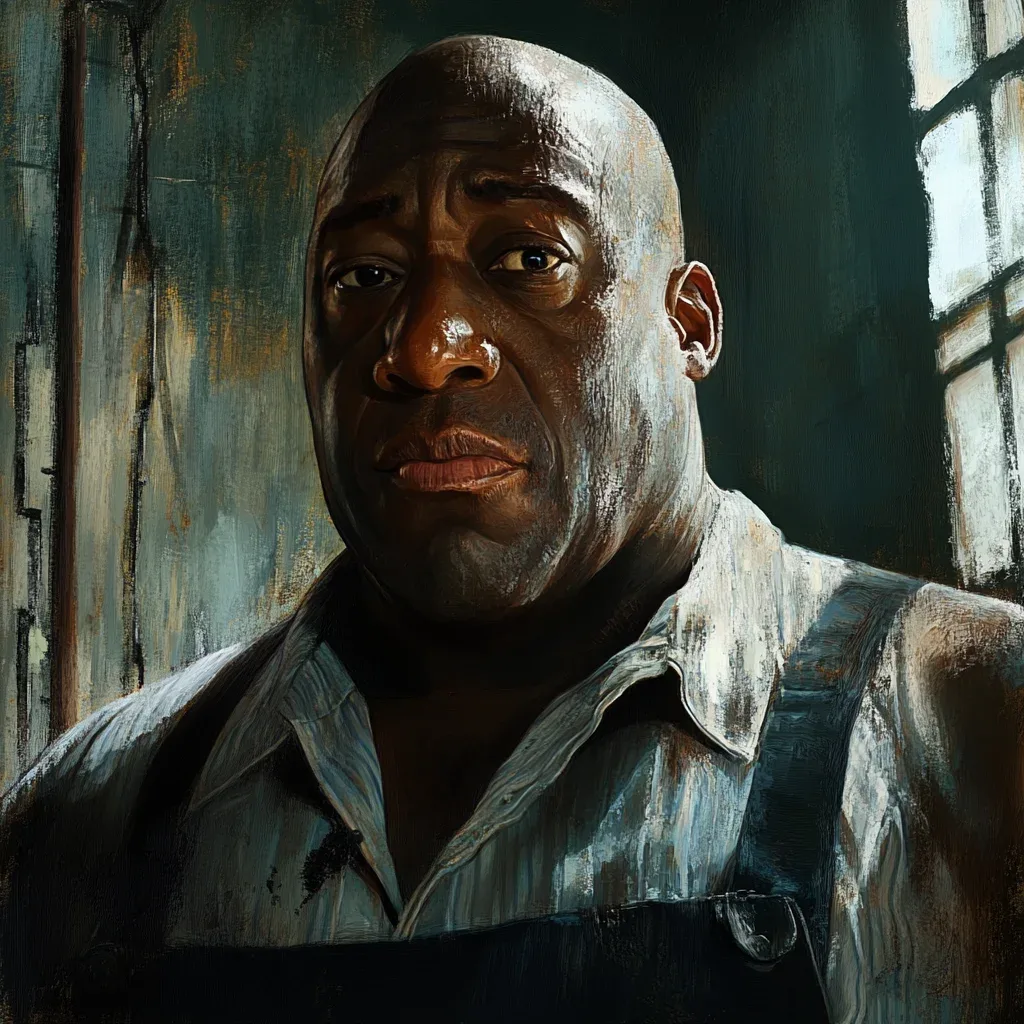
Frank Darabont's 1999 masterpiece The Green Mile remains one of the most beloved Stephen King screen adaptations in cinematic history. Set on Death Row in a 1935 Louisiana penitentiary, the emotional drama brought together unforgettable performances from Tom Hanks and Michael Clarke Duncan. From clever optical tricks used to create John Coffey's giant presence to surprising cast improvisations and historical liberties, the production was filled with fascinating behind-the-scenes stories. Discover the obscure details, unique filming techniques, and real-life casting twists that made this classic film so magical.
1. Bruce Willis Was Responsible for Casting Michael Clarke Duncan
When director Frank Darabont was searching for an actor to play the gentle giant John Coffey, he struggled to find someone with the requisite physical presence and emotional depth. Action star Bruce Willis, who had just worked alongside Michael Clarke Duncan on the 1998 blockbuster Armageddon, stepped in to help. Willis personally called Darabont to advocate for Duncan, assuring the director that he had found the perfect actor for the role. Duncan was subsequently brought in for an audition, which blew the filmmakers away and landed him his breakout role. Without Willis's passionate endorsement, the iconic portrayal of John Coffey might never have happened.
2. Tom Hanks Was Originally Supposed to Play His Older Self
Originally, director Frank Darabont intended for Tom Hanks to play both the 1935 version of Paul Edgecomb and the elderly 108-year-old version residing in a nursing home. The film's makeup department spent hours attempting to transform the 42-year-old Hanks into a centenarian using prosthetic makeup and appliances. However, early camera tests proved disappointing, as the makeup failed to look believable enough under close camera scrutiny. Filmmakers decided it was far better to cast an actual elderly actor, hiring veteran performer Dabbs Greer for the framing sequence. Notably, this emotional performance marked the final film appearance of Greer's long and distinguished acting career.
3. Over Fifteen Mice Portrayed Mr. Jingles
Bringing the surprisingly intelligent mouse Mr. Jingles to life required far more than a single talented rodent. Production animal handlers brought in over fifteen distinct mice to play the role throughout filming. Because teaching one animal to perform every required trick was impossible, each mouse was specialized in specific behaviors, such as pushing a spool, standing on command, or sitting quietly. The memorable scene where Mr. Jingles rolls a wooden spool required a designated mouse actor trained for weeks specifically for that motion. Additionally, CGI and animatronic mice were used sparingly for scenes that involved extreme physical danger to the animals.
4. Doug Hutchison Requested Squeaky Shoes for Percy
Actor Doug Hutchison was determined to make the sadistic guard Percy Wetmore as insufferable as possible to audiences. To add an extra layer of annoyance to his screen presence, Hutchison specifically requested that the wardrobe department equip him with exceptionally squeaky shoes. He reasoned that the persistent, irritating sound would announce his character's presence and grate on the nerves of the audience before he even delivered a line. The subtle character choice worked brilliantly, enhancing the sense of dread whenever Percy walked down the corridor. It remains a masterclass in using sound design and wardrobe to shape character perception.
5. Forced Perspective Was Used to Make John Coffey Look Huge
Although John Coffey appears to tower over everyone on Cold Mountain Penitentiary's Death Row, actor Michael Clarke Duncan was not as monstrously taller than his castmates as he appeared on screen. Duncan stood six feet five inches tall, making him only an inch taller than co-star David Morse, who played Brutus "Brutal" Howell at six feet four inches. To create the visual illusion of a giant among ordinary men, the filmmakers relied heavily on camera tricks, low angles, and forced perspective. They even constructed special miniature props, smaller cots, and reduced doorframes to amplify Duncan's stature relative to his surroundings.
6. Prison Guard Uniforms Were Historically Inaccurate
The distinctive dark blue uniforms worn by Paul Edgecomb and his fellow guards on Death Row are actually an intentional historical inaccuracy. During the Great Depression in 1935 Louisiana, prison guards at real state facilities were not issued official uniforms and typically wore basic civilian street clothes. Director Frank Darabont intentionally chose to override historical reality to serve the dramatic needs of the narrative. He believed that matching uniforms provided the guards with visual authority and created a crisp aesthetic contrast against the prisoners' drab attire. The resulting look became an iconic visual hallmark of the movie.
7. Stephen King Sat in the Replica Electric Chair
During a production visit to the set, celebrated author Stephen King was offered a chance to experience the atmospheric realism firsthand. King agreed to sit in "Old Sparky," the custom-built replica electric chair created for the film's climax. The crew even strapped him into the wooden chair using the realistic leather restraints to give him the full experience. King later admitted that the experience was deeply chilling, uncomfortable, and unnerving, prompting him to ask to be released almost immediately. The eerie moment reinforced just how authentic and haunting the film's physical set was for everyone present.
8. Sam Rockwell Requested Fake Acne for His Character
Actor Sam Rockwell went to great lengths to make the murderous inmate William "Wild Bill" Wharton appear repulsive and unhinged. Unsatisfied with looking like a conventional villain, Rockwell personally requested that the makeup department give his character severe facial blemishes and acne. He spent extra time in the makeup chair each morning having fake pimples and greasy skin textures applied to his face. Rockwell believed these unpleasant physical details reflected the character's toxic internal nature and chaotic personality. The deliberate choice succeeded in making Wild Bill one of cinema's most memorable and unsettling antagonists.
9. Louisiana Didn't Use the Electric Chair in 1935
While execution by the electric chair serves as the central looming threat in The Green Mile, Louisiana did not actually use this method in 1935. Historically, the state of Louisiana performed all state executions by hanging until the end of the decade. The state did not officially adopt electrocution as its primary method of capital punishment until 1940, five years after the film's setting. Stephen King acknowledged this deliberate historical discrepancy in his original serialized novel, choosing the electric chair because of its dramatic power. The adaptation faithfully maintained this compelling, albeit non-historical, plot device.
10. The Set Was Deliberately Scaled Down
The atmospheric interior of the E Block prison set was engineered specifically to manipulate audience perception of scale. Production designer Terence Marsh supervised the construction of sets that were scaled down compared to standard architectural dimensions. The prisoner beds were built significantly shorter, cell doorways were lowered, and corridors were narrowed to emphasize John Coffey's size. When Michael Clarke Duncan moved through these cramped spaces, he naturally looked like a behemoth trapped in a tight cage. This clever environmental design subtly reinforced the narrative without relying heavily on digital visual effects.
11. Tom Hanks Stayed in Character for Stephen King's Visit
When author Stephen King arrived on set to observe filming, lead actor Tom Hanks decided to welcome him in a uniquely immersive way. Hanks remained entirely in character as head guard Paul Edgecomb throughout the author's visit. Rather than breaking character to chat casually, Hanks treated King as an official visitor inspecting the facility. He walked King through the set while maintaining the authoritative yet respectful demeanor of his 1935 prison warden persona. King thoroughly enjoyed the immersive trick, appreciating the dedication Hanks brought to bringing his written pages to life.
12. Set Silence Was Strictly Enforced During Mouse Scenes
Filming scenes featuring live animals always presents unique challenges, but working with mice required extreme operational discipline on set. Because rodents are easily startled by sudden sounds or fast movements, director Frank Darabont instituted strict silence rules during animal takes. Whenever Mr. Jingles was on camera, the entire cast and crew were forced to freeze in complete silence to avoid startling the delicate animals. If anyone shifted weight or made a noise, the mouse would scatter, instantly ruining the shot and delaying production. The painstaking process required immense patience from everyone on the soundstage.
13. Tom Hanks Found the Bladder Infection Scenes Challenging
One of the central narrative catalysts in the story is Paul Edgecomb's severe urinary tract infection, which causes him excruciating pain until John Coffey heals him. Tom Hanks later confessed that acting out the agonized physical symptoms of a bladder infection proved surprisingly difficult. Because the affliction had to be communicated visually without dramatic dialogue, Hanks had to rely entirely on facial expressions and awkward physical posture. Capturing the agonizing discomfort—and the subsequent sudden relief after Coffey's supernatural healing—demanded subtle acting choices. Hanks joked that portraying severe physical relief from an infection was one of his most unusual acting challenges.
14. Harry Dean Stanton Improvised His Execution Rehearsal Song
Character actor Harry Dean Stanton added a memorable touch of dark humor to the film through an unscripted moment of musical improvisation. Stanton portrayed Toot-Toot, the eccentric, long-term inmate who acts as a stand-in during execution rehearsals. During the rehearsal scene for Arlen Bitterbuck's execution, Stanton spontaneously began singing a song while sitting in the electric chair. Director Frank Darabont was delighted by the surreal, dark absurdity of the moment and decided to keep it in the final cut of the film. The improvised song provided a chilling contrast to the somber nature of the scene.
15. Stephen King Called It His Most Faithful Adaptation
Stephen King is notoriously critical of cinematic adaptations of his literary work, famously disliking Stanley Kubrick's version of The Shining. However, King has repeatedly praised Frank Darabont's adaptation of The Green Mile as one of the finest films ever made from his books. King publicly stated that the three-hour drama was perhaps the most faithful and respectful screen adaptation of his work ever produced. He praised the cast's emotional sincerity, the director's meticulous attention to detail, and the movie's faithfulness to his original prose. The endorsement stands as a rare piece of highest praise from the master of horror himself.
Sources & References
This AI-assisted post was rigorously curated and fact-checked for accuracy by:
 Martin Roháček
How fun was this article? 🤔
Tap a star to rate it
🧠 Quiz: How closely were you paying attention?
10 questions — all answers are in the article above!
Enjoyed these facts? There's more! 💌
Fresh fun facts in your inbox. No spam, ever.