
The Clockwork Philosopher: 15 Fascinating Facts About Immanuel Kant
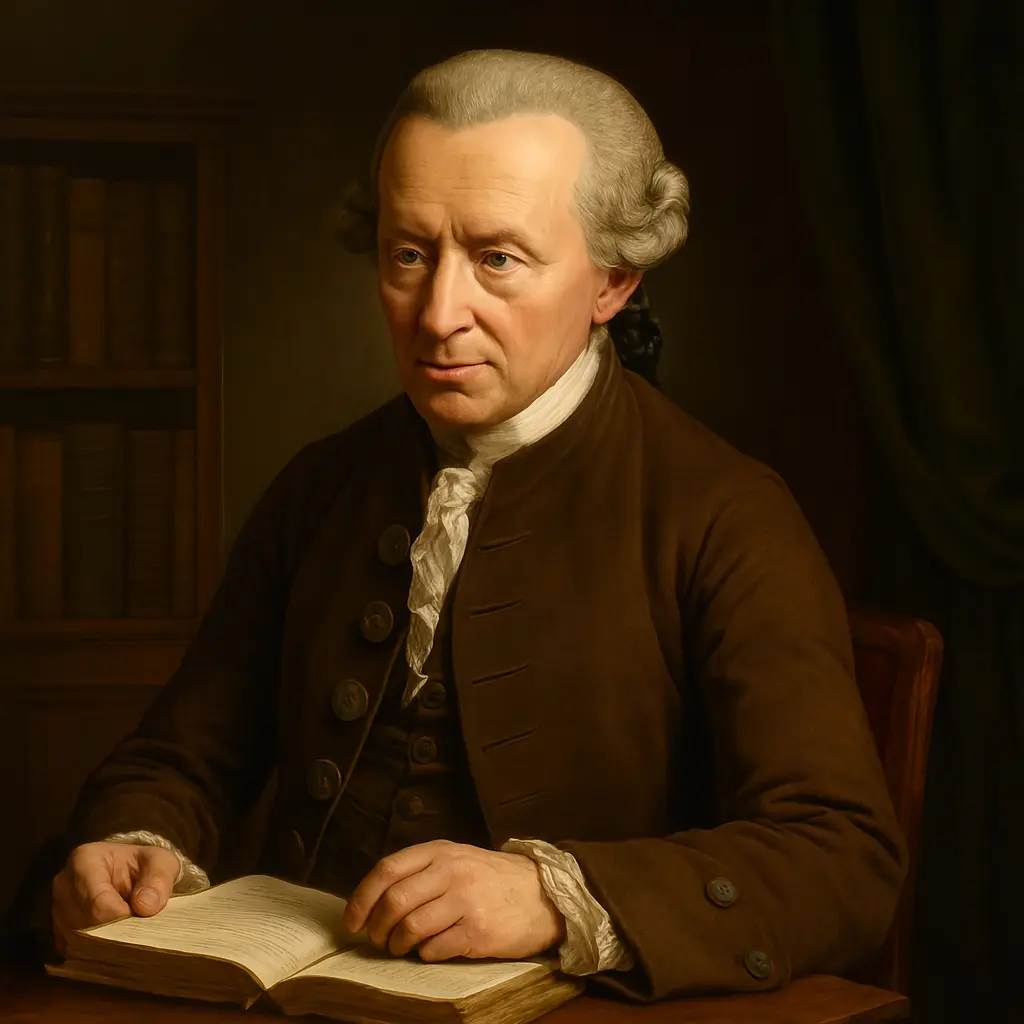
Immanuel Kant was one of the most influential thinkers in Western history, yet he rarely set foot outside his hometown of Königsberg. Known for an astonishingly rigid routine so predictable that neighbors reportedly set their clocks by his afternoon walks, Kant launched an intellectual revolution that transformed cosmology, metaphysics, and ethics. From proposing nebular hypotheses about the stars to designing early blueprints for global peace, here are 15 fascinating facts about the Enlightenment genius.
1. He Spent Virtually His Entire Life in One City
Immanuel Kant spent nearly his entire eighty years of life within the immediate surroundings of his birthplace, Königsberg, East Prussia (now Kaliningrad, Russia). Although he never traveled more than a few dozen miles from home, his revolutionary ideas crossed continents and transformed Western philosophy forever. He spent decades working as an academic at the local university, thoroughly contented with his quiet domestic sphere. Scholars often marveled at how a thinker with such limited geographical horizons could possess such vast intellectual vision. Ultimately, his sedentary life proved that profound philosophical breakthroughs require deep introspection rather than constant global wandering.
2. His Daily Routine Was Impeccably Punctual
Kant was renowned throughout Königsberg for maintaining an astonishingly rigid daily schedule. He woke up precisely at 5:00 AM every morning and spent his early hours writing, lecturing, and dining with friends. At exactly 3:30 PM, Kant departed for his daily eight-lap walk along a specific tree-lined avenue now known as the Philosopher's Walk. Local residents famously claimed they could set their pocket watches by the exact moment he stepped out his front door. He reportedly broke this strict routine only twice in his entire adult life: once to buy Jean-Jacques Rousseau's novel Émile and once to get news regarding the French Revolution.
3. He Proposed How Solar Systems Are Formed
Long before publishing his famous philosophical treatises, Kant made monumental contributions to astrophysics and cosmology. In 1755, he published Universal Natural History and Theory of the Heavens, in which he proposed that planetary systems form from spinning clouds of cosmic dust. This breakthrough became known as the Nebular Hypothesis, which French mathematician Pierre-Simon Laplace later expanded independently. Kant also correctly theorized that distant nebulae were actually vast, independent star systems similar to our own Milky Way galaxy. His early scientific insights demonstrated a remarkable ability to deduce cosmic structures through pure rational analysis.
4. He Took a Decade-Long Publishing Pause
After securing a full professorship in logic and metaphysics at the University of Königsberg in 1770, Kant published almost nothing for over a decade. Contemporaries feared that the brilliant academic had burned out or abandoned his ambitious intellectual goals. In reality, Kant was quietly orchestrating a complete overhaul of Western metaphysics during this famous "silent decade." When he finally emerged from isolation in 1781, he published the Critique of Pure Reason, a monumental volume that changed philosophy forever. This dramatic pause demonstrated Kant's absolute commitment to releasing only thoroughly tested and fully realized theories.
5. His Masterpiece Was Initially Unreadable
The initial release of the Critique of Pure Reason met with confusion and criticism due to its overwhelming density and complex jargon. Even Kant admitted that the book was extraordinarily dry and difficult for general readers to digest. To clarify his central arguments, he published a shorter, more accessible overview in 1783 titled Prolegomena to Any Future Metaphysics. He subsequently issued a heavily revised second edition of the main text in 1787 to clear up widespread misunderstandings. Today, despite its challenging prose, the work is recognized as one of the most important books in philosophical history.
6. He Sparked a "Copernican Revolution" in Thought
Kant famously declared that his philosophy accomplished a "Copernican Revolution" in human understanding. Before Kant, thinkers assumed that human knowledge must conform to external objects as they exist in reality. Kant flipped this assumption on its head by arguing that external objects must instead conform to the inherent cognitive structure of the human mind. By synthesizing rationalism and empiricism, he argued that human experience is actively shaped by built-in mental categories. This bold conceptual shift redefined epistemology and changed how scholars understood the relationship between mind and reality.
7. He Believed Space and Time Exist Only in Mind
One of Kant's most surprising claims was that space and time are not objective physical features of the universe. Instead, he categorized space and time as "pure forms of intuition" built directly into the framework of human cognition. According to Kant, our brains use space and time as fundamental mental lenses to organize incoming raw sensory data. Without these internal spatial and temporal frameworks, human perception of events and objects would be completely impossible. Therefore, we can never experience space or time as independent realities outside our own consciousness.
8. He Claimed True Reality Is Unknowable
Kant made a sharp distinction between things as they appear to us and things as they exist independently of perception. He called the world of human experience "phenomena" and the objective reality beyond our senses "noumena" or the Ding an sich (thing-in-itself). Kant maintained that human beings can only ever know phenomena because our sensory organs and mental structures alter everything we perceive. The true nature of the thing-in-itself remains forever beyond the reach of human cognition. This radical limit placed on human knowledge remains one of the most debated concepts in metaphysics.
9. He Taught Physical Geography Without Traveling
Despite never seeing an ocean or high mountain range in his life, Kant was a pioneer in academic geography. He was among the first scholars to offer formal university lectures on physical geography, a subject he taught for over forty years. Kant satisfied his immense curiosity about the natural world by voraciously reading travel logs, sea captains' journals, and international reports. His lectures were extraordinarily vivid, engaging, and detailed, drawing large crowds of students and local citizens alike. Through sheer intellectual curiosity, he mastered the physical features of a planet he never actually traveled.
10. He Formulated the Categorical Imperative
In moral philosophy, Kant rejected the idea that right and wrong depend on consequences, feelings, or religious commandments. Instead, he developed the concept of the Categorical Imperative, a supreme moral principle rooted entirely in pure reason. The fundamental rule commands individuals to act only according to principles that they would logically want everyone else to follow as a universal law. He also argued that rational beings must treat humanity always as an end in itself, never merely as a means to an end. This framework established duty and consistency as the ultimate foundations of ethical behavior.
11. He Authored a Blueprint for Global Peace
In 1795, Kant published a remarkably visionary essay titled Perpetual Peace: A Philosophical Sketch, outlining how nations could prevent future wars. He proposed a federation of free, constitutional states operating under a shared body of international law to maintain global order. Kant argued that constitutional republics are naturally hesitant to enter conflicts because citizens bear the true cost of war. His bold proposal laid the theoretical groundwork for modern international organizations established centuries later. Today, historians recognize his blueprint as a direct ancestor of both the League of Nations and the United Nations.
12. He Was Censored by the Prussian King
Despite his calm personal demeanor, Kant's religious writings brought him into direct conflict with royal authority. In 1793, his treatise Religion within the Bounds of Bare Reason angered King Frederick William II of Prussia for reducing religious faith to rational morality. The Prussian government censored the text and explicitly ordered Kant to stop publishing or lecturing on religious subjects. Kant dutifully complied with the royal decree out of respect for state authority, maintaining his silence on the topic until the king died in 1797. The incident highlighted the tension between Enlightenment free thought and authoritarian state control.
13. He Was a Host Who Never Married
Kant lived a bachelor life, never marrying or fathering children during his eighty years. He devoted his entire existence to rigorous academic scholarship, maintaining a modest household managed by a single manservant. Despite his solitary domestic living arrangement, Kant was far from an anti-social hermit. He regularly hosted lively dinner parties, delighting guests with his wide-ranging conversational skills, witty humor, and broad knowledge of world events. Friends described him as an attentive host who insisted that dinner conversation remain engaging, lighthearted, and intellectually stimulating.
14. His Gravestone Bears His Most Famous Quote
Kant passed away in February 1804 at the age of seventy-nine, uttering the simple final words, "Es ist gut" ("It is good"). He was buried in Königsberg Cathedral, where a grand neo-classical tomb was later erected in his honor. Inscribed upon his monument is his most famous quotation, taken from the conclusion of his Critique of Practical Reason. It reads: "Two things fill the mind with ever new and increasing admiration and awe... the starry heavens above me and the moral law within me." This eloquent quote perfectly captures his lifelong fascination with both the physical cosmos and human ethics.
15. He Revolutionized Modern Cognitive Psychology
Kant's philosophical legacy reshaped almost every major intellectual movement that followed in Western thought. His work directly inspired German Idealism through thinkers like Georg Wilhelm Friedrich Hegel, Johann Gottlieb Fichte, and Friedrich Schelling. Later in the nineteenth and twentieth centuries, phenomenology, existentialism, and modern ethics built heavily upon Kantian foundations. Furthermore, his view of the human mind as an active processor of reality anticipated key principles of modern cognitive psychology and neuroscience. Few thinkers in human history have left such a deep, permanent mark across so many distinct academic disciplines.
Sources & References
This AI-assisted post was rigorously curated and fact-checked for accuracy by:
 Martin Roháček
How fun was this article? 🤔
Tap a star to rate it
🧠 Quiz: How closely were you paying attention?
10 questions — all answers are in the article above!
Enjoyed these facts? There's more! 💌
Fresh fun facts in your inbox. No spam, ever.