
The Shadowed East End: 15 Fascinating Facts About Jack the Ripper
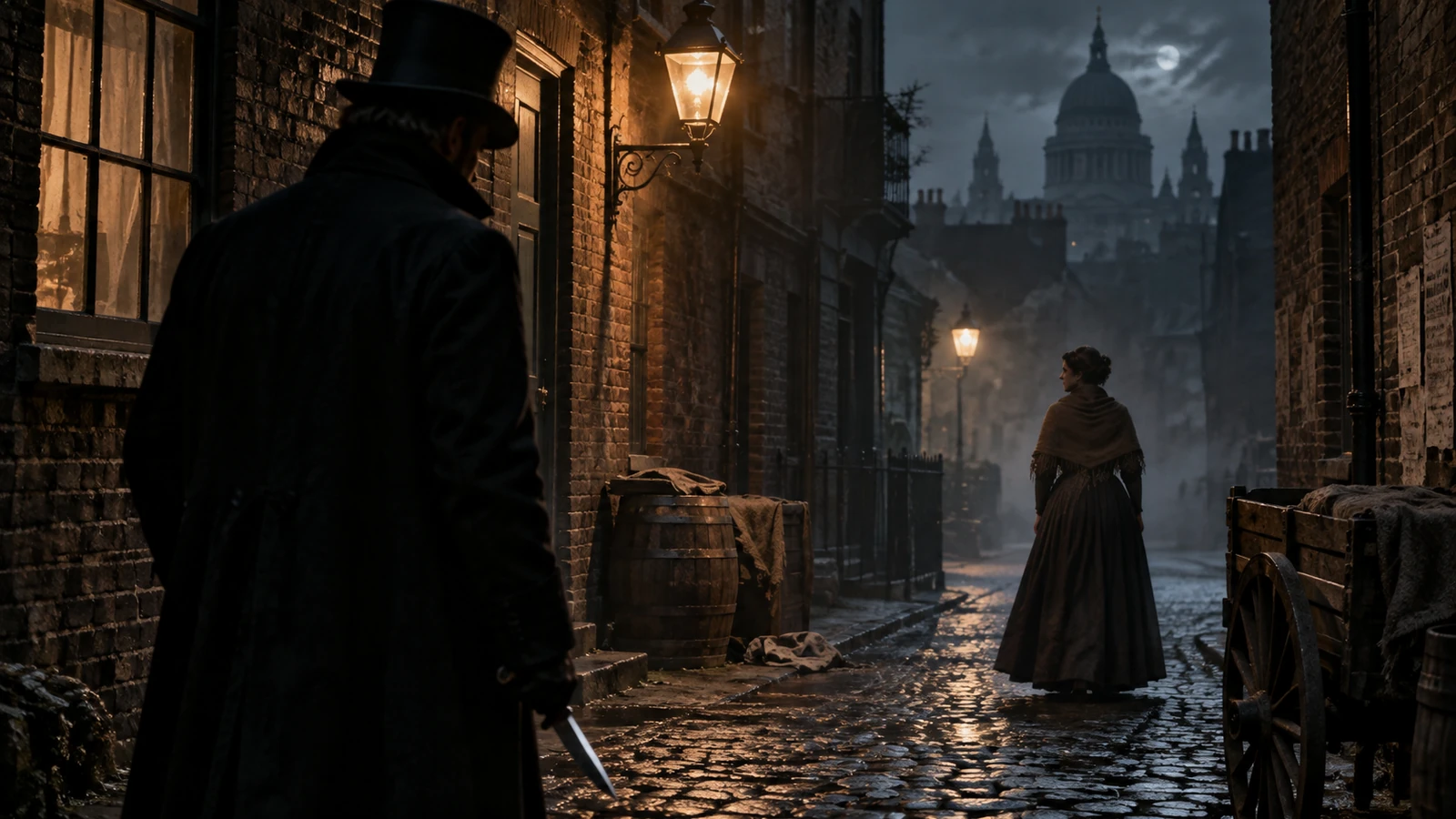
In the autumn of 1888, a mysterious serial killer terrorized London's impoverished Whitechapel district, creating an unsolved mystery that continues to fascinate the world. Dubbed Jack the Ripper by a cheeky journalist's hoax letter, the unidentified murderer claimed the lives of at least five women while constantly evading Victorian police. From royal conspiracy theories and disastrous bloodhound trials to early forensic blunders, the case redefined law enforcement and established the modern true crime genre. Discover the dark, surprising, and complex historical truths behind Victorian London's most infamous serial killer.
1. The Infamous Moniker Stemmed from a Journalist's Hoax
The gruesome name "Jack the Ripper" was never used by the killer himself, but was instead coined in a sensational taunting letter sent to the Central News Agency in late September 1888. Known as the "Dear Boss" letter, it was signed with the dramatic pseudonym and threatened further mutilations. Most modern historians and senior police officials from the era believe the letter was a clever hoax written by a London journalist named Tom Bulling to boost newspaper sales. Before this letter captivated the public, press outlets simply referred to the perpetrator as the "Whitechapel Murderer" or "Leather Apron." Nevertheless, the terrifying sobriquet stuck and permanently cemented the killer's place in popular folklore.
2. The Killer Has Only Five "Canonical" Confirmed Victims
While Whitechapel saw numerous brutal deaths during the late 1800s, criminologists generally attribute exactly five murders to Jack the Ripper. Known as the "canonical five," these victims were Mary Ann Nichols, Annie Chapman, Elizabeth Stride, Catherine Eddowes, and Mary Jane Kelly. All five women were targeted between August 31 and November 9, 1888, while working as destitute streetwalkers in London's East End. Their deaths shared distinct hallmarks, including slashed throats and extensive abdominal mutilations executed in dark alleys. Although up to eleven deaths were recorded in the broader police file, these five remain the definitive core of the mystery.
3. The "From Hell" Letter Was Accompanied by a Preserved Human Kidney
Among the hundreds of letters received by authorities, the "From Hell" letter received in October 1888 is considered the most chilling and plausible. Addressed to George Lusk, head of the Whitechapel Vigilance Committee, the small wooden box contained a letter along with half a preserved human kidney. The writer claimed to have fried and eaten the missing half, boasting of its pleasant taste to the horrifying dismay of the public. Medical examination confirmed the organ was a human left kidney suffering from Bright's disease, matching the medical condition of recent victim Catherine Eddowes. Unlike the cheeky "Dear Boss" note, this grisly package convinced many investigators that they were interacting directly with the true killer.
4. Medical Experts Strongly Disagreed on the Killer's Anatomical Knowledge
The precise surgical removal of organs from several victims sparked intense debate regarding the killer's professional background. Police surgeons who examined the bodies expressed wildly conflicting opinions about the level of skill required to perform such swift dissections in pitch darkness. Dr. George Bagster Phillips argued that the precise extraction of organs required advanced anatomical knowledge, pointing toward a doctor or trained surgeon. Conversely, Dr. Thomas Bond asserted that the injuries showed no anatomical skill whatsoever and were merely the chaotic hackings of an uneducated butcher. This fundamental disagreement split the police investigation, causing detectives to split their attention between elite medical professionals and local slaughterhouse workers.
5. The Royal Family Suspect Had an Impregnable Alibi
One of the most persistent and outlandish conspiracy theories implicates Prince Albert Victor, the Duke of Clarence and grandson of Queen Victoria. Known affectionately as "Eddy," the royal was alleged by later theorists to have committed the crimes during a secret bout of madness caused by advanced syphilis. However, official court circulars, royal records, and historical diaries definitively prove that the prince was nowhere near London when the murders occurred. During several of the killings, he was attending official royal events in Scotland and Yorkshire, miles away from Whitechapel. Despite being completely exonerated by undeniable historical records, the prince remains a popular pop-culture suspect today.
6. Two Women Were Murdered in Less Than an Hour During the "Double Event"
On the night of September 30, 1888, the killer struck twice within the span of an hour in what became known as the "Double Event." The first victim, Elizabeth Stride, was discovered in Dutfield's Yard with a severed carotid artery, though her body was not further mutilated. Investigators believe the killer was interrupted by a local delivery man before he could complete his horrifying routine. Thwarted and hungry for blood, the perpetrator quickly fled to Mitre Square in the City of London, where he encountered Catherine Eddowes. There, he carried out extensive facial and abdominal mutilations, demonstrating a terrifying level of speed, desperation, and calculated audacity.
 Famous Disasters, Mysteries and Crimes
Explore the gripping truths behind history's most infamous disasters, unsolved mysteries, and legendary criminals. From colossal volcanic eruptions to the birth of the modern underworld, uncover the startling facts that separate myth from reality.
See All Facts
Famous Disasters, Mysteries and Crimes
Explore the gripping truths behind history's most infamous disasters, unsolved mysteries, and legendary criminals. From colossal volcanic eruptions to the birth of the modern underworld, uncover the startling facts that separate myth from reality.
See All Facts
7. Crucial Chalk Graffiti at a Crime Scene Was Intentionally Erased
Following the murder of Catherine Eddowes, police discovered a bloody piece of her apron near a doorway on Goulston Street alongside a cryptic message written in white chalk. The graffiti read: "The Juwes are the men that Will not be blamed for nothing," containing a distinctive spelling error. Metropolitan Police Commissioner Sir Charles Warren personally ordered the chalk message erased before dawn, fearing it would ignite violent anti-Semitic riots in the heavily Jewish East End. This controversial decision infuriated local detectives, who wanted to photograph and analyze the handwriting as potential evidence. To this day, historians debate whether the text was a vital clue left by the killer or merely pre-existing neighborhood vandalism.
8. Police Tried and Failed to Use Tracking Bloodhounds
Desperate to catch the elusive perpetrator, the Metropolitan Police experimented with using trained bloodhounds to track the killer's scent through the city. Two champion hounds named Barnaby and Burgho were brought to London and tested in public parks, briefly instilling hope in a terrified public. However, the trial proved to be a complete operational failure when applied to the chaotic streets of the East End. The dense stench of sewage, slaughterhouses, and overwhelming crowds completely overwhelmed the dogs' sensitive noses. Furthermore, one of the dogs famously bit Commissioner Warren during a demonstration, and the animals were ultimately returned to their owner without ever being deployed at an active crime scene.
9. The Murders Ceased Abruptly After the Horrific Death of Mary Jane Kelly
The gruesome series of murders came to a sudden halt after November 9, 1888, following the horrific death of twenty-five-year-old Mary Jane Kelly. Unlike previous victims murdered in public thoroughfares, Kelly was killed inside her rented room at Miller's Court, allowing the killer hours of uninterrupted privacy. The level of destruction inflicted upon her body far surpassed any of the prior attacks, representing the bloody climax of the spree. After this nightmarish event, no further canonical Whitechapel murders were recorded, leading historians to speculate on the killer's fate. Most experts believe the perpetrator either died, was committed to an asylum, or was imprisoned for an unrelated offense shortly thereafter.
10. The Investigation Was One of the Largest Manhunts in Victorian History
The scale of the Jack the Ripper investigation was unprecedented in the annals of British law enforcement history. Over the course of the investigation, Scotland Yard interviewed more than 2,000 individuals, investigated over 300 suspects, and detained nearly 80 people. Detectives worked tirelessly around the clock, while plainclothes officers patrolled Whitechapel alleys in soft-soled shoes to sneak up on potential attackers. Additionally, local residents formed the Whitechapel Vigilance Committee to hire private investigators and patrol the streets themselves. Despite these massive efforts and thousands of tips from the public, the police were never able to gather enough concrete evidence to formally charge anyone.
11. Sherlock Holmes Creator Suspected the Killer Was "Jill the Ripper"
Famous author Sir Arthur Conan Doyle, the creator of Sherlock Holmes, proposed a unique theory that the killer might actually have been a woman. Conan Doyle argued that a female murderer—dubbed "Jill the Ripper"—could walk through the blood-stained streets without drawing suspicion, especially if she wore midwife attire. Midwives carried medical equipment, had basic anatomical knowledge, and routinely walked the streets at all hours in blood-spattered aprons without raising alarm. This theory was later expanded by crime writer William Stewart, who suggested a vengeful midwife was seeking retribution for botched abortions. While an intriguing exercise in deduction, no physical evidence ever emerged to substantiate the "Jill" hypothesis.
12. Queen Victoria Personally Criticized the Metropolitan Police
The inability of law enforcement to solve the Whitechapel murders infuriated Queen Victoria, who took a deep personal interest in the ongoing investigation. The monarch regularly wrote fiery letters to Home Secretary Henry Matthews and Prime Minister Lord Salisbury demanding swift action. Victoria sharply criticized the police for their ineptitude and offered practical suggestions, including improving street lighting and increasing foot patrols in impoverished areas. She argued that the squalid, dimly lit alleys of Whitechapel were enabling the criminal to operate with complete impunity. Her constant pressure forced Scotland Yard to modernize several administrative procedures, even though the case itself remained frustratingly unsolved.
13. Investigators Tested the Bizarre Theory of Retinal Photography
In their desperate bid to identify the killer, Victorian police turned to cutting-edge technology and controversial pseudoscience of the late 19th century. The case marked one of the earliest uses of forensic crime scene photography, capturing detailed images of victims to preserve evidence for investigators. More bizarrely, police considered using optography—the scientific theory that the human eye captures and stores the final image seen before death like a camera lens. Officers actually photographed the retinas of some victims in hopes of retrieving a visual image of the killer's face. Unsurprisingly, the optography experiments yielded zero results, as the underlying biological concept was fundamentally flawed.
14. Modern DNA "Solutions" Have Been Widely Discredited by Geneticists
In recent years, media headlines periodically claim that modern genetic testing has finally unmasked Jack the Ripper, but these claims are widely rejected by experts. A prominent 2014 book made world news by analyzing a silk shawl allegedly retrieved from the Catherine Eddowes crime scene, pointing to Polish barber Aaron Kosminski. However, forensic scientists and geneticists quickly demolished the study's conclusions, pointing out severe methodological errors and a fundamental misunderstanding of mitochondrial DNA analysis. Furthermore, the shawl had been handled by dozens of people over a century, leaving it hopelessly contaminated with modern DNA. Consequently, mainstream historians still consider Kosminski merely one of many unproven suspects.
15. The Case Established the Template for Modern True Crime Coverage
The Jack the Ripper saga effectively birthed the modern true crime genre and revolutionized how media covers serial offenses. The Whitechapel murders coincided with the rapid rise of cheap daily newspapers, national telegraph networks, and widespread public literacy. Editors realized that sensationalized, graphic coverage of real-life atrocities sold thousands of extra copies every single day, creating a frantic media circus. This sensational reporting transformed an urban crime spree into an enduring international obsession that persists over a century later. In doing so, the case established the sensationalized news template still used today for high-profile criminal investigations.
Sources & References
This AI-assisted post was rigorously curated and fact-checked for accuracy by:
 Martin Roháček
How fun was this article? 🤔
Tap a star to rate it
🧠 Quiz: How closely were you paying attention?
10 questions — all answers are in the article above!
Enjoyed these facts? There's more! 💌
Fresh fun facts in your inbox. No spam, ever.