1. The Historic 35th Stage Win
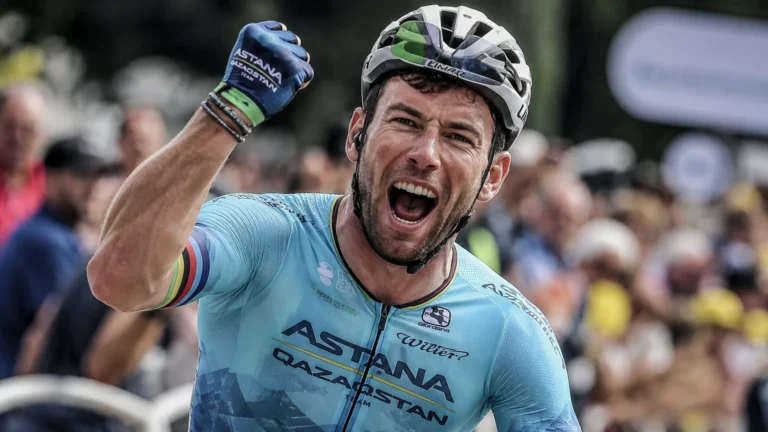
In July 2024, Mark Cavendish achieved what many believed was mathematically and physically impossible. He won his 35th career stage at the Tour de France, officially breaking the all-time record previously held by the legendary Eddy Merckx since 1975. This monumental victory cemented his ultimate legacy as the greatest sprinter in the history of the sport.
2. He Was a Teenage Bank Clerk
Before he was a multi-millionaire sports icon, Cavendish had to fund his own early cycling career. After leaving school, he worked as a bank clerk at a local Barclays branch on his home island. He worked behind the desk for two years to diligently save enough money to support himself while racing as an unpaid amateur in Europe.
3. His Secret Weapon Was Ballroom Dancing
One of the most intense and aggressive sprinters in the peloton actually has a background in formal dance. During his childhood, his mother ran a dance studio, and Cavendish actively competed in ballroom dancing. He has frequently credited this early dance training with giving him the exceptional balance, precise footwork, and spatial awareness required to navigate highly dangerous, high-speed cycling sprints.
4. The Meaning Behind “The Manx Missile”
Cavendish is famously nicknamed “The Manx Missile.” The moniker is a nod to his birthplace, the Isle of Man, a small, self-governing British Crown Dependency located in the Irish Sea. The people of the island are known as Manx, and Cavendish takes immense pride in his unique heritage, frequently serving as a sporting ambassador for his homeland.
5. An Unorthodox, Aerodynamic Sprint
Unlike massive, muscular sprinters such as Marcel Kittel or André Greipel, Cavendish doesn’t necessarily produce the highest peak wattage in the peloton. Instead, his dominance comes from his aerodynamic positioning. Wind tunnel tests have proven that his uniquely low, flat-backed sprinting posture drastically reduces his aerodynamic drag, allowing him to slice through the wind faster than much more powerful riders.
6. Winning the Longest Classic on His First Try
In 2009, Cavendish entered the Milan-San Remo, one of cycling’s five historic “Monuments” and the longest one-day professional race on the calendar at nearly 300 kilometers. Despite it being his very first attempt at the grueling race, he won it in a thrilling photo finish by catching German rider Heinrich Haussler mere millimeters before the finish line.
7. The Epstein-Barr Battle
Cavendish’s career was nearly derailed entirely by an invisible enemy. Between 2017 and 2020, he suffered from a severe, prolonged case of the Epstein-Barr virus (glandular fever). The illness completely drained his physical stamina, caused him to miss seasons of peak racing, and led to a serious battle with clinical depression as he feared his athletic career was permanently over.
8. A Minimum-Wage Miracle Comeback
By late 2020, Cavendish was teamless and tearfully suggested to the press that his career was finished. In a last-ditch effort, he convinced the Deceuninck-Quick-Step team boss to give him a minimum-wage contract for the 2021 season. In one of the greatest comebacks in sports history, he went on to win four stages at that year’s Tour de France and claim the green sprint jersey when everyone thought he was washed up.
9. He Un-Retired Because of a Broken Collarbone
Cavendish officially announced that 2023 would be his final season in the professional peloton, hoping to secure his record-breaking 35th Tour win before retiring. Tragically, he crashed out on Stage 8 and broke his collarbone. Refusing to let his legendary career end in the back of an ambulance, he delayed his retirement and signed on for one more year with Astana Qazaqstan to successfully chase the record in 2024.
10. The Only Team GB Track Rider to Miss a Medal in 2008
The 2008 Beijing Olympics were a dominant showcase for Great Britain’s track cycling team, with almost every single rider taking home a medal. The sole exception was Mark Cavendish. Partnered with Bradley Wiggins in the Madison event, the heavily favored duo suffered from fatigue and finished a disappointing ninth, leaving Cavendish as the only British track cyclist to fly home empty-handed.
11. He Finally Found Olympic Redemption
The Olympic curse haunted Cavendish for years, including a heavily scrutinized failure to win the road race on home soil at the London 2012 games. However, he finally found his redemption at the 2016 Rio Olympics. Returning to the velodrome, he competed in the grueling, multi-event Omnium and won a hard-fought silver medal, finally securing his missing Olympic hardware.
12. A Frustrating Year with Team Sky
In 2012, Cavendish joined the British super-team, Team Sky, wearing the prestigious rainbow jersey as the reigning World Champion. However, the team’s sole focus was on securing a general classification overall victory for Bradley Wiggins. Left to fend for himself in the sprints without a dedicated lead-out train, Cavendish still miraculously managed to win three Tour stages before mutually terminating his contract after just one season.
13. He Was Officially Knighted
In recognition of his unparalleled contributions to British cycling and his extensive charity work, Cavendish was included in King Charles III’s Birthday Honours list in 2024. He was officially knighted, elevating him to the title of Sir Mark Cavendish, an incredibly rare and prestigious honor for a still-active professional athlete.
14. Sprinting on Pure Instinct, Not Power Data
Modern professional cycling is heavily dictated by sports science, with riders constantly staring at digital power meters on their handlebars to measure their exact wattage output. Cavendish famously rejects this during finales. He does not use his screen to look at power numbers during a sprint, relying entirely on his raw instinct, peripheral vision, and ability to read the chaotic, high-speed movement of the peloton.
15. A Three-Time Track World Champion
While he is globally famous for his road cycling exploits, Cavendish is also a masterful tactician in the velodrome. Before transitioning fully to the road, he honed his pack-racing skills on the track, becoming a three-time UCI Madison World Champion, winning the rainbow bands in 2005, 2008, and 2016 alongside various British teammates.