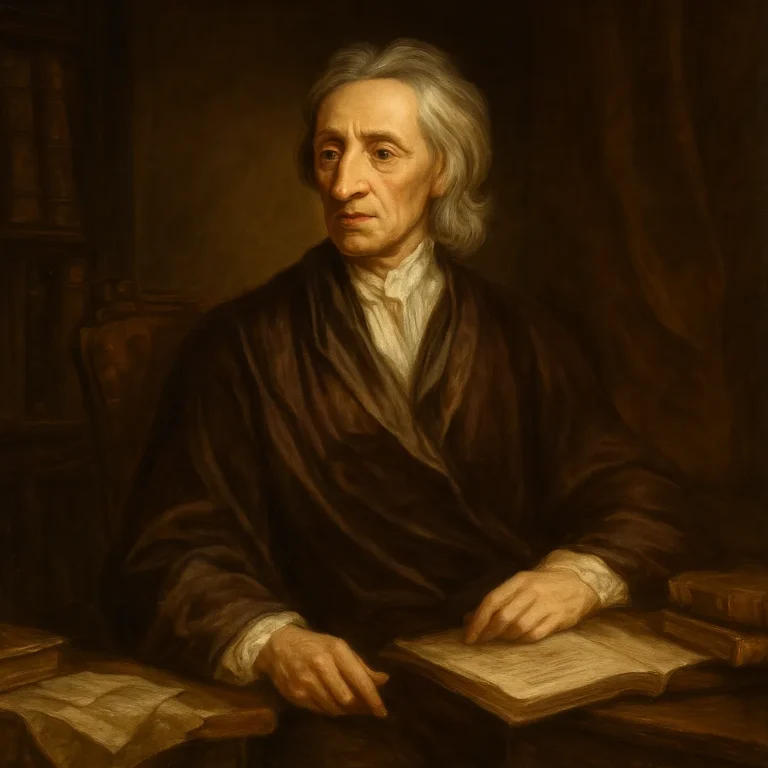
This article uncovers the quirky, bold, and brilliant sides of one of history’s most influential thinkers. Known as the Father of Liberalism, Locke did far more than inspire revolutions—his life was full of intriguing twists.
John Locke
John Locke’s writings directly influenced the U.S. Declaration of Independence—Thomas Jefferson borrowed entire phrases.
He studied medicine and collaborated with Thomas Sydenham, a leading physician, even though he’s known as a philosopher.
Locke once had to flee to the Netherlands because his political ideas made him a target in England.
His most famous work, Two Treatises of Government, was published anonymously to avoid persecution.
Locke believed that all knowledge comes from experience, a theory that challenged centuries of accepted philosophy.
He argued that government should exist only with the consent of the governed—radical in the 1600s.
Despite his revolutionary ideas, Locke was deeply religious and believed faith and reason could coexist.
He helped draft the Fundamental Constitutions of Carolina, supporting both religious tolerance and aristocracy—an odd mix.
Locke invested in the Royal African Company but later condemned slavery, showing a complex evolution in his views.
His ideas on natural rights—life, liberty, and property—became foundational to liberal thought.
Locke supported the Glorious Revolution of 1688, which limited the power of the monarchy in England.
He believed children are born as blank slates—tabula rasa—and shaped entirely by their experiences.
John Locke never married and left most of his estate to a friend, showing how private his personal life was.
He wrote extensively on education, believing early training determined character and success.
Locke died in 1704, but his radical belief in freedom and equality still echoes in modern democracies today.
How useful was this post?
Click on a star to rate it!
This AI-assisted post was rigorously curated and fact-checked for accuracy by: