15 Surprising Facts About Mansa Musa
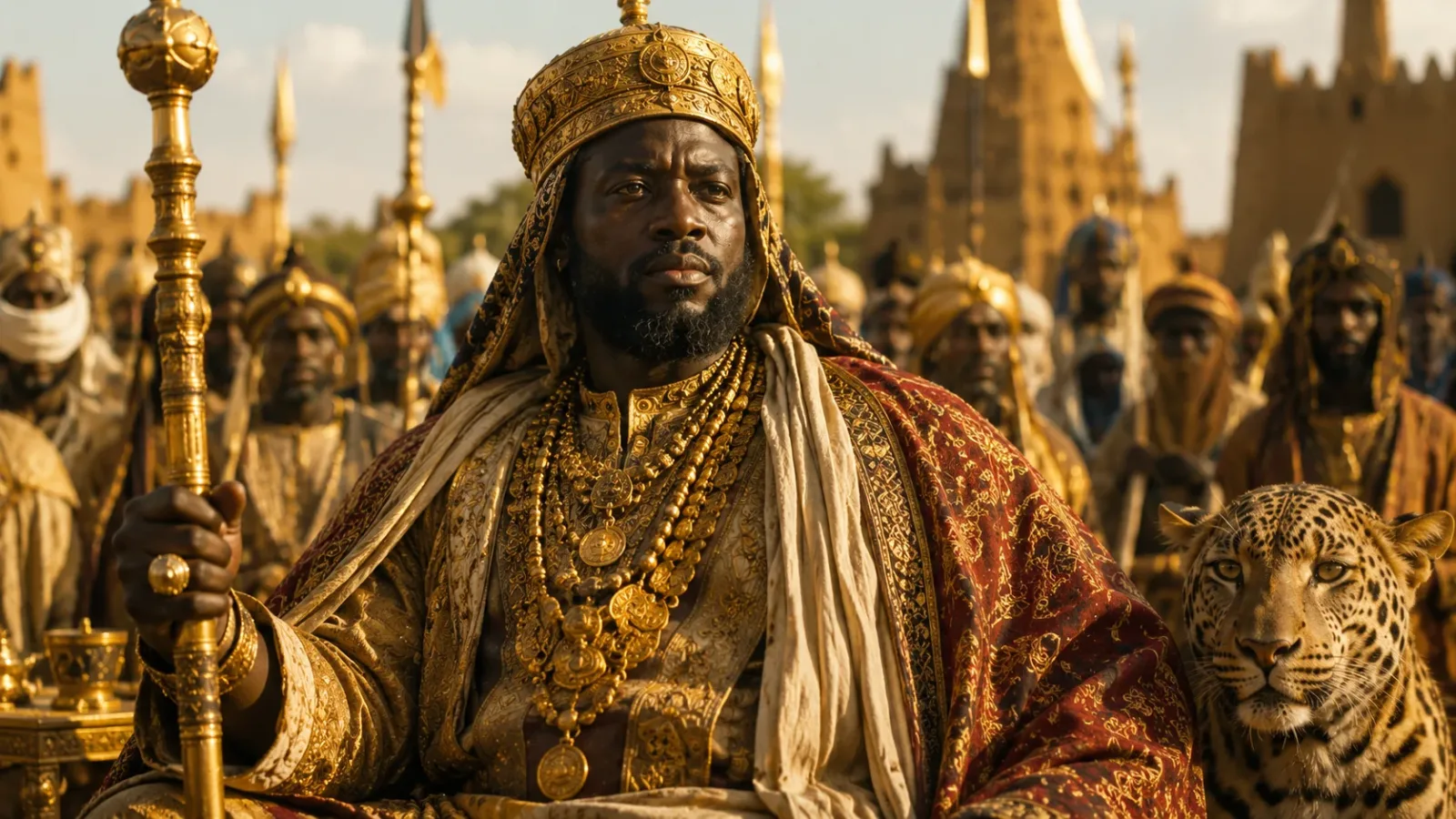
Mansa Musa, the 14th-century ruler of the Mali Empire, is frequently cited as the wealthiest individual in human history. Yet, his historical impact extends far beyond his unimaginable fortune. By controlling the vast trade networks of West Africa, he built a sophisticated, globally connected empire that spanned thousands of miles. From his monumental pilgrimage across the Sahara Desert to his transformation of Timbuktu into a worldwide beacon of scholarship, discover the trusted facts behind a leader who literally put his empire on the map.
1. “Mansa” Is a Title, Not a First Name
While history remembers him primarily as Mansa Musa, “Mansa” is not actually a given name. In the Mandinka language of West Africa, the word translates directly to “sultan,” “emperor,” or “king of kings.” His actual birth name was Musa Keita, and he was a prominent member of the Keita dynasty, which had established the Mali Empire several generations before he took the throne in 1312.
2. He Inherited Power After a Naval Disappearance
Musa’s path to the throne was highly unusual. His predecessor, Mansa Abu Bakr II, was deeply obsessed with the Atlantic Ocean and what lay beyond it. According to historical records from the region, Abu Bakr equipped a massive fleet of thousands of ships to explore the western ocean and set sail himself, leaving Musa as his deputy. When the king and his fleet never returned, Musa officially assumed the title of emperor.
3. His Wealth Is Considered Incalculable
Modern economists and historians frequently attempt to quantify Mansa Musa’s net worth, often estimating it at over $400 billion adjusted for modern inflation. However, most academic scholars agree that his wealth was so vast that it is practically impossible to put a modern dollar amount on it. He commanded complete control over an empire that produced an endless supply of highly valuable resources, making his purchasing power effectively limitless.
4. He Controlled the Old World’s Gold
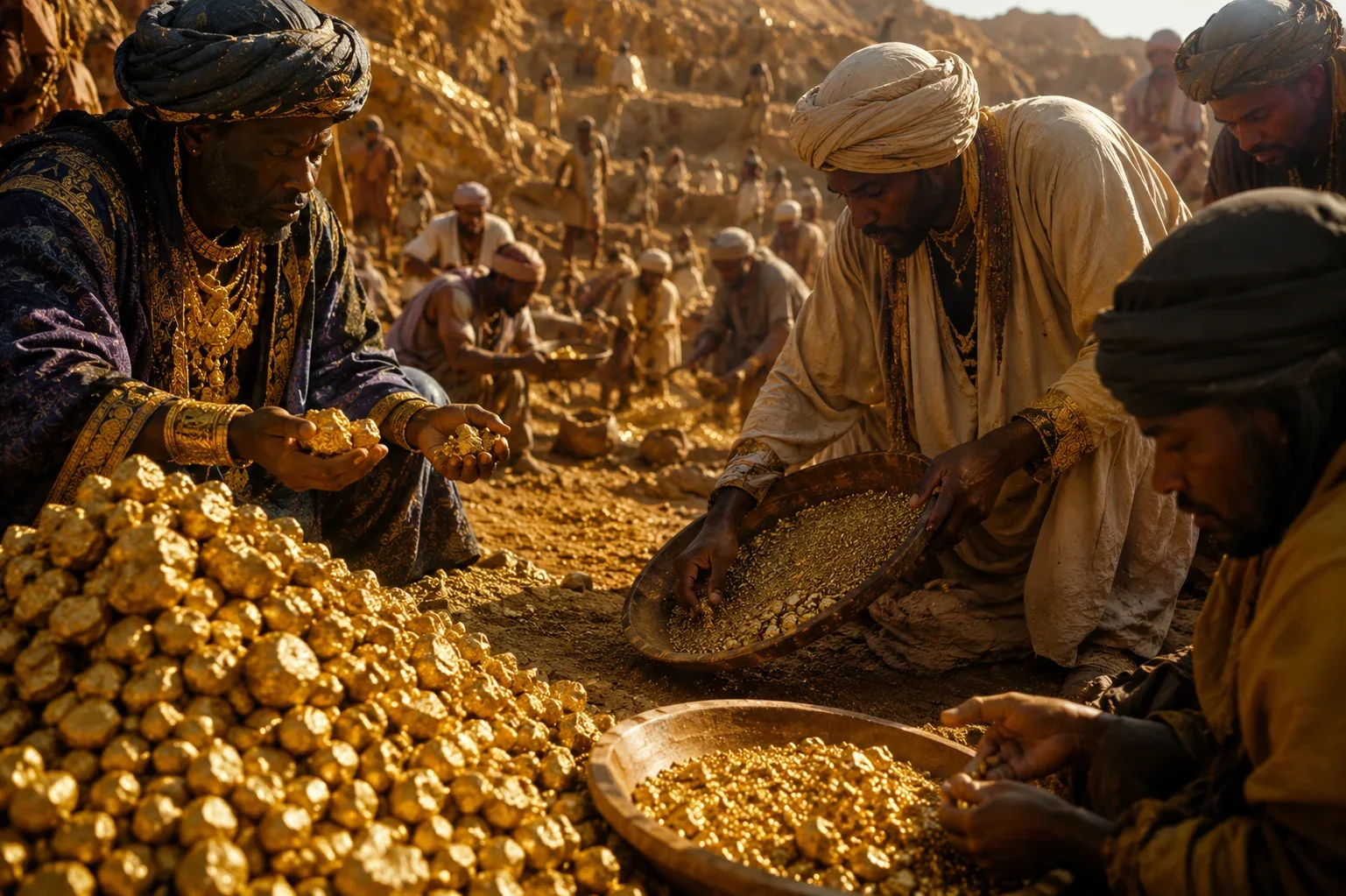
During the 14th century, the kingdoms of Europe were struggling to acquire gold and silver to mint their coins. Meanwhile, the Mali Empire contained three immense gold mines. It is estimated that during Mansa Musa’s reign, his empire accounted for almost half of the Old World’s entire supply of gold. Because the empire strictly regulated the trade, all gold nuggets belonged exclusively to the emperor, while the public was allowed to trade in gold dust.
5. The Salt Trade Was Just as Profitable
While gold was the foundation of his legendary wealth, salt was arguably just as important to the Malian economy. In the ancient world, salt was a vital commodity used to preserve meat and maintain human health in hot climates. Mansa Musa controlled the heavily guarded salt mines of the Sahara Desert. Merchants would frequently trade equal weights of gold and salt, bringing massive revenue to the empire’s central treasury.
6. His Pilgrimage to Mecca Was Unprecedented
As a devout Muslim, Mansa Musa embarked on the Hajj, the religious pilgrimage to the holy city of Mecca, in 1324. While the Hajj is a standard requirement for practicing Muslims, Musa’s journey was anything but standard. He organized a caravan to travel the 4,000-mile route across the Sahara Desert that was so large and extravagant it resembled a moving city, permanently catching the attention of the Middle East and Europe.
 Rulers, Kings and Emperors
Discover the captivating truths behind history's most iconic rulers, kings, and emperors. From eccentric geniuses and tactical masterminds to deeply flawed sovereigns, explore the hidden lives of those who shaped the modern world.
See All Facts
Rulers, Kings and Emperors
Discover the captivating truths behind history's most iconic rulers, kings, and emperors. From eccentric geniuses and tactical masterminds to deeply flawed sovereigns, explore the hidden lives of those who shaped the modern world.
See All Facts
7. He Traveled With a Mobile City
Historical accounts describe the sheer size of his 1324 caravan as staggering. It is reported to have included roughly 60,000 men, including thousands of soldiers, civilian officials, merchants, and slaves. The procession featured dozens of camels, each carrying up to 300 pounds of pure gold dust. The logistics required to feed and provide water for tens of thousands of people and animals across a brutal desert landscape demonstrated immense organizational power.
8. He Accidentally Crashed the Economy of Egypt
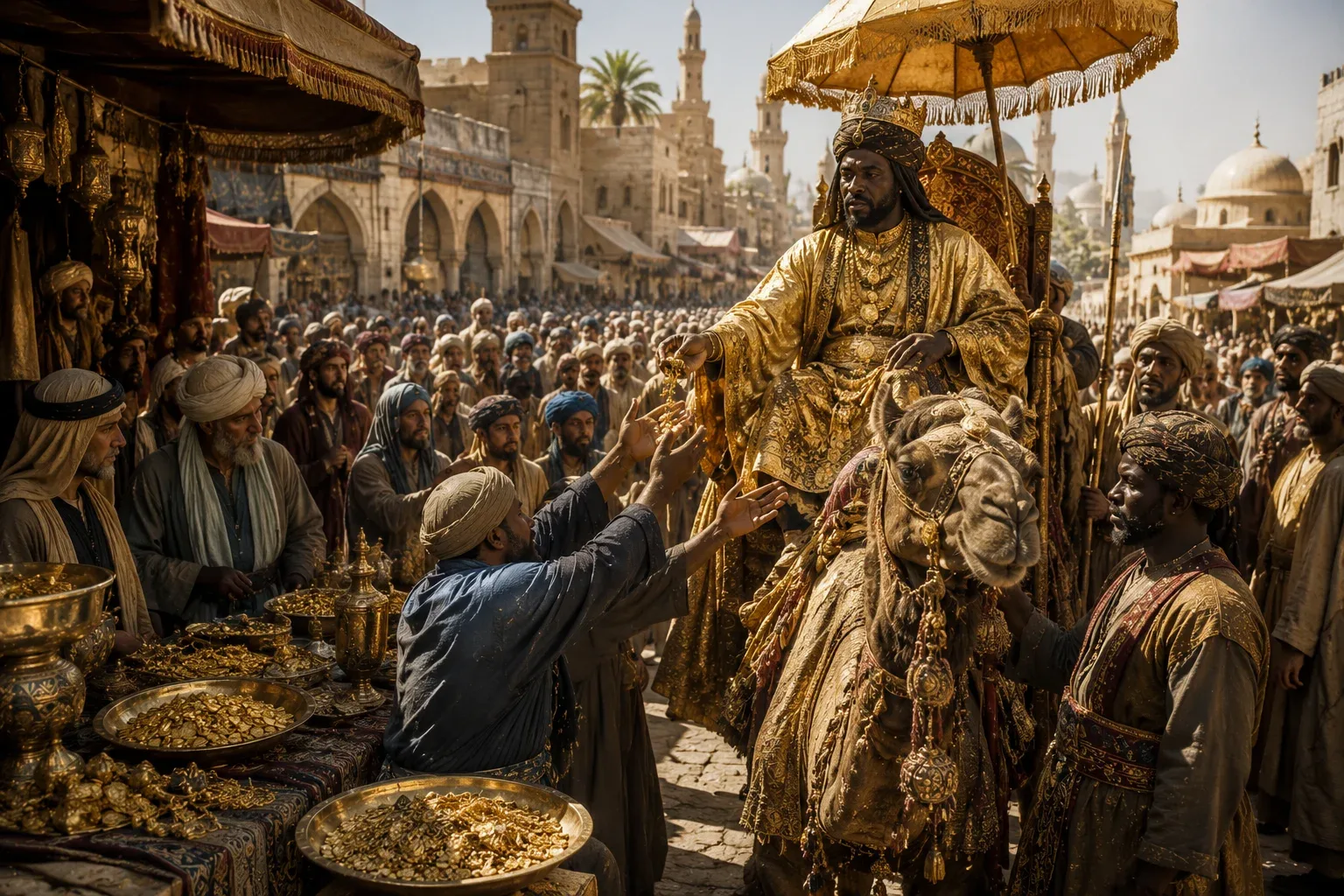
When the massive Malian caravan stopped in Cairo on its way to Mecca, Mansa Musa spent heavily in the local markets and gave away lavish gold gifts to the poor and to government officials. Because he flooded the city with so much precious metal in a short period, the value of gold in Egypt plummeted. This caused severe hyperinflation, driving up the cost of basic goods and plunging the regional economy into a recession that lasted for a decade.
9. He Attempted to Fix the Market He Broke
Mansa Musa was a pragmatic ruler, and upon his return journey through Cairo a year later, he recognized the economic damage his generosity had caused. In an attempt to stabilize the Egyptian market, he borrowed as much gold as he could carry from local moneylenders at exorbitant interest rates. This effectively removed a large portion of gold from circulation, demonstrating an early understanding of complex macroeconomic principles.
10. He Put West Africa on the European Map
For a long time, the interior of West Africa was a mystery to European cartographers. Mansa Musa’s legendary display of wealth in Cairo changed that entirely. In 1375, a Spanish cartographer created the Catalan Atlas, one of the most important world maps of the medieval period. The map prominently features an illustration of Mansa Musa sitting on a golden throne, holding a massive gold nugget, which immediately drew the attention of European traders.
11. He Turned Timbuktu Into an Intellectual Hub
On his return journey from Mecca, Mansa Musa annexed the city of Timbuktu. Rather than simply using it as a trading post, he decided to transform the city into a global center of religion, culture, and learning. He heavily funded the construction of massive libraries and invited prominent scholars, poets, mathematicians, and jurists from across the Islamic world to relocate to his empire.
12. He Paid Architects in Extraordinary Sums
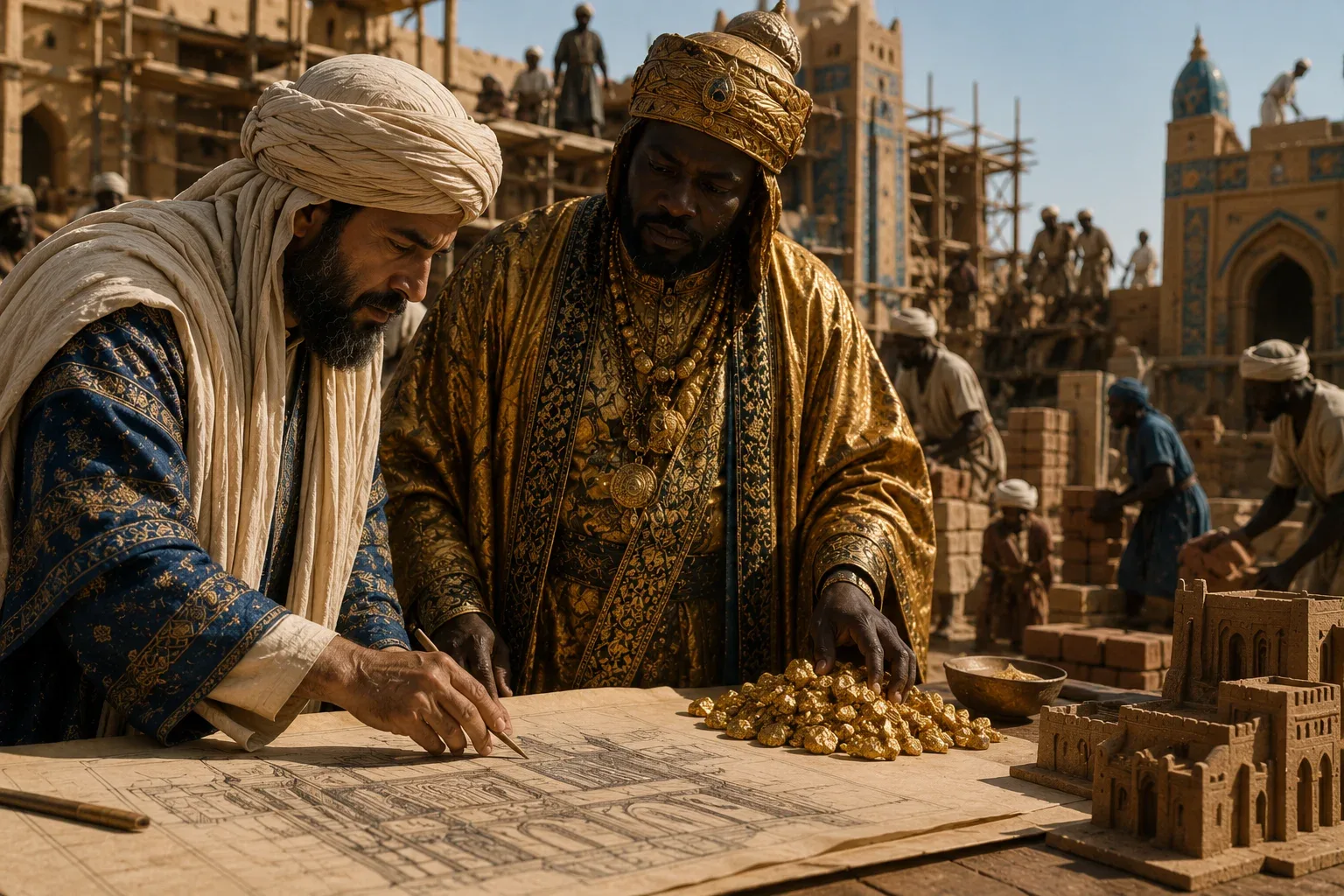
To build his new cultural capital, Musa recruited Abu Ishaq al-Sahili, a renowned poet and architect from Andalusia (modern-day Spain). Al-Sahili introduced the use of baked bricks to the region. According to historical accounts, Mansa Musa paid the architect roughly 200 kilograms of pure gold to design and construct several prominent buildings across the empire.
13. He Built the Famous Djinguereber Mosque
One of the most lasting physical legacies of Mansa Musa’s reign is the Djinguereber Mosque in Timbuktu, designed by al-Sahili. Constructed largely from mud-brick, limestone, and wood, the mosque became a central pillar of the city’s religious life. Through careful maintenance and annual re-plastering by the local community, this striking piece of medieval architecture still stands and is actively used today.
14. He Funded the University of Sankore
Under Musa’s patronage, the Sankore Madrasah in Timbuktu was expanded into a fully functioning university. At its peak, the university housed roughly 25,000 students and boasted a library containing hundreds of thousands of manuscripts, making it one of the largest collections of books in the world at the time. It rivaled the great learning centers of Cairo and Baghdad, focusing on astronomy, medicine, and Islamic law.
15. The Empire Crumbled After His Death
Mansa Musa passed away around 1337, leaving behind an empire that stretched from the Atlantic coast of modern-day Senegal to the borders of Niger. Unfortunately, his successors lacked his administrative brilliance and diplomatic skill. In the decades following his death, the Mali Empire slowly fractured due to internal civil wars, weak leadership, and continuous invasions from neighboring kingdoms, eventually leading to its collapse.
Sources & References
This AI-assisted post was rigorously curated and fact-checked for accuracy by:
 Martin Roháček
How fun was this article? 🤔
Tap a star to rate it
🧠 Quiz: How closely were you paying attention?
10 questions — all answers are in the article above!
Enjoyed these facts? There's more! 💌
Fresh fun facts in your inbox. No spam, ever.