The Aquatic Phenomenon: 15 Fascinating Facts About Michael Phelps
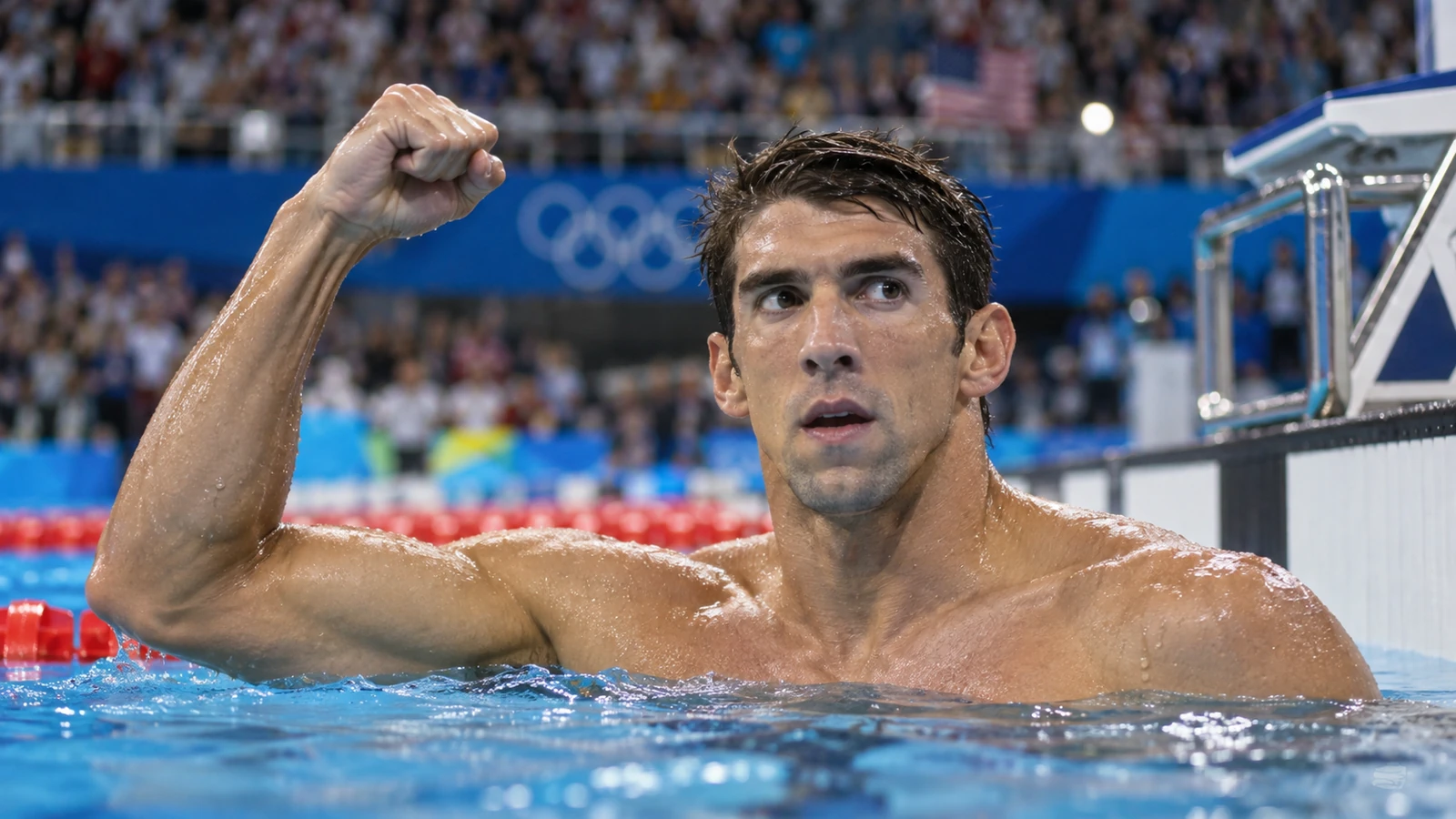
Michael Phelps stands as the most decorated Olympian of all time, boasting an unprecedented 28 medals across five Games. Beyond his towering trophy case lies a fascinating blend of unique anatomical traits, biological advantages, and mental resilience that transformed him into an unstoppable force in the pool. From overcoming childhood fears and diagnostic labels to shattering ancient records and swimming world finals completely blind, his story is full of incredible surprises. Dive into 15 compelling facts that explain the science, history, and extraordinary journey behind swimming's greatest icon.
1. He Learned the Backstroke First Due to a Fear of Putting His Face Underwater
Long before he became the most decorated swimmer in history, Michael Phelps was terrified of putting his face underwater. When his mother enrolled him in swimming lessons at age seven to help manage his hyperactive energy, he strongly resisted dunking his head into the pool. Recognizing his reluctance, his swim instructors adapted by allowing him to float on his back instead. As a result, he mastered the backstroke long before he ever learned basic freestyle techniques. What began as a childhood phobia ultimately laid the foundation for his historic, multi-stroke dominance in competitive swimming.
2. His Wingspan Exceeds His Height by Three Full Inches
Most human beings possess a wingspan that roughly matches their total standing height, resulting in a physical ratio close to one. Michael Phelps stands six feet four inches tall, but his arm span stretches to an astounding six feet seven inches. This unusual anatomic trait, often referred to as a high ape index, provides him with massive mechanical leverage when reaching through the water. His exceptionally long arms function like natural oars, allowing him to pull himself forward with incredible propulsion. Combined with his unusually broad shoulders, this physical reach gave him a distinct edge over taller competitors throughout his career.
3. A School Teacher Once Told His Mother He Would Never Be Able to Focus
In the sixth grade, Phelps was diagnosed with Attention-Deficit/Hyperactivity Disorder (ADHD), which frequently led to behavioral trouble at school. One of his middle school teachers even sternly warned his mother, Debbie Phelps, that her son lacked the capacity to focus on anything and would never succeed. However, the swimming pool offered him a structured sanctuary for his intense physical energy and hyper-fixation. By channeling his mental drive into training, he developed an unmatched athletic discipline that allowed him to train for up to six hours a day. His mental stamina ultimately turned what critics viewed as a limitation into his greatest competitive asset.
4. He Won an Olympic Gold Medal While Swimming Completely Blind
During the 200-meter butterfly final at the 2008 Beijing Olympics, Phelps suffered a swimmer’s nightmare when his goggles filled with water immediately after diving off the block. Unable to see the bottom lane lines or the approaching wall, he had to complete nearly the entire race virtually blind. Instead of panicking, he relied on his thousands of hours of rigorous practice to count every single arm stroke. By knowing precisely how many strokes it took to cross the fifty-meter pool, he calculated his final turn and touch flawlessly. Not only did he win the gold medal, but he also shattered the world record in the process.
5. His Body Produces Substantially Less Lactic Acid Than Other Elite Athletes
Intense physical exertion causes human muscles to accumulate lactic acid, leading to severe fatigue, burning sensations, and delayed recovery times. Laboratory testing revealed that Phelps produces roughly half the amount of lactic acid during maximum exertion compared to his top rivals. While most swimmers require hours or days to flush metabolic waste from their muscle tissue, his body recovers at a remarkably accelerated rate. This biological anomaly allowed him to compete in multiple grueling heats and finals during a single afternoon without performance degradation. His rapid physiological recovery was essential to winning eight gold medals during a single Summer Olympics.
6. Extremely Flexible Ankles Allow His Feet to Function Like Natural Fins
Hydrodynamic propulsion in swimming relies heavily on ankle flexibility to drive water backward efficiently. Phelps possesses hypermobile joints, and his ankles can extend fifteen degrees beyond the normal range of motion for adult males. This extreme flexibility allows his large, size-14 feet to bend like hyper-flexible flippers or the tail fins of marine mammals. When executing his powerful underwater dolphin kick, his feet whip through the water with maximum surface area and minimal drag. This mechanical advantage enabled him to generate unprecedented speed off every pool wall during his racing career.
7. The Famous 12,000-Calorie Daily Diet Was Largely an Exaggerated Myth
During the 2008 Summer Olympics, widespread media reports claimed that Phelps consumed a staggering 12,000 calories every single day to sustain his training. Headlines detailed massive breakfasts of fried egg sandwiches, pancakes, French toast, and entire pizzas for dinner. Phelps later clarified that while he ate enormous quantities of food, the 12,000-calorie figure was a gross exaggeration created by tabloid reporting. During peak training cycles, his actual daily intake was closer to 8,000 calories, which was still four times the average adult male recommendation. Even at 8,000 calories, his intense swimming regimen burned energy so fast that he maintained under eight percent body fat.
8. He Broke an Olympic Record That Had Stood for More Than 2,000 Years
At the 2016 Rio Olympics, Phelps won his 13th individual career Olympic gold medal by taking first place in the 200-meter individual medley. This historic victory broke a record that had endured since the ancient Olympic Games in 152 BCE. The previous record holder was Leonidas of Rhodes, an ancient runner who captured twelve individual Olympic titles across four consecutive Olympiads. By winning his 13th individual crown over two millennia later, Phelps cemented his status as the single most successful individual athlete in recorded human history.
9. He Slept in a High-Altitude Chamber to Boost His Red Blood Count
To maximize his oxygen uptake during grueling training cycles leading up to the 2012 London Olympics, Phelps spent years sleeping in a specialized altitude chamber. The sealed chamber simulated an elevation of approximately 8,000 feet by artificially reducing atmospheric oxygen concentration. Sleeping under low-oxygen conditions forced his body to release erythropoietin, a hormone that stimulates red blood cell production. With a higher concentration of oxygen-carrying red blood cells, his muscles received more oxygen during heavy endurance workouts. This legal altitude simulation gave him superior aerobic conditioning without requiring him to relocate his daily training base.
10. He Was the Youngest American Male Olympic Swimmer in Nearly Seven Decades
When Phelps qualified for the 2000 Sydney Olympics at age 15, he became the youngest male swimmer to make the United States Olympic team in 68 years. Although he failed to win a medal in Sydney, finishing fifth in the 200-meter butterfly, the high-level experience proved invaluable. Just five months after the Sydney Games, he broke the world record in that same event, becoming the youngest male swimmer ever to set a world record. From that point forward, his career trajectory reshaped the landscape of competitive swimming for over a decade.
11. His Unique Body Proportions Create the Ultimate Hydrodynamic Machine
Beyond his impressive wingspan, Phelps features an anatomical build that sports scientists consider ideal for swimming efficiency. He possesses an unusually long torso coupled with disproportionately short legs for a man standing six feet four inches tall. In fluid dynamics, a longer hull design experiences less drag moving through water than a shorter one. His massive size-14 feet act as natural paddles, while his relatively short legs reduce passive resistance at the end of every stroke. This rare combination of structural advantages allows him to glide through the water with remarkably little surface friction.
12. He Once Raced a Great White Shark for Television
In July 2017, Discovery Channel kicked off its annual Shark Week by promoting a sensational race between Phelps and a Great White Shark. Dubbed "Phelps vs. Shark: Great Gold vs. Great White," the event generated massive viewer anticipation across the globe. However, safety and practical logistics prevented him from swimming directly alongside an actual predatory shark in open ocean water. Instead, scientists measured the speed of a real Great White in South Africa and used CGI simulation technology to project the apex predator next to Phelps in the water. Outfitted with a specialized monofin, Phelps completed the 100-meter course in 38.4 seconds, losing to the simulated shark by just two seconds.
13. He Popularized Ancient Cupping Therapy at the 2016 Rio Games
Viewers around the world were surprised during the 2016 Rio Olympics when Phelps appeared on the starting blocks covered in dark purple circles. The mysterious circular marks were the result of cupping, an ancient Traditional Chinese Medicine technique designed to improve blood circulation. By creating suction with heated glass cups placed against the skin, the therapy pulls blood into sore muscles to accelerate healing and relieve soreness. Phelps used cupping regularly as part of his physical therapy routine to maintain peak performance during back-to-back races. His high-profile appearance brought global attention to the practice, causing a sudden spike in popularity among athletes worldwide.
14. His Medal Count Surpasses the All-Time Olympic Totals of Over 160 Nations
Across his five Olympic appearances from 2000 to 2016, Phelps amassed an astonishing total of 28 Olympic medals, including 23 golds. To put this accomplishment in perspective, his individual tally exceeds the all-time Olympic medal totals of more than 160 sovereign nations. Countries such as Portugal, Peru, Morocco, and Serbia have won fewer total medals in their entire Olympic histories than Phelps won by himself. If he were recognized as an independent nation, he would rank among the top thirty most successful countries in the history of the Summer Games.
15. He Sank one of the Longest Televised Putts in Golf History
After retiring from competitive swimming, Phelps turned his intense athletic focus toward golf, competing in numerous celebrity pro-am tournaments. At the 2012 Alfred Dunhill Links Championship at Kingsbarns Golf Links in Scotland, he produced a moment of sheer sporting magic. Facing an agonizing par-four putt from off the green, he struck his ball from a staggering 159 feet away. The ball tracked flawlessly across the undulating green before dropping directly into the cup, setting the record for the longest televised putt in golf history at the time.
Sources & References
This AI-assisted post was rigorously curated and fact-checked for accuracy by:
 Martin Roháček
How fun was this article? 🤔
Tap a star to rate it
🧠 Quiz: How closely were you paying attention?
10 questions — all answers are in the article above!
Enjoyed these facts? There's more! 💌
Fresh fun facts in your inbox. No spam, ever.