The Brutal Evolution: 15 Fascinating Facts About Mixed Martial Arts
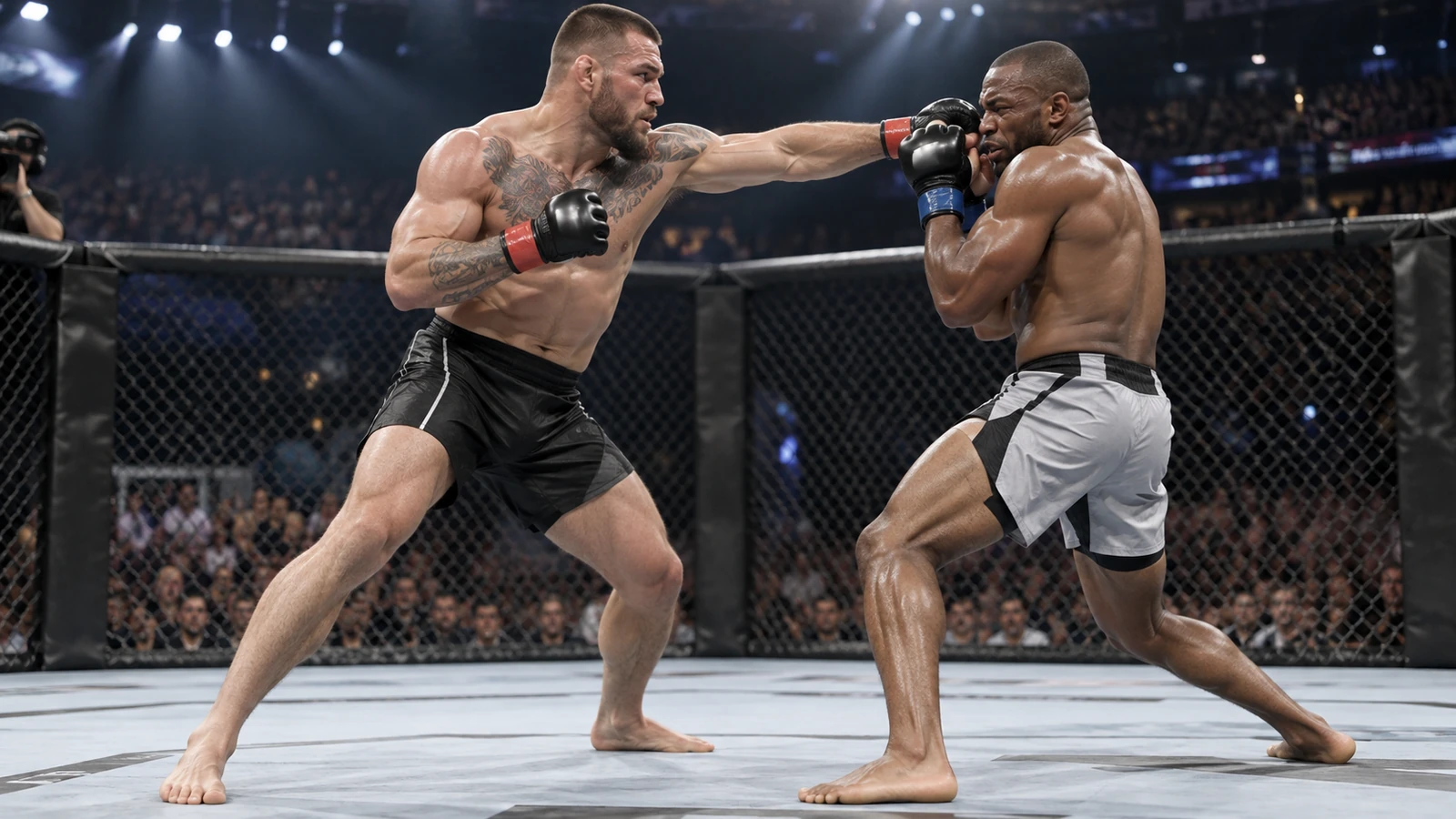
Mixed Martial Arts has transformed from a chaotic, unregulated spectacle into one of the fastest-growing professional sports on the planet. Originating as a showcase to answer which martial art reigned supreme, early contests featured bare-knuckle striking, no weight classes, and marathon bouts without time limits. Over three decades of regulation, scientific training, and global expansion have revolutionized combat sports forever. Here are 15 fascinating facts about the brutal origins, weird quirks, and legendary figures of MMA.
1. Early MMA Fights Operated with Almost No Rules
When the Ultimate Fighting Championship debuted in November 1993, it was marketed as a no-holds-barred tournament designed to pit different fighting styles against one another. There were virtually no weight classes, time limits, or judges, and the original rulebook only prohibited eye-gouging and biting. Groin strikes, headbutts, and hair-pulling were technically allowed, though heavily discouraged by gentlemanly agreements or minor fines. State athletic commissions quickly refused to sanction these raw contests, labeling them human cockfighting and pushing the sport underground. It took years of regulatory overhauls, the introduction of mandatory gloves, and standardized weight classes for MMA to emerge as a mainstream athletic sport.
2. Royce Gracie Won UFC 1 Without Weight Classes
The first UFC tournament featured no weight divisions, meaning small competitors could be paired against hulking giants. Royce Gracie, a lean 170-pound Brazilian jiu-jitsu practitioner, was intentionally chosen by his family to represent their submission style over his bulkier brothers. Gracie systematically dismantled opponents who outweighed him by more than 50 pounds by taking them to the canvas and applying leverage-based submissions. His shocking victories proved to the world that pure striking power and massive physical stature were ineffective against skilled ground grappling. This outcome fundamentally changed combat sports and made Brazilian Jiu-Jitsu an essential discipline for all modern fighters.
3. The Octagon Was Inspired by Sci-Fi and Action Cinema
The iconic eight-sided enclosure known as the Octagon was not designed by traditional sports engineers, but rather by creative visionaries seeking a striking visual identity. UFC co-creator Rorion Gracie teamed up with movie director John Milius, famous for directing Conan the Barbarian, to conceptualize the fighting surface. They wanted an arena that felt futuristic, cinematic, and entirely distinct from a classic square boxing ring. Early proposals included wild ideas like surrounding the mat with alligator pits or electric wire fences before settling on high chain-link walls. The vinyl-coated fence and octagonal layout ultimately proved to be both visually iconic and exceptionally functional for athlete safety.
4. Padded MMA Gloves Were Not Mandatory Until 1997
In the early years of modern MMA, fighters routinely entered the cage with bare hands, believing bare knuckles delivered maximum damage. However, bare-knuckle punching often led to broken metacarpal bones—frequently called a boxer's fracture—and severe facial lacerations. Padded, open-fingered gloves weighing four ounces were introduced at UFC 14 in 1997 to protect fighters' hands while allowing them to grasp and grapple freely. Contrary to popular belief, gloves were not introduced to lessen impact on the receiver, but to protect the puncher's hands so they could strike with full power. The introduction of gloves drastically reduced hand injuries, allowing fighters to throw heavier combinations without fear of crippling their fingers.
5. Early Fights Featured No Time Limits or Rounds
Before standardized timed rounds were instituted, early MMA matches could drag on for agonizingly long periods until one fighter submitted or was knocked unconscious. At UFC 5 in 1995, the highly anticipated Superfight between Royce Gracie and Ken Shamrock lasted 36 minutes without a single break or round reset. Because neither athlete could finish the other before the television broadcast time expired, the match was declared a draw, frustrating fans and producers alike. This structural failure forced promoters to introduce timed rounds and five-minute periods, which kept the action fast-paced and fit neatly into television schedules. Modern championship fights now consist of five five-minute rounds, ensuring intense pacing throughout.
6. Fedor Emelianenko Built a Decade-Long Streak Outside the UFC
Widely regarded as one of the greatest heavyweights in combat sports history, Russian legend Fedor Emelianenko dominated mixed martial arts for nearly a decade without ever signing with the UFC. Known as The Last Emperor, Emelianenko relied on a dangerous combination of International Master of Sport in Combat Sambo and elite Judo. Operating primarily out of Japan’s PRIDE Fighting Championships, he amassed a 28-fight unbeaten streak against elite kickboxers, Olympic wrestlers, and former UFC champions. Despite frequent negotiations with UFC management, Emelianenko chose to stay independent, proving that world-class greatness could be achieved outside the sport's biggest American promotion. His calm, emotionless demeanor inside the cage earned him legendary status worldwide.
7. Japanese MMA Blended High Art, Pro Wrestling, and Theatrics
During the late 1990s and 2000s, Japan's PRIDE Fighting Championships rivaled and often surpassed the UFC in both popularity and purse sizes. PRIDE events were held in massive venues like the Saitama Super Arena and featured theatrical entrance ramps, fireworks, and live orchestra performances. The promotion embraced spectacle by scheduling freakshow matchups alongside legitimate world-championship bouts, pitting lightweight champions against colossal sumo wrestlers. Rules differed significantly from North American standards, permitting soccer kicks to the head of grounded opponents, knees to a grounded fighter, and stomp strikes. Referees even handed out yellow cards that docked purse money for passive fighting, forcing athletes to maintain an aggressive pace.
8. The Enclosed Octagon Is Actually Safer Than a Boxing Ring
Casual observers often view the tall chain-link cage as a cruel enclosure designed to keep fighters trapped inside. In reality, the Octagon fence was implemented as a critical safety feature to protect fighters from falling out of the arena. Traditional boxing and kickboxing rings feature flexible ropes that allow fighters to accidentally fall through or land awkwardly on the concrete floor outside. The rigid yet give-yielding canvas wall prevents dangerous drops and eliminates the need for referees to constantly reset action near the edge. Furthermore, the flexible mesh cushions high-impact takedowns, absorbing force far better than solid wooden barriers or ropes.
9. Early MMA Judges Struggled to Score Ground Grappling
When state athletic commissions began regulating mixed martial arts, they relied heavily on existing boxing judges who had no formal training in submission wrestling or ground control. As a result, early decision victories were often plagued by extreme scoring bias toward standing punches and kicks, completely ignoring dominant ground positioning and submission attempts. A fighter executing a tight armbar or holding a guard for five minutes might lose a decision to someone who landed two visible jab strikes on the feet. This misunderstanding sparked the creation of the Unified Rules of Mixed Martial Arts in 2000, which explicitly trained judges to value effective grappling, takedown defense, and ground control equal to striking.
10. Weight Cutting Can Cause Fighters to Lose 10% of Body Weight in Days
To gain a physical size advantage over opponents, modern MMA fighters engage in drastic weight-cutting routines before official weigh-ins. Athletes rapidly shed body water weight through extreme sweat sessions in saunas, hot baths, and severe fluid restriction over a 48-hour period. It is common for fighters to drain 15 to 20 pounds of water—representing over 10 percent of their total body weight—just hours before stepping on the scale. Once weighed in, fighters rapidly consume electrolyte solutions and nutrient-dense meals to regain massive amounts of weight before stepping into the cage the following night. However, severe dehydration drains brain fluid, dramatically increasing the risk of concussions and kidney failure.
11. MMA Traces Its Ancestry Back to Ancient Greek Pankration
While modern MMA gained global popularity in the 1990s, the concept of combining striking and grappling dates back thousands of years. Introduced to the Ancient Olympic Games in 648 BCE, pankration was a grueling sport that combined boxing, wrestling, kicking, and joint locks with almost no rules except banning biting and gouging. Ancient Greek athletes were celebrated as national heroes for mastering this ultimate form of empty-hand combat. Centuries later in the 1920s, Brazilian fighters revived this concept through Vale Tudo (Anything Goes) matches, which directly birthed modern mixed martial arts. Modern rules and athletic testing have refined these ancient combat concepts into a regulated global sport.
12. One Fighter Amassed Over 300 Professional MMA Matches
While top modern UFC fighters might compete two or three times a year, American fighter Travis Fulton set an unbelievable endurance record across his career. Nicknamed The Ironman, Fulton logged an astonishing 320 professional MMA bouts, along with over 60 professional boxing matches. Competing relentlessly from 1996 through 2019, he fought on regional circuits across the globe, sometimes fighting multiple times in a single weekend. Fulton accumulated over 250 career wins, mainly through submission techniques, showcasing a level of physical durability that will likely never be repeated. His record stands as a testament to the wild, unregulated landscape of early regional MMA circuits.
13. Dana White Promised Women Would Never Fight in the UFC—Then Changed His Mind
In 2011, when asked by reporters when women would fight in the UFC, promotion president Dana White famously replied, "Never." However, the meteoric rise of Olympic judo medalist Ronda Rousey completely dismantled that stance within two short years. Rousey's dominant performances in Strikeforce, paired with her charismatic media presence, convinced White that female fighters could headline major pay-per-view events. In February 2013, Rousey defended her newly created Bantamweight belt against Liz Carmouche at UFC 157, marking the first female fight in UFC history. Today, women's divisions feature some of the highest-paid, most technically proficient athletes in all of martial arts.
14. Conor McGregor's Crossover Fight Earned Him More Than Entire MMA Careers
Irish superstar Conor McGregor shattered all financial combat sport benchmarks when he stepped out of the cage and into the boxing ring in 2017. McGregor challenged undefeated boxing legend Floyd Mayweather Jr. in a crossover spectacle dubbed "The Money Fight." Despite losing via tenth-round stoppage, McGregor earned a disclosed purse and pay-per-view cut estimated at over $100 million for a single night of work. This single payout dwarfed the lifetime career earnings of almost every elite MMA champion in history. The event demonstrated the unprecedented mainstream crossover appeal of top MMA icons on the global sporting stage.
15. Modern Fighters Use Cryotherapy and Hyperbaric Chambers for Recovery
The grueling physical toll of modern mixed martial arts training requires athletes to adopt cutting-edge recovery science to extend their careers. Fighters frequently submerge themselves in whole-body cryotherapy chambers cooled to minus 200 degrees Fahrenheit to instantly flush inflammation and accelerate tissue repair. Additionally, hyperbaric oxygen therapy chambers are used to saturate bodily tissues with pure oxygen under elevated pressure, speeding up muscle healing and brain recovery. Paired with data-driven heart rate monitoring, ice baths, and specialized physical therapy, modern fighters recover significantly faster than their predecessors. These scientific protocols have extended athlete prime performance windows well into their late thirties.
Sources & References
This AI-assisted post was rigorously curated and fact-checked for accuracy by:
 Martin Roháček
How fun was this article? 🤔
Tap a star to rate it
🧠 Quiz: How closely were you paying attention?
10 questions — all answers are in the article above!
Enjoyed these facts? There's more! 💌
Fresh fun facts in your inbox. No spam, ever.