1. The “Death Zone” Begins at 26,000 Feet
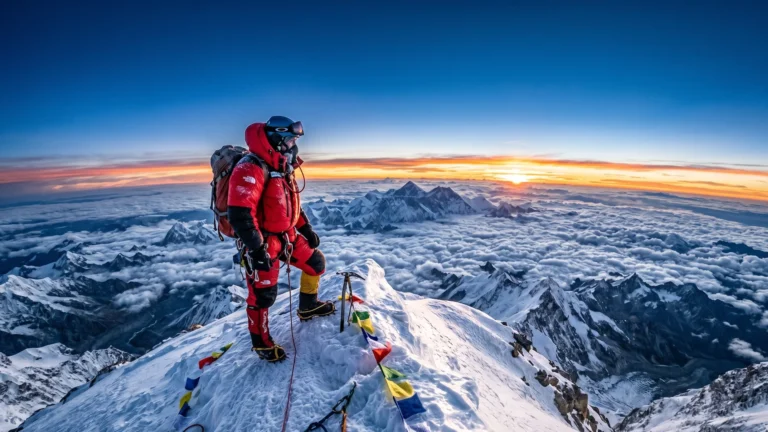
Above 8,000 meters (26,247 feet), climbers enter the terrifying “Death Zone,” where there is simply not enough oxygen to sustain human life. In this brutal altitude, the atmospheric oxygen level is only a third of what it is at sea level, causing the human body to literally begin shutting down and dying cell by cell. Even with supplemental oxygen, climbers experience severe cognitive impairment, debilitating fatigue, and a high risk of developing fatal high-altitude pulmonary or cerebral edema.
2. The Summit is Covered in 450-Million-Year-Old Marine Fossils
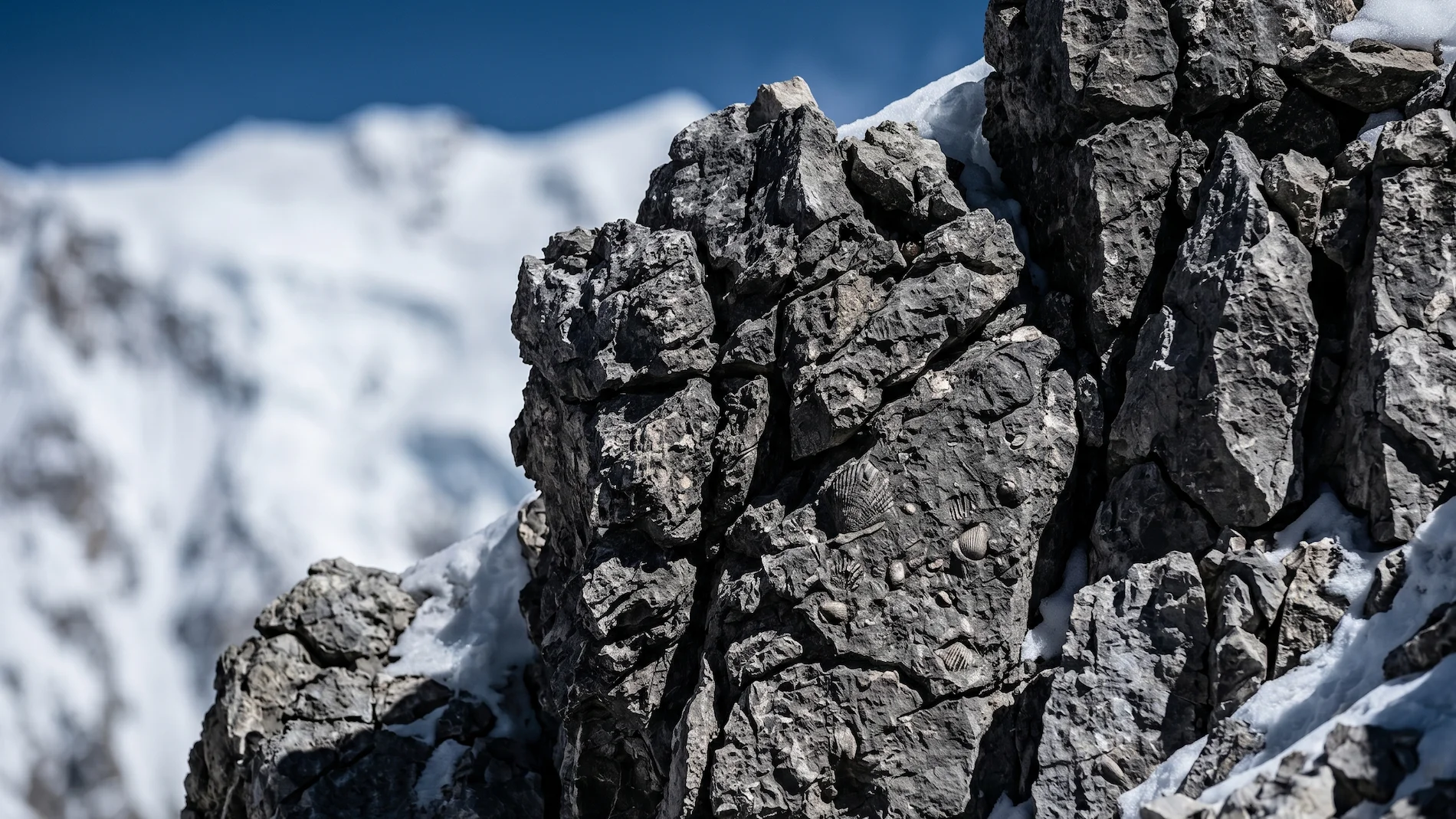
It is deeply awe-inspiring to realize that the highest point on Earth was once at the absolute bottom of an ancient ocean. The summit pyramid of Mount Everest is actually composed of marine limestone containing the fossilized remains of sea creatures that lived over 450 million years ago. When the Indian and Eurasian tectonic plates violently collided millions of years ago, they thrust this ancient prehistoric seafloor miles up into the sky.
3. Climbing the Mountain Costs a Staggering Fortune
Scaling Mount Everest is an exceptionally expensive endeavor that requires deep pockets alongside incredible physical endurance. Today, the total cost for a climber to attempt a guided summit ranges anywhere from $50,000 to well over $100,000. This staggering price tag covers essential expenses like the $11,000 Nepalese climbing permit, necessary high-altitude gear, supplemental oxygen canisters, food, base camp logistics, and the invaluable assistance of local Sherpa guides.
4. “Rainbow Valley” Serves as a Somber Climbing Landmark
Due to the extreme danger and near-impossibility of recovering bodies in the Death Zone, over 200 fallen climbers remain permanently frozen on the mountain. A notorious section near the summit is solemnly referred to as “Rainbow Valley” because of the brightly colored down jackets and climbing gear worn by those who perished there. While it is a tragic reality, these colorful figures remain perfectly preserved in the sub-zero temperatures and inadvertently serve as grim trail markers for modern climbers navigating the hazardous route.
5. Mount Everest is Still Growing Taller Every Single Year
The roof of the world is not a static monolith; it is an active, shifting geological phenomenon that continues to reach further into the stratosphere. Because the Indian tectonic plate is still relentlessly pushing beneath the Eurasian plate, Mount Everest grows approximately 4 millimeters taller every single year. This incredibly slow but continuous upward thrust means the mountain Sir Edmund Hillary climbed in 1953 was slightly shorter than the one mountaineers face today.
6. The Sherpa People Possess Incredible Genetic Adaptations
The local Sherpa people are the unsung heroes of Everest, acting as expert guides, porters, and vital lifeline providers for western climbers. Astoundingly, centuries of living at high altitudes have actually altered Sherpa genetics, giving them a unique physiological advantage in low-oxygen environments. Their bodies utilize oxygen far more efficiently than the average human, allowing them to perform grueling physical labor in the Death Zone where others can barely take a single step.
7. It is the World’s Highest Trash Dump
The increasing commercialization of Everest has brought a wave of environmental devastation to this pristine Himalayan environment. Decades of expeditions have left behind tons of garbage, including discarded oxygen cylinders, shredded tents, food containers, and vast amounts of human waste. In recent years, the Nepalese government has had to organize massive, dangerous cleanup expeditions and institute mandatory trash-deposit rules to force climbers to bring their refuse back down.
8. Deadly Traffic Jams Plague the Final Ascent
In recent years, the sheer volume of climbing permits issued has resulted in surreal, terrifying traffic jams at the very top of the world. Climbers are frequently forced to wait in single-file lines for hours along a precarious knife-edge ridge just to reach the true summit. This devastating bottleneck forces mountaineers to expend their limited supplemental oxygen while standing still in sub-zero winds, significantly increasing the risk of frostbite, exhaustion, and sudden death.
9. Water Boils at a Much Lower Temperature on the Summit
The extreme atmospheric pressure at the summit of Everest alters the basic laws of physics that govern cooking and hydration. At 29,032 feet, the atmospheric pressure is so low that water boils at merely 160°F (71°C) instead of the standard 212°F (100°C) at sea level. This makes it incredibly difficult and time-consuming to melt snow for safe drinking water or properly cook freeze-dried meals, adding another layer of physical exhaustion to the climb.
10. The Fastest Ascent Took Under Eleven Hours
Most climbers spend weeks at Base Camp acclimatizing before undertaking a grueling multi-day push to the summit from the lower camps. However, in 2004, a superhuman Sherpa named Lakpa Gelu shattered all expectations by climbing from Base Camp to the summit in an astonishing 10 hours and 56 minutes. This staggering feat of speed and endurance highlights the massive gap in physical capability between elite, high-altitude professionals and amateur mountaineers.
11. Jumping Spiders Live at Extreme Altitudes
Even in the harsh, freezing, and barren wasteland of Everest’s upper slopes, a tiny predator has found a way to survive against all odds. The Himalayan jumping spider has been discovered hiding in rocky crevices at stunning elevations as high as 22,000 feet. These resilient arachnids manage to survive the freezing temperatures by feeding on stray springtails and insects that are blown up the mountainside by the fierce alpine winds.
12. A Standard Expedition Takes Up to Two Months
Reaching the summit is not a quick weekend trip; it is a punishing physiological marathon that tests human patience as much as strength. Because the body requires significant time to adjust to the drastically lowered oxygen levels, climbers must spend weeks acclimatizing by rotating between various higher camps and Base Camp. This tedious, necessary process of going up and coming back down means a standard Everest expedition easily takes between six to eight weeks to safely complete.
13. The First Tweet From the Summit Was Sent in 2011
Modern technology has fully permeated the most remote corners of the globe, including the isolated, freezing peak of the highest mountain on Earth. In 2011, British mountaineer Kenton Cool made history by sending the very first tweet from the summit of Mount Everest using a weak 3G mobile signal. He typed out a brief message confirming his arrival at the top, proving that the modern era of constant digital connectivity had conquered the ultimate natural boundary.
14. An Octogenarian Successfully Scaled the Mountain
Age is just a number when it comes to supreme human willpower and a lifelong dedication to the perilous sport of mountaineering. In 2013, Japanese climber Yuichiro Miura shattered historical records by successfully reaching the summit of Mount Everest at the incredibly advanced age of 80. Despite undergoing four heart surgeries prior to the climb, Miura proved that careful preparation, immense mental fortitude, and a seasoned support team can defy the standard limitations of the human body.
15. The Record for Most Summits is Jaw-Dropping
While simply surviving one trip to the summit is the defining achievement of a lifetime for most people, some extraordinary athletes view the peak as their personal playground. Legendary Sherpa guide Kami Rita currently holds the absolute record for the most total ascents, having conquered the mountain dozens of times over his long career. Even more astounding, he and other elite Sherpas have been known to summit the mountain multiple times in a single week to secure ropes and guide different clients, defying all bounds of human stamina.
Sources and References