The Fortified Haven: 15 Fascinating Facts About Muscat
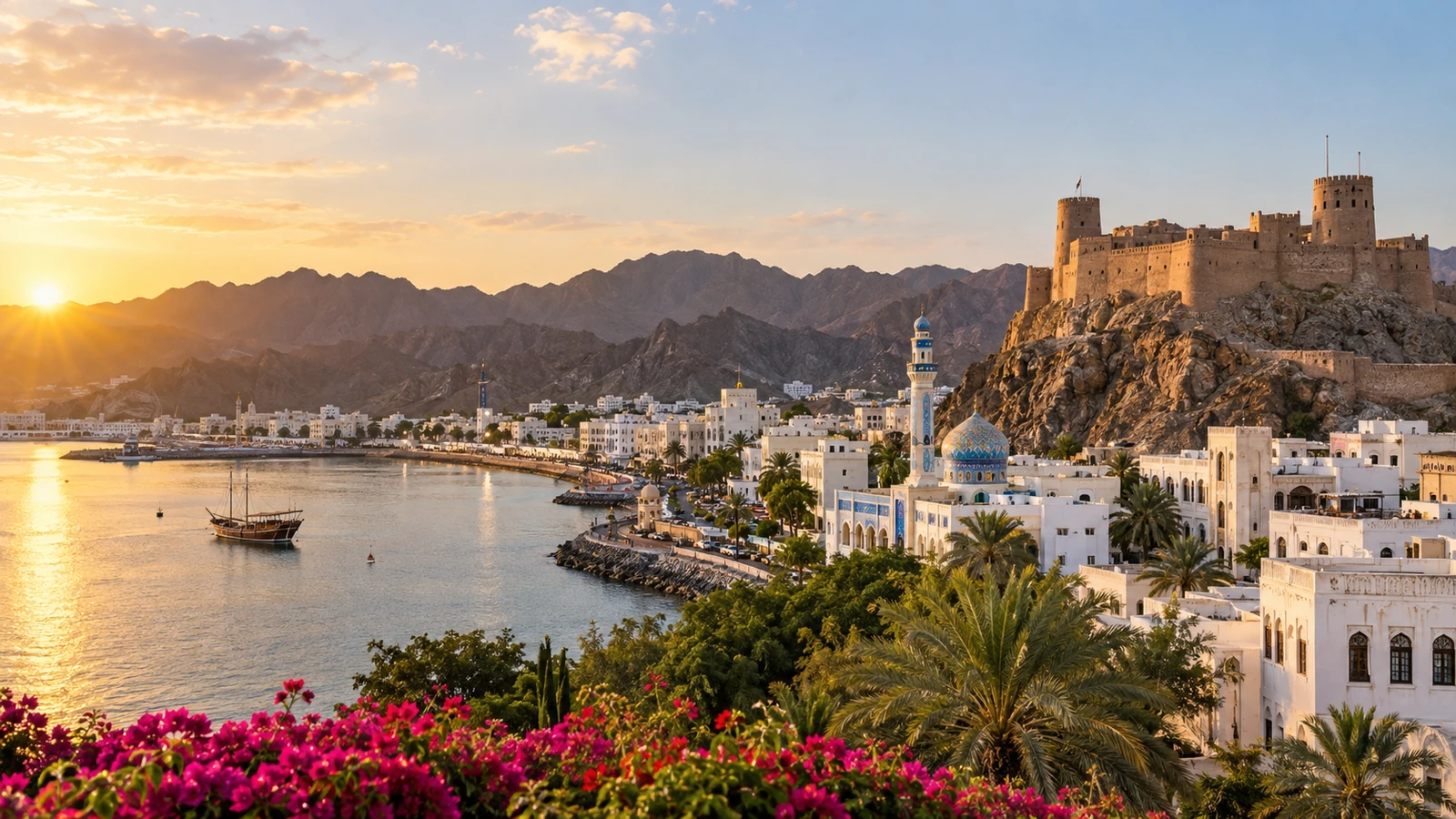
Nestled between dark volcanic mountains and the Arabian Sea, Muscat is one of the Middle East's most evocative capitals. Renowned for its pristine white low-rise architecture, ancient harbors, and centuries of maritime history, the city blends ancient trading routes with modern Arabian culture. From grand mosques housing record-breaking treasures to historic souks filled with frankincense, Muscat offers a fascinating contrast to the hyper-modern skylines of neighboring Gulf states. Here are 15 fascinating facts about Oman's captivating capital city.
1. The Name Muscat Means Anchorage
The name Muscat translates to "anchorage" or "falling place" in Arabic, reflecting the site's historical role as a sheltered haven for ancient mariners. Tucked into a natural cove along the Gulf of Oman, the site offered ships safe harbor from turbulent open seas for thousands of years. Early Greek geographer Ptolemy recorded the port as Cryptus Hortus, or the "Hidden Harbor," noting its clever concealment behind formidable coastal ridges. Ships trading between Mesopotamia, India, and East Africa routinely anchored here to replenish fresh water and provisions. Today, this maritime heritage remains central to the city's identity as a crossroads of Indian Ocean trade.
2. Human Settlement Dates Back over 7,000 Years
Long before modern empires contested the Arabian Peninsula, prehistoric communities thrived along the shores of Muscat. Archaeological excavations at Ras al-Hamra within the city limits have uncovered coastal settlements and burial grounds dating back to the 6th millennium BCE. Researchers discovered that these ancient inhabitants were skilled fisher-gatherers who crafted intricate jewelry from sea shells and turtle bones. Unique burial practices reveal that bodies were interred facing the sea, often accompanied by grave goods like pearls and polished stones. These remarkable finds make Muscat one of the oldest continuously inhabited coastal sites in the Middle East.
3. Portuguese Conquerors Built the City's Twin Forts
In 1507, Portuguese explorer Afonso de Albuquerque attacked and seized Muscat to establish control over lucrative spice trade routes. Recognizing the harbor's supreme strategic value, the Portuguese spent decades fortifying the shoreline against rival powers. They constructed two massive stone fortresses, Fort Al Jalali and Fort Al Mirani, which still guard the harbor entrance today. Perched atop sheer volcanic cliffs, these castles featured thick ramparts, gun ports, and subterranean passages designed to survive heavy bombardments. Though the Portuguese were expelled in 1650, their impressive stonework remains a defining feature of Muscat's skyline.
4. Muscat Resisted Ottoman and Persian Invasions
Throughout the 16th and 17th centuries, Muscat was a battlefield for powerful rival empires seeking supremacy in the Persian Gulf. Ottoman Admiral Salih Reis raided and sacked the town in 1552, but the fortified harbor proved nearly impossible to hold permanently. Decades later, Persian forces launched multiple sieges attempting to capture Muscat's harbor and dictate maritime trade routes. Omani tribes under the Ya'rubid Dynasty eventually united to drive out foreign occupiers and establish their own naval dominant force. This fierce resistance turned Muscat into a symbol of Omani independence and naval power across the region.
5. It Was the Heart of an Intercontinental Empire
During the 19th century, Muscat served as the nerve center of a powerful transoceanic empire built by Sultan Said bin Sultan. Omani influence expanded across the Arabian Sea, establishing control over strategic East African ports including Mombasa and the island of Zanzibar. In fact, Sultan Said temporarily moved his imperial court from Muscat to Stone Town in Zanzibar in 1840 to manage the booming trade in spices and cloves. Muscat acted as the northern anchor of this vast maritime trade network that connected East Africa, India, and Europe. This imperial legacy infused the city with rich African and South Asian cultural influences that persist today.
6. The Grand Mosque Houses Astounding Treasures
Muscat's Sultan Qaboos Grand Mosque, opened in 2001, is a masterpiece of modern Islamic architecture capable of holding over 20,000 worshippers. The interior of the main prayer hall features a single hand-knotted Persian carpet that weighs a staggering 21 metric tonnes. Woven by 600 Iranian artisans over four years, this legendary rug contains 1.7 billion individual knots and covers over 4,000 square meters. Hanging directly above the carpet is a massive chandelier crafted from 600,000 Swarovski crystals and plated in 24-karat gold. The mosque stands as one of Muscat's most iconic landmarks and is open to non-Muslim visitors.
 Asian Cities
From hyper-futuristic megacities boasting heated subway seats to ancient imperial capitals hiding subterranean water palaces, Asia's greatest metropolises are defined by astonishing contrasts. Discover the hidden quirks and rich histories of these hubs.
See All Facts
Asian Cities
From hyper-futuristic megacities boasting heated subway seats to ancient imperial capitals hiding subterranean water palaces, Asia's greatest metropolises are defined by astonishing contrasts. Discover the hidden quirks and rich histories of these hubs.
See All Facts
7. Strict Laws Ban Glass Skyscrapers
Unlike neighboring Gulf capitals famous for towering glass skyscrapers, Muscat enforces strict urban planning regulations to preserve its traditional skyline. Local building codes mandate that all structures must display traditional Omani architectural elements, such as whitewashed or beige facades, arabesque arches, and decorative domes. Furthermore, building heights are strictly capped across most of the city, preventing the construction of supertall towers. This deliberate aesthetic vision ensures that modern development harmonizes with the city's dramatic rocky landscape and historical heritage. As a result, Muscat offers a uniquely understated, authentic atmosphere compared to other regional metropolises.
8. It Built the Gulf's First Royal Opera House
Muscat made regional cultural history in 2011 with the opening of the Royal Opera House Muscat, the first facility of its kind in the Gulf Cooperation Council. Commissioned by Sultan Qaboos bin Said, an avid enthusiast of classical music, the complex showcases traditional Omani craftsmanship alongside state-of-the-art acoustic design. Its exterior is lined with local Omani desert rose limestone, while the interior features intricate hand-carved teak wood and gold leaf detailing. The venue regularly hosts world-class opera companies, orchestral performances, and international ballet troupes. This groundbreaking institution established Muscat as a major hub for international arts and performance in the Middle East.
9. Muttrah Souq Is One of Arabia's Oldest Markets
Winding through narrow alleyways along the corniche, Muttrah Souq is widely considered one of the oldest preserved marketplaces in the Arab world. Locally known as Al Dhalam, or "Darkness," the market earned its nickname because its densely packed wooden roofs blocked out the harsh Arabian sun. For centuries, merchants gathered here to trade rare items brought by dhows from India, China, Africa, and Europe. Visitors today wander through an intoxicating maze scented with frankincense, myrrh, rosewater, and exotic spices. The bazaar remains a vibrant center of daily commerce, famous for its intricate Omani silver khanjars, textiles, and antique crafts.
10. The Coastline Is a Critical Sea Turtle Sanctuary
The pristine coastline surrounding Muscat serves as a vital sanctuary for several endangered sea turtle species, particularly the green turtle. Rugged beaches and secluded coves near the city provide essential nesting sites where thousands of turtles arrive annually to lay their eggs. Recognizing the vulnerability of these marine reptiles, the Omani government established protected reserves and eco-tourism guidelines along the coast. Conservation efforts near Muscat allow visitors to observe nesting rituals under strict ranger supervision without disturbing the natural habitat. This commitment to ecological protection has made Muscat a key location for marine conservation in the Arabian Peninsula.
11. Historic Defensive Walls Still Guard Old Muscat
The original quarter of Old Muscat remains partially encircled by massive 17th-century stone walls and fortified city gates. Historically, these walls were constructed to defend the town against inland tribal attacks and foreign invaders landing from the bay. Elaborate wooden gates, such as Bab al-Kabir and Bab al-Matha'ib, were locked every night after sunset to secure the population inside. Today, the preserved walls and renovated gatehouses function as gateways into the historical heart of the city. They separate the historic administrative area from modern suburban expansions, serving as a tangible monument to Muscat's martial past.
12. Centuries of Trade Created a Multi-Ethnic Mosaic
Muscat's position at the crossroads of maritime trade routes shaped a uniquely diverse and cosmopolitan population long before modern globalization. For centuries, merchant communities from Balochistan, Gujarat, Sindh, Persia, and the Swahili coast settled permanently in Muscat's port districts. Families such as the Lawati community established distinct neighborhoods, preserving their heritage while contributing significantly to Omani commerce. This blending of cultures influenced local culinary traditions, musical forms, and even the daily vocabulary of Omani Arabic. Today, Muscat takes pride in its peaceful multi-ethnic fabric and harmonious tradition of religious tolerance.
13. Volcanic Mountains Form a Natural Amphitheater
The geography of Muscat is visually striking, characterized by dark, rugged mountain ridges that plunge directly into the turquoise waters of the Gulf. These dramatic rock formations consist largely of ophiolites, ancient oceanic crust and upper mantle rock exposed on land. The Western Hajar Mountains wrap around the city, acting as a formidable natural barrier that protected Muscat from landward invasions for centuries. Because the mountains restrict urban sprawl along the coast, Muscat grew as a linear series of distinct coastal valleys connected by modern highway passes. This unique topography gives the city a dramatic landscape where jagged peaks meet ocean bays at every turn.
14. Bait Al Zubair Preserves Centuries of Heritage
Located in Old Muscat, the Bait Al Zubair Museum offers a window into Omani heritage through a restored traditional family residence. Opened to the public in 1998, this private museum houses an extensive collection of Omani artifacts, including ancient weapons, ceremonial daggers, and historic attire. Visitors can explore displays of handcrafted silver jewelry, antique cartography, and traditional household items used across different Omani regions. The museum compound also features a reconstructed Omani village and a traditional falaj irrigation canal system. It stands as a primary educational institution dedicated to safeguarding the nation's tangible history.
15. The Muscat Festival Celebrates Omani Culture
Every year, the city comes alive during the Muscat Festival, a month-long celebration of Omani culture, arts, and international heritage. The festival attracts visitors from around the world to witness traditional folk dances, craft demonstrations, and regional culinary showcases. Public parks and cultural venues host outdoor performances, acrobatic shows, and maritime re-enactments that highlight Oman's rich seafaring history. Artisans from dozens of countries participate in interactive workshops, creating an international cultural exchange in the heart of the capital. It serves as an annual showcase of how Muscat honors its ancient roots while embracing contemporary global community.
Sources & References
This AI-assisted post was rigorously curated and fact-checked for accuracy by:
 Martin Roháček
How fun was this article? 🤔
Tap a star to rate it
🧠 Quiz: How closely were you paying attention?
10 questions — all answers are in the article above!
Enjoyed these facts? There's more! 💌
Fresh fun facts in your inbox. No spam, ever.