The Sparrow From Minsk: 15 Fascinating Facts About Olga Korbut
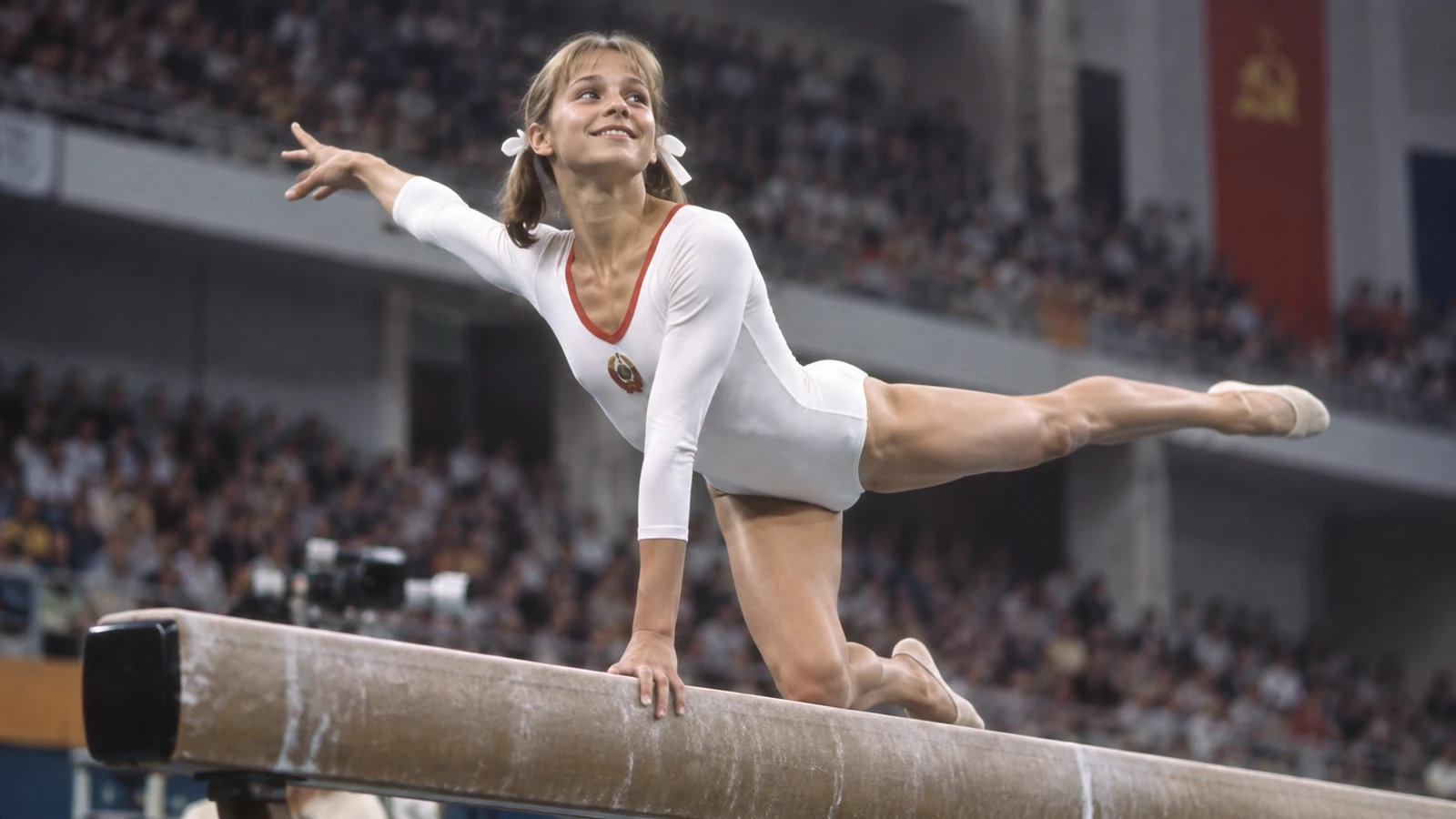
Olga Korbut, affectionately nicknamed the 'Sparrow from Minsk,' redefined artistic gymnastics forever at the 1972 Munich Olympic Games. Armed with terrifyingly daring acrobatic flips and captivating emotional vulnerability, the Soviet prodigy captured six career Olympic medals and won the hearts of worldwide audiences. Beyond her ground-breaking maneuvers on the balance beam and uneven bars, Korbut served as a Cold War soft-power ambassador and ignited a global gymnastics participation boom. Here are 15 fascinating facts about the life, career, and enduring legacy of this sports icon.
1. The Sparrow from Minsk
Standing at just 4 feet 11 inches tall and weighing roughly 84 pounds, Olga Korbut looked far younger than her 17 years when she arrived at the 1972 Munich Olympics. Born in Minsk in the Byelorussian SSR, her compact physique and boundless energy earned her the affectionate moniker "The Sparrow from Minsk." Prior to her rise, elite women’s artistic gymnastics was dominated by taller, mature athletes who prioritized traditional balletic posture. Korbut’s pint-sized frame allowed her to execute unprecedented acrobatic spins with lightning speed. Her dynamic presence completely captivated worldwide television audiences, changing the public perception of elite gymnasts forever.
2. The Revolutionary Korbut Flip on the Uneven Bars
During her performance on the uneven parallel bars in Munich, Korbut shocked judges and fans by standing on the high bar and executing a backward somersault before re-grasping the bar. This move, which became known as the Korbut Flip, had never been seen before in international competition. Her daring maneuver required immense spatial awareness, precise timing, and extraordinary courage to pull off on live television. The arena broke into thunderous applause, marking a turning point in gymnastics history. Although she took a silver medal on the apparatus due to an earlier mistake, the move became an instant legend.
3. The Famous Tears That Charmed the World
During the individual all-around competition in 1972, Korbut suffered a heartbreaking slip on the uneven bars, receiving a devastating score of 7.50 that knocked her out of medal contention. Cameras captured her breaking down in genuine, unscripted tears, revealing a vulnerable humanity rarely seen in stoic Soviet athletes of the era. Rather than alienating viewers, her emotional response endeared her to millions of television watchers around the globe. The very next day, she returned to the arena with remarkable resilience, winning individual gold medals on both the balance beam and the floor exercise. Her dramatic emotional arc turned her into an international pop-culture icon overnight.
4. The First Backflip on a Balance Beam
Korbut did not limit her revolutionary aerial acrobatic tricks to the uneven bars; she also transformed the balance beam. She became the first gymnast in history to successfully land a backward somersault on the four-inch-wide wooden apparatus during international competition. Before Korbut, beam routines were primarily composed of poses, small jumps, and low-risk dance elements. By adding high-flying flips to her beam routine, she set a new standard for difficulty and risk in women's sports. Her daring approach redefined the apparatus from an exercise in balance into a showcase for high-altitude acrobatics.
5. Banned for Being Too Dangerous
Despite creating one of the most iconic moves in gymnastics history, Korbut's signature bar trick can no longer be performed in modern elite competition. The International Gymnastics Federation later revised its Code of Points, banning gymnasts from standing upright on the high bar. The ruling was enacted primarily out of safety concerns, as missing the catch could cause severe head and spinal injuries. Furthermore, modern equipment changes and continuous-motion requirements made static stands on the bar obsolete. Today, the Korbut Flip remains a legendary relic preserved only in historic archival footage.
6. Cold War Soft-Power Ambassador
In 1973, at the height of Cold War tensions between the United States and the Soviet Union, Korbut was invited to tour America as part of a Soviet delegation. During her visit, she met US President Richard Nixon at the White House in a high-profile diplomatic event. Nixon famously turned to the petite athlete and remarked, "You did more for peace between our two countries than politicians were able to do in five years." Her warmth, charm, and athletic genius broke through intense geopolitical friction. She proved that sports could build diplomatic bridges when traditional political channels stalled.
7. She Ignited a Global Gymnastics Craze
Before 1972, gymnastics was a niche Olympic discipline with modest participation numbers across Western nations. Korbut’s electrifying performances in Munich catalyzed an unprecedented surge in worldwide interest in the sport. Gyms across North America, Europe, and Asia saw an overwhelming flood of young girls eager to enroll in training classes. Equipment manufacturers struggled to keep up with the sudden demand for balance beams and mats. Media outlets routinely credited her with single-handedly transforming women's gymnastics into a mainstream, televised spectator sport.
8. Winning Rare American Honors as a Soviet Athlete
Following her remarkable breakthrough in 1972, Korbut received honors that were almost unheard of for an athlete representing the USSR. In 1972, she was named the Associated Press Female Athlete of the Year, defeating prominent Western sports stars for the title. The following year, she received the prestigious ABC’s Wide World of Sports Athlete of the Year award. American media outlets praised her charismatic smile and expressive style, treating her as a global superstar rather than an ideological rival. Her widespread popularity demonstrated the universal appeal of elite athletic brilliance across political divides.
9. A Legacy of Six Olympic Medals
Across two Olympic Games in Munich (1972) and Montreal (1976), Korbut compiled an extraordinary record of competitive achievements. In 1972, she secured gold medals in the team event, balance beam, and floor exercise, alongside a silver medal on the uneven bars. Four years later in Montreal, despite battling injuries, she earned another team gold medal and a silver medal on the balance beam. Her total tally reached six Olympic medals, solidifying her status among the most decorated gymnasts of her generation. Her achievements paved the way for future Soviet and international gymnastics legends.
10. Shifting the Sport to Younger Prodigies
Korbut’s success catalyzed a fundamental demographic shift in women's artistic gymnastics worldwide. Before her appearance, the sport was dominated by women in their twenties who emphasized artistic posture and classical dance. Korbut was 17 in Munich, but her small stature made her look even younger, proving that lighter, younger athletes had a distinct physical advantage in complex acrobatics. Following her victories, national programs began prioritizing younger prodigies capable of executing intense acrobatic elements. This transition ushered in the modern era of teenage gymnastics superstars like Nadia Comăneci.
11. Inaugural Member of the Gymnastics Hall of Fame
In 1988, the International Gymnastics Hall of Fame was officially established to honor the greatest figures in the sport’s history. Korbut was selected as the very first inductee, receiving the inaugural honor ahead of every other historic athlete. The committee recognized not only her competitive medal count, but her extraordinary role in popularizing and revolutionizing artistic gymnastics globally. Her inclusion affirmed that her cultural impact was just as significant as her athletic hardware. She remains recognized worldwide as one of the ultimate pioneers of modern sports.
12. Moving to America and Becoming a Citizen
Following the dissolution of the Soviet Union, Korbut made a dramatic life change by immigrating to the United States in 1991. She settled initially in New Jersey and later moved to Arizona and Idaho, where she pursued a career as a gymnastics coach. Years after leaving her homeland, she officially became a naturalized United States citizen in 2000. She dedicated decades of her life to coaching young American gymnasts, passing down her training techniques to new generations. Her journey completed a remarkable arc from Soviet icon to beloved American coach.
13. The Controversial Mastermind Behind Her Success
Korbut’s innovative style was developed under the tutelage of Renald Knysh, an aggressive Soviet gymnastics coach known for pushing boundaries. Knysh scouted Korbut when she was 11 years old, recognizing her fearlessness and exceptional spatial awareness. Together, they spent years secretly inventing and perfecting acrobatic tricks that judges had never imagined possible. However, their relationship was intense and demanding, reflecting the harsh pressure of the Soviet state sports system. Knysh's training methods were grueling, but they ultimately unlocked the skills that transformed Korbut into a global legend.
14. Breaking Silence on Systemic Soviet Athletic Abuse
In 1999, Korbut bravely spoke out about the darker realities of her time in the Soviet sports training system. She publicly alleged that her former coach, Renald Knysh, had subjected her to years of physical, psychological, and sexual abuse. Her courageous statements broke a long-standing wall of silence surrounding the treatment of elite athletes in former Eastern Bloc programs. Although Knysh denied the allegations, Korbut’s openness inspired other former athletes to share their own experiences. Her advocacy shed light on the urgent need for athlete safety, mental health protections, and ethical coaching practices.
15. Selling Her Medals at Auction
In 2017, Korbut made international headlines when she decided to put her Olympic medals and personal memorabilia up for auction. The sale included her gold and silver medals from the 1972 and 1976 Games, along with awards and competitive leotards. The auction raised over $330,000, with her 1972 team gold medal alone selling for $66,000. When asked about her decision, she explained that she wanted to share her history with fans and that memories were more valuable to her than physical metal. The proceeds helped secure her financial stability while allowing her historic artifacts to be preserved by sports collectors worldwide.
Sources & References
This AI-assisted post was rigorously curated and fact-checked for accuracy by:
 Martin Roháček
How fun was this article? 🤔
Tap a star to rate it
🧠 Quiz: How closely were you paying attention?
10 questions — all answers are in the article above!
Enjoyed these facts? There's more! 💌
Fresh fun facts in your inbox. No spam, ever.