1. He Was Astonishingly Tall
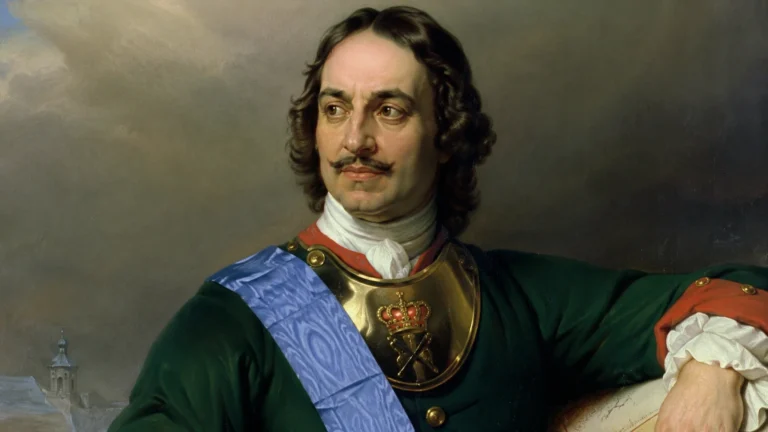
Even by modern standards, Peter the Great was a giant. He stood at 6 feet 8 inches (203 cm) tall, towering over his contemporaries. Despite his immense height, contemporaries noted that his proportions were somewhat unusual; he had relatively narrow shoulders, small hands and feet, and suffered from a facial tic, likely the result of childhood trauma during a bloody political uprising.
2. He Traveled Europe in Disguise
Realizing Russia was centuries behind the West in technology and science, Peter launched the “Grand Embassy” in 1697. He traveled across Western Europe for 18 months to study modern diplomacy, warfare, and industry. To avoid the suffocating formalities of royal protocol, he traveled incognito under the pseudonym “Pyotr Mikhailov,” though his extraordinary height made his true identity obvious to everyone he met.
3. He Worked as a Ship’s Carpenter
Peter was obsessed with the sea and shipbuilding. During his Grand Embassy, he didn’t just observe European industry—he actively participated in it. He spent several months in the Netherlands working as a common shipwright at the docks of Zaandam and Amsterdam. He later traveled to England to study naval architecture and city planning, returning to Russia with a profound understanding of maritime engineering.
4. He Imposed a Tax on Beards
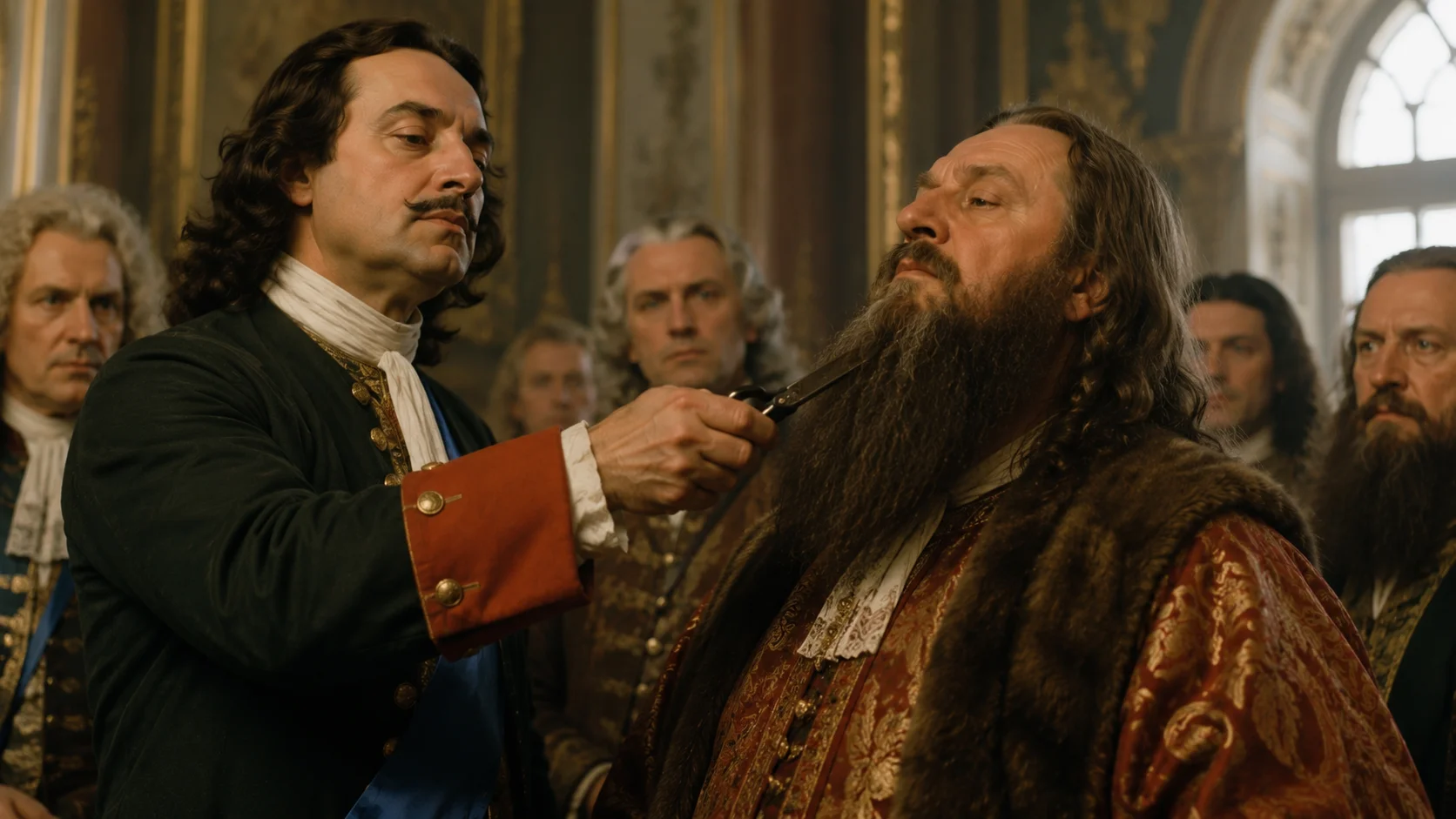
Upon returning to Russia, Peter was determined to Westernize the appearance of the Russian nobility (the boyars). Believing their long, traditional beards were a symbol of backwardness, he ordered them to shave. When many refused on religious grounds, he instituted a “beard tax.” Those who paid the tax were required to carry a copper token proving their right to keep their facial hair.
5. He Built a New Capital on a Swamp
Desiring a “Window to the West” with direct access to the Baltic Sea, Peter captured a desolate, marshy territory from the Swedish Empire. In 1703, he founded the city of St. Petersburg there, moving the capital away from traditional Moscow. The city’s construction relied on the forced labor of tens of thousands of serfs and prisoners, many of whom died from disease and exhaustion, earning it the nickname “The City Built on Bones.”
6. He Created the First Russian Navy
Before Peter’s reign, Russia had virtually no naval force and its only port was Archangel on the freezing White Sea. Leveraging the knowledge he acquired in Europe, Peter built the Imperial Russian Navy completely from scratch. His new fleet allowed Russia to project power across the Baltic and Black Seas, permanently altering the balance of power in Northern Europe.
7. He Defeated the “Unbeatable” Swedish Empire
To secure his Baltic coastline, Peter engaged in the Great Northern War (1700–1721) against the Swedish Empire, led by the brilliant tactician King Charles XII. Though the Russians were badly beaten in early battles, Peter used the losses to reform and modernize his army. In 1709, he achieved a crushing victory at the Battle of Poltava, effectively ending Sweden’s era as a dominant European power.
8. He Was an Amateur Dentist and Surgeon
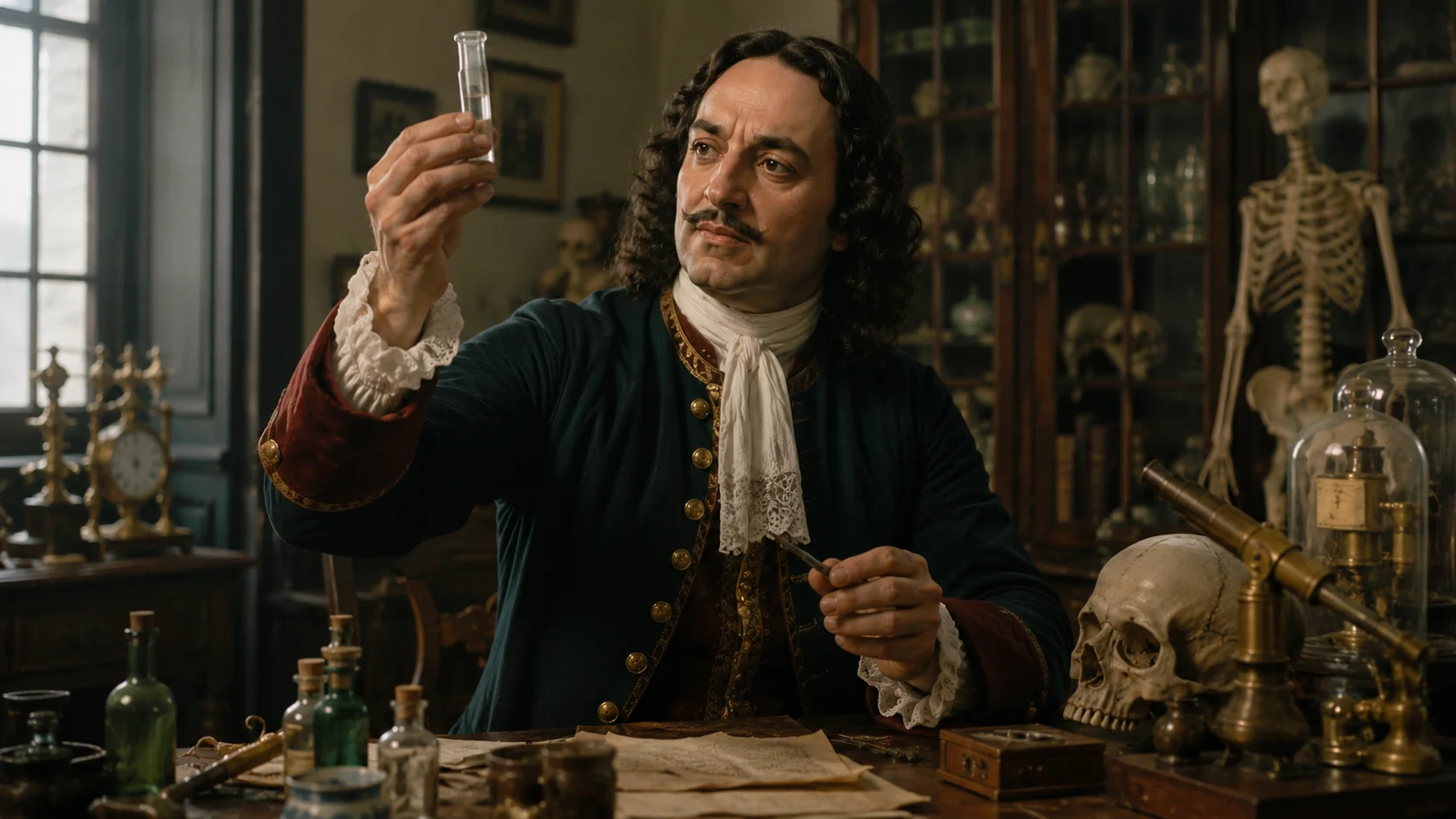
Peter had a morbid fascination with medicine, anatomy, and surgery, and he fancied himself a skilled practitioner. He carried a surgical kit with him at all times and frequently insisted on performing minor surgeries on his own courtiers. He was particularly enthusiastic about pulling teeth, and a bag of the teeth he extracted from his terrified subjects still survives in a Russian museum today.
9. He Established Russia’s First Museum
Influenced by the “cabinets of curiosities” he saw in Europe, Peter founded the Kunstkamera in St. Petersburg, Russia’s first museum. To combat the Russian public’s superstition and fear of anatomy, he filled the museum with preserved medical oddities, animal mutations, and anatomical specimens. To encourage attendance, he famously offered a free shot of vodka to anyone who visited.
10. He Married a Peasant Laundress
In an era when royal marriages were strictly political alliances, Peter scandalized the Russian court by marrying a commoner. His second wife, Catherine, was born Marta Helena Skowrońska, an orphaned peasant of Polish-Lithuanian descent who had been captured during the Great Northern War and worked as a laundress. Peter was deeply devoted to her, and she eventually succeeded him as Empress Catherine I.
11. He Tortured and Killed His Own Son
Peter’s relationship with his eldest son and heir, Tsarevich Alexei, was disastrous. Alexei despised his father’s reforms and fled to Austria, hoping to wait out Peter’s death. Convinced his son was plotting treason, Peter lured him back to Russia with promises of forgiveness. Once Alexei returned, Peter had him imprisoned, interrogated, and tortured to death in the Peter and Paul Fortress.
12. He Replaced Hereditary Power with a Meritocracy
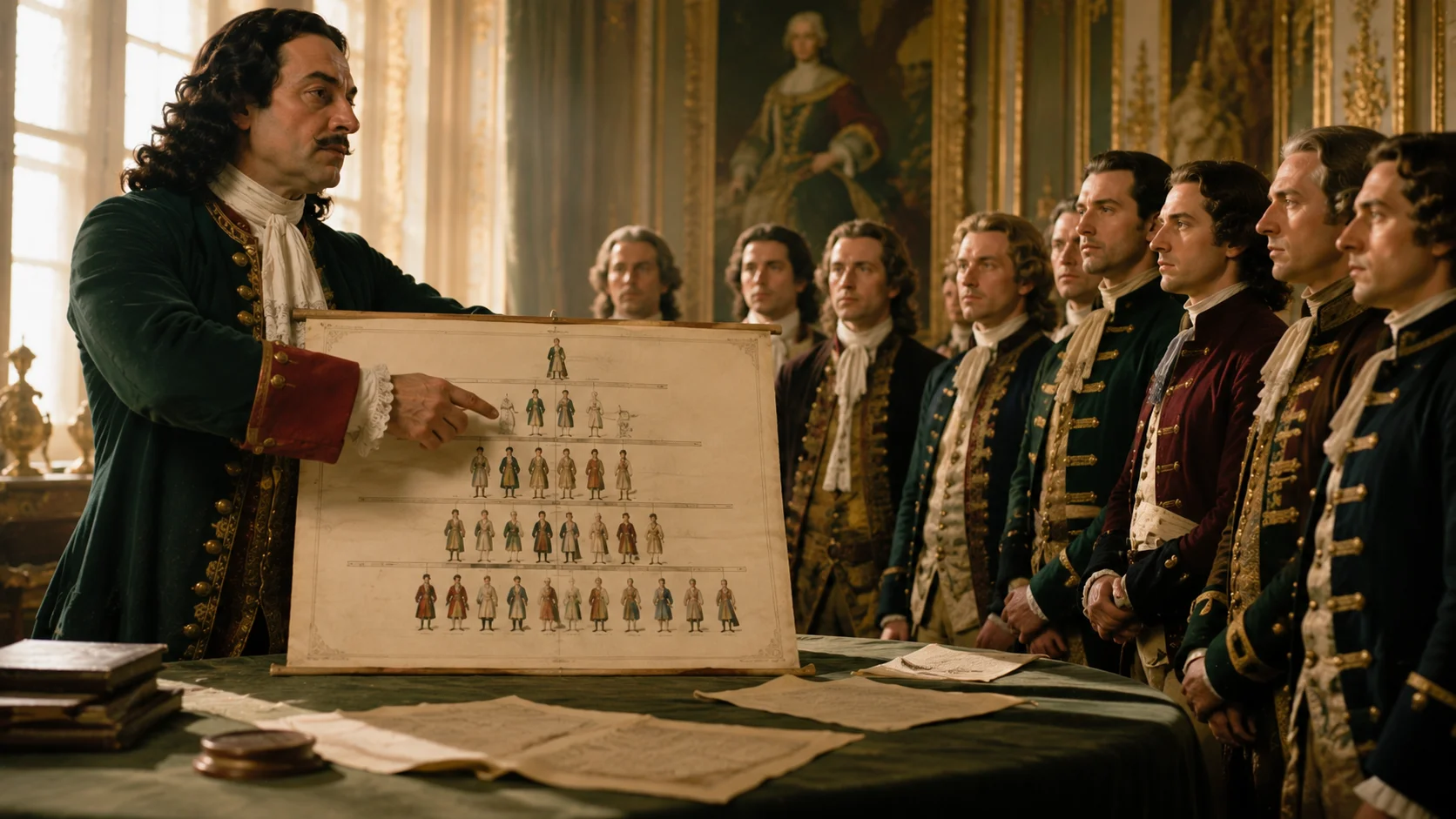
Despising the entrenched, lazy nobility who held power merely by birthright, Peter introduced the “Table of Ranks” in 1722. This system reorganized the military, government, and royal court into a strict hierarchy of 14 ranks. Regardless of a person’s noble birth, they had to start at the bottom rank and earn their way up through competent state service, allowing commoners to achieve noble status.
13. He Reformed the Russian Calendar
Before Peter, Russia operated on the Byzantine calendar, which celebrated the New Year on September 1st and counted years from the supposed creation of the world. In 1699, Peter decreed that Russia would adopt the Julian calendar, moving the New Year to January 1st and counting years from the birth of Christ, bringing Russian timekeeping in line with much of Europe.
14. He Banned Traditional Russian Clothing
The beard tax was only one part of Peter’s cultural overhaul. He also banned the traditional kaftan—long, heavy coats with sleeves that extended past the hands—worn by the boyars. Guards were stationed at the gates of major cities with shears, instructed to literally cut the sleeves and hemlines off the coats of any nobleman trying to enter wearing traditional Russian dress.
15. He Began His Reign as a Co-Tsar
Peter did not initially rule alone. Following the death of Tsar Feodor III in 1682, a violent succession dispute erupted. As a compromise, the ten-year-old Peter was crowned as co-tsar alongside his sickly, mentally challenged older half-brother, Ivan V. Because both were too young or incapable of ruling, Ivan’s sister Sophia acted as regent until Peter overthrew her in 1689.