1. They Didn’t Call Themselves “Greeks”
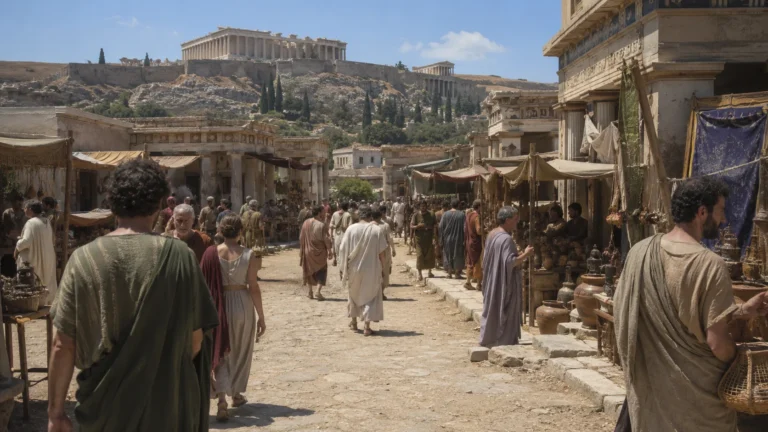
If you traveled back in time to 5th-century BC Athens and called the locals “Greeks,” they wouldn’t know what you were talking about. The people we call Ancient Greeks referred to themselves as Hellenes, and their land was Hellas. The term “Greek” comes from the Romans, who encountered a specific tribe called the Graeci in southern Italy and mistakenly applied the name to all Hellenic people.
2. It Was Never a Single Country
Ancient Greece was not a unified nation with a single capital. Instead, it was a collection of over 1,000 independent city-states, known as poleis (the singular is polis). Cities like Athens, Sparta, Corinth, and Thebes had their own governments, laws, and armies. They were fiercely independent and constantly went to war with one another, only uniting to fight off massive foreign threats like the Persian Empire.
3. The Pristine Marble Statues Were Originally Painted
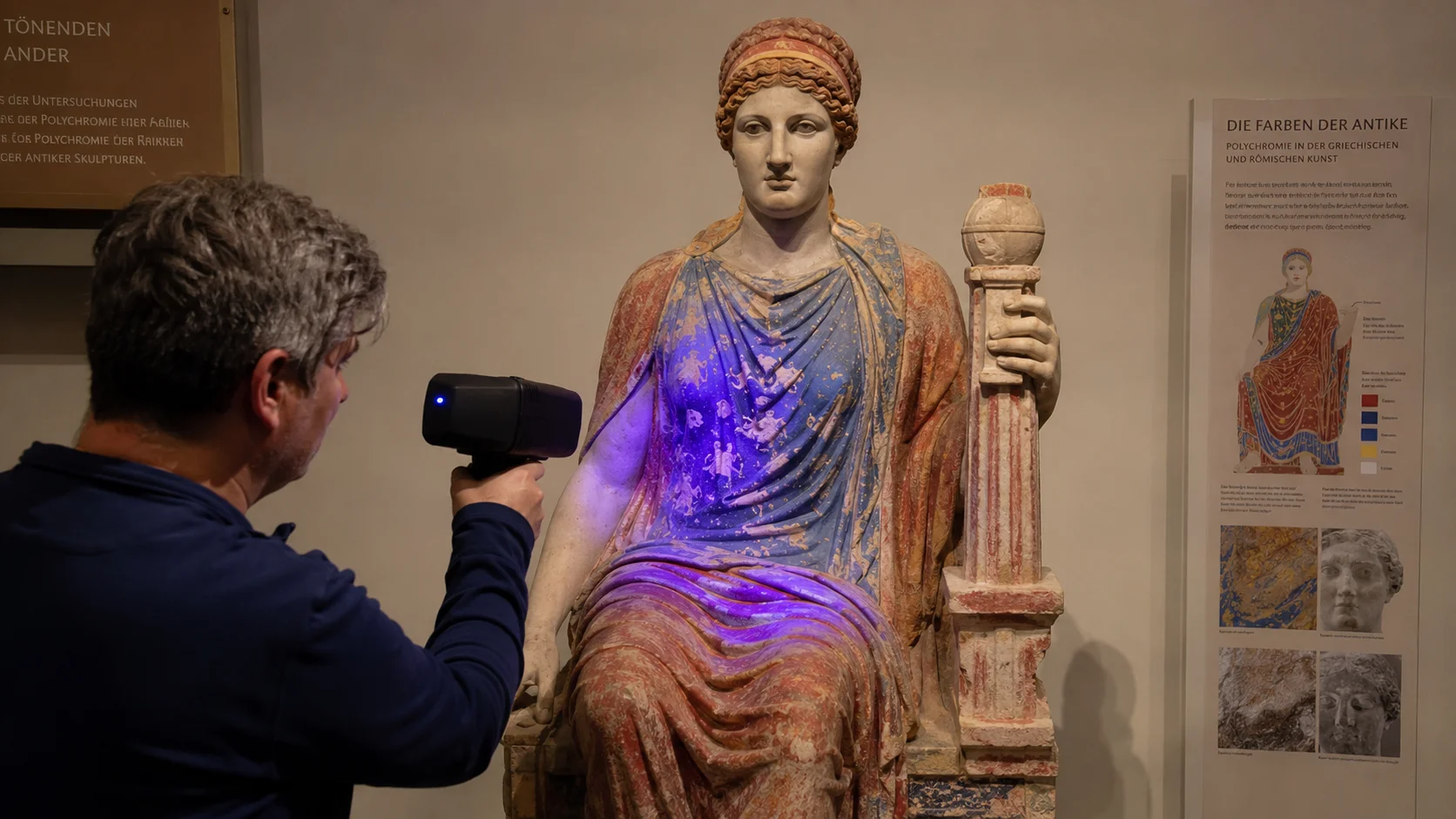
The idea that Greek art was defined by pure, white marble is a Renaissance myth. Ancient Greek sculptors and architects painted their statues and temples in vibrant, garish colors—bright reds, blues, yellows, and golds. Over millennia, the paint weathered away, leaving the bare stone we see today. Modern ultraviolet light analysis has confirmed the existence of complex, colorful patterns on almost all ancient statues.
4. The Original Olympics Were Performed Naked
The ancient Olympic Games, held every four years in honor of Zeus, were not for the modest. Athletes competed entirely nude. In fact, the word gymnasium derives from the Greek word gymnos, which literally means “naked.” Competing unclothed was meant to celebrate the physical perfection of the human body and prevent any cheating via concealed weapons or garments.
5. The Word “Idiot” Was Originally a Political Insult
In the Athenian democracy, civic participation was considered a profound moral duty. An idiotes (the root of the modern word “idiot”) was a private citizen who selfishly chose not to vote, debate, or participate in public affairs. To the highly political Athenians, someone who only cared about their personal business rather than the state was ignorant and useless.
6. Democracy Was Invented, But Highly Exclusive
While Athens is celebrated as the birthplace of democracy (rule by the demos, or people), it was not a free-for-all. Voting rights were strictly limited to adult male citizens who had completed military training. Women, enslaved people, and foreign residents (metics) were entirely excluded. At its height, only about 10% to 20% of the Athenian population was actually allowed to vote.
7. They Voted to Kick People Out of the City
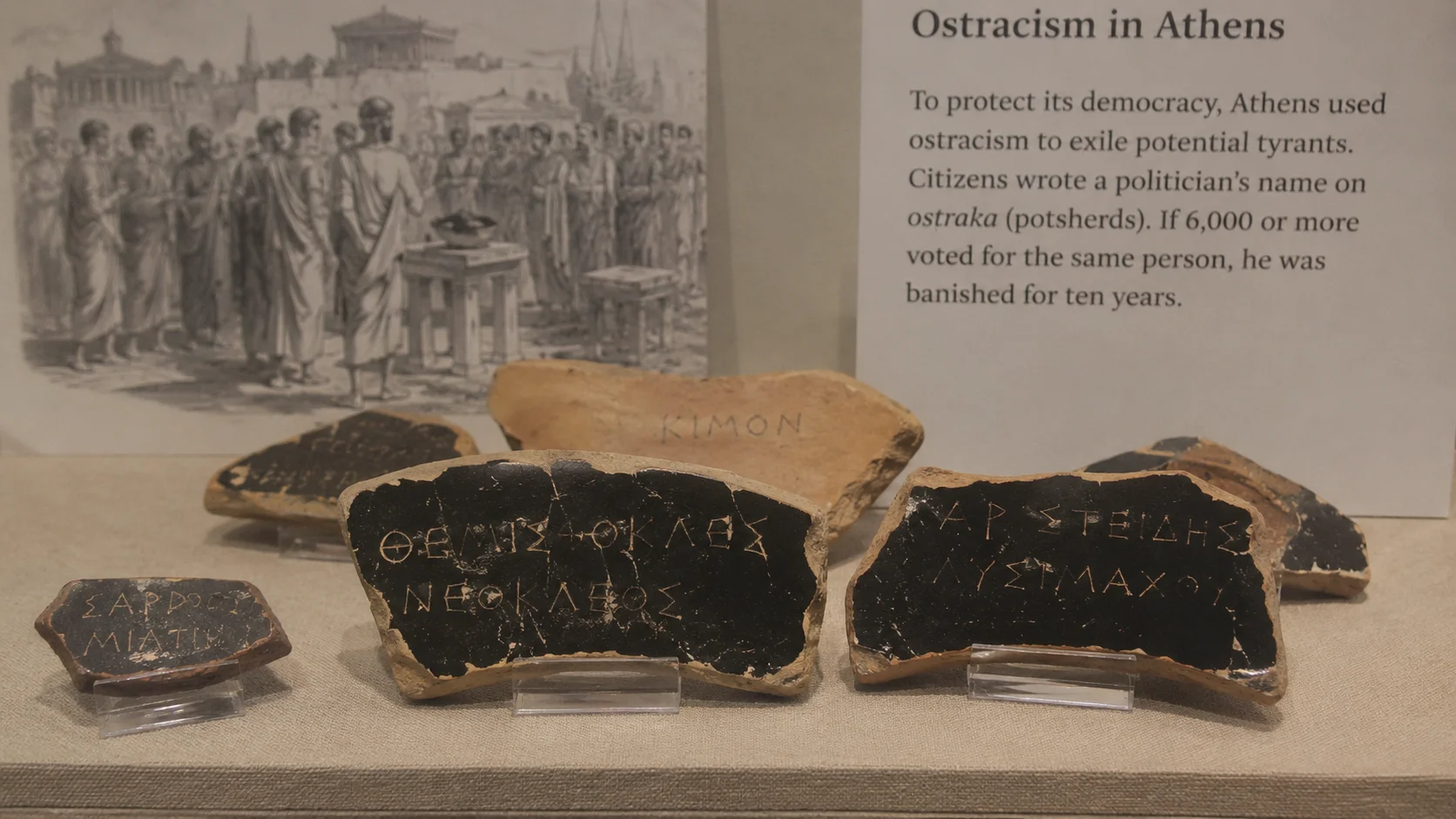
To protect their fragile democracy from tyrants, Athenians used a system called ostracism. Once a year, citizens could write the name of an overly powerful or unpopular politician on a piece of broken pottery called an ostrakon. If a person received a majority of votes (requiring a quorum of 6,000), they were exiled from Athens for exactly ten years, though they kept their property and citizenship.
8. Spartan Boys Endured the Brutal “Agoge”
Sparta was a city-state entirely dedicated to warfare. At age seven, Spartan boys were taken from their mothers and placed into the agoge, a brutal, state-sponsored military training program. They were given barely any food, forcing them to steal to survive—a skill valued in warfare. However, if a boy was caught stealing, he was severely beaten, not for the theft, but for being careless enough to get caught.
9. Spartan Women Were the Most Liberated in Greece
While Athenian women were largely confined to their homes and treated as perpetual minors under the guardianship of male relatives, Spartan women enjoyed shocking freedoms. Because Spartan men were constantly living in military barracks, women managed the estates, inherited wealth, and could own land. They also underwent rigorous physical training, as Spartans believed strong women produced strong warriors.
10. They Believed Drinking Straight Wine Was Barbaric
The Greeks loved wine, but they viewed drinking it straight as dangerous, uncivilized, and a fast track to madness. In their symposia (drinking parties), wine was always mixed with water in a large bowl called a krater. The usual ratio was three parts water to one part wine. Only “barbarians” (non-Greeks) drank their wine unmixed.
11. They Built an Ancient “Computer”
In 1901, sponge divers off the coast of the Greek island of Antikythera discovered a heavily encrusted bronze mechanism dating back to the 2nd century BC. Known as the Antikythera mechanism, it is a complex analog computer containing dozens of interlocking gears. The Greeks used it to perfectly calculate and predict astronomical positions, eclipses, and the four-year cycle of the Olympic Games.
12. Theatre Started as a Wild God’s Cult
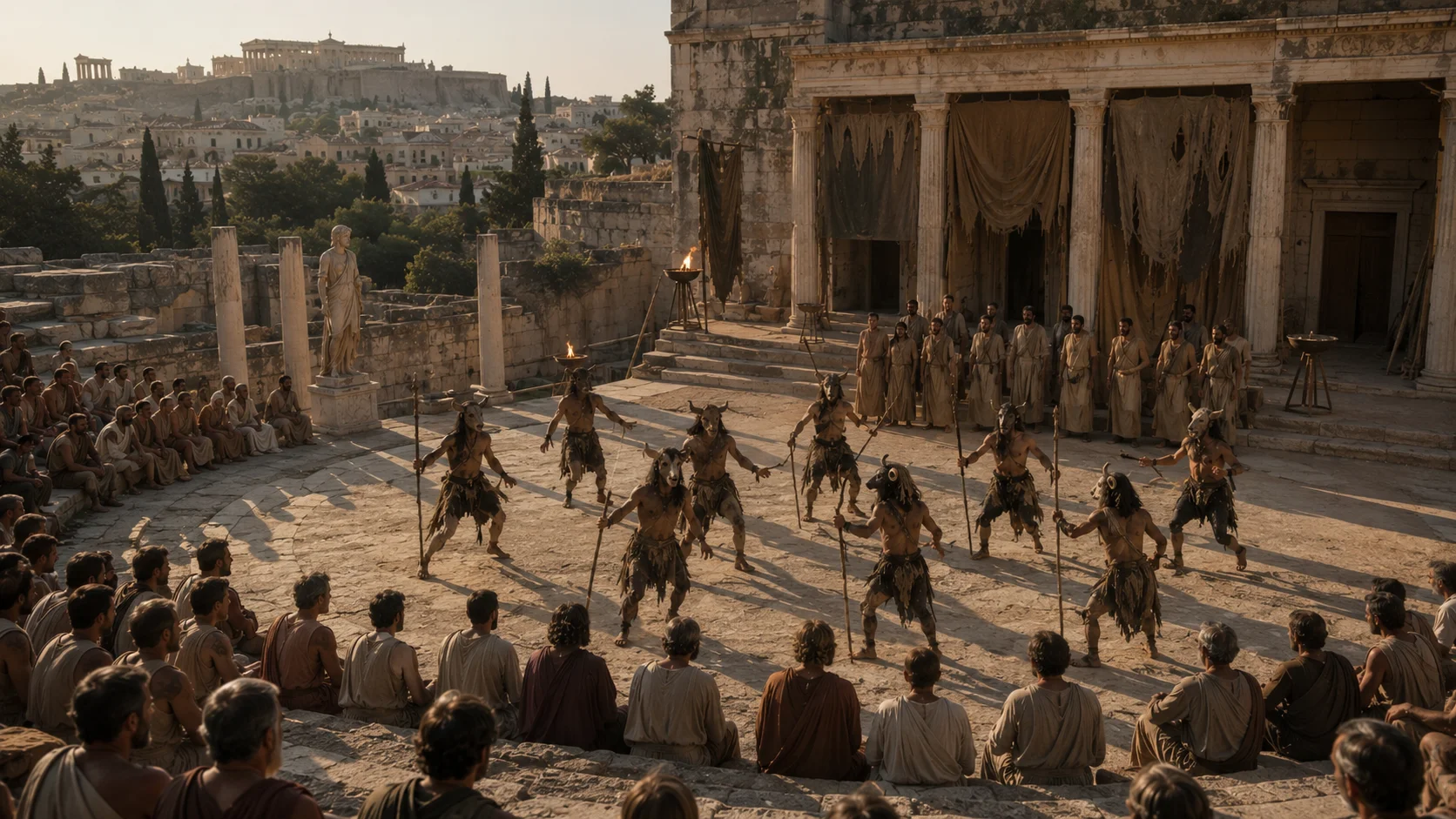
Western theater didn’t begin as polite entertainment; it evolved from wild, ecstatic religious festivals honoring Dionysus, the god of wine, madness, and ecstasy. Early performances featured choruses of men singing hymns dressed as satyrs (half-men, half-goats). In fact, the word “tragedy” comes from the Greek word tragoidia, which translates to “goat song.”
13. The “Marathon” Is Based on a Deadly Historical Run
The modern 26.2-mile marathon is inspired by the legendary Battle of Marathon in 490 BC. According to popular legend, a Greek herald named Pheidippides ran all the way from the battlefield of Marathon to Athens to announce the miraculous victory over the invading Persians. He reportedly shouted, “Nike!” (Victory!) before immediately collapsing and dying of exhaustion.
14. They Believed the Navel of the World Was in Delphi
The Oracle of Delphi was the most important religious sanctuary in Ancient Greece. Kings and commoners alike traveled there to receive prophecies from Apollo through his priestess, the Pythia. The Greeks believed Delphi was the physical center of the earth, marked by a sacred stone called the Omphalos (navel), which was placed there by Zeus after two eagles he released flew across the world and met at that exact spot.
15. The “Homeric Question” Doubts Homer’s Existence
The Iliad and The Odyssey are the foundational epic poems of Ancient Greece, traditionally credited to a blind poet named Homer. However, modern historians and classicists debate the “Homeric Question.” Many believe that Homer wasn’t a single historical person, but rather a legendary name attached to a long, evolving oral tradition of bards who passed the stories down over centuries before they were finally written down.