The Sacred Masterpiece: 15 Fascinating Facts About Saint Peter's Basilica
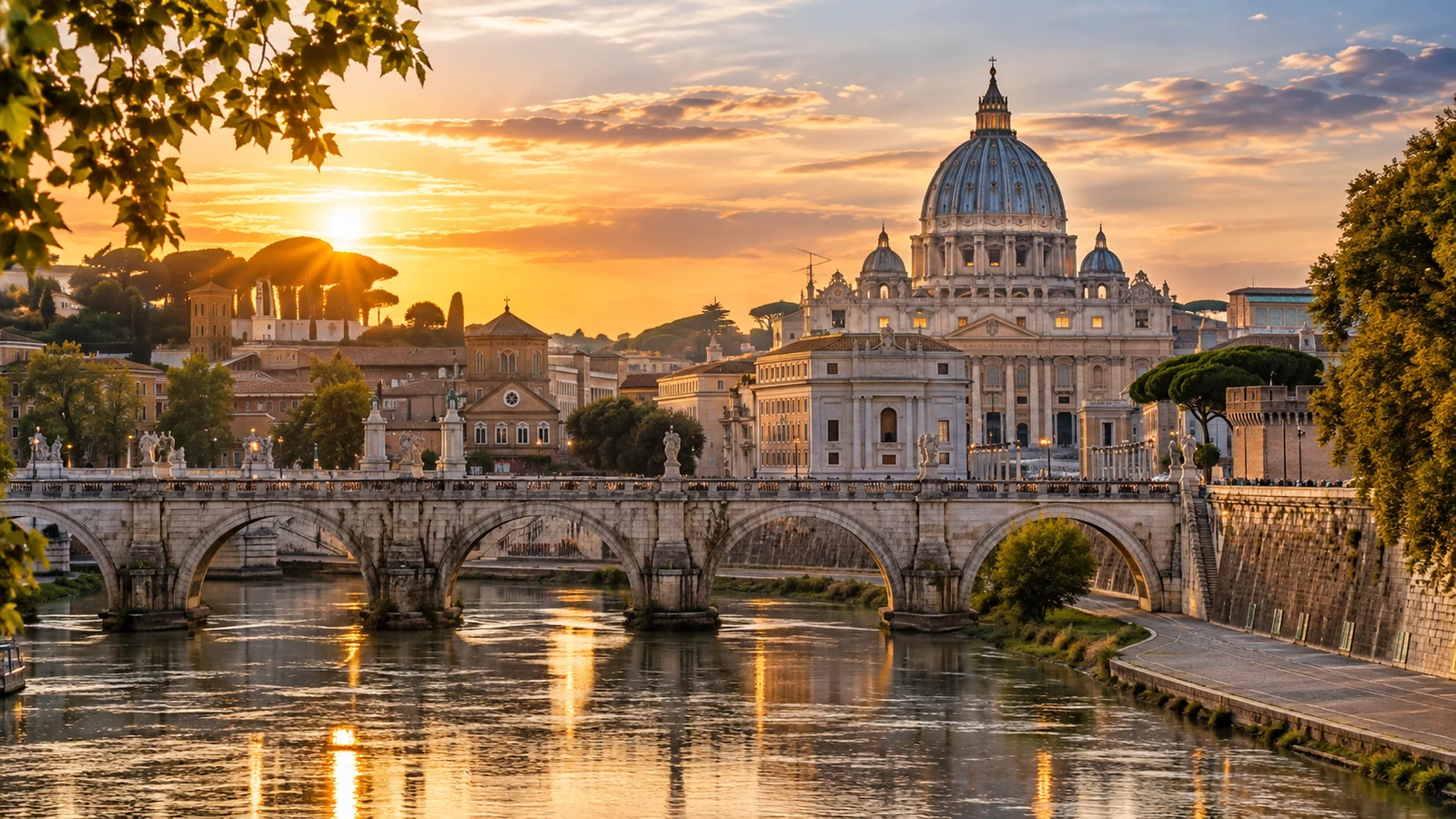
Saint Peter's Basilica stands as the architectural heart of Vatican City and one of the most iconic holy sites on Earth. While millions of visitors flock to admire its colossal dome and glittering artwork, few realize that its altar paintings are actually made of glass, its ancient foundations caused a historical uproar, and its vast colonnade hides ingenious optical illusions. From secret underground tombs to dramatic historical attacks, here are 15 mind-blowing facts about Saint Peter's Basilica.
1. The Majestic Altarpieces Are Actually Glass Mosaics
Visitors walking through Saint Peter's Basilica often marvel at the majestic altarpieces, assuming they are looking at Renaissance and Baroque oil paintings. In reality, almost all of the visual artwork on the walls and altars consists of painstaking glass mosaics. During the 17th and 18th centuries, damp conditions, humidity from crowds, and soot from candle smoke began rapidly degrading original canvas paintings inside the church. To preserve the art, the Vatican established the Vatican Mosaic Studio, reproducing masterpieces like Raphael's Transfiguration using tiny glass tiles called tesserae. Today, these vibrant mosaic renditions can withstand humidity and light without fading, fooling millions of tourists every year into thinking they are oil paintings.
2. The Original Architect Was Nicknamed the "Master of Destruction"
Before the present Renaissance basilica was constructed, an ancient structure known as Old Saint Peter’s Basilica stood on the site, built by Emperor Constantine in the 4th century. When Pope Julius II commissioned Donato Bramante to design a grand replacement in 1506, Bramante took a notoriously aggressive approach to demolition. He tore down the millennium-old basilica along with its ancient mosaics, historic papal tombs, and priceless columns without meticulous cataloging. This ruthless strategy earned Bramante the disdainful nickname Il Ruinante ("The Destroyer" or "Master of Destruction") among contemporary Romans and scholars. Although his bold geometric plan laid the foundation for the masterpiece seen today, many lamented the irreversible loss of early Christian heritage.
3. It Is Not Actually the Official Seat of the Pope
Despite being the center of major papal ceremonies and the prominent global symbol of Catholic power, Saint Peter's Basilica is not the official seat of the Bishop of Rome. That distinction belongs to the Archbasilica of Saint John Lateran (San Giovanni in Laterano), located across town in Rome. As the oldest public church in the city, Saint John Lateran holds the ecclesiastical rank of Cathedral of Rome and serves as the official mother church of Roman Catholicism. Saint Peter's is technically classified as a papal major basilica, serving as a shrine built over the apostle's grave rather than the primary seat of papal authority. Consequently, in the strict liturgical hierarchy of the Roman Catholic Church, Saint John Lateran outranks Saint Peter's Basilica.
4. The Bronze Altar Canopy Was Built from Stripped Ancient Roman Temples
Dominating the interior space beneath the dome is Gian Lorenzo Bernini's massive, 98-foot-tall bronze canopy known as the Baldacchino. To gather enough raw bronze to cast this gigantic four-columned structure in the 1620s, Pope Urban VIII took controversial measures. He ordered workers to strip the ancient bronze girders and roof tiles directly from the portico of the Pantheon, an iconic surviving ancient Roman monument. This act outraged the citizens of Rome, giving rise to the famous satirical saying, "What the barbarians didn't do, the Barberini did" (Quod non fecerunt barbari, fecerunt Barberini), referencing the Pope’s family name. The melted metal was re-engineered into intricate twisted columns, bronze bees, and laurel leaves that hover directly over Saint Peter's tomb.
5. Saint Peter’s Tomb Was Confirmed Under the Altar in the 1940s
For centuries, Catholic tradition held that Saint Peter was crucified upside down under Emperor Nero and buried in a nearby pagan necropolis beneath the church floor. However, physical evidence remained elusive until Pope Pius XII ordered secret archaeological excavations under the basilica’s central altar during World War II. Archaeologists uncovered an entire ancient Roman city of the dead hidden directly underneath the building floor. Among these ruins, they discovered a small shrine surrounding a burial niche painted with a red wall and marked with ancient Greek graffiti reading PETROS ENI ("Peter is here"). Forensic analysis of the bones found within confirmed they belonged to a male in his 60s from the 1st century AD, leading the Vatican to officially announce in 1968 that the apostle's resting place had been found.
6. Michelangelo Took Over Design at Age 71 and Worked Without a Salary
The construction of the current basilica was plagued by delays and changing architectural plans across multiple generations. In 1547, Pope Paul III appointed a 71-year-old Michelangelo Buonarroti as chief architect after several predecessors had passed away. Michelangelo refused a salary for the grueling project, declaring he was working solely for the salvation of his soul, and completely re-engineered Bramante’s floor plan into a unified design. He dedicated the last 17 years of his life to engineering the enormous dome, creating wooden scale models to guide future builders. Michelangelo died in 1564 at the age of 89, decades before the dome was finally completed by his pupil Giacomo della Porta.
7. The Massive Dome Letters Are Taller Than a Full-Grown Human
Surrounding the interior base of the majestic dome runs a Latin inscription in bold blue and gold lettering that quotes Christ’s words to Saint Peter from the Gospel of Matthew. When viewed from the floor far below, the lettering looks modestly sized and easily readable. However, due to the immense scale of the building, this optical impression is completely deceptive. In reality, each individual letter stands approximately seven feet (2 meters) tall, making them taller than an average adult human. The entire interior of Saint Peter's was built using scaled architecture designed specifically to appear balanced to the human eye from extreme distances.
8. The Holy Door Is Sealed with Solid Brickwork for Decades at a Time
On the far right of the basilica's main entrance portico sits the Porta Santa, or Holy Door, which remains completely sealed from the inside by a solid wall of brick and mortar. This door is opened only during official Jubilee years designated by the Pope, which typically occur once every 25 years. To mark the start of a Holy Year, the Pope ritually strikes the brick mortar with a silver hammer, allowing workers to dismantle the wall so pilgrims can walk through to symbolic forgiveness. Passing through the Holy Door is a deeply spiritual experience for Catholic pilgrims seeking plenary indulgences. Once the Jubilee year concludes, the wall is ceremonially rebuilt from within, encasing historic commemorative coins inside the bricks until the next holy celebration.
9. A Mental Health Crisis Led to the Armored Glass Protection of the Pietà
Michelangelo’s famous marble masterpiece, the Pietà, created when he was just 24 years old, stands inside a chapel near the entrance of Saint Peter’s. On Pentecost Sunday in May 1972, a mentally disturbed geologist named Laszlo Toth leaped over the guardrail wielding a hammer. He struck the sculpture 15 times while claiming to be Jesus Christ resurrected, knocking off Mary’s left arm, chipping her nose, and damaging her veil. Vatican artisans spent months painstakingly restoring the statue, using original marble fragments gathered from the floor along with a compound made of marble dust and resin. Following this tragic attack, the sculpture was re-installed behind a multi-layered, bulletproof glass wall to protect it from future vandalism.
10. The Square Contains a Built-In Optical Illusion with 284 Columns
When standing in Saint Peter’s Square, visitors are embraced by Gian Lorenzo Bernini's massive elliptical colonnade consisting of 284 Doric columns arranged four deep. While walking through the square, the forest of pillars can look chaotic and overlapping. However, Bernini incorporated a brilliant geometrical trick into the pavement design. On either side of the central obelisk, embedded directly into the cobblestones, are two small marble disks marked Centro del Colonnato (Center of the Colonnade). When a person stands precisely on either of these stones and looks out toward the porticos, the four rows of columns align seamlessly behind one another. Through this clever application of perspective, the deep colonnade appears to consist of only a single row of thin pillars.
11. Saint Peter’s Bronze Statue Has Lost Its Toes to Centuries of Pilgrims
Situated inside the central nave stands an ancient bronze statue of Saint Peter seated on a marble throne, attributed to 13th-century sculptor Arnolfo di Cambio. For over seven hundred years, millions of Catholic pilgrims visiting Vatican City have paused before this statue to offer prayers and perform a devotional gesture. Tradition dictates touching or kissing the statue’s right foot while placing one's forehead against it as a sign of veneration. Because of this continuous physical contact by millions of hands and lips over centuries, the metal on the right foot has been worn completely smooth, erasing the detailed shape of the toes. The left foot, by comparison, remains significantly more defined because pilgrims historically focused primary attention on the right side.
12. Construction Took 120 Years and Triggered the Protestant Reformation
The construction of the modern basilica was an epic engineering feat that took 120 years to complete, stretching from 1506 to 1626. Over the course of twelve decades, eighteen different popes and a succession of legendary Renaissance architects helped design and modify the structure. Funding such a colossal architectural endeavor was immensely expensive, leading Pope Julius II and later Pope Leo X to grant special financial indulgences in exchange for donations toward the building fund. The aggressive sale of these indulgences across Europe sparked outrage among religious reformers, directly prompting Martin Luther to write his 95 Theses, which triggered the Protestant Reformation and altered Western history forever.
13. A Unique Optical Illusion Shrinks the Dome on Via Piccolomini
Located a few miles west of Saint Peter's Basilica, a quiet Roman street named Via Piccolomini offers one of the most famous optical illusions in urban architecture. As you stand at the far end of this street looking down toward the basilica, the massive dome appears surprisingly gigantic, framed perfectly by surrounding trees. However, as you walk or drive down Via Piccolomini closer toward the dome, the dome appears to recede into the distance and shrink smaller and smaller. Conversely, moving backward away from the building makes the dome loom significantly larger in your field of vision. This puzzling perceptual phenomenon is caused by the framing of the street layout and how human visual context shifts relative to surrounding buildings.
14. Queen Christina of Sweden Is One of the Very Few Women Buried in the Crypts
Beneath the marble floor of Saint Peter's Basilica lie the Vatican Grottoes, containing the tombs of more than 90 popes along with various monarchs and dignitaries. Among the vast majority of male clergy, only three women are officially interred within the basilica complexes, with Queen Christina of Sweden being the most prominent. Christina famously shocked 17th-century Europe by abdicating her royal throne in 1654, renouncing Protestantism, and converting to Roman Catholicism. She moved to Rome, where she became a major patron of the arts and sciences until her death in 1689. Honored for her dramatic conversion during the Counter-Reformation, Pope Alexander VIII granted her the rare privilege of a grand burial place in the sacred Vatican crypts.
15. The Top of the Colonnade Hosts 140 Saints Watching Over Visitors
Bernini designed the vast, welcoming arms of Saint Peter’s Square to symbolize "the maternal arms of the Church" reaching out to embrace humanity. Resting atop the entablature of the double colonnade are 140 individual marble statues depicting martyrs, saints, popes, and founding figures of religious orders. Carved between 1662 and 1703 by a dedicated team of sculptors under Bernini’s supervision, each statue stands over 10 feet (3.1 meters) tall. Positioned around the perimeter of the oval plaza, these stone figures face inward toward the square, creating the illusion of a heavenly assembly looking down to guard and greet millions of pilgrims arriving from around the globe.
Sources & References
This AI-assisted post was rigorously curated and fact-checked for accuracy by:
 Martin Roháček
How fun was this article? 🤔
Tap a star to rate it
🧠 Quiz: How closely were you paying attention?
10 questions — all answers are in the article above!
Enjoyed these facts? There's more! 💌
Fresh fun facts in your inbox. No spam, ever.