The Volcanic Gem: 15 Fascinating Facts About Santorini
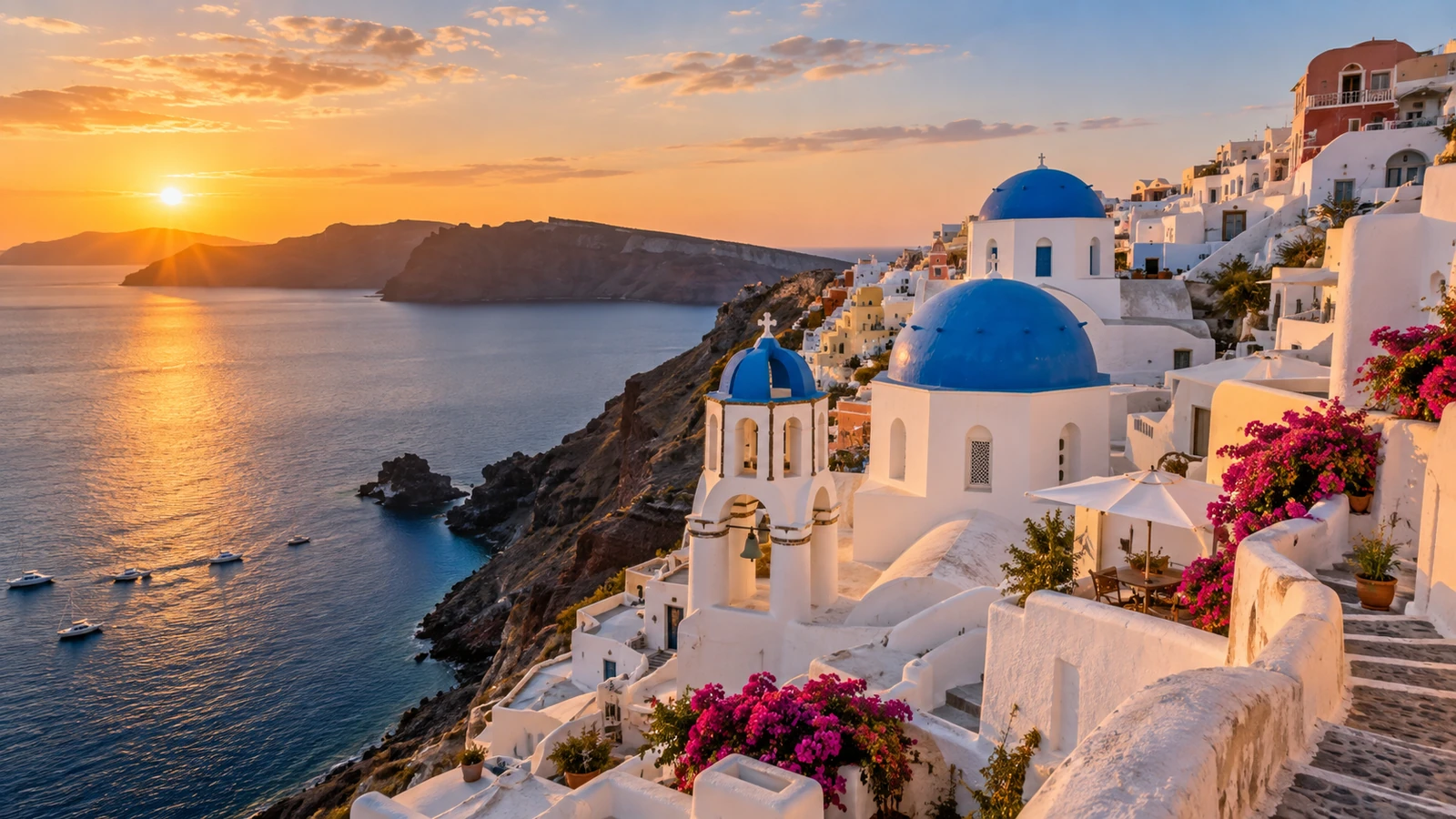
Perched dramatically on the rim of a massive submerged volcano, Santorini is one of the most visually stunning and geologically unique destinations in the Mediterranean. Famous worldwide for its gleaming whitewashed villages, striking red beaches, and world-class wines, this Aegean island harbors a history shaped by catastrophic natural forces. From lost ancient civilizations with remarkably advanced indoor plumbing to unique agricultural traditions built around volcanic soil, Santorini is far more than a postcard sunset. Here are 15 fascinating facts about the famous Greek island that reveal its rich past and unique geology.
1. The Island Was Once Round and Known as Strongili
Long before it became a crescent-shaped paradise, Santorini was a single, round volcanic island called Strongili, which translates to 'The Round One.' Around 1600 BCE, one of the most violent volcanic events in human history—the Minoan eruption—shattered the landmass. The center of the island collapsed inward, submerging millions of tons of rock into the Aegean Sea and creating a massive sunken crater. Today, the dramatic cliffs that tourists marvel at are actually the rim of this ancient geological catastrophe. The remaining crescent rim along with neighboring islands like Thirasia are all that survive of the original landmass.
2. Santorini Holds the Title of the World's Only Inhabited Caldera
Santorini holds the unique distinction of being the only inhabited volcanic caldera in the entire world. While other volcanoes exist across the globe, none support full-scale, permanent cities, luxury hotels, and thriving agricultural communities situated right along their perilous rim. Residents and visitors essentially live, sleep, and dine on the edge of an active underwater volcano. The town of Fira and the village of Oia sit perched over 300 meters above the water on the caldera's sheer inner cliff faces. This precarious placement offers some of the most breathtaking panoramic views in the Mediterranean.
3. The Minoan Eruption May Have Inspired the Legend of Atlantis
Many historians and geologists believe that Santorini is the real-world historical inspiration behind Plato's legend of the lost city of Atlantis. The catastrophic Minoan eruption around 1600 BCE triggered devastating tsunamis and climate cooling that crippled the advanced Bronze Age Minoan civilization across the Aegean. Plato described a highly sophisticated naval empire that sank into the ocean in a single day and night of immense misfortune. The sudden physical destruction of the thriving civilization on Santorini mirrors Plato's narrative with uncanny accuracy. While the theory remains debated, walking through the island's ruins genuinely feels like stepping into a legendary myth.
4. Akrotiri Possessed Advanced Indoor Plumbing 3,500 Years Ago
Excavations at the ancient Minoan site of Akrotiri revealed a prehistoric city frozen in time under volcanic ash, complete with mind-boggling urban infrastructure. Long before the rise of classical Greece or the Roman Empire, the residents of Akrotiri enjoyed multi-story buildings, complex municipal drainage, and flush toilets connected to underground sewer systems. Archaeologists found complex ceramic piping that separated clean water supplies from wastewater runoff. This sophisticated engineering allowed ancient inhabitants to live in remarkable comfort more than 3,500 years ago. Tragically, all of this engineering genius was buried when the volcano erupted around 1600 BCE.
5. Local Vines Are Woven Into Baskets Called Kouloura
The extreme heat, persistent summer winds, and water shortages of Santorini forced local viticulturists to invent a unique vine-training system called kouloura. Instead of growing upright on traditional trellises, grapevines are meticulously woven into tight, ring-shaped baskets that rest directly on the ground. The grapes grow inside the woven nest, where they are protected from abrasive, sand-laden gale forces. Additionally, the thick outer leaves canopy the delicate fruit from the burning sun while trapping moisture underneath. This ancient agricultural technique has allowed winemakers to produce world-class Assyrtiko grapes for thousands of years.
6. Whitewashed Houses Were Originally a Disinfectant Measure
The iconic white and blue aesthetic of Santorini's villages actually originated from a public health directive rather than artistic design. In 1938, Greek ruler Ioannis Metaxas ordered residents to paint their houses with whitewash made from quicklime to combat a severe cholera outbreak. Lime acts as a powerful natural disinfectant, sanitizing surfaces and helping suppress the spread of deadly bacteria. The brilliant white coating also reflected the intense summer sunlight, keeping indoor temperatures surprisingly manageable. What began as a mandatory medical response eventually transformed into a strict architectural requirement that defines Cycladic tourism today.
7. Volcanic Theraic Earth Was Used to Build the Suez Canal
The volcanic soil of Santorini contains a high concentration of fine volcanic ash rich in silica and alumina, known locally as Theraic earth. When mixed with lime, this natural material forms a remarkably durable hydraulic cement that hardens underwater and withstands centuries of erosion. Builders discovered that structures made with Theraic earth actually grew stronger over time while providing natural waterproofing against ocean spray. This indigenous mortar was so prized for its durability that millions of tons were exported internationally in the 19th century. Remarkably, Theraic earth was even utilized in the construction of the engineering marvel known as the Suez Canal.
8. Santorini Has Zero Rivers or Lakes
Despite being surrounded by the crystal-clear Aegean Sea, Santorini possesses absolutely no natural rivers, lakes, or freshwater streams. For centuries, islanders survived by building sophisticated collection systems to channel precious rainwater from roofs into underground stone cisterns. Every drop of precipitation was treated like liquid gold, forcing residents to develop extreme water conservation habits. Today, the influx of hundreds of thousands of annual tourists has outstripped what rainfall can provide. Consequently, the island relies almost entirely on modern thermal and reverse-osmosis desalination plants to convert seawater into drinkable fresh water.
9. Anhydro Cherry Tomatoes Flourish by Drinking Morning Fog
Santorini is famous for its miniature cherry tomatoes, locally known as anhydro, which translates to 'waterless.' Farmers do not artificially irrigate these tomato crops at all throughout their entire growth cycle. Instead, the porous volcanic soil absorbs humidity from the heavy sea fog that blankets the island during summer mornings. The plants absorb this captured atmospheric moisture, producing tiny, thick-skinned tomatoes with an intensely concentrated, sweet, and tangy flavor. Because of their unique agricultural profile and rich volcanic minerals, Santorini cherry tomatoes hold Protected Designation of Origin status in Europe.
10. Traditional Cave Houses Offer Natural Climate Control
Long before modern air conditioning, islanders built yposkafa, traditional cave dwellings carved directly into the soft volcanic pumice of the caldera cliffs. These vaulted homes feature thick rock walls that act as exceptional natural insulation, regulating interior temperatures year-round. During the scorching summer heat, the subterranean spaces remain refreshingly cool, while in the winter, they retain heat generated inside. Originally built as humble homes for seamen and poorer residents who could not afford timber, these cave structures have been renovated into luxury boutique hotels. Their organic, flowing architectural lines now represent some of the most expensive real estate in Greece.
11. Sun-Drying Grapes Gives Vinsanto Wine Its Distinctive Flavor
One of Santorini's most prestigious culinary exports is Vinsanto, a naturally sweet dessert wine made using ancient winemaking methods. Winemakers harvest naturally high-acid grapes, primarily Assyrtiko, and lay them out on open mats to dry in the Mediterranean sun for up to two weeks. As the intense sunlight evaporates the water content, the natural sugars and aromatic compounds inside the grapes become ultra-concentrated. After pressing, the dense juice undergoes a slow fermentation and must age in oak barrels for a minimum of two years. The resulting elixir features a rich amber color with complex flavors of dried figs, raisins, honey, and spice.
12. Iconic Blue Domes Are Surprisingly Rare Outside of Oia
Photographs of Santorini often create the illusion that every church on the island features a brilliant cobalt-blue dome. In reality, the vast majority of Santorini's hundreds of churches and chapels have plain white or pastel yellow domes. The famous trio of blue domes frequently seen on postcards and social media is located specifically in the picturesque village of Oia. While blue domes do exist elsewhere on the island, they represent a small minority of the ecclesiastical architecture. Most small family chapels feature whitewashed roofs designed to blend seamlessly into the surrounding stark Cycladic landscape.
13. The Iron-Rich Red Beach Resembles a Martian Landscape
Located near the ancient site of Akrotiri, Santorini's famous Red Beach looks like a surreal landscape transported directly from the surface of Mars. Towering behind the narrow shoreline are massive, crumbling cliffs composed of dark red lava rock rich in iron oxide. Over centuries, erosion has broken down these iron-heavy geological formations, coating the beach in unique dark reddish pebbles and sand. The stark contrast between the fiery red volcanic backdrop and the vibrant turquoise waters of the Aegean makes it one of the most visually dramatic coastal sites in the world. Visitors must navigate a steep, rocky trail to witness this geological phenomenon up close.
14. Aegean Meltemi Winds Provide Natural Summer Cooling
Summers in the Aegean Sea can reach scorching temperatures, but Santorini stays surprisingly pleasant thanks to a powerful wind known as the Meltemi. These dry, northern winds sweep down across the Aegean during July and August, acting as a natural air conditioning system for the island. While the Meltemi can occasionally create rough seas and make ferry rides thrillingly bumpy, it keeps the island's coastal villages cool and breezy during the hottest months of the year. The strong breezes also blow away humidity and fog, leaving clear, crisp skies ideal for viewing Santorini's legendary sunsets.
15. Thermal Vents Turn the Sea into Volcanic Hot Springs
Because the underwater volcano beneath Santorini is merely dormant rather than extinct, subterranean heat continues to warm the surrounding seawater. Boat tours regularly take visitors into the center of the caldera near the uninhabited volcanic islet of Nea Kameni. Here, guests can leap into the ocean and swim toward shallow, muddy coves where thermal underwater vents release sulfur and heat into the sea. The water in these secluded spots turns a murky reddish-yellow color and becomes warm to the touch. The mineral-rich volcanic mud is believed by locals to possess healing properties for the skin and joints.
Sources & References
This AI-assisted post was rigorously curated and fact-checked for accuracy by:
 Martin Roháček
How fun was this article? 🤔
Tap a star to rate it
🧠 Quiz: How closely were you paying attention?
10 questions — all answers are in the article above!
Enjoyed these facts? There's more! 💌
Fresh fun facts in your inbox. No spam, ever.