The Multitalented A-Lister: 15 Fascinating Facts About Scarlett Johansson
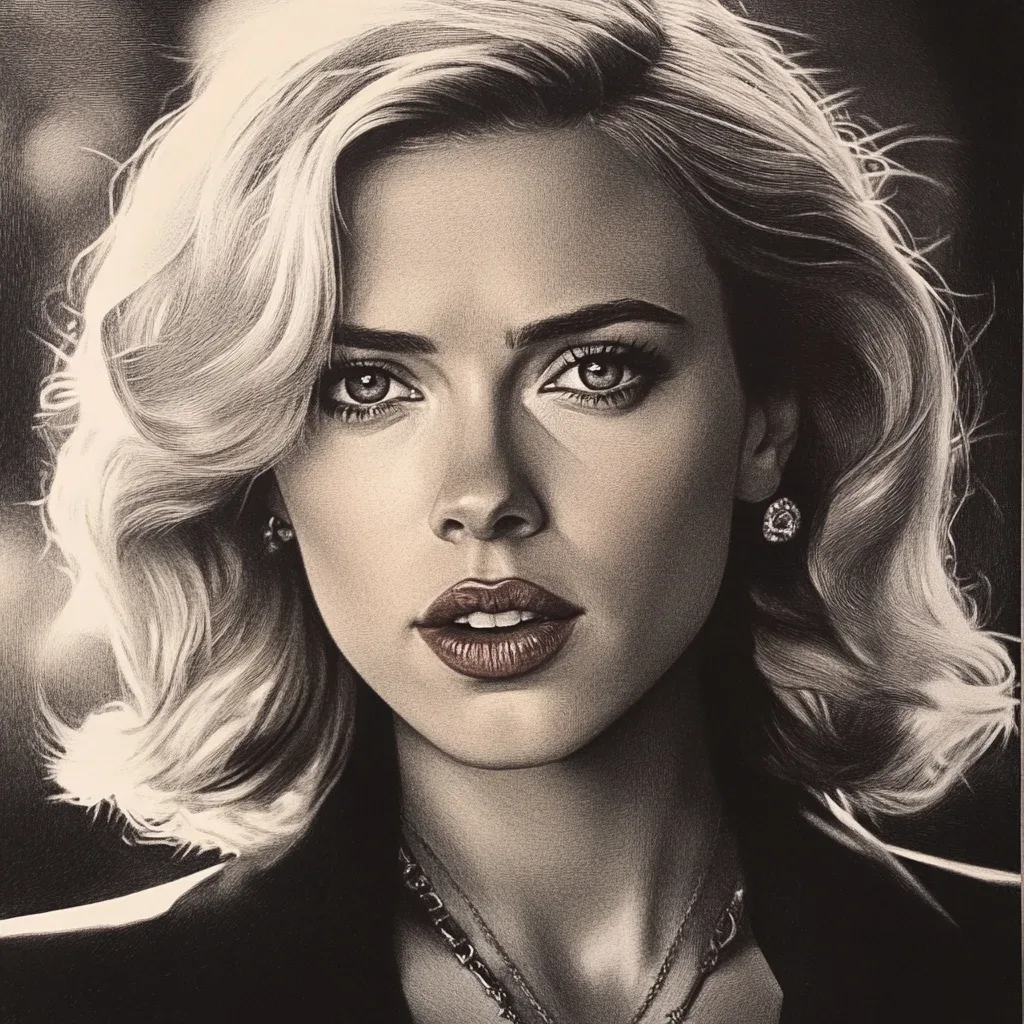
Scarlett Johansson has been a Hollywood mainstay since her childhood, evolving from indie darling to global box-office powerhouse. Behind her iconic roles as Black Widow and her critically acclaimed dramatic performances lies a career full of surprising twists, creative risks, and industry-defining moments. From musical experiments to historic studio legal battles, discover the most fascinating facts about one of cinema's biggest stars.
1. She Has a Twin Brother Who Is a Foot Taller Than Her
Scarlett Johansson was born three minutes before her twin brother, Hunter Johansson, on November 22, 1984. While Scarlett stands at 5 feet 3 inches, Hunter looms over her at 6 feet 3 inches tall. The siblings acted together in the 1996 indie drama Manny & Lo when they were children. However, Hunter eventually transitioned away from acting to pursue a career in political campaign management and community organization. Scarlett has frequently brought him as her date to high-profile red-carpet events over the years.
2. David Fincher Thought She Was Too Sexy for Dragon Tattoo
When director David Fincher was casting the lead role of Lisbeth Salander for his 2011 adaptation of The Girl with the Dragon Tattoo, Scarlett Johansson delivered a glowing audition. Fincher praised her screen test as spectacular, admitting she was everything the character needed to be. However, he ultimately decided against casting her because he felt her natural charisma and beauty made her look far too attractive for the socially awkward hacker. The role eventually went to Rooney Mara, who earned an Academy Award nomination for her performance. Johansson respected the decision, acknowledging that casting requires matching the director's precise visual vision.
3. Childhood Commercial Auditions Failed Due to Her Raspy Voice
Long before becoming one of Hollywood's highest-paid actresses, Scarlett Johansson struggled to land roles in television commercials as a young child. Casting directors frequently rejected her because her voice was unusually deep and raspy for a young girl, claiming she sounded too mature or like she had a chronic cold. Her mother eventually encouraged her to stop auditioning for commercials and focus entirely on feature films and stage plays. That distinctive voice later became one of her most recognizable artistic assets, helping her land acclaimed voice-acting roles in movies like Her and The Jungle Book.
4. She Released an Album Composed Almost Entirely of Tom Waits Covers
In May 2008, Scarlett Johansson ventured into the music industry with her debut studio album, titled Anywhere I Lay My Head. The project featured ten cover versions of songs originally written and recorded by legendary rock icon Tom Waits, along with one original track. Alternative rock pioneer David Bowie even provided backing vocals on two of the album's tracks after visiting the recording sessions in Louisiana. Although critics gave the album mixed reviews upon release, it demonstrated her willingness to take bold creative risks outside of Hollywood. She followed it up a year later with a collaborative album alongside singer-songwriter Pete Yorn.
5. She Completely Avoids All Public Social Media Accounts
In an era where most celebrities actively maintain public profiles to engage fans and promote brand deals, Scarlett Johansson refuses to join Instagram, TikTok, or X. She has repeatedly stated in interviews that she values her personal privacy too much to share intimate moments of her daily life online. Furthermore, she finds the concept of constantly documenting one's own life to be an exhausting dynamic that breeds anxiety. Johansson has joked that her ego is far too fragile to handle reading public commentary about herself every morning. Consequently, fans looking for official updates must rely entirely on her press interviews and movie releases.
6. CGI and Stunt Doubles Concealed Her Pregnancy in Avengers
When Scarlett Johansson became pregnant with her first child shortly before filming began on Avengers: Age of Ultron in 2014, the production team had to implement creative solutions to shoot her action scenes as Black Widow. Director Joss Whedon hired three distinct stunt doubles who wore special tracking dots on their faces during physical sequences. Visual effects artists then painstakingly replaced the stunt performers' faces with Johansson's digitized face during post-production. Additionally, the camera operators used close-up framing, tactical costumes, and strategic lighting to conceal her growing baby bump. The final cuts were so seamless that most audiences never realized she was pregnant during the shoot.
7. Her Historic Lawsuit Against Disney Changed Hollywood Streaming Contracts
In July 2021, Scarlett Johansson filed a groundbreaking lawsuit against The Walt Disney Company over the release strategy of her solo Marvel film, Black Widow. The lawsuit claimed that Disney breached her contract by simultaneously releasing the film on Disney+ Premier Access while it was in theaters, which reduced her box-office performance bonuses. The legal battle sparked an industry-wide conversation about how actors should be compensated in the modern era of digital streaming platforms. Disney initially attacked the lawsuit in public statements, but the two parties ultimately settled the dispute out of court a few months later. Sources reported that Johansson received a settlement payout estimated at over $40 million.
8. She Was Named After the Main Character of Gone with the Wind
Scarlett Johansson was named by her parents after Scarlett O'Hara, the famously headstrong protagonist of Margaret Mitchell's iconic 1936 novel Gone with the Wind. Her mother, Melanie Sloan, was an avid film enthusiast and avid fan of the classic movie adaptation starring Vivien Leigh. Growing up with a namesake rooted in literary and cinematic history helped spark Johansson's passion for performing arts at an early age. She began taking acting lessons in Manhattan when she was just seven years old. Today, Johansson has carved out her own monumental cinematic legacy, eclipsing even the famous character after whom she was named.
9. She Was Secretly Married to Ryan Reynolds for Two Years
Long before Ryan Reynolds became synonymous with Deadpool and Scarlett Johansson became the face of Black Widow, the two stars were quietly married. They began dating in early 2007 and tied the knot in a private ceremony near Vancouver, Canada, in September 2008. Throughout their relationship, both actors went to extreme lengths to protect their privacy, rarely appearing together on red carpets or speaking about each other in interviews. The high-profile marriage lasted just over two years before they announced their amicable separation in December 2010, finalizing their divorce in 2011. Both actors subsequently remarried and continued to build massive Hollywood careers.
10. She Is a Natural Left-Handed Performer
Scarlett Johansson is part of the estimated ten percent of the global population that is naturally left-handed. Observant fans can spot her using her left hand for everyday actions like signing autographs, writing notes, or holding props in her various movie roles. When preparing for physical action scenes in films like Captain America: The Winter Soldier, fight choreographers had to adapt combat movements to match her dominant hand. Being left-handed has occasionally presented subtle challenges on set when interacting with right-handed co-stars in fast-paced choreography. Nevertheless, she seamlessly integrates her left-handedness into her physical performances.
11. She Made History as the First Female Voice of Kaa
In Jon Favreau's 2016 live-action adaptation of Disney's The Jungle Book, Scarlett Johansson took on the voice role of the giant python Kaa. In all previous adaptations of Rudyard Kipling's classic stories, including Disney's 1967 animated film, the hypnotic snake had been voiced exclusively by male actors. Favreau specifically chose to gender-swap the character because he felt the original film was overly male-dominated and wanted an alluring, mysterious female voice. Johansson delivered a sinister yet captivating performance that gave the iconic villain an entirely new depth. She also performed the haunting hypnotic song "Trust in Me" for the film's end credits soundtrack.
12. She Celebrated Her 20th Birthday at Disneyland in Disguise
To mark her milestone 20th birthday in November 2004, Scarlett Johansson decided to celebrate at the original Disneyland theme park in Anaheim, California. Wanting to enjoy the rides like a regular guest, she wore a casual disguise consisting of a dark wig, heavy makeup, and low-profile clothing. Despite her efforts to blend into the crowds, eagle-eyed fans instantly recognized the rising Hollywood star while she waited in line for attractions. Johansson admitted that the disguise ended up drawing even more attention because it looked so out of place. Nevertheless, she embraced the moment and spent the rest of the day enjoying the theme park with friends.
13. She Was Woody Allen's Creative Muse for Three Films
During the mid-2000s, Scarlett Johansson became the creative muse for director Woody Allen, starring in three of his feature films in rapid succession. Their artistic collaboration began with the 2005 psychological thriller Match Point, which earned her a Golden Globe nomination and revived Allen's critical standing. They reunited shortly after for the comedy-mystery Scoop in 2006 and the romance drama Vicky Cristina Barcelona in 2008. Allen frequently praised her sharp intellect, quick wit, and classic Hollywood screen presence during promotional interviews. Their partnership helped solidify Johansson's reputation as a versatile dramatic actress capable of anchoring complex adult dramas.
14. She Perfected a "Bored Face" for Her Breakout Role in Lost in Translation
Scarlett Johansson was only 17 years old when she landed her critically acclaimed role as Charlotte in Sofia Coppola's 2003 film Lost in Translation. To convey the profound emotional isolation and aimlessness of her character, director Sofia Coppola instructed Johansson to practice a specific "bored face." The goal was to portray deep inner melancholy without appearing overly dramatic or whiny. Her understated, nuanced performance opposite Bill Murray won widespread praise from international critics and earned her a BAFTA Award for Best Actress in a Leading Role. The film launched her from promising teen actor into a top-tier international movie star.
15. She Is an Active Ambassador and Volunteer for Feeding America
Beyond her Hollywood stardom, Scarlett Johansson is a dedicated philanthropist who has partnered closely with Feeding America, the United States' largest domestic hunger-relief organization. She has served as a public spokesperson for the non-profit, appearing in public service announcements to raise awareness about food insecurity affecting millions of families. Rather than just lending her celebrity name, Johansson regularly rolls up her sleeves to volunteer at local food banks and distribute meals during holiday food drives. Her passion for the cause stems from a desire to address basic human needs in communities across the nation.
Sources & References
This AI-assisted post was rigorously curated and fact-checked for accuracy by:
 Martin Roháček
How fun was this article? 🤔
Tap a star to rate it
🧠 Quiz: How closely were you paying attention?
10 questions — all answers are in the article above!
Enjoyed these facts? There's more! 💌
Fresh fun facts in your inbox. No spam, ever.