The Granitic Paradise: 15 Fascinating Facts About Seychelles
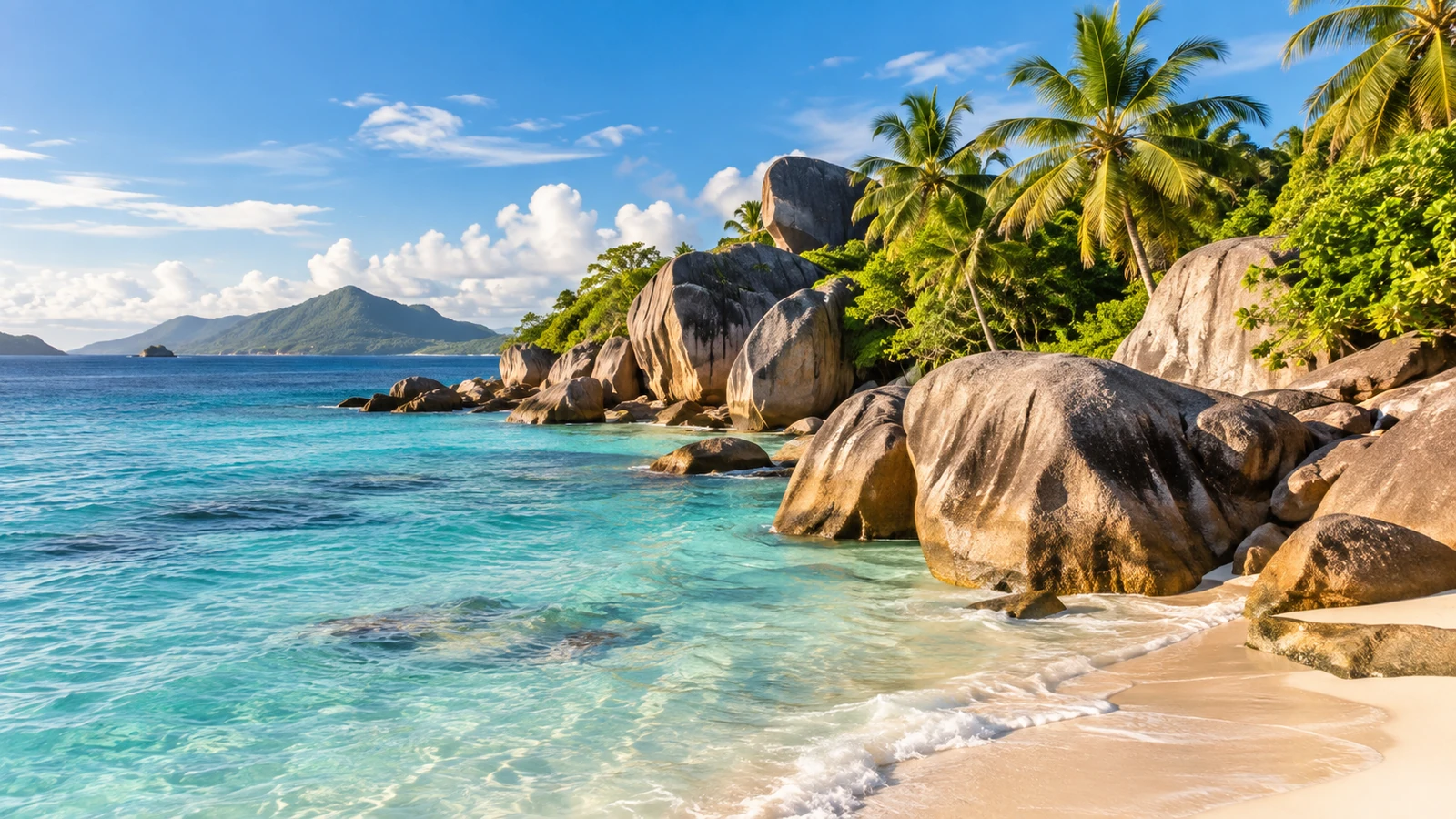
Scattered across the turquoise expanse of the western Indian Ocean, the Seychelles is an extraordinary archipelago where ancient granite peaks meet untouched tropical wilderness. Far from being typical volcanic islands, this nation holds the title of Earth's only mid-ocean granitic archipelago, boasting prehistoric rock formations and unique wildlife. From mysterious pirate treasure legends and record-breaking giant seeds to world-leading conservation efforts, the Seychelles is packed with surprising secrets. Read on to discover the fascinating facts that make this remote island state truly unique.
1. The Unsolved Mystery of La Buse's Pirate Treasure
During the Golden Age of Piracy in the late 17th and early 18th centuries, the secluded islands of the Seychelles served as a primary sanctuary for infamous ocean marauders. The legendary French pirate Olivier Levasseur, known as La Buse ("The Buzzard"), famously operated in the region after capturing a massive Portuguese galleon loaded with gold, diamonds, and church treasures. Folklore maintains that before he was executed in 1730, Levasseur threw a cryptic cryptogram into a crowd, daring anyone to locate his vast fortune. Historians and treasure hunters believe this legendary hoard was hidden somewhere in the dense jungles of Mahé Island. Despite decades of dedicated searches and elaborate deciphering efforts, La Buse's multi-million-dollar stash remains one of the world's greatest undiscovered pirate treasures.
2. The Coco de Mer and Its Botanical Records
The Seychelles is the exclusive native home of the Coco de Mer palm (Lodoicea maldivica), which grows naturally on only two islands, Praslin and Curieuse. This extraordinary tree produces the largest and heaviest seed in the entire plant kingdom, with single seeds weighing up to 40 pounds or more. Beyond its remarkable dimensions, the seed is famous for its suggestive shape, which strikingly resembles a woman's lower torso and buttocks. Centuries before the uninhabited islands were discovered, these enigmatic seeds drifted across the Indian Ocean to distant shores, sparking myths that they grew on underwater trees in the Garden of Eden. Today, the Coco de Mer is heavily protected by Seychellois law, requiring strict permits to buy or export approved specimens.
3. Esmeralda, the Heavyweight Male Tortoise on Bird Island
Residing on the private coral cay of Bird Island is Esmeralda, one of the world's largest and oldest living Aldabra giant tortoises. Despite carrying a traditionally female name given by early visitors, biological examinations confirmed that Esmeralda is actually a male tortoise. Tipping the scales at well over 600 pounds, he is widely recognized as one of the heaviest giant tortoises ever recorded in the wild. Estimates suggest Esmeralda was born in the 18th century, making him well over 170 years old as he freely roams the island's sandy paths. Visitors to Bird Island can walk alongside this gentle reptile, who remains a living symbol of the archipelago's unique ecological heritage.
4. A Matriarchal Thread in Creole Household Culture
Seychellois society features a fascinating social dynamic where women traditionally hold dominant authority within the domestic sphere. In many Creole households, mothers manage family finances, direct daily expenses, and make critical decisions regarding child rearing and domestic affairs. While men traditionally worked long hours away from home in fishing or plantation labor, women anchored the home environment and community social life. This matriarchal structure extends to intergenerational care, with grandmothers frequently playing pivotal roles in guiding extended family networks. Although modern economic changes have shifted workplace dynamics, the influential role of women remains a cornerstone of Seychelles culture.
5. The Breadfruit Legend of Guaranteed Return
Breadfruit is a traditional starchy staple in Seychellois cuisine, often roasted, boiled, or fried into crisp chips. A cherished local superstition claims that any visitor who eats breadfruit while staying in the islands is magically bound to return to the Seychelles in their lifetime. The fruit was originally brought to the region during colonial times to serve as a reliable, nutritious food source for plantation workers. Over generations, locals embraced the starchy produce and integrated it into both traditional recipes and island folklore. Whether traveling for business or leisure, newcomers are often playfully advised to sample breadfruit if they hope to see the paradise islands again.
6. Victoria's Status as One of the World's Smallest Capitals
Located on the northeastern coast of Mahé Island, Victoria serves as the political, cultural, and commercial heart of the Seychelles nation. It holds the distinction of being among the smallest official capital cities in the world by both population and geographic footprint. Visitors can easily walk across the entire city center in a few hours, passing colonial-era buildings, bustling street markets, and vibrant harbor docks. A prominent focal point of the town is a silver-painted clock tower erected in 1903, built as a miniature replica of London's Little Ben. Despite its small scale, Victoria remains a bustling hub where the vast majority of the country's civic and economic affairs are conducted.
7. The Earth's Only Mid-Ocean Granitic Islands
While most ocean islands across the globe were created by volcanic eruptions or coral accretion, the inner islands of Seychelles are fundamentally different. They constitute the only mid-ocean granitic island group on Earth, formed from continental granite rather than volcanic basalt. Geologists recognize these islands as shattered fragments of the ancient supercontinent Gondwana, isolated when India separated from Madagascar millions of years ago. This unique geological origin gives the Seychellois landscape its iconic aesthetic, featuring towering granite peaks rising directly from turquoise tropical waters. Because of this ancient continental bedrock, the soil and endemic plant species developed in complete isolation over tens of millions of years.
8. An Archipelago That Remained Uninhabited for Millennia
Unlike many tropical regions with ancient native cultures, the Seychelles archipelago had no indigenous human inhabitants prior to European exploration. For thousands of years, the islands remained completely untouched, inhabited only by dense colonies of seabirds, giant tortoises, and endemic marine life. Early Arab traders and Portuguese navigators mapped the islands during the 16th century, but none established permanent settlements. It was not until the 1770s that French colonists arrived with enslaved workers from East Africa and South India to establish initial agricultural outposts. Consequently, the modern Seychellois population evolved entirely from diverse waves of immigration, forming a unique multi-ethnic Creole identity.
9. The UNESCO-Recognized Moutya Dance
The Moutya is a deeply evocative traditional dance that forms an integral part of the cultural identity of the Seychelles. Created by enslaved Africans in the 18th century, the dance served as a clandestine form of emotional expression and secret communication amidst harsh plantation conditions. Dancers gather around a bonfire to the hypnotic rhythm of large goat-skin drums, which are heated over flames to tune their sound pitch. The sensual and rhythmic movements are accompanied by chanted lyrics that historically recounted hardship, yearning for freedom, and social commentary. In 2021, UNESCO officially inscribed the Moutya onto the Representative List of the Intangible Cultural Heritage of Humanity.
10. Massive Coconut Crabs with Incredible Power
The Seychelles is home to the coconut crab (Birgus latro), the largest land-living arthropod on the planet. These giant invertebrates can reach a leg span of over three feet and possess immensely powerful claws capable of lifting heavy objects. Their claws generate enough force to crack open hard coconuts, which form a major component of their omnivorous diet. Known informally as "robber crabs," they earned their nickname due to an unusual habit of stealing shiny objects, cutlery, and food from human campsites. Protected in several island sanctuaries, these formidable crustaceans play a vital role in cleaning the forest floor by consuming fallen fruits and organic detritus.
11. A Rare Tropical Haven Free of Malaria
Tropical island travel often involves concerns about vector-borne diseases, but the Seychelles offers an exceptionally safe health environment. The entire nation is completely free of endemic malaria, meaning travelers do not require anti-malarial medication during their visits. This phenomenon exists because the specific mosquito species capable of transmitting malaria, Anopheles, does not exist on the archipelago. Public health authorities maintain strict biosecurity measures at ports and airports to prevent invasive vector species from establishing themselves. As a result, visitors can enjoy the tropical climate, lush forests, and coastal trails without the threat of catching malaria.
12. Over Half of the Nation Is Protected Land
The Seychelles is a global pioneer in environmental conservation, boasting one of the highest proportions of protected land area on Earth. Over 50 percent of the nation's total land area is designated as national parks, strict nature reserves, and biosphere reserves. The government implemented strict environmental laws early on to protect fragile ecosystems from overdevelopment and habitat loss. Key protected areas include the Vallée de Mai on Praslin and the remote Aldabra Atoll, both designated as UNESCO World Heritage sites. This commitment to sustainability ensures that rare endemic species continue to thrive in their natural pristine habitats.
13. Ancient Granite Formations Pre-Dating Dinosaurs
The iconic granite boulders that adorn beaches like Anse Source d'Argent on La Digue are far more than picturesque photospots. Geologists estimate that these massive granite formations are around 750 million years old, originating in the Precambrian era. This means the rock formations predated the emergence of dinosaurs and formed long before the separation of modern continents. Over hundreds of millions of years, relentless ocean waves, tropical rains, and wind sculpted the smooth, dramatic grooves seen today. Standing amongst these prehistoric monoliths offers visitors a tangible connection to the ancient geological foundation of planet Earth.
14. The 1756 Stone of Possession and Colonial Legacy
In 1756, French officer Captain Nicholas Morphey laid a carved monument on Mahé known as the Stone of Possession (Pierre de Possession). This act officially claimed the uninhabited archipelago for King Louis XV of France, naming it after Jean Moreau de Séchelles, the French finance minister. The stone bears the carved royal coat of arms of France and served as the symbolic foundation of European colonial presence. Although control of the islands later shifted to Great Britain in the 19th century, the stone remained a prominent historical artifact. Today, the original Stone of Possession is preserved and displayed at the National Museum of History in Victoria.
15. The Critically Endangered Jellyfish Tree
One of the rarest and most mysterious botanical specimens on Earth is the Jellyfish Tree (Medusagyne oppositifolia), native solely to Mahé. The tree derives its unusual common name from its delicate white flowers, whose central reproductive organs closely resemble tiny swimming jellyfish. Long thought to be extinct, a small surviving population was rediscovered high in the granite cliffs during the 1970s. Today, fewer than 100 mature wild trees exist, struggling to reproduce naturally in their harsh, rocky environment. Conservation botanists in Seychelles are actively studying and propagating seeds in specialized nurseries to rescue this prehistoric plant from extinction.
Sources & References
This AI-assisted post was rigorously curated and fact-checked for accuracy by:
 Martin Roháček
How fun was this article? 🤔
Tap a star to rate it
🧠 Quiz: How closely were you paying attention?
10 questions — all answers are in the article above!
Enjoyed these facts? There's more! 💌
Fresh fun facts in your inbox. No spam, ever.