The Hard-Boiled Graphic Novel: 15 Fascinating Facts About Sin City
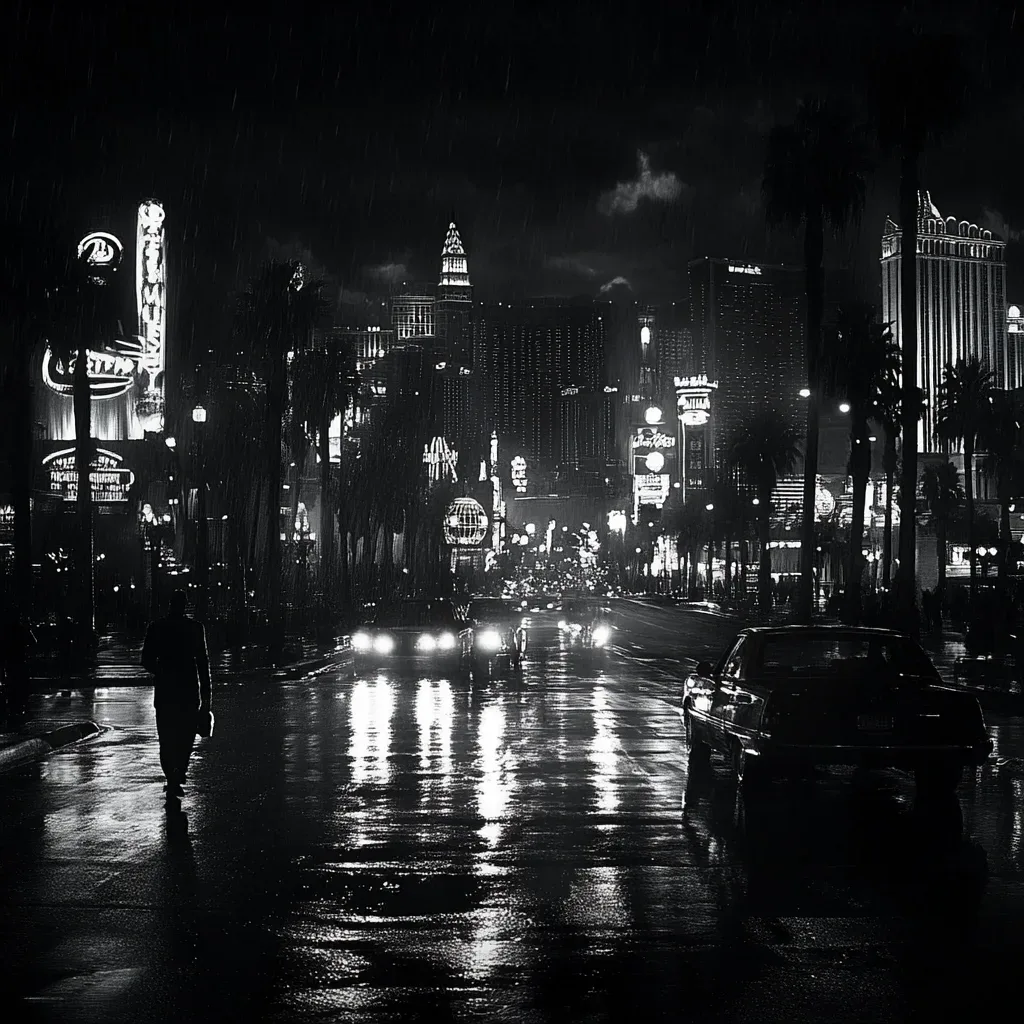
When Robert Rodriguez brought Frank Miller’s iconic neo-noir graphic novel series Sin City to the big screen in 2005, he broke almost every rule in Hollywood's playbook. By eschewing physical sets in favor of ground-breaking green screen digital soundstages, refusing to use a conventional script, and resigning from the Directors Guild of America to honor Miller’s co-directing credit, Rodriguez delivered a landmark visual masterpiece. From Quentin Tarantino’s famous one-dollar directorial cameo to secret prop crossovers and inventive special effects, here are 15 fascinating facts about the making of Sin City.
1. Rodriguez Shot a Test Short to Win Over Frank Miller
Comic creator Frank Miller was deeply skeptical of Hollywood adaptations after frustrating experiences writing screenplays for RoboCop 2 and RoboCop 3. To prove he would remain strictly faithful to Miller's vision, Robert Rodriguez self-funded a short film starring Josh Hartnett and Marley Shelton based on Miller's prose story "The Customer Is Always Right." Rodriguez flew to Austin, Texas, to show Miller the completed sequence alongside a side-by-side comic comparison. Stunned by how accurately Rodriguez translated his black-and-white noir artwork into motion, Miller immediately granted permission for a full feature adaptation.
2. Quentin Tarantino Directed a Scene for Just One Dollar
Director Quentin Tarantino stepped behind the camera as a special guest director for the eerie sequence where Dwight talks to the corpse of Jackie Boy in the front seat of a car. Rodriguez had previously composed soundtrack music for Tarantino’s film for a symbolic single dollar, so Tarantino returned the favor by directing this scene for the exact same fee. During the shoot, Tarantino experimented with digital cinema cameras, a technology he had previously avoided in favor of traditional film stock. His hands-on experience on Rodriguez’s digital set offered him a rare hands-on look at high-definition digital workflows.
3. The Entire Feature Used Only Four Physical Sets
Despite covering several expansive storylines across a sprawling criminal underworld, Sin City was produced almost entirely inside a digital environment at Troublemaker Studios in Austin. The production built only four physical sets for actors to interact with: Kadie’s Club Bar, Shellie’s apartment interior, a hospital exterior alleyway, and a diner counter. Everything else—from soaring skyscrapers and rain-slicked highways to sinister mansions—was generated digitally in post-production. Actors performed against completely empty green screens, relying heavily on precise physical marks and their imagination.
4. Miho's Swords Were Reused from Kill Bill
The deadly assassin Miho, played by Devon Aoki, wields sharp katana swords that carry a notable cinematic pedigree. Quentin Tarantino personally lent Rodriguez the iconic Hattori Hanzo swords used by Uma Thurman’s character in Kill Bill: Volume 1. Because Tarantino kept several original hero props stored safely in his garage, he allowed the production team to borrow them for Aoki’s action scenes. This subtle prop sharing created a silent crossover between the two directors' ultra-stylized cinematic universes.
5. Rodriguez Resigned from the DGA to Credit Frank Miller
The Directors Guild of America enforces a strict rule stating that a film may only credit one director, with rare exceptions granted for established filmmaking teams. When Rodriguez insisted that comic author Frank Miller receive full co-director credit alongside him, the guild flatly denied the request. Refusing to compromise on giving Miller equal billing for his artistic vision, Rodriguez formally resigned from the DGA prior to the film's release. His resignation forced him to relinquish his directing job on Paramount's John Carter of Mars, but it allowed him to preserve Miller's credit on Sin City.
6. Mickey Rourke and Elijah Wood Never Met on Set
Despite engaging in one of the film's most intense visual standoffs, stars Mickey Rourke (Marv) and Elijah Wood (Kevin) never set foot on the soundstage at the same time. Due to scheduling conflicts and the flexible nature of digital shooting, Rourke filmed his close-ups and action beats months before Wood arrived in Texas. Digital compositing artists layered their individual performances together in post-production to create the illusion of their terrifying confrontation. Wood later admitted in press interviews that he did not actually meet Rourke until the red-carpet premiere of the movie.
7. Fluorescent Red Liquid Was Used to Create White Blood
To replicate the stark, high-contrast aesthetic of Frank Miller’s black-and-white comic books, special effects artists had to get creative with blood presentation. Instead of standard fake blood, the crew filled blood packs with bright fluorescent red fluid. Under the soundstage's specialized lighting setups, this vivid red pigment popped sharply against the green screens. Digital color artists were then able to isolate the bright fluid effortlessly and key it into pure, stylized white blood during post-production editing.
8. Brittany Murphy Shot All Her Scenes in a Single Day
Brittany Murphy, who portrayed the tough-talking barmaid Shellie, delivered her entire performance in a whirlwind 24-hour shoot. Because the digital pipeline required no physical set changes or lighting relocations, Rodriguez was able to power through all of Murphy’s scenes across multiple storylines back-to-back. Murphy arrived on set, mastered her blocking against blank green screens, and wrapped her entire role in just one day. Despite the brief filming window, her compelling performance remains one of the most memorable elements of the film.
9. Jessica Alba’s Strict Clause Reshaped Her Striptease
Jessica Alba played exotic dancer Nancy Callahan, but she maintained a strict no-nudity clause in her acting contract. Rather than recasting the role or pushing for explicit scenes, Rodriguez embraced the restriction by focusing on shadow play, silhouettes, and rhythmic editing. Using creative camera angles, strategic backlighting, and stylized dance movements, the filmmakers evoked the seductive atmosphere of the comic without requiring actual exposure. Alba felt completely comfortable during filming, and the resulting sequences matched the comic's high-contrast artistic style perfectly.
10. The Graphic Novels Served Directly as the Script
Unlike traditional film adaptations, Sin City does not feature a standard screenwriter credit anywhere in its main title sequence. Rodriguez decided that Frank Miller’s original printed dialogue and panels were already perfectly structured for cinematic storytelling. Copies of Miller's graphic novels were bound and handed out to the cast and crew to serve as the official working script and storyboard guide. The film credits simply state that it is "Based on the graphic novels by Frank Miller," honoring the raw source material without traditional Hollywood script rewrites.
11. Leonardo DiCaprio Passed on Playing the Yellow Bastard
The role of the grotesque, pedophilic villain Roark Junior (aka the Yellow Bastard) was initially offered to Hollywood superstar Leonardo DiCaprio. Rodriguez approached DiCaprio to take on the villain role to break his leading-man streak, but DiCaprio ultimately declined the project due to scheduling commitments and the extreme prosthetics required. The role eventually went to Nick Stahl, who underwent hours of heavy makeup and full-body prosthetics every morning to transform into the rotting yellow antagonist.
12. Frank Miller Made a Fatal Cameo as a Priest
Comic author Frank Miller appeared on screen in a brief cameo role as Father Mulcahy, a corrupt Catholic priest. In the segment "The Hard Goodbye," Marv confronts Father Mulcahy inside a church confessional box seeking answers about the murder of Goldie. Miller's character makes the mistake of taunting Marv, leading to his swift execution right inside the confessional booth. Miller joked in behind-the-scenes interviews that getting killed by one of his own comic book creations was a highlight of his career.
13. Benicio del Toro’s Oscars Hair Saved His Look
When Robert Rodriguez ran into Benicio del Toro at an Academy Awards after-party, del Toro was sporting a scruffy, unkempt haircut and a long beard. Rodriguez immediately saw the actor as the perfect incarnation of the slimy, hypocritical police detective Jackie Boy. Rodriguez explicitly pleaded with del Toro not to touch his hair or shave until production began a few weeks later. Del Toro agreed, keeping his wild look intact, which ultimately became the signature design for Jackie Boy's unwashed character in the film.
14. Elijah Wood Wore Reflective Lenses for a Soulless Glare
To portray the cannibalistic, silent serial killer Kevin, Elijah Wood had to project an eerie, unblinking menace without speaking a single line of dialogue. Special effects artists provided Wood with custom contact lenses that had a subtle reflective coating designed to catch set lights. When illuminated by targeted off-camera spotlights, Wood's eyes flared with an inhuman, glowing reflection against the black-and-white background. This uncanny visual effect amplified the character’s predatory demeanor throughout his terrifying scenes.
15. Robert Rodriguez Was a One-Man Filmmaking Crew
Robert Rodriguez famously operated as a true auteur on Sin City, performing nearly every primary creative role behind the camera. In addition to directing and co-writing the adaptation plan, he served as the film's director of photography, principal film editor, and original score composer alongside Graeme Revell and John Debney. By operating the camera himself, editing raw footage daily in his home studio, and scoring the dark noir soundtrack, Rodriguez maintained total artistic cohesion while keeping production costs low.
Sources & References
This AI-assisted post was rigorously curated and fact-checked for accuracy by:
 Martin Roháček
How fun was this article? 🤔
Tap a star to rate it
🧠 Quiz: How closely were you paying attention?
10 questions — all answers are in the article above!
Enjoyed these facts? There's more! 💌
Fresh fun facts in your inbox. No spam, ever.