The Sacred Tradition: 15 Fascinating Facts About the Masters Tournament
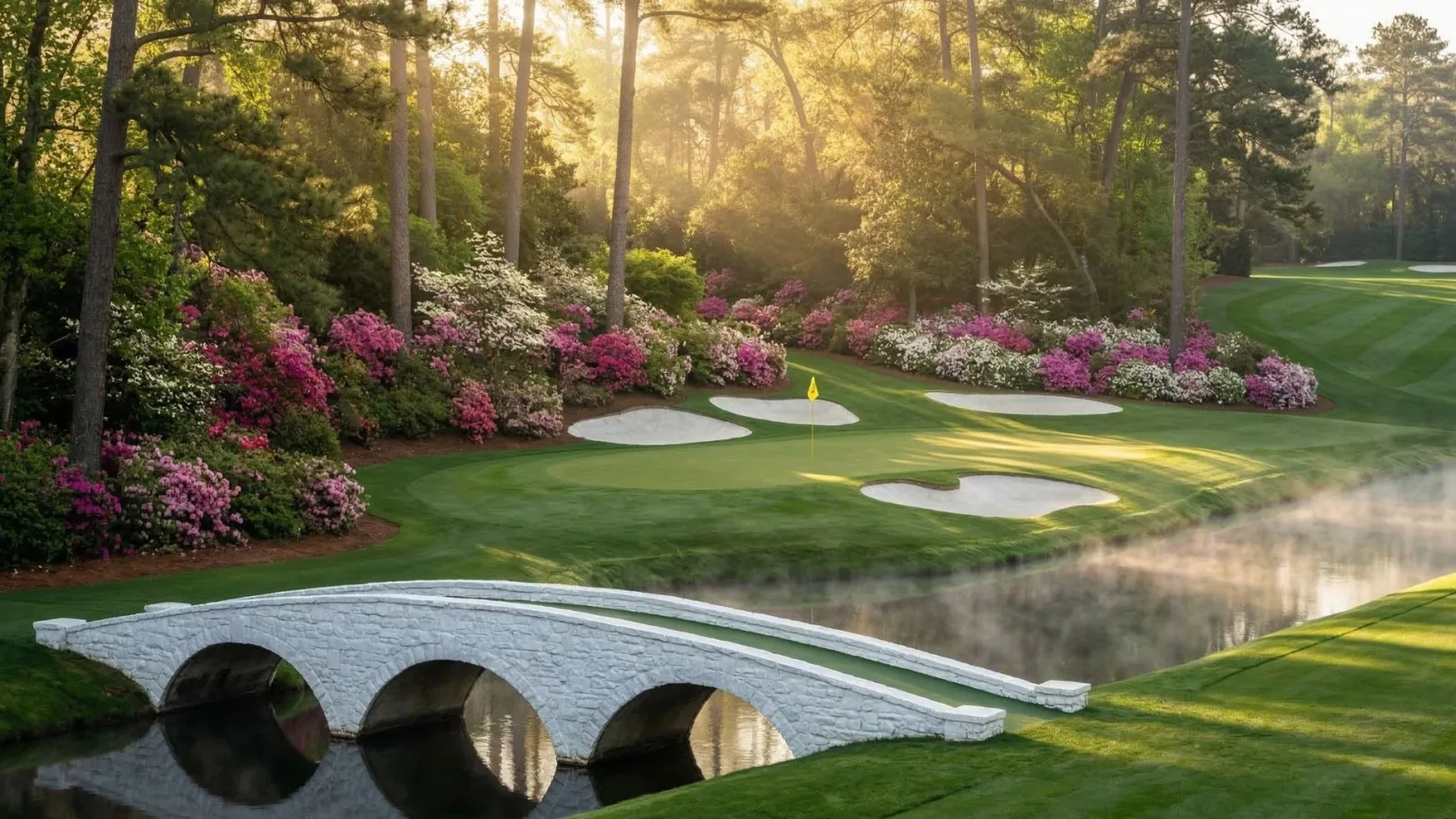
The Masters Tournament is golf's most prestigious event, celebrated as much for its steeped traditions and eccentric ground rules as for its world-class competition. Held annually at the exclusive Augusta National Golf Club, the tournament blends sporting excellence with strict regulations, ultra-affordable concessions, and botanical perfection. From white quartz hazards and banned broadcasting vocabulary to wartime cattle herds, Augusta National conceals a surprising backstory behind its pristine green fairways. Discover the fascinating secrets and lesser-known traditions that make the Masters an unmatched spectacle in global sports.
1. The Green Jacket Must Be Returned After One Year
Winning the Masters comes with one of sports' most iconic garments, but champions do not actually get to keep the Green Jacket at home permanently. The winner is permitted to take the jacket home for exactly one year following their victory, after which it must be returned to Augusta National Golf Club. From that point on, the jacket remains in a designated locker room on club grounds and can only be worn by the champion during visits to the property. The only major exception to this rule occurred when Gary Player took his jacket home to South Africa in 1961 and jokingly told club chairman Clifford Roberts he would have to come retrieve it himself.
2. Concession Prices Remain Frozen in Time
While modern sports stadiums are notorious for charging exorbitant prices for food and beverages, Augusta National offers a shockingly affordable menu. The tournament's legendary pimento cheese sandwich, wrapped in simple green wax paper, famously costs just a dollar and fifty cents. Other menu items, including egg salad sandwiches, barbecue, and soft drinks, are similarly priced at pocket-change rates. Augusta National intentionally keeps concession costs low as a gesture of appreciation for attendees, considering cheap food an essential part of the Masters experience.
3. Magnolia Lane Predates the Golf Course by Decades
The dramatic entrance road leading up to the Augusta National clubhouse, known as Magnolia Lane, is lined with 61 massive, canopy-forming magnolia trees. These historic trees were planted in the 1850s by Belgian nobleman Dennis Berckmans, long before the land became a golf facility. At the time, the property was Fruitland Nurseries, one of the most successful botanical nurseries in the American South. When golf legend Bobby Jones and investment banker Clifford Roberts purchased the property in 1931, they preserved the magnificent driveway, making it an iconic symbol of the tournament.
4. Broadcasters Follow a Strictly Enforced Script
Television commentators covering the Masters must adhere to a rigid code of terminology mandated by Augusta National executives. Announcers are strictly forbidden from using common sports words like "fans" or "spectators," and must instead refer to attendees exclusively as "patrons." Similarly, the front and back portions of the golf course are called the "first nine" and "second nine," rather than the "front nine" or "back nine." Broadcasters who violate these linguistic guidelines risk losing their credentials or being removed from future telecasts entirely.
5. Amen Corner Was Named After a 1930s Jazz Record
The notorious three-hole stretch comprising holes 11, 12, and 13 at Augusta National is globally known as "Amen Corner." Legendary sportswriter Herbert Warren Wind coined the moniker in a 1958 article for Sports Illustrated while searching for a phrase to describe where crucial, dramatic play occurred. Wind revealed years later that he drew inspiration from a 1930s jazz song titled "Shoutin' in that Amen Corner," recorded by Mezz Mezzrow. The phrase stuck instantly and has since become one of the most famous geographic labels in professional sports.
6. Electronic Devices Trigger an Immediate Lifetime Ban
Augusta National enforces one of the strictest security and media policies in modern entertainment by completely banning cell phones and electronic recording devices. Patrons must clear security checkpoints equipped with metal detectors, and anyone caught sneaking a smartphone onto the grounds faces immediate ejection. More importantly, the owner of the ticket badge used by the offender will have their tournament credentials permanently revoked for life. The zero-tolerance policy ensures that spectators remain fully present, creating an immersive atmosphere completely free from screens and selfie sticks.
7. Groundskeepers Use Dye for High-Definition Perfection
To ensure the course looks flawless for millions of television viewers around the world, Augusta National employs meticulous cosmetic techniques. Because the tournament takes place in early spring when local turf is still emerging from winter dormancy, agronomists use specialized, environmentally safe green dye to touch up any pale grass patches. The club also adds food-grade dark dye to its water hazards to create vivid reflections of the surrounding azaleas and pines. These extreme aesthetic measures give Augusta National its famously surreal, picture-perfect appearance during broadcast week.
8. The Defending Champion Selects a Custom Dinner Menu
Every Tuesday evening of Masters week, past winners gather for the exclusive Masters Club dinner, commonly known as the Champions Dinner. Established in 1952 by Ben Hogan, the tradition dictates that the defending champion hosts the gathering and selects the entire food menu. Over the decades, winners have served deeply personal dishes, ranging from Tiger Woods' cheeseburgers and milkshakes in 1998 to Hideki Matsuyama's gourmet sushi and Miyazaki wagyu beef in 2022. Attendance is restricted strictly to former Masters champions and the current Augusta National club chairman.
9. Live Cattle Maintained the Grounds During World War II
Due to severe labor shortages and fuel rationing during World War II, Augusta National was forced to close its course from 1942 through 1944. To prevent the manicured fairways from turning into overgrown wilderness, club co-founder Clifford Roberts purchased a herd of roughly 200 cattle to graze on the grass. The plan backfired slightly when the roaming cows damaged several key plants and stripped bark off iconic trees. Additionally, the club raised livestock and turkeys on the grounds to support the war effort before reopening for golf in 1945.
10. The Big Oak Tree Serves as Golf's Power Hub
Positioned directly behind the historic clubhouse sits a majestic live oak tree that was planted in the 1850s. During Masters week, the shaded area beneath this giant tree becomes the epicenter of business and networking for the global golf industry. High-powered executives, sports agents, corporate sponsors, and former players gather under its branches to negotiate major endorsement deals and discuss official golf politics. Because media access is strictly restricted elsewhere on the grounds, the Big Oak Tree remains the premier meeting ground for golf's ruling class.
11. Caddies Must Wear Standardized Heavy White Jumpsuits
Unlike other professional tournaments where caddies wear branded athletic shirts, Augusta National requires all caddies to wear identical heavy white jumpsuits and green hats. Originally, Augusta National employed local caddies who wore these uniform suits so they could be easily identified by club members. When players were finally permitted to bring their own personal caddies in 1983, the club maintained the iconic jumpsuit requirement to preserve tradition. Each suit prominently features the player's assigned number on the chest and surname across the back.
12. The Pristine White Bunkers Contain Crushed Quartz
The brilliant white hazards scattered around Augusta National look like tropical beach sand, but they are actually composed of crushed waste quartz. Known as "SP-55 sand," the material is a byproduct generated during feldspar mining in Spruce Pine, North Carolina. Augusta National began importing this specific quartz material in the 1970s because its sharp, angular grains hold their shape better on steep bunker slopes and do not splash as easily. The stark white quartz creates a striking visual contrast against the deep green turf and dark pine straw.
13. A United States President Helped Design Ike's Pond
Dwight D. Eisenhower was a devoted member of Augusta National long before and during his tenure as President of the United States. During a visit to the property in 1949, Eisenhower took a walk through the woods and suggested that building a dam across a spring-fed stream would create a superb fishing spot. Club chairman Clifford Roberts loved the idea, built the three-acre body of water, and officially named it "Ike's Pond." Today, Ike's Pond serves as a scenic centerpiece for the club's famous Par-3 Contest held on the Wednesday of tournament week.
14. Broadcasters Once Piped in Fake Bird Chirps
During the 1990s, observant birdwatchers listening to CBS telecasts noticed something strange about the ambient background noise. An ornithologist realized that the chirping birds heard during the broadcast included species like the white-throated sparrow, which do not sing in Georgia during early spring. Under scrutiny, CBS admitted that sound engineers had layered pre-recorded audio tracks of bird calls over the broadcast to create a calm atmosphere. The controversy prompted network producers to retire the synthetic bird audio and rely solely on live environmental microphones scattered across the course.
15. The Champion Receives a Sterling Silver Clubhouse Replica
In addition to donning the iconic Green Jacket and earning a lucrative prize check, the winner of the Masters receives two permanent trophies. The primary Masters Trophy, depicting the Augusta National clubhouse, was made in England and resides permanently at the club, engraved with the names of every winner and runner-up. However, the champion takes home a smaller, handcrafted sterling silver replica of the clubhouse mounted on a dark wood pedestal. The winner also receives a 3.4-ounce solid gold medal, making the Masters prize package one of the most comprehensive rewards in all of sports.
Sources & References
This AI-assisted post was rigorously curated and fact-checked for accuracy by:
 Martin Roháček
How fun was this article? 🤔
Tap a star to rate it
🧠 Quiz: How closely were you paying attention?
10 questions — all answers are in the article above!
Enjoyed these facts? There's more! 💌
Fresh fun facts in your inbox. No spam, ever.