The Luminous Shoreline: 15 Fascinating Facts About the Vaadhoo Island Sea of Stars
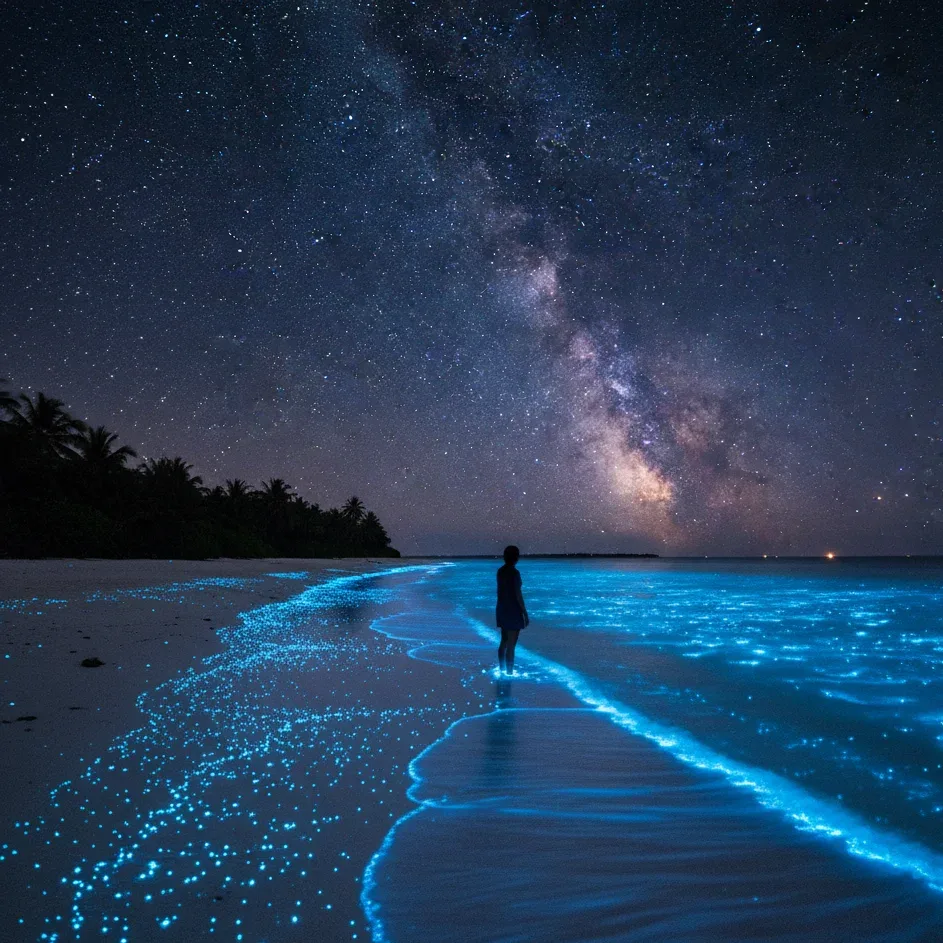
Along the remote shores of Vaadhoo Island in the Maldives lies a world-famous natural spectacle where night waves glitter with an ethereal blue luminescence. Known around the globe as the Sea of Stars, this surreal glowing shoreline looks like a fairy tale brought to life under pitch-black skies. Far from magical sorcery, the display is driven by millions of microscopic organisms responding to the movement of the ocean tide. From high-stakes evolutionary defenses to local Maldivian legends, discovering the science and mystery behind this glowing paradise reveals one of Earth's most breathtaking ecological treasures.
1. Microscopic Dinoflagellates Create the Illusion
The breathtaking display known as the Sea of Stars is not caused by glowing water itself, but by billions of single-celled marine organisms called dinoflagellates. Specifically, species such as Lingulodinium polyedra gather in dense concentrations in the warm ocean waters surrounding Vaadhoo Island. When these microorganisms are disturbed by movement, they emit a vivid blue-green light through a complex biochemical process. This light travels across the water, creating the optical illusion of a starry galaxy reflected in the ocean tide. Without microscopic plankton blooms, the shores of Vaadhoo would remain completely dark at night.
2. Mechanical Agitation Triggers the Glow
The luminous light produced by dinoflagellates only activates when physical force bends their cell membranes. As ocean waves crash onto the sand, footsteps tread upon the wet shore, or boat hulls cut through the water, mechanical stress triggers an electrical impulse inside the cell. This impulse opens voltage-gated proton channels, changing the internal acidity of the cell. The sudden shift in pH activates the enzyme luciferase, which oxidizes a molecule called luciferin and releases energy in the form of bright blue light. The entire chemical reaction occurs in mere milliseconds, producing instantaneous blue sparks wherever the water is disturbed.
3. Minimal Light Pollution on an Isolated Island
Vaadhoo Island is located in the Raa Atoll of the Maldives and has a permanent resident population of fewer than 600 people. Because the island remains largely undeveloped compared to major resort hubs, ambient artificial light pollution is practically nonexistent. This absence of human-made glow allows the natural bioluminescence to appear significantly brighter and clearer to the human eye. Dark skies create the extreme contrast necessary for visitors to see individual glowing droplets of water clinging to their hands or feet. The tiny community's commitment to quiet island life preserves one of the best viewing conditions on the planet.
4. Optimal Viewing Aligns with New Moons
While bioluminescence can occur year-round in tropical waters, the ideal time to witness the Sea of Stars spans from late summer through late autumn. During these months, water temperatures and nutrient flows encourage dense blooms of dinoflagellates near the coast. Furthermore, planning a trip during a new moon phase dramatically increases the visual impact of the event. Without the overhead glare of a bright moon, the midnight beach becomes pitch black, allowing the faint blue marine glow to shine with maximum brilliance. Local guides often recommend checking lunar calendars before setting out for a beach stroll.
5. The Glow Is Actually an Antipredator Defense
Although humans view the glittering shoreline as a romantic spectacle, the bioluminescent reaction evolved as a survival mechanism. When a small marine predator attempts to feed on dinoflagellates, the sudden burst of bright blue light startles the attacker. This temporary distraction gives the microscopic organism a chance to escape unharmed in the dark water. Additionally, the flash startles filter feeders that might otherwise consume entire colonies of plankton at once. What looks like ethereal magic to human observers is fundamentally a high-stakes self-defense strategy in the oceanic food web.
6. The Bioluminescent "Burglar Alarm" Effect
Beyond startling immediate threats, the chemical flash serves as an evolutionary burglar alarm in the open ocean. When a small shrimp or juvenile fish disturbs a dinoflagellate, the resulting blue burst illuminates the attacker in the pitch-black water. This unexpected light reveals the predator's location to larger tertiary predators hunting nearby, such as squid or larger fish. The small predator must then choose between fleeing or becoming prey itself, which spares the plankton population from being eaten. Scientists consider this multi-tiered ecological defense one of nature's cleverest indirect survival methods.
7. Blue Light Travels Farthest Underwater
There is a precise physical reason why the Sea of Stars glows in shades of brilliant electric blue rather than red, yellow, or green. In marine environments, short wavelengths of light—specifically blue and green—travel much farther through water than longer red wavelengths. Most ocean creatures have evolved eyes that are overwhelmingly sensitive to blue light, making it the most effective wavelength for communication and defense underwater. Because blue light cuts through dark ocean water effortlessly, the dinoflagellates get maximum visibility for every unit of chemical energy they expend. Consequently, the shorelines of Vaadhoo shimmer in a captivating neon blue color.
8. Rare Climate Stability Keeps Vaadhoo Consistent
Bioluminescent tides occur in various parts of the world, but they are notoriously unpredictable and often disappear after a single night. Vaadhoo Island stands out globally because its bioluminescent displays occur far more regularly throughout the year. The tropical climate of Raa Atoll maintains stable water temperatures and reliable nutrient-rich ocean currents that sustain dinoflagellate populations over long periods. While seasonal fluctuations still influence the density of the plankton, Vaadhoo offers far greater consistency than northern marine habitats where glowing algae blooms are fleeting summer anomalies. This reliability has turned Vaadhoo into a premier destination for eco-tourists.
9. Ancient Folklore and Starry Spirits
Long before marine biologists explained the chemistry of dinoflagellates, island inhabitants interpreted the phenomenon through local mythology and folklore. Maldivian oral traditions passed down stories of starry spirits descending from the heavens to dance along the ocean tide at night. The glowing blue footprints left in the sand were believed to be signs of good fortune and protective ancestral energy. Fishermen historically paid close attention to these glowing tides, using them as natural indicators of changing ocean currents and fish movements. Today, those ancient tales add a layer of cultural enchantment to an already breathtaking natural wonder.
10. The Shoreline Effect Creates "Glowing Sand"
As ocean waves break along the shore, thousands of dinoflagellates are washed onto the damp sand and left behind by the receding tide. Walking along the wet beach agitates these stranded organisms, causing the sand beneath a traveler's feet to ignite in glowing blue footprints. The temporary neon prints linger for several seconds before fading as the plankton settle or dry out. Swirling a stick or running fingers through the wet sand produces brilliant streaks of light that look like liquid stars. This interactive shoreline phenomenon gives rise to the popular description of walking on a bed of stars.
11. Capturing the Effect Demands Specialized Photography
Photographers traveling to Vaadhoo Island quickly learn that capturing the Sea of Stars requires specific camera techniques rather than standard smartphone snaps. Because the light emitted by individual plankton is faint, long-exposure photography on a sturdy tripod is essential. Using wide-aperture lenses and elevated ISO settings allows camera sensors to collect enough light to reveal the full grandeur of the blue tide. Photographers must balance exposure times carefully so that moving waves create a luminous mist without washing out the starry detail. Patience and pitch-black conditions are key to producing the iconic images seen in travel magazines.
12. A Thriving Coral Reef Marine Ecosystem
The waters surrounding Vaadhoo Island are not just home to bioluminescent plankton; they also support a thriving marine ecosystem within the Raa Atoll. Healthy coral reefs encircle the island, providing shelter for sea turtles, reef sharks, manta rays, and hundreds of tropical fish species. The same nutrient-rich water flows that nourish the plankton also fuel the complex food webs across these vibrant reef systems. Visitors who explore the island during the day can enjoy world-class snorkeling and diving before witnessing the night transformation. The glowing shoreline is merely one dimension of a rich and interconnected marine biosphere.
13. Sustainable Tourism and Local Hospitality
To accommodate the influx of curious travelers, small eco-friendly guesthouses such as the Vaadhoo View Inn have emerged on the island. Rather than building massive luxury resorts, local residents encourage sustainable community-based tourism that directly benefits the native population. Local guides lead night walks along the beach while educating guests on how to enjoy the bioluminescence without damaging fragile coastal habitats. By avoiding excessive artificial lighting along beachfront properties, the community actively preserves the dark skies required for the display. This model empowers local islanders while safeguarding a delicate natural phenomenon.
14. Vulnerability to Environmental and Climate Shifts
Despite its dazzling resilience, the bioluminescent ecosystem around Vaadhoo Island is sensitive to environmental disruption. Rising sea temperatures, ocean acidification, and chemical pollution caused by coastal runoff can decimate plankton populations. If water conditions shift too dramatically, dinoflagellates can suffer mass die-offs or toxic red tides that replace the beneficial glowing blooms. Conservationists and marine researchers monitor water quality around Raa Atoll to ensure environmental protection measures remain strong. Protecting Vaadhoo’s pristine waters is essential to guaranteeing that future generations can witness the glowing sea.
15. Sister Phenomenon Across Other Indian Ocean Spots
While Vaadhoo Island is the world's most famous hotspot for the Sea of Stars, similar bioluminescent displays occur sporadically across other islands in the Maldives, such as Muddhoo and Rangali. These neighboring sites share the same warm Indian Ocean waters and dinoflagellate species, occasionally producing magnificent illuminated beaches. However, Vaadhoo remains the top choice for travelers due to its unique combination of dark shorelines, minimal commercial development, and accessible local hospitality. Comparing different islands reveals how specific coastal geography and low light pollution combine to create the ultimate bioluminescent showcase.
Sources & References
This AI-assisted post was rigorously curated and fact-checked for accuracy by:
 Martin Roháček
How fun was this article? 🤔
Tap a star to rate it
🧠 Quiz: How closely were you paying attention?
10 questions — all answers are in the article above!
Enjoyed these facts? There's more! 💌
Fresh fun facts in your inbox. No spam, ever.