The Imperial Poet: 15 Fascinating Facts About Virgil
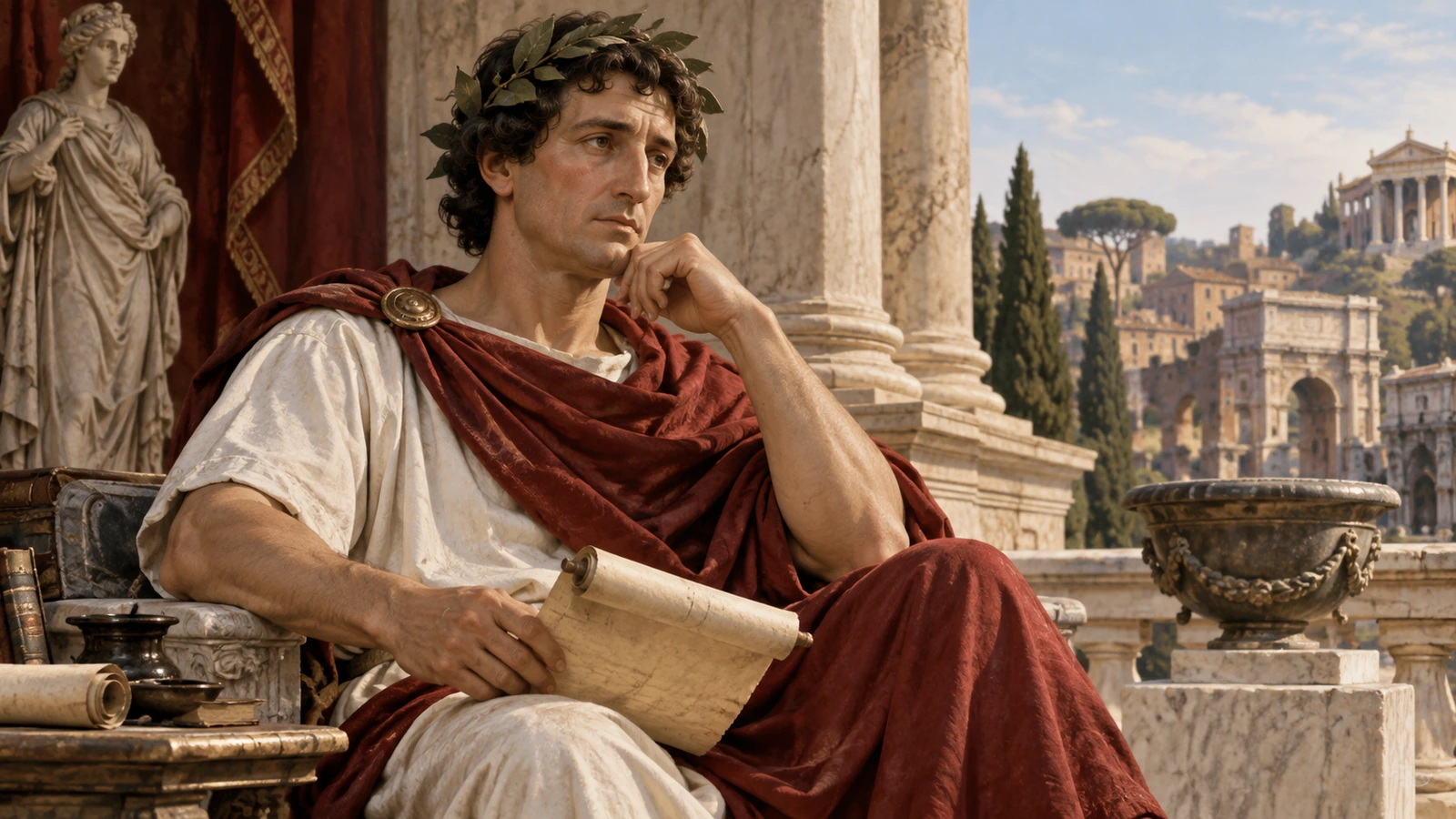
Publius Vergilius Maro, known to the modern world as Virgil, stands as one of ancient Rome's most towering literary figures. Best known for composing the epic Aeneid, his influence extended far beyond classical antiquity into medieval sorcery legends, Christian theology, and Renaissance literature. Yet behind his grand national mythology lies a surprisingly complex figure marked by crippling shyness, severe illness, and obsessive perfectionism. Here are 15 fascinating facts about the life, death, and incredible legacy of Rome's greatest poet.
1. He Tried to Burn His Masterpiece on His Deathbed
As Publius Vergilius Maro lay dying of a fever in Brindisi in 19 BCE, he begged his companions to burn the unpolished manuscript of the Aeneid. Virgil had spent over a decade crafting his magnificent epic poem detailing the mythical founding of Rome by the Trojan hero Aeneas. Before setting out on a research trip to Greece and Asia Minor, he had instructed his friends that should anything happen to him, the manuscript must be destroyed. Convinced the masterpiece was incomplete and unrefined, the dying poet even attempted to haul himself out of bed to burn the scrolls himself before his attendants restrained him. His deep perfectionism almost robbed world literature of one of its most influential founding texts.
2. Emperor Augustus Saved the Epic From the Flames
Fortunately for modern literature, Emperor Augustus flatly refused to honor the poet's final wish. Virgil had bequeathed his writings to his close friends and fellow literary figures Varius Rufus and Plotius Tucca, strictly instructing them not to publish any unrevised work. Recognizing the political and cultural monument that the Aeneid represented for the newly established Roman Empire, Augustus personally intervened and countermanded Virgil's orders. He directed Varius and Tucca to edit the text only minimally, removing obvious errors without adding a single new line of poetry. Thanks to imperial intervention, the immortal poem survived intact for future generations rather than ending up as ash in a funeral pyre.
3. He Was Nicknamed "The Maiden" Due to Extreme Shyness
Despite writing sweeping tales of heroic war and empire, Virgil was notoriously introverted and socially awkward. In his youth, his modest demeanor and quiet, chaste behavior earned him the Greek nickname Parthenias, which translates to "The Maiden" or "Virgin." The nickname was also a clever wordplay on his family name, Vergilius, which sounded similar to the Latin word for maiden. His discomfort with public fame was so severe that whenever adoring fans recognized him on the streets of Naples, he would duck into the nearest doorway to escape. He preferred the solitary quiet of his study over the bustling social life of Rome's literary elite.
4. He Compared His Writing Process to a Bear Licking Her Cubs
Virgil was an agonizingly slow writer who obsessively refined every single syllable he produced. According to the ancient biographer Suetonius, the poet composed only a few lines each morning before spending the remainder of the day editing and paring them down. He famously described his painstaking method by comparing himself to a mother bear bringing her newborn offspring into the world. Just as a bear licks her shapeless cubs into their proper physical form, Virgil claimed he birthed rough drafts and slowly "licked" them into poetic perfection. This meticulous craft enabled him to produce some of the most melodious and rhythmically complex hexameter verse in the Latin language.
5. The Aeneid Contains Dozens of Unfinished "Prop" Lines
Because Virgil died before completing his planned final three years of editing, the Aeneid remains technically incomplete. The epic contains fifty-eight partial lines of verse where the strict dactylic hexameter meter suddenly stops midway through. Later literary scholars referred to these truncated verses as tibicines, an ancient architectural term meaning temporary props or scaffolding. Virgil had inserted these incomplete lines as placeholders to keep his creative narrative flowing, fully intending to replace them with polished poetry later. The presence of these structural props offers a rare behind-the-scenes glimpse into the legendary poet's raw drafting process.
6. He Lost His Family Farm During Roman Land Confiscations
Long before he became Rome's premier poet, Virgil experienced the devastating trauma of displacement during the Roman civil wars. Following the Battle of Philippi in 42 BCE, the victorious triumvirs confiscated private farmland near Andes to compensate tens of thousands of retired soldiers. Virgil's ancestral estate was among the properties seized, casting his family into financial turmoil and emotional distress. Through the aid of influential patrons like Gaius Maecenas, the young poet eventually received monetary compensation and new lands, though the psychological scar remained. This bitter personal ordeal deeply influenced his early pastoral work, the Eclogues, which poignantly addresses the suffering of evicted farmers.
7. His Early Poetry Led Christians to View Him as a Pagan Prophet
In his Fourth Eclogue, written around 40 BCE, Virgil composed a mysterious poem predicting the birth of a miraculous child who would inaugurate a Golden Age. Modern historians believe Virgil was likely celebrating an upcoming birth within the family of his political patron or Marc Antony. However, early Christian theologians interpreted the mysterious passage as an unwitting pagan prophecy forecasting the arrival of Jesus Christ. This providential interpretation elevated Virgil to a unique status among classical authors, protecting his works from destruction during the Middle Ages. Consequently, his manuscripts were preserved in monastic libraries across Europe while many other pagan texts were systematically discarded.
8. People Used His Poems to Predict the Future for Centuries
During the late Roman Empire and throughout the Middle Ages, Virgil's works were assigned supernatural authority through a divination practice known as Sortes Vergilianae. Similar to a fortune-telling ritual, individuals seeking guidance would open a copy of the Aeneid to a completely random page and read the first verse their eyes landed upon. The selected line was believed to offer a prophetic omen regarding the seeker's future, career, or personal dilemmas. Historical figures, including Roman emperors like Alexander Severus and King Charles I of England, famously consulted the Virgilian Lottery before major political decisions. This practice demonstrated the near-scriptural reverent authority that western culture attributed to Virgil's writing for well over a millennium.
9. Medieval Folklore Transformed the Poet Into a Powerful Sorcerer
As centuries passed, popular folk imagination gradually reinvented the historical figure of Virgil into an enigmatic master of black magic and alchemy. By the twelfth century, oral traditions in Naples claimed that the ancient poet had possessed supernatural abilities used to construct magical wonders. Tales recounted how he created a mechanical bronze fly that repelled real flies from entering the city and built a magical bridge made entirely of air. Other stories credited him with constructing copper statues that guarded Naples from volcanic eruptions and foreign invaders. This bizarre mythic evolution completely eclipsed his historical identity as a literary figure among the common population of medieval Europe.
10. A Neapolitan Castle Is Named After a Legend Involving His Magical Egg
One of the most enduring local legends concerning Virgil's mythical powers centers on the famous seaside fortress in Naples known as Castel dell'Ovo. According to folklore, Virgil placed an enchanted, delicate egg inside a glass vial that was secured within an iron cage embedded in the fortress's foundations. The poet allegedly warned the citizens that the safety and stability of the entire city depended entirely upon the physical integrity of this hidden egg. Locals believed that if the egg ever shattered, the fortress would crumble into the sea and widespread catastrophe would befall Naples. Even today, the landmark retains its historical name, the "Castle of the Egg," in honor of this medieval magical tradition.
11. He Was the Unwilling Subject of a Popular Medieval Cautionary Tale
During the Middle Ages, a humorous and cautionary tale known as "Virgil in the Basket" became one of the most widely depicted stories in European art. The legend claimed that Virgil became smitten with the daughter of the Roman Emperor, who secretly offered to hoist him up to her tower bedroom in a large basket. Seeking to humiliate the famous scholar, she pulled him halfway up the tower wall and left him dangling helplessly above the public square all night. The next morning, the revered poet was exposed to the relentless ridicule of the entire town until the emperor ordered his release. The story was frequently referenced by medieval moralists as an example of how romantic infatuation could foolishly compromise the greatest mind.
12. Dante Alighieri Appointed Him as His Guide Through Hell
When the Italian poet Dante Alighieri authored his masterpiece, the Divine Comedy, in the early fourteenth century, he selected Virgil to play a central role. In the epic poem, Virgil appears as Dante's authoritative guide through the dark realms of the Inferno and Purgatorio. Dante revered the ancient Roman master as the supreme symbol of human reason, moral wisdom, and literary perfection. Because Virgil lived before the time of Christ, Dante placed his mentor in Limbo, the peaceful first circle of Hell reserved for virtuous pagans. This literary tribute permanently solidified Virgil's standing as the cornerstone of Western classical tradition and Renaissance humanism.
13. He Suffered From Chronic Poor Health Throughout His Entire Life
In stark contrast to the martial heroism and athletic prowess portrayed in his poetry, Virgil had a remarkably frail physical constitution. Ancient historical accounts record that he was plagued by severe chronic health issues, including frequent stomach ailments, intense headaches, and respiratory trouble. Modern medical historians suspect that the poet may have suffered from chronic tuberculosis or another debilitating long-term illness. To manage his delicate health, Virgil adopted an extremely modest, temperate diet and spent most of his adult life living quietly in Campania. His fragile condition made long journeys exceptionally hazardous, ultimately contributing to his premature death at age fifty-one during his travels in Greece.
14. His Epitaph Summarized His Entire Career in Two Verses
According to tradition, as Virgil lay dying, he dictated a brief Latin couplet to serve as his final epitaph. The famous lines read: Mantua me genuit, Calabri rapuere, tenet nunc Parthenope; cecini pascua, rura, duces. This translates to: "Mantua gave me life, Calabria took it away, now Naples holds me; I sang of pastures, fields, and leaders." The final phrase neatly summarizes his three major literary accomplishments: pastoral life in the Eclogues, agriculture in the Georgics, and military leaders in the Aeneid. This succinct inscription was later carved into his legendary tomb located on the outskirts of Naples.
15. Despite His Humble Image, He Died an Immensely Wealthy Man
Although Virgil maintained a quiet, modest lifestyle that mirrored his rustic poetic themes, he was actually one of the wealthiest men in Rome. His extraordinary literary talents attracted the generous patronage of Emperor Augustus and the wealthy statesman Gaius Maecenas. Through imperial gifts, substantial land grants, and lucrative inheritances, Virgil accumulated a vast personal fortune over his lifetime. At the time of his death in 19 BCE, historical records indicate his estate was valued at approximately ten million sesterces. This staggering sum put him on par with Rome's wealthiest aristocrats, proving that poetry could be an extraordinarily lucrative endeavor in Augustan Rome.
Sources & References
This AI-assisted post was rigorously curated and fact-checked for accuracy by:
 Martin Roháček
How fun was this article? 🤔
Tap a star to rate it
🧠 Quiz: How closely were you paying attention?
10 questions — all answers are in the article above!
Enjoyed these facts? There's more! 💌
Fresh fun facts in your inbox. No spam, ever.