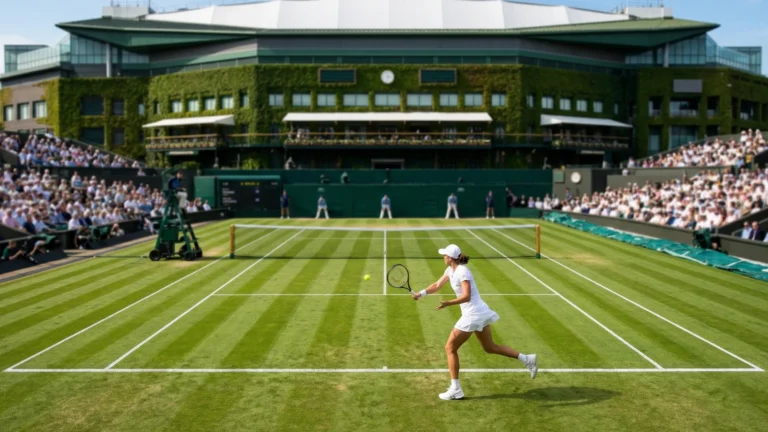
The incredibly exact grass length: Every single blade of grass on the championship courts is meticulously cut to precisely eight millimeters, requiring a dedicated team of groundskeepers to physically vacuum, mop, and perfectly manicure the courts every single day to ensure flawless ball bounces.
The extreme underwear inspections: The famous all-white dress code is so intensely strict that it explicitly applies to all visible undergarments and sweatbands. Umpires routinely inspect players before matches and will literally force them to go back to the locker room and change if they spot even a tiny millimeter of colored fabric.
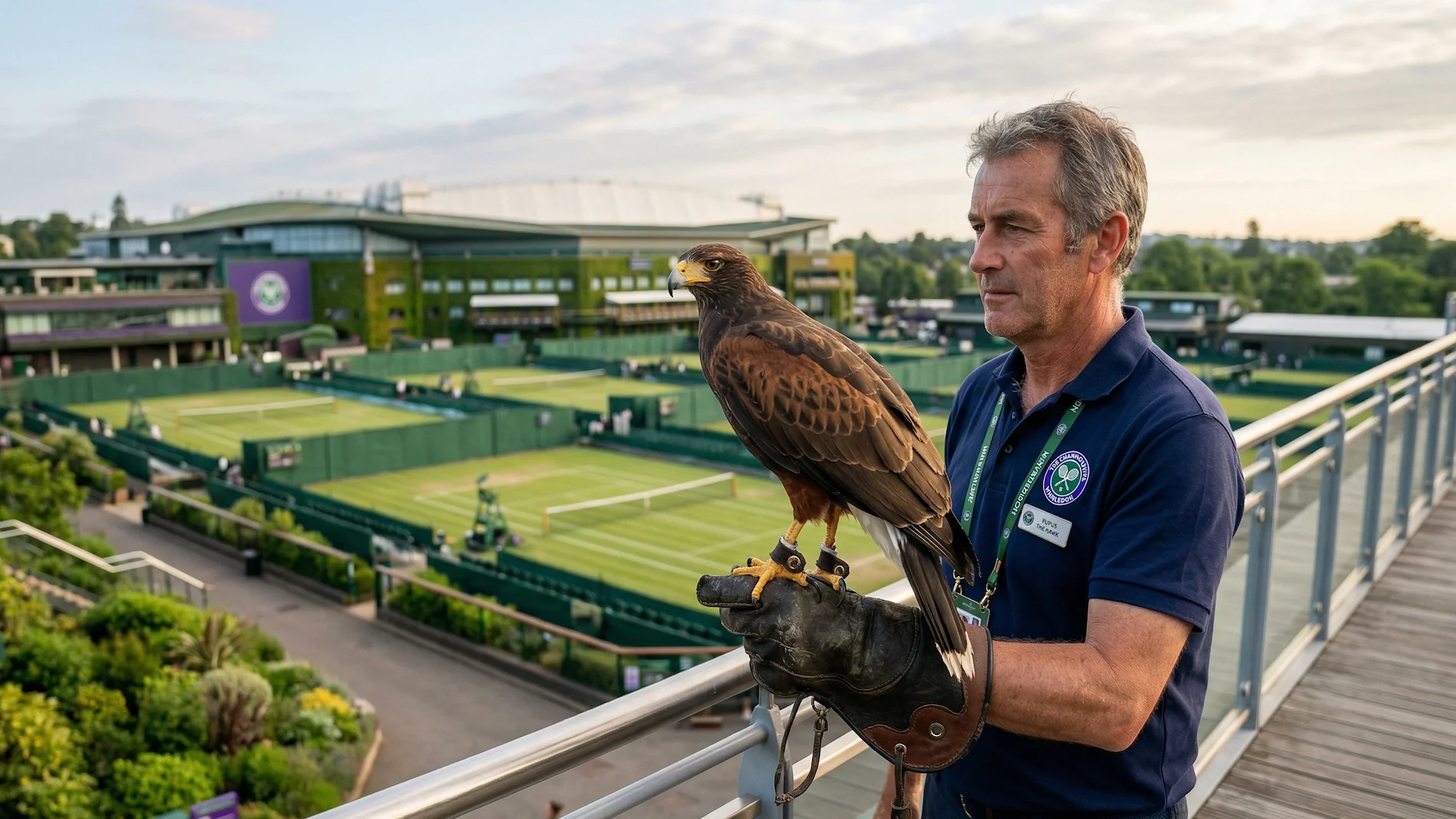
The official avian security guard: A majestic Harris hawk named Rufus is an official, working employee of the club. He carries his own security pass with the job title Bird Scarer, and his handler flies him over the courts every morning to terrify local pigeons and stop them from interrupting the matches.
The staggeringly massive strawberry consumption: Throughout the two-week tournament, hungry spectators consume a mind-boggling thirty-eight tons of fresh strawberries. These famous berries are locally sourced, picked at dawn, and served swimming in over seven thousand liters of fresh dairy cream.
The surprisingly late adoption of yellow tennis balls: For over a century, the tournament strictly used traditional white tennis balls. They stubbornly refused to adopt the high-visibility optic yellow balls until 1986, long after color television had made them the absolute standard everywhere else in the sporting world.
The devastating wartime bombing of the iconic Centre Court: During the Second World War, the club grounds were heavily targeted by the German Luftwaffe. A massive bomb crashed directly through the roof of Centre Court, obliterating over a thousand spectator seats and forcing the tournament to rely on temporary repairs for nearly a decade.
The absolute ban on traditional advertising hoardings: Unlike almost every other major sporting arena on the planet, the tournament strictly forbids flashing digital billboards and massive corporate sponsor logos around the courts, maintaining a pristine, uncommercialized green environment to preserve its traditional aesthetics.
The exhausting reality of the longest match in history: In 2010, John Isner and Nicolas Mahut played a grueling, superhuman match that stretched across three separate days. It lasted over eleven hours of pure playing time, forcing the players to take bathroom breaks and sleep overnight before concluding the final, historic set.
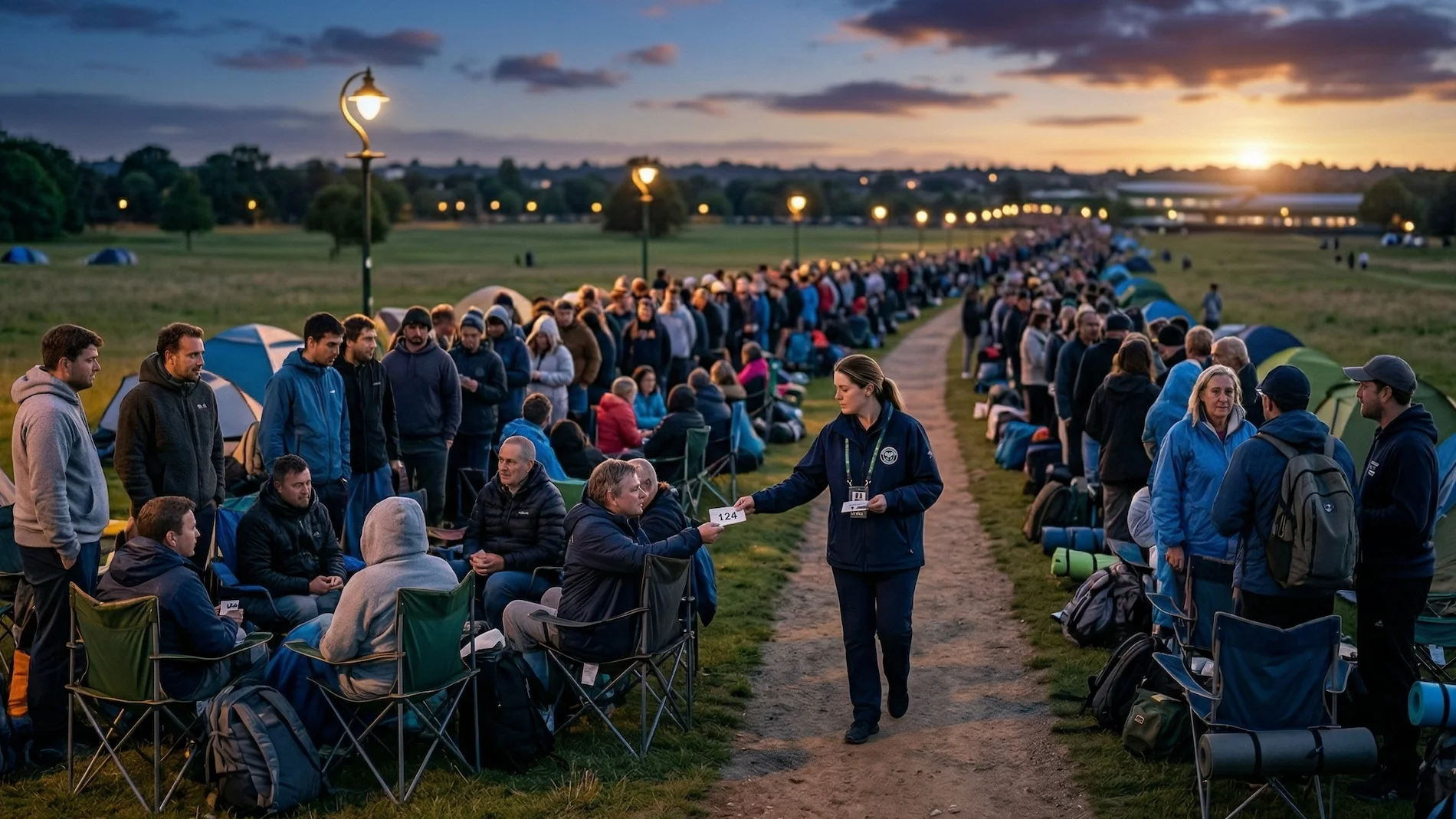
The highly organized, ancient art of The Queue: It is one of the only major global sporting events left where fans can literally pitch a two-person tent in a nearby park and camp overnight to buy premium tickets the next morning, provided they strictly adhere to a massive, highly specific civic code of conduct that bans loud music and gazebos.
The bizarre pineapple resting atop the men’s championship trophy: The prestigious gentlemen’s singles trophy is mysteriously topped with a completely golden pineapple. This quirky historical design choice originated in the nineteenth century, when pineapples were considered incredibly rare, expensive symbols of extreme wealth and hospitality in British high society.
The historic partnership behind the tennis balls: The sporting goods company Slazenger has been the official supplier of tennis balls for the tournament continuously since 1902. This incredible century-long arrangement makes it the single longest-running commercial sporting sponsorship in human history.
The strict, military-style training for ball boys and girls: Local teenagers selected to retrieve balls must endure months of intense physical and disciplinary training. They are rigorously drilled on how to stand completely still, exactly how to roll the balls flawlessly across the grass, and how to seamlessly blend into the background without drawing attention.
The extreme logistics of keeping the balls perfectly bouncy: Over fifty-five thousand tennis balls are used during the fortnight. They are meticulously stored in refrigerated, climate-controlled containers right up until the exact moment they are taken to the court, ensuring the internal atmospheric pressure remains completely flawless.
The royal bowing rules were recently relaxed: For decades, players were strictly required to bow or curtsy to the Royal Box upon entering Centre Court. The rule was officially modernized and changed so that players now only perform the gesture if the ruling Monarch or the Prince of Wales is physically seated in the box.
The tournament employs a dedicated, hyper-local meteorologist: Because grass courts become incredibly dangerous and slippery at the slightest hint of moisture, the club retains its own advanced weather team. They constantly monitor the skies and command the groundskeepers to deploy the massive court covers in a matter of seconds to protect the precious eight-millimeter grass.
Sources and References:
Wimbledon Official Archives: https://www.wimbledon.com/en_GB/news/articles/2024-07-05/wimbledon_lookback_75_years.html
Wimbledon Official Ticket Queue Guide: https://www.wimbledon.com/en_GB/atoz/queueing.html
Wimbledon Official Facts and Figures: https://www.wimbledon.com/en_GB/atoz/faq_and_facts_and_figures.html
Wimbledon Official Clothing Guidelines: https://www.wimbledon.com/en_GB/about_wimbledon/clothing_and_equipment.html