The Peaceful Chaos: 15 Fascinating Facts About Woodstock
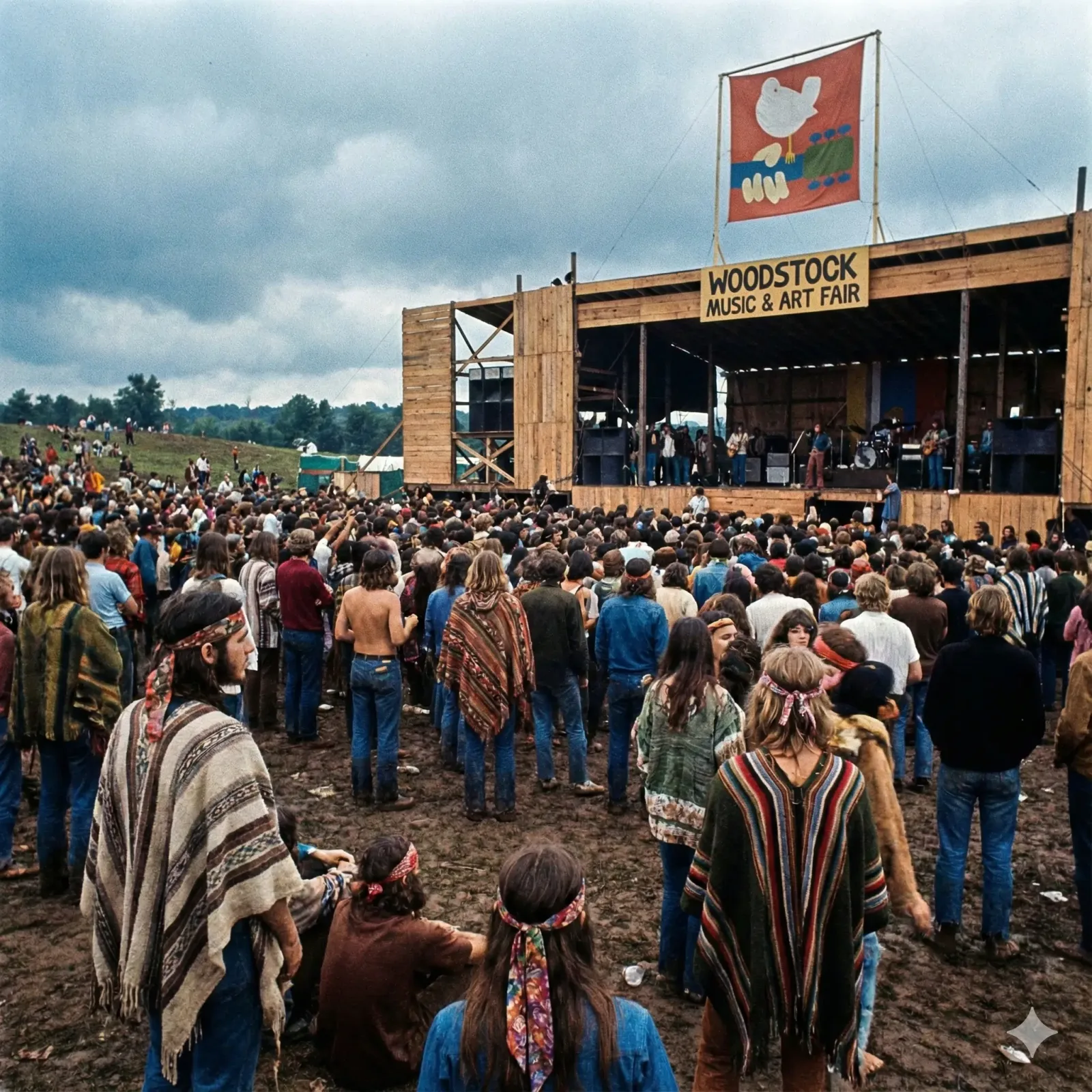
In August 1969, nearly half a million young people gathered in upstate New York for three days of peace, love, and music that redefined an entire generation. What was originally planned as a paid, medium-sized concert quickly spiraled into a historic cultural milestone marked by massive gridlock, unexpected acts of generosity, and unforgettable performances. From improvised anthem songs to unusual security tactics involving cream pies, the reality of Woodstock is even more wild than the legend. Here are 15 fascinating facts about the iconic 1969 festival that made history.
1. Woodstock Didn't Actually Take Place in Woodstock
Despite its legendary name, the Woodstock Music & Art Fair was not held in the town of Woodstock, New York. Organizers originally planned to hold the concert there, but local residents quickly rejected the permit due to crowd concerns. After moving the event to Wallkill, New York, town officials there also pulled the plug just weeks before the concert date. Desperate for a venue, promoter Michael Lang secured a site in Bethel, New York, roughly 43 miles southwest of Woodstock. The original name was retained because promotional materials had already been printed and distributed nationwide.
2. A Local Dairy Farmer Saved the Entire Event
When the festival was left without a location less than a month before opening, 49-year-old dairy farmer Max Yasgur stepped in to save the day. Yasgur agreed to rent his 600-acre alfalfa field in Bethel to the organizers for a fee reported between $50,000 and $75,000. Despite intense backlash from his conservative neighbors, Yasgur defended the young crowd's right to assemble peacefully. During the festival, he took the stage to address the crowd, praising them for proving to the world that half a million young people could gather without violence. Today, a monument marking his historic farm stands at the site of the main stage.
3. It Was Planned as a Ticketed Profit-Maker, Not a Free Concert
Woodstock was never intended to be a free event, with advanced tickets selling for $18, equivalent to around $150 today. However, as hundreds of thousands of un-ticketed attendees arrived days early, the sheer volume of people overwhelmed the perimeter. Recognizing that building chain-link fences and ticket booths would create dangerous choke points, organizers abandoned ticket collection entirely on Friday afternoon. Promoter John Roberts made the split-second decision to declare it a free festival to ensure public safety. This choice instantly plunged the festival's young financial backers into millions of dollars of personal debt.
4. A 17-Mile Traffic Jam Turned the Highway into a Parking Lot
The sudden influx of over 400,000 festival-goers completely paralyzed the infrastructure of rural upstate New York. A traffic jam stretching 17 miles along the New York State Thruway forced thousands of fans to abandon their cars on the highway and hike up to 15 miles to reach the farm. The gridlock was so extreme that artists could not reach the venue by road, prompting organizers to arrange military and civilian helicopters to fly performers directly to the back of the stage. The gridlock even led the Governor of New York to declare the festival site a disaster area.
5. Richie Havens Improvised "Freedom" During an Extended Opening
Folk singer Richie Havens was not originally scheduled to open the festival, but he was bumped to the top spot because the scheduled openers were stuck in traffic. Havens took the stage on Friday afternoon and played for nearly three hours to keep the massive crowd entertained while organizers scrambled. After exhausting his entire repertoire of songs and performing multiple encores, Havens ran out of rehearsed material. He began strumming his guitar furiously and improvised the song "Freedom," incorporating elements of the spiritual "Sometimes I Feel Like a Motherless Child." The impromptu performance went on to become one of the defining anthems of the counterculture movement.
6. The Iconic Logo Features a Catbird, Not a Dove
The famous Woodstock promotional logo featuring a bird perched on the neck of a guitar was designed by artist Arnold Skolnick. While most people assume the bird represents a dove of peace, Skolnick actually modeled the silhouette on a catbird native to his home in Shelter Island, New York. Skolnick created the design in just a few hours after the venue shifted from Wallkill to Bethel, using cut-out paper shapes to craft the bold graphic. The bird originally perched on a flute in early sketches, but Skolnick changed it to a guitar stem to match the musical nature of the event.
7. Security Was Handled by a Commune Armed with Cream Pies
Fearing that traditional police officers would escalate tension, organizers hired Hugh Romney—better known as Wavy Gravy—and his Hog Farm commune to manage peace-keeping duties. Dubbed the "Please Force," the Hog Farmers maintained order without weapons, badges, or physical force, relying instead on humor, gentle coaxing, and de-escalation tactics. Wavy Gravy famously announced to the media that his security force would threaten disruptive attendees with cream pies and fizzy water rather than violence. The Hog Farm commune also established a crucial "trip tent" to help care for attendees experiencing bad drug trips, treating them with sympathy and quiet support.
8. Jimi Hendrix Earned the Most Money but Played to an Emptying Field
Jimi Hendrix was the highest-paid performer at Woodstock, negotiating a top-tier contract worth $18,000 for his performance. Due to weather delays and prolonged sets, Hendrix was scheduled as the final closing act and did not take the stage until 9:00 AM on Monday morning. By the time he performed his historic, feedback-drenched rendition of "The Star-Spangled Banner," an estimated 370,000 attendees had already left to return to work or school. Only about 30,000 exhausted, mud-caked spectators remained to witness what became one of the most famous guitar performances in rock history.
9. Santana Received $750 and Played While High on Mescaline
Before Woodstock, Santana was a relatively unknown Latin rock band from San Francisco, landing a slot on the lineup primarily through their manager, Bill Graham. They were paid just $750 for their high-energy set, making them one of the lowest-compensated acts at the entire festival. Bandleader Carlos Santana had taken mescaline earlier in the day, expecting to perform late in the evening, but the schedule was abruptly bumped up by several hours. Santana famously recalled that the neck of his electric guitar felt like a slithering snake while he played, forcing him to improvise wildly to keep his composure through their scorching breakthrough performance.
10. Major Legendary Bands Refused Invitations to Perform
Several of the world's biggest acts famously skipped the historic gathering for various logistical and personal reasons. The Beatles declined after John Lennon reportedly demanded that his wife Yoko Ono's band also play, though visa complications were the official issue. Bob Dylan turned down the offer despite living near the original town of Woodstock, reportedly annoyed by the influx of hippies invading his neighborhood. Led Zeppelin also declined, with manager Peter Grant choosing to book higher-paying solo headlining gigs that weekend rather than sharing the stage with dozens of rival acts.
11. Emergency Airlifts Delivered Food from Local Communities and the Military
With massive unexpected crowds consuming all food supplies within 24 hours, the festival faced a severe humanitarian crisis by Saturday afternoon. Recognizing the dire situation, members of a local Jewish Community Center in nearby Monticello prepared thousands of kosher sandwiches using donated bread and meats. Additionally, the U.S. Army dispatched helicopters from nearby Stewart Air Force Base to drop off tons of food, water, and medical supplies directly into the muddy fields. These generous airlifts helped prevent widespread starvation and medical emergencies during the weekend.
12. Medical Tents Treated Thousands of Foot Injuries and Bad Trips
Despite popular myths about wild lawlessness, the festival's medical operations were remarkably organized and compassionate. A team of volunteer doctors and nurses treated over 5,000 patients over four days, mostly for barefoot cuts, stepping on broken glass, and severe sunburns. Volunteers also cared for over 700 individuals suffering from adverse drug reactions, employing calm reassurance rather than police intervention. Surprisingly, medical records show that despite torrential downpours and cramped conditions, no major violent crimes were reported during the entire gathering.
13. Official Records Confirm Three Fatalities Occurred at the Event
Tragically, three deaths were officially recorded during the four-day festival despite the overall peaceful nature of the crowd. One teenager, 17-year-old Raymond Mizzak, was accidentally run over by a tractor while sleeping in his sleeping bag in a nearby hayfield. Another attendee died from a severe insulin reaction related to type-1 diabetes, while the third official fatality was attributed to a prescription drug overdose. While rumors of additional hidden deaths persisted for years, law enforcement and medical authorities confirmed only those three fatalities.
14. The Event Left the Organizers in Deep Financial Debt
Because the festival converted into a free event on Friday afternoon, the four young promoters were left facing financial ruin. The festival accumulated over $1.3 million in debt immediately following the weekend, equivalent to nearly $10 million today. Co-creator John Roberts had to rely on his family's trust fund to pay off vendors, stagehands, and artist contracts. It took more than a decade of revenue from the successful 1970 documentary film and official soundtrack record sales for the promoters to finally break even and see a profit.
15. The Clean-Up Took Five Months and Cost Over $100,000
When the music ended on Monday morning, the festival site was left covered in thousands of tons of wet garbage, discarded clothing, tents, and abandoned automobiles. Clean-up crews worked for five long months using heavy bulldozers and farm equipment to clear the debris and restore Max Yasgur's land. The massive restoration effort cost promoters over $100,000 and required burning or burying acres of wet trash. Decades later, the pristine pasture was recognized for its historic importance and added to the National Register of Historic Places in 2017.
Sources & References
This AI-assisted post was rigorously curated and fact-checked for accuracy by:
 Martin Roháček
How fun was this article? 🤔
Tap a star to rate it
🧠 Quiz: How closely were you paying attention?
10 questions — all answers are in the article above!
Enjoyed these facts? There's more! 💌
Fresh fun facts in your inbox. No spam, ever.