
The Majestic Wilderness: 15 Fascinating Facts About Yosemite National Park
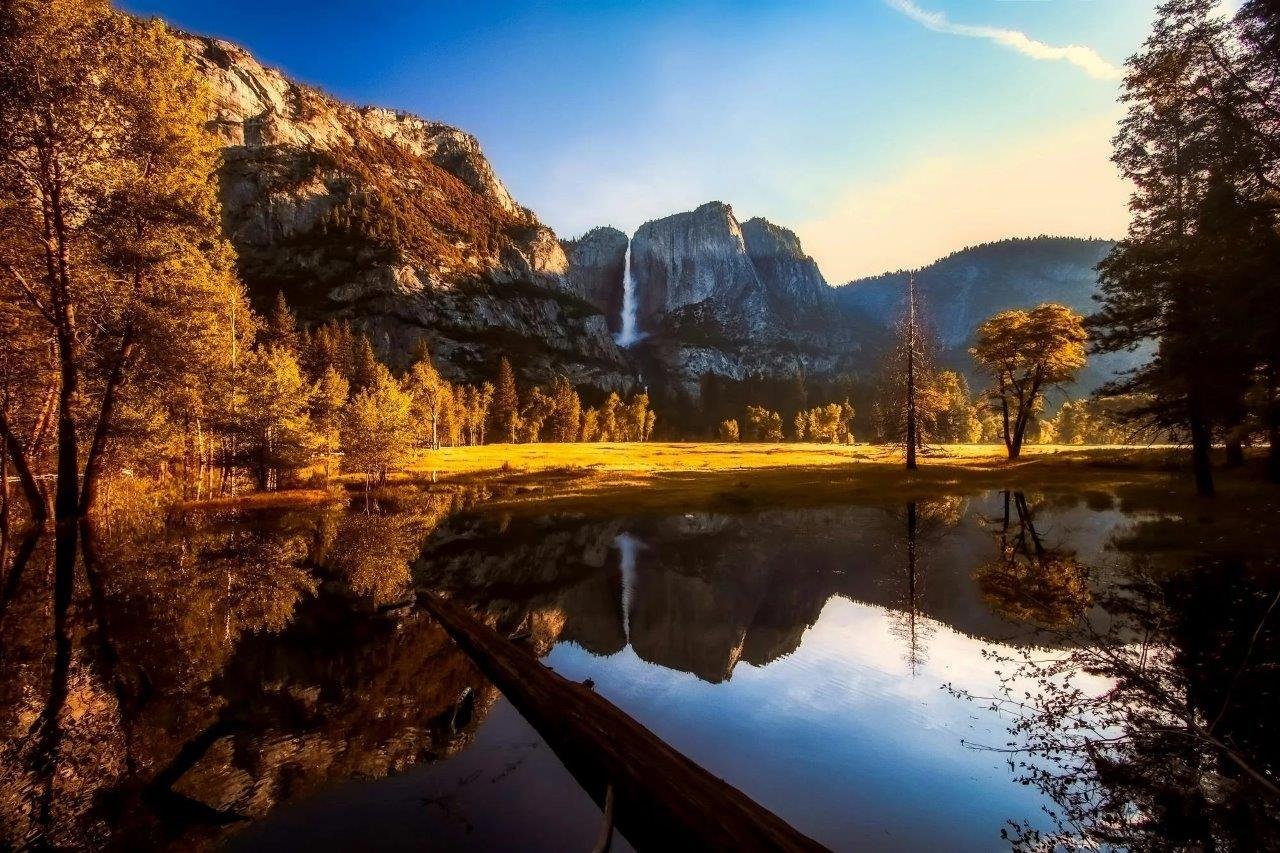
Nestled deep in California’s Sierra Nevada mountains, Yosemite National Park is a world-renowned sanctuary of towering granite monoliths, ancient giant sequoias, and plunging waterfalls. Beyond its famous postcard vistas like El Capitan and Half Dome, Yosemite holds a rich tapestry of ecological marvels and unexpected history. From historic military stewards and secret wartime hospitals to rare natural phenomena that defy expectations, this park is full of surprises. Read on to discover 15 fascinating facts about one of America’s most beloved national parks.
1. The Name "Yosemite" Likely Means "Killer"
Many visitors assume the name Yosemite is a gentle Native American word describing beautiful mountains or clear water. In reality, the word originates from the Southern Sierra Miwok word Yohhe'meti, which translates directly to "they are killers." The term was used by neighboring indigenous tribes to describe the local Ahwahneechee inhabitants, who were feared for their fierce combat skills. When European settlers arrived during the Gold Rush, they misunderstood the regional terms and applied the moniker to the valley itself. Today, the park preserves both the Miwok language heritage and the ancient human story that spans thousands of years in the valley.
2. Buffalo Soldiers Were Yosemite's First Official Rangers
Before the National Park Service was created in 1916, protecting public lands fell upon the shoulders of the United States Military. In 1903, African American regiments known as the Buffalo Soldiers were dispatched to patrol Yosemite and nearby Sequoia. Led by Captain Charles Young, the first Black national park superintendent, these 9th Cavalry troops accomplished incredible feats under difficult conditions. They built crucial roads, constructed trails, evicted illegal cattle grazers, and stopped commercial poachers. Their discipline and pioneering conservation work established the operational framework for modern park ranger duties.
3. Horsetail Fall Creates a Glowing "Firefall" Phenomenon
For a few short weeks every February, a stunning natural illusion draws photographers from around the globe to Yosemite Valley. If weather conditions line up precisely, the setting sun hits Horsetail Fall at a specific angle, illuminating the mist in vibrant shades of orange and red. This optical spectacle makes the falling water look like a stream of liquid fire pouring down the eastern face of El Capitan. Historically, hotel managers used to dump actual burning hot coals off Glacier Point for tourist entertainment, but today's optical firefall is completely natural. The event depends heavily on a clear sky and sufficient snowpack melting off the summit.
4. Yosemite Bid to Host the 1932 Winter Olympics
In the late 1920s, local business leaders and park advocates sought to put Yosemite on the global sports map by bidding for the 1932 Winter Olympic Games. Don Tresidder, president of the Yosemite Park and Curry Company, spearheaded an aggressive campaign to showcase the valley's snow-covered slopes. To prove the park's capabilities, developers constructed a large outdoor ice rink, toboggan runs, and ski jumps near the valley floor. Although the International Olympic Committee ultimately awarded the Games to Lake Placid, New York, the effort established Yosemite as a premier winter sports destination in California.
5. The Ahwahnee Hotel Served as a Naval Hospital During WWII
The luxurious Ahwahnee Hotel, famous for its majestic granite architecture and upscale accommodations, took on a radically different role during World War II. In 1943, the U.S. Navy leased the historic building and converted it into a specialized psychiatric and convalescent hospital for servicemen. Known officially as the U.S. Naval Special Hospital, the facility treated thousands of sailors suffering from combat fatigue and physical injuries. Military doctors believed that the serene mountain scenery and crisp outdoor air would accelerate psychological healing. After the war ended, the hotel underwent extensive restorations before reopening to civilian tourists in 1946.
6. Alex Honnold Completed a Historic Rope-Free Climb of El Capitan
Yosemite Valley is widely considered the spiritual home of modern rock climbing, dominated by the imposing 3,000-foot granite monolith known as El Capitan. On June 3, 2017, professional climber Alex Honnold achieved what many thought was physically impossible by scaling the vertical wall without ropes, harnesses, or safety equipment. His miraculous "free solo" ascent of the Freerider route took just three hours and 56 minutes. This staggering feat of human endurance and mental focus was documented in the Oscar-winning film Free Solo. Honnold's climb remains one of the greatest athletic achievements in human history.
7. The Rare Yosemite Toad Walks Instead of Hopping
High up in the alpine meadows of Yosemite resides one of the park's most unique endemic creatures: the Yosemite toad (Anaxyrus canorus). Unlike typical frogs and toads that propel themselves across distances with long leaps, this amphibian primarily walks across the marshy terrain. Found almost exclusively within a high-elevation band of the Sierra Nevada, the species relies on shallow snowmelt pools to breed during brief summer months. Due to climate change, habitat shifts, and fungal disease, the Yosemite toad is currently classified as a threatened species under federal protection. Scientists monitor their populations closely as an indicator of overall alpine ecosystem health.
8. Moonbows Illuminate Yosemite's Waterfalls at Night
Waterfalls are striking by day, but Yosemite offers a nocturnal marvel known as a moonbow, or lunar rainbow. During spring and early summer, heavy snowmelt creates voluminous mist at the base of Yosemite Falls and Lower Yosemite Fall. When a bright full moon rises in a clear night sky, the moonlight reflects and refracts through the mist particles, creating a rainbow in the dark. While the human eye often perceives these nocturnal arcs as silvery-white bands, long-exposure photography reveals a full spectrum of brilliant colors. Photographers calculate lunar angles months in advance to capture this rare atmospheric phenomenon.
9. Supercooled Slush Forms Lava-Like "Frazil Ice"
During cold spring mornings, streams beneath Yosemite's massive waterfalls experience a peculiar hydrological event known as frazil ice formation. When turbulent, fast-flowing water drops below freezing temperatures without turning into solid ice, tiny ice crystals accumulate in suspension. This slurry surges downstream like a thick, milky river of slush that behaves surprisingly like flowing lava. As the sun rises and temperatures warm, the frazil ice slowly dissipates back into clear water. It is a striking seasonal reminder of how temperature and fast hydraulics interact in alpine environments.
10. Black Bears Once Learned to Peel Open Car Doors
Yosemite is home to hundreds of American black bears, which historically presented significant human-wildlife conflict challenges. In past decades, bears became so accustomed to human food left inside parked vehicles that they learned ingenious tactics to access it. Bears were observed inserting their claws into vehicle door frames and pulling down with immense leverage, popping doors open like tin cans. To end this destructive behavior, the park implemented strict food storage regulations and installed heavy-duty bear-proof food lockers in all campgrounds. Today, bear break-ins have dropped dramatically, helping keep both wildlife and visitors safe.
11. Yosemite Falls Is the Tallest Waterfall in North America
Plunging down the granite cliffs of Yosemite Valley, Yosemite Falls stands as a magnificent natural centerpiece dropping a total of 2,425 feet. This towering feature consists of three distinct cascades: the Upper Fall, the Middle Cascades, and the Lower Fall. It reigns as the tallest measured waterfall in North America and ranks among the tallest in the entire world. Because the falls rely heavily on winter snowpack rather than rain, water flow peaks during late spring and often dries up completely by late summer.
12. The U.S. Army Ran Yosemite for Over Two Decades
Long before federal park rangers patrolled the trails, the U.S. Army managed Yosemite National Park from 1891 until 1914. Troops established a seasonal military headquarters in Yosemite Valley every summer to enforce regulations and protect natural resources. Cavalry officers evicted thousands of sheep that were illegally grazing on subalpine meadows, tracked down timber thieves, and cracked down on wildlife poachers. Their strict military governance laid the administrative groundwork that preserved the land until civilian stewardship was codified by Congress.
13. Giant Sequoias in Mariposa Grove Pre-date Ancient Civilizations
The southern portion of the park protects the Mariposa Grove, home to over 500 mature giant sequoias (Sequoiadendron giganteum). The most famous resident of the grove is the Grizzly Giant, an ancient tree estimated to be roughly 3,000 years old. This living giant was already a sapling long before the rise of the Roman Empire and has survived hundreds of natural wildfires throughout human history. Giant sequoias rely on high-intensity fires to clear forest undergrowth and burst open their seed cones, making controlled burns a vital conservation tool today.
14. Deep Glacial Ice Sculpted the Iconic Valley Monoliths
The dramatic U-shaped profile of Yosemite Valley was carved over millions of years by powerful forces of water, tectonic uplift, and glacial ice. During successive Ice Ages, massive glaciers up to 2,000 feet thick filled the valley floor, grinding against the hard granite bedrock. As the glaciers moved, they scraped away weaker rock layers while polishing sheer granite walls like Half Dome and El Capitan. When the ice finally melted away roughly 10,000 years ago, it left behind a flat valley floor surrounded by vertical cliffs that draw millions of visitors every year.
15. Yosemite Scenery Inspired Walt Disney's Classic Attractions
The iconic wilderness of Yosemite has inspired countless artists, writers, and visionaries, including animator Walt Disney. Disney was an avid fan of the national parks and visited Yosemite frequently with his family for quiet retreat and inspiration. The majestic pine forests, dramatic rock formations, and rustic lodge architecture influenced his creative team during the development of classic wilderness-themed attractions. Most notably, the visual design and rustic aesthetic of Disney's Country Bear Jamboree and Disney's Wilderness Lodge resort draw direct inspiration from Yosemite's unique wilderness culture.
Sources & References
This AI-assisted post was rigorously curated and fact-checked for accuracy by:
 Martin Roháček
How fun was this article? 🤔
Tap a star to rate it
🧠 Quiz: How closely were you paying attention?
10 questions — all answers are in the article above!
Enjoyed these facts? There's more! 💌
Fresh fun facts in your inbox. No spam, ever.