The Prankster's Almanac: 15 Fascinating Facts About April Fools' Day
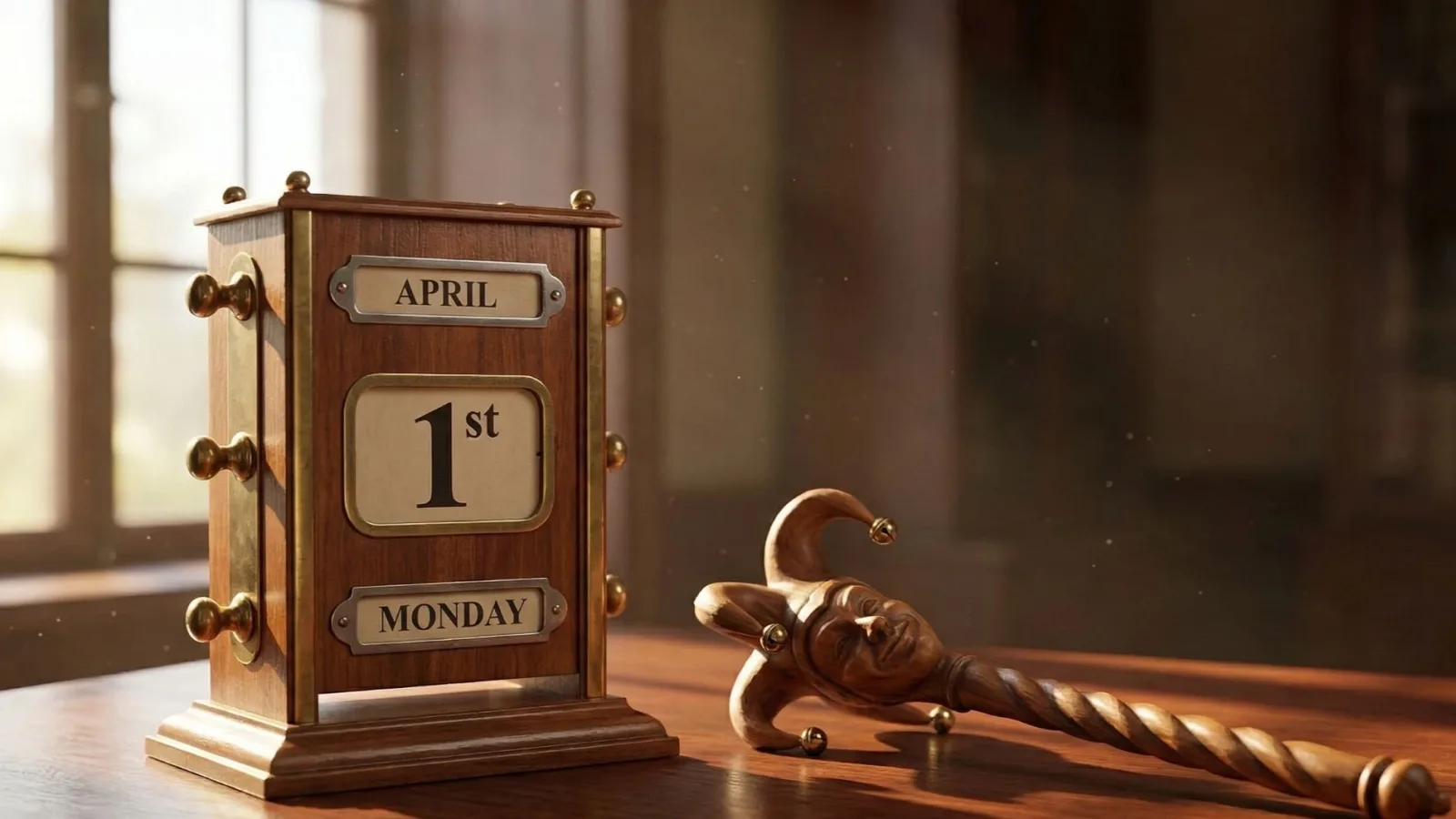
April Fools' Day has inspired centuries of elaborate hoaxes, media pranks, and cultural trickery around the world. From calendar reform in Renaissance France to high-tech corporate tricks by tech giants, April 1 has long been dedicated to playful deception. Discover the origins, outrage, and surprising history behind one of humanity's most bizarre annual traditions.
1. A Calendar Switch Created the Original April Fools
In 1564, King Charles IX of France reformed the French calendar via the Edict of Roussillon, shifting the official start of the new year from April 1 to January 1. Pope Gregory XIII standardized this change across the Catholic world in 1582 with the introduction of the Gregorian calendar. However, news traveled slowly in the sixteenth century, and many rural citizens continued celebrating the new year during spring. Those who embraced the calendar reform ridiculed those who clung to old traditions, labeling them fools and subjecting them to fake gifts and public mockery.
2. French Pranksters Stick Paper Fish on Unsuspecting Backs
In France, April Fools' Day is known as Poisson d'Avril, which translates directly to April Fish. The tradition dates back centuries and involves children and adults secretly sticking paper cutouts of fish onto the backs of unsuspecting friends, teachers, and coworkers. When the victim finally discovers the paper creature, the trickster shouts Poisson d'Avril in celebration. Historians believe the fish symbol represents young, easily caught fish during early spring, symbolizing a naive or easily fooled person. To this day, French bakeries sell fish-shaped chocolates and pastries throughout early April.
3. A Prankster Faked a Volcanic Eruption in Alaska
On April 1, 1974, residents of Sitka, Alaska, woke up to alarming black smoke billowing from Mount Edgecumbe, a dormant volcano that had been quiet for thousands of years. Terrified citizens contacted local police and emergency services, believing a catastrophic eruption was imminent. In reality, local prankster Oliver "Porky" Bickar had spent months planning the stunt, eventually flying 100 old rubber tires into the volcanic crater by helicopter. He set the tires ablaze and spray-painted "APRIL FOOL" in giant letters in the snow beside the crater rim. FAA officials and local authorities ultimately praised Bickar for the legendary execution of his illusion.
4. National Public Radio Announced Richard Nixon Was Running Again
In 1992, National Public Radio's flagship news program Talk of the Nation dropped a massive political bombshell by announcing that disgraced former president Richard Nixon was running for office again. The radio segment featured a remarkably convincing voice actor named Rich Little impersonating Nixon, who delivered a fake speech announcing his new campaign slogan. The imposter boldly claimed that he had never done anything wrong and promised he would never do it again. Switchboards at NPR were overwhelmed by thousands of outraged listeners who missed the subtext of the April Fools broadcast. The network only revealed the joke during the second half of the program after triggering national media frenzy.
5. Burger King Advertised a Burger Designed for Lefties
On April 1, 1998, fast-food giant Burger King placed a full-page advertisement in USA Today introducing a brand-new menu item called the Left-Handed Whopper. The advertisement claimed that the sandwich contained the exact same ingredients as the original burger, but all condiments were rotated 180 degrees to benefit America's left-handed citizens. According to the company's fake science, this minor structural adjustment redistributed topping weight so ingredients would not spill out for left-handed eaters. The stunt was a massive success, resulting in thousands of customers walking into restaurants specifically requesting the specialized burger.
6. Gmail Was Originally Assumed to Be an Elaborate Corporate Gag
When Google officially launched its webmail service Gmail on April 1, 2004, tech journalists and users universally assumed it was a hoax. At the time, popular email providers like Hotmail and Yahoo offered users a mere two to four megabytes of inbox storage space, whereas Google promised a staggering one gigabyte for free. Because Google was already famous for posting absurd April Fools jokes every year, the public dismissed the press release as an impossible fantasy. The company had to repeatedly assure media outlets that the high-capacity email platform was a genuine product that would permanently transform digital storage standards.
7. A Swedish News Expert Tricked Viewers with Nylon Tights
In 1962, Sweden had only one television channel, which broadcast exclusively in black and white. On April 1, the network's technical expert, Kjell Stensson, appeared during the evening news to inform the nation that a major technological breakthrough had been made. Stensson explained that viewers could instantly convert their black-and-white television screens to vivid color by pulling a pair of nylon stockings over the glass screen. He provided a solemn, highly technical explanation involving light diffraction through fine fabric meshes to make the claim believable. Hundreds of thousands of Swedish citizens rushed to grab nylon tights, stretching them over their screens in vain.
8. The BBC Convinced Millions That Spaghetti Grew on Trees
On April Fools' Day in 1957, the highly respected BBC news program Panorama broadcast a three-minute segment about a bumper spaghetti harvest in southern Switzerland. Narrated by distinguished broadcaster Richard Dimbleby, the video showed Swiss villagers carefully picking long strands of cooked pasta hanging from tree branches. At the time, delicate dried pasta was not a everyday food item in the United Kingdom, leaving many British viewers completely unfamiliar with how it was produced. The BBC switchboard was inundated with phone calls from fascinated viewers asking how to cultivate their own home-grown spaghetti trees.
9. The BBC Caused an Uproar by Turning Big Ben Digital
In 1980, the BBC World Service reported to its global audience that London's world-famous Big Ben clock tower was undergoing an aggressive modern renovation. The broadcast claimed that the historic analog clock faces were being replaced with a sleek, four-sided digital display to bring the landmark into the modern era. To make the prank even more provocative, announcers stated that the original mechanical clock hands would be given away to the first four listeners who called the station. Outraged citizens flooded the network with angry complaints, forcing the BBC to issue an official public apology.
10. Scotland Historically Celebrated April Fools for 48 Hours
While most nations limit practical jokes to a single morning, Scotland historically celebrated the holiday over two full consecutive days. The first day was called Huntigowk Day, named after the phrase "hunt the gowk," where gowk means a cuckoo or a foolish person. On this day, victims were sent on absurd errands with sealed letters asking the recipient to send the bearer further down the road. The second day was known as Tailie Day, which focused entirely on pranks directed at a victim's backside, establishing a tradition of pinning paper tails and signs onto friends' clothes.
11. High-Tech Documentary Footage Fooled Wildlife Lovers with Flying Penguins
In 2008, the BBC released a teaser trailer for a natural history documentary series titled Miracles of Evolution, presented by Terry Jones. The video showcased remarkable footage of a newly discovered colony of Adelie penguins taking flight from freezing Antarctic ice sheets. The film depicted the birds soaring into the sky and traveling thousands of miles to spend their winters basking in South American rainforests. To achieve the breathtaking visual effect, the BBC employed sophisticated animation artists. Nature lovers worldwide were briefly captivated by the magnificent flying birds before realizing the video was a clever broadcast hoax.
12. Taco Bell Announced It Purchased America's Liberty Bell
On April 1, 1996, fast-food chain Taco Bell ran full-page advertisements in seven major American newspapers announcing it had purchased the historic Liberty Bell from the United States government. The company declared that the national landmark was being renamed the Taco Liberty Bell in order to help reduce national debt. The advertisement sparked immediate public outrage, causing angry citizens to deluge both Taco Bell headquarters and the National Park Service with protesting phone calls. Taco Bell later revealed the prank and donated $50,000 toward the preservation of the real Liberty Bell.
13. Nineteeth-Century Londoners Were Invited to See Lions Being Washed
One of the oldest documented mass April Fools hoaxes took place in London during the mid-nineteenth century. Pranksters created official-looking paper invitation cards complete with formal wax seals, inviting unsuspecting citizens to the Tower of London. The cards stated that guests were cordially invited to witness the solemn annual ceremony of "Washing the White Lions" at the castle's moat on April 1. Dozens of gullible visitors arrived at the historic fortress only to discover that no such event existed and that the royal menagerie had already moved to the London Zoo.
14. Google Claimed Its Search Engine Could Read Your Mind
Long before modern artificial intelligence, Google kicked off its long-standing tradition of corporate April Fools pranks in the year 2000 with the launch of MentalPlex. The search engine homepage featured a swirling, hypnotic graphic that instructed users to stare intently into the center of the screen. Users were directed to mentally visualize the search query they wished to perform while remaining completely silent and still. After a few moments, clicking the graphic would display funny error messages claiming the user's thoughts were infected with bad energy or crowded with pop culture trivia.
15. Many Hispanic Nations Celebrate Practical Jokes in December
While much of the Western world engages in practical jokes on April 1, many Spanish-speaking countries celebrate their equivalent tradition on December 28. Known as El Día de los Santos Inocentes or the Day of the Holy Innocents, the holiday stems from a religious commemoration of a biblical narrative. Over centuries, the observance transformed into a day of lighthearted pranks, humor, and harmless trickery across Spain and Latin America. Media outlets in these regions frequently publish outrageously fake news stories, revealing the joke at the end by calling the fooled reader an inocente.
Sources & References
This AI-assisted post was rigorously curated and fact-checked for accuracy by:
 Martin Roháček
How fun was this article? 🤔
Tap a star to rate it
🧠 Quiz: How closely were you paying attention?
10 questions — all answers are in the article above!
Enjoyed these facts? There's more! 💌
Fresh fun facts in your inbox. No spam, ever.