1. England Played the First-Ever Official International Match
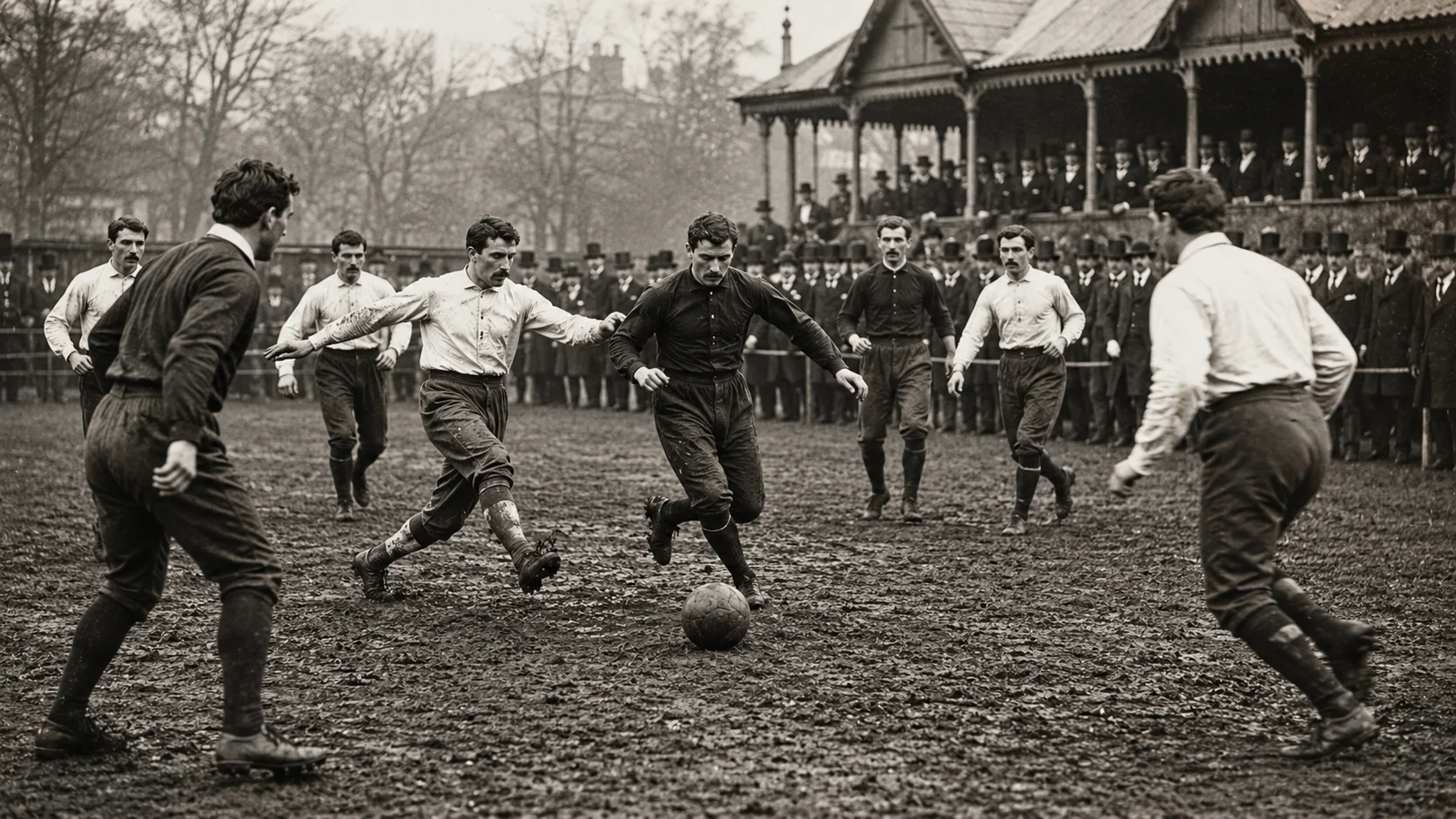
Before the massive modern stadiums and billion-dollar television deals, international football began on a humble cricket ground. On November 30, 1872, England officially faced Scotland in Glasgow in what FIFA recognizes as the first-ever official international football match. Played in front of roughly 4,000 spectators, the fiercely contested game ended in a 0-0 draw. England wore white shirts and caps, while the Scottish team consisted entirely of players from Queen’s Park FC.
2. The “Three Lions” Crest Dates Back to Richard the Lionheart
The iconic crest worn proudly on the chest of every English player has deep, medieval royal roots rather than modern sporting origins. The symbol was officially established by King Richard the Lionheart in the late 12th century as the royal arms of England. It combined the single lion used by his predecessors, Henry I and Henry II, into a unified symbol of three lions. The English Football Association formally adopted this historic royal seal when it was founded in 1863.
3. A Team of American Amateurs Humiliated England in 1950
Entering the 1950 World Cup in Brazil, England was heavily favored to dominate the tournament, assuming their professional stars would easily dismantle the competition. Instead, they suffered what is widely considered the greatest upset in World Cup history, losing 1-0 to a United States team composed entirely of part-time amateurs. An unknown forward named Joe Gaetjens scored the winning goal, shocking the English press so thoroughly that many newspapers initially assumed the telegraph report was a massive typographical error.
4. Geoff Hurst’s Hat-Trick Secured the 1966 World Cup
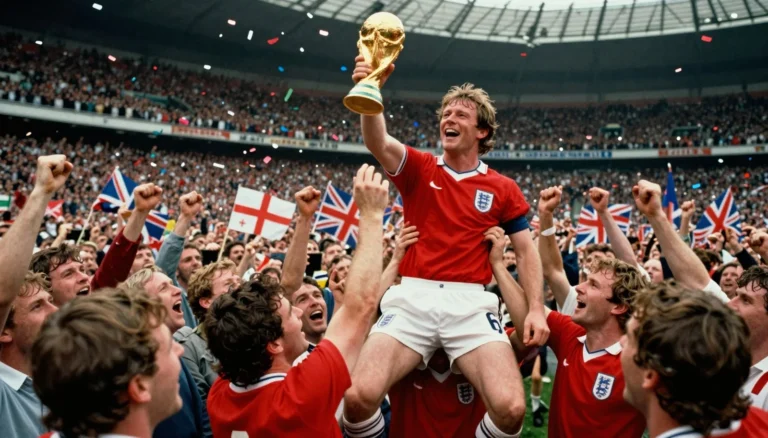
England’s absolute pinnacle of international success occurred on home soil during the 1966 World Cup final at Wembley Stadium. Facing a formidable West German side, English striker Geoff Hurst delivered the ultimate individual performance by scoring a sensational hat-trick. His dramatic third goal in the dying seconds of extra time secured a 4-2 victory, cementing his legacy as the only man to score a hat-trick in a World Cup final until Kylian Mbappé matched the incredible feat over half a century later in 2022.
5. A Dog Named Pickles Saved the 1966 World Cup
Just four months before England hosted their legendary 1966 tournament, the solid gold Jules Rimet trophy was brazenly stolen from a public stamp exhibition in London. Scotland Yard launched a massive, frantic search, but the priceless cup was ultimately discovered seven days later wrapped in newspaper under a suburban hedge. The hero was a black and white collie named Pickles, who sniffed it out while on a walk with his owner, instantly becoming a massive global celebrity and earning an invitation to the winner’s banquet.
6. A Decades-Long Curse of Penalty Shootout Heartbreak
For generations, the most terrifying phrase for any England fan was “penalty shootout.” Beginning with an agonizing loss to West Germany at the 1990 World Cup, England developed a massive psychological block from the twelve-yard mark. They suffered critical, heartbreaking shootout eliminations at Euro 1996, the 1998 World Cup, Euro 2004, the 2006 World Cup, and Euro 2012. It took almost three decades before manager Gareth Southgate finally broke the legendary curse by defeating Colombia on penalties at the 2018 World Cup.
7. Sir Stanley Matthews Played Until He Was 42 Years Old
Modern footballers frequently retire in their early thirties, but English winger Sir Stanley Matthews defied all biological logic. Known globally as the “Wizard of the Dribble,” Matthews maintained such incredibly strict dietary and fitness regimes that he continued playing for the national team until he was 42 years and 104 days old. He remains the absolute oldest player to ever represent the Three Lions and famously continued his domestic club career until the staggering age of 50.
8. Gary Lineker Never Received a Yellow or Red Card
In an intensely physical sport where tactical fouls and aggressive tackles are standard practice, English striker Gary Lineker maintained an impossibly perfect disciplinary record. Across an illustrious 16-year professional career spanning exactly 654 competitive club matches and 80 international caps for England, Lineker never received a single yellow or red card. This flawless display of sportsmanship and respect for the rules earned him the highly prestigious FIFA Fair Play Award in 1990.
9. England Boycotted the First Three World Cups
Despite inventing the modern rules of association football, England stubbornly refused to participate in the inaugural decades of the global tournament. Following a bitter dispute regarding payments to amateur players, the English FA completely withdrew from FIFA in 1928. This incredibly isolationist stance meant that the Three Lions entirely boycotted the 1930, 1934, and 1938 World Cups, only returning to the global stage after World War II in 1950.
10. The Historic 5-1 Annihilation of Germany in Munich
English fans frequently reference a single, glorious autumn evening in 2001 when discussing their greatest modern victories. During a highly tense World Cup qualifying match at the Olympiastadion in Munich, England completely dismantled a powerful German side that had never previously lost a qualifier on home soil. Striker Michael Owen scored a brilliant hat-trick, leading the Three Lions to a shocking 5-1 victory that instantly became a defining moment of national pride.
11. Paul Gascoigne’s Infamous “Dentist’s Chair” Celebration
Prior to the Euro 1996 tournament hosted in England, the British tabloid press viciously attacked the national squad after photos emerged of players drunkenly pouring alcohol into each other’s mouths on a specialized “dentist’s chair” during a trip to Hong Kong. Midfielder Paul Gascoigne brilliantly flipped the narrative after scoring a stunning volley against Scotland at Wembley. He immediately laid flat on the grass while his teammates squirted water into his mouth, instantly transforming a major scandal into an iconic, defiant soccer celebration.
12. Theo Walcott Was Called Up Before Playing in the Premier League
In one of the most shocking squad selections in international history, manager Sven-Göran Eriksson selected Theo Walcott for the 2006 World Cup roster in Germany. At the time of the announcement, the 17-year-old prodigy had recently transferred to Arsenal but had never actually played a single minute of top-flight Premier League football. He remains the absolute youngest player to ever represent the senior England team, making his debut at just 17 years and 75 days old.
13. Gareth Southgate Sparked a Massive Waistcoat Phenomenon
During England’s highly unexpected and thrilling run to the semifinals of the 2018 World Cup in Russia, manager Gareth Southgate accidentally became a massive global fashion icon. Because he wore a sharp, tailored navy blue waistcoat on the touchline during every single match, sales of waistcoats across the United Kingdom skyrocketed by over 35%. Fans, television pundits, and even commercial airline pilots began wearing the formal attire to show passionate support for the national team.
14. Peter Shilton Holds an Unbreakable Caps Record
Goalkeeper Peter Shilton stands as the absolute undisputed ironman of English international football. Over the course of a spectacular two-decade international career spanning from 1970 to 1990, Shilton accumulated a staggering 125 senior appearances for the Three Lions. Despite modern players featuring in significantly more international fixtures per calendar year, Shilton’s massive appearance record has remained entirely untouched for over thirty years.
15. The “Russian” Linesman Was Actually from Azerbaijan
The most controversial moment of England’s 1966 World Cup victory was Geoff Hurst’s second goal, which famously bounced down from the crossbar and was highly disputed as to whether it entirely crossed the goal line. The referee consulted his linesman, Tofiq Bahramov, who confidently signaled that it was a valid goal. While the British press historically referred to him as the “Russian linesman,” Bahramov was actually from Azerbaijan, where he is now celebrated as a massive national hero with the national stadium permanently named in his honor.
Sources and References