The Unspoken Catastrophe: 15 Fascinating Facts About the Chernobyl Disaster
On April 26, 1986, a flawed safety test at the Chernobyl Nuclear Power Plant in Soviet Ukraine triggered the worst nuclear power accident in human history. The resulting explosion spewed massive radioactive clouds across Europe, forcing the permanent evacuation of entire cities and reshaping global geopolitical secretiveness. From toxic lava formations lurking deep within the ruined reactor to radioactive wild boars roaming Western Europe today, the catastrophe produced astonishing ecological and historical consequences. Here are 15 fascinating facts about the Chernobyl disaster that reveal the true scope of this historic event.
1. A Simulated Blackout Test Triggered the Fatal Explosion
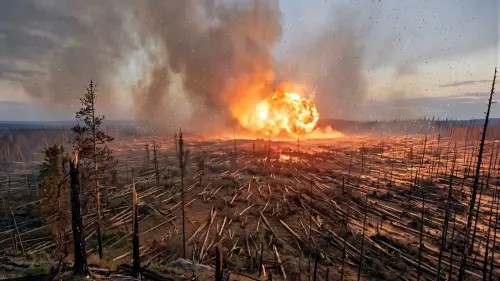
On April 26, 1986, technicians at Chernobyl's Reactor 4 initiated a delayed safety test to see if idling turbine generators could power cooling pumps during a grid blackout. The experiment relied on dangerous reactor conditions, including a dangerously low power level and disabled emergency shutdown systems. A fatal combination of unstable design traits—specifically control rods tipped with graphite that temporarily increased reactivity when inserted—and human operational errors caused a massive power surge. The resulting steam explosions blew off the 1,000-ton reactor lid and exposed the core to the atmosphere. It stands as one of only two nuclear disasters classified as Level 7 on the International Nuclear Event Scale.
2. Sweden Sounded the Alarm Before the Soviet Union Admitted the Disaster
In the immediate aftermath of the explosion, the Soviet government attempted to conceal the magnitude of the disaster from the public and the rest of the world. Two days later, workers arriving at Sweden's Forsmark Nuclear Power Plant—over 600 miles away—triggered radiation alarms when radioactive particles were detected on their clothing. After determining that the contamination was originating elsewhere, Swedish scientists traced the atmospheric wind patterns back to northern Ukraine and threatened to issue an official international warning. Faced with undeniable foreign evidence, Soviet authorities were forced to publicly break their silence on state television. This landmark event broke traditional Cold War secrecy protocols and catalyzed global safety monitoring systems.
3. Pripyat Residents Were Left Unaware for Over 36 Hours
The nearby city of Pripyat was constructed in 1970 specifically to house the families of the workers operating the nuclear plant. Despite the horrific explosion occurring just miles away in the early hours of Saturday morning, the city's 49,000 residents were not alerted to the danger. Children played outdoors, couples held outdoor weddings, and families went about their weekend routines as radioactive dust rained down around them. It was not until 36 hours after the explosion that buses arrived to evacuate the entire population, telling them they would return in three days. Today, Pripyat remains a silent ghost town where personal belongings sit frozen in time.
4. The Blast Released Hundreds of Times More Radiation Than Atomic Bombs
While nuclear weapons are designed to maximize blast force and thermal energy, nuclear reactor meltdowns release massive quantities of long-lived radioactive isotopes directly into the biosphere. The Chernobyl explosion spewed an estimated 400 times more radioactive material into the atmosphere than the atomic bomb dropped on Hiroshima in 1945. Airborne plumes containing iodine-131, cesium-137, and strontium-90 drifted across much of Europe, reaching as far as Scandinavia and the United Kingdom. Scientists estimate that roughly 70 percent of the total radioactive fallout landed on neighboring Belarus. The long-term health impact across Europe led to heightened surveillance of cancer rates for decades.
5. The Infamous "Elephant's Foot" Is One of the Deadliest Objects on Earth
In late 1986, cleanup crews exploring the dark corridors beneath the destroyed reactor discovered a monstrous mass of solid lava-like material. Formed when melted nuclear fuel fused with sand, concrete, and steel casing, this hazardous corium mixture slithered into the basement like toxic magma before hardening. Dubbed the "Elephant's Foot" due to its wrinkled grey appearance, the object was initially so radioactive that spending just two minutes near it would inflict a lethal dose of radiation. Workers had to use cameras mounted on wheels or shoot the dense mass with armor-piercing rifles to obtain samples. Though its radioactivity has decayed significantly over time, it remains dangerously toxic to this day.
6. Over 600,000 "Liquidators" Cleaned Up the Radioactive Wreckage
To contain the burning reactor core and clear lethal graphite debris from surrounding roofs, the Soviet military mobilized a massive force of emergency workers known as liquidators. Comprising soldiers, firefighters, miners, and civilian laborers, over 600,000 men and women were deployed into the radioactive zone. Many wore rudimentary lead aprons and basic cloth masks that provided minimal defense against intense gamma radiation. Some workers, nicknamed "bio-robots," were given just 90 seconds to shovel highly radioactive graphite off the reactor roof before reaching dangerous exposure limits. Their heroism and sacrifice prevented an even catastrophic secondary explosion that could have rendered much of Europe uninhabitable.
7. The "Red Forest" Turned Rusty Red Before Being Bulldozed and Buried
Immediately adjacent to the power plant lay four square miles of dense pine woodland that bore the brunt of the initial radioactive plume. The radiation dosage was so intense that it killed the trees' vascular systems within days, causing the pine needles to turn a striking, rusty-orange color. This distinctive appearance earned the area its iconic nickname, the "Red Forest," which became one of the most contaminated terrestrial ecosystems on Earth. To mitigate the spread of radiation, Soviet authorities eventually bulldozed the dead trees and buried them beneath thick layers of trenches and soil. Ironically, because microbes and fungi were also killed by the radiation, dead wood in the area decays at an abnormally slow rate.
8. Pripyat's Iconic Amusement Park Was Opened for Only a Few Hours
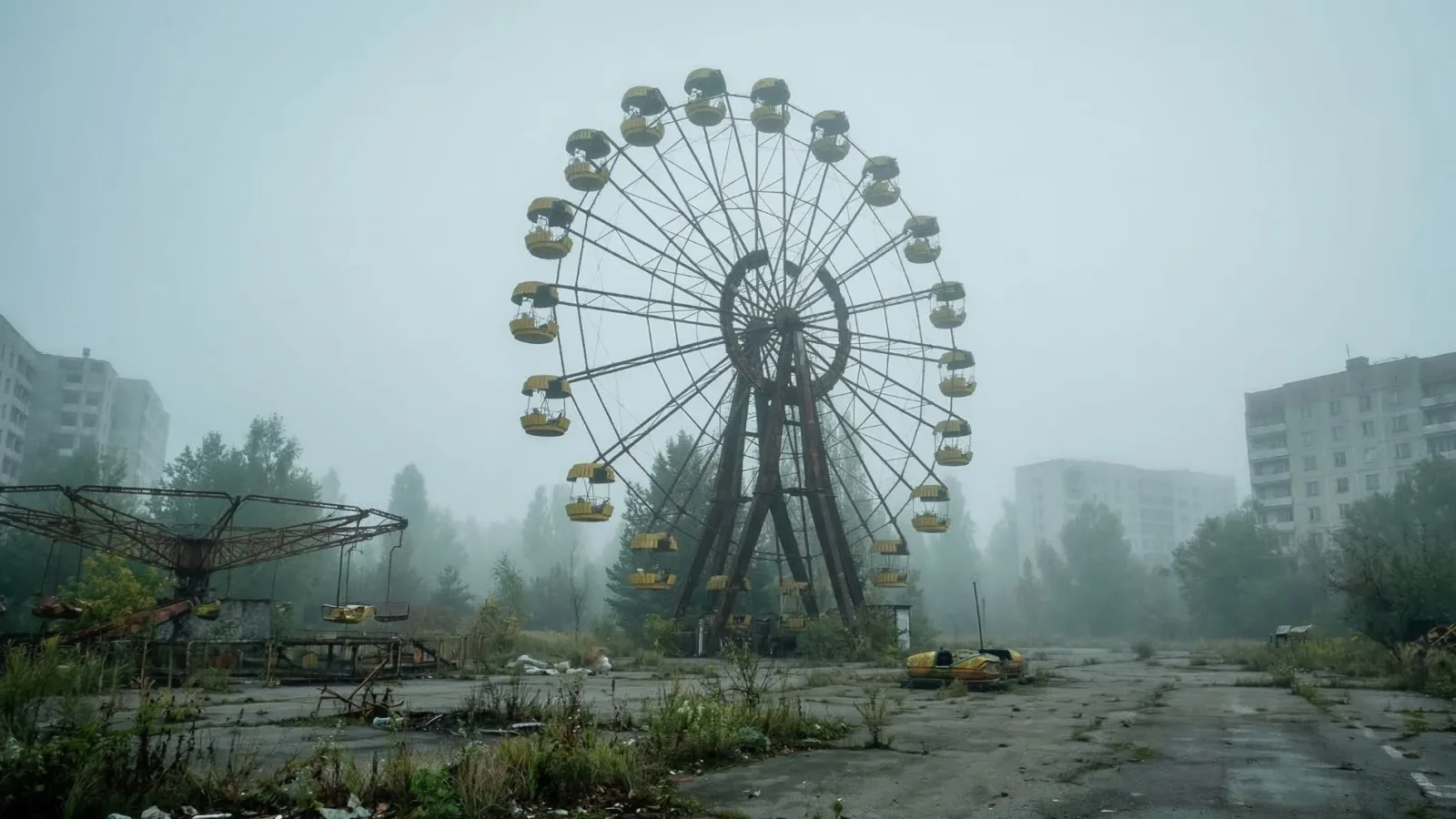
Located in the center of Pripyat, an iconic yellow Ferris wheel stands as an enduring symbol of the city's sudden abandonment. The brand-new amusement park was scheduled for its official grand opening on May 1, 1986, as part of the Soviet May Day celebrations. However, on April 27—the day after the explosion—city officials briefly opened the park's rides for a few hours to entertain local residents and divert panic while evacuation plans were finalized. Some photojournalists suspect the rides were operated briefly to boost morale before residents were loaded onto buses. Today, the rusty Ferris wheel remains one of the most photographed monuments inside the exclusion zone.
9. The Chernobyl Plant Kept Generating Power Until the Year 2000
It is a common misconception that the entire Chernobyl facility ceased operations immediately after the catastrophe at Reactor 4. In reality, the remaining three reactors continued to generate electricity for Ukraine due to severe regional power shortages. Thousands of technicians continued reporting to work every day inside the plant, passing right by the entombed ruins of Reactor 4. Reactor 2 was shut down following a fire in 1991, followed by Reactor 1 in 1996, while Reactor 3 remained operational until December 2000. It took fourteen years of international pressure and financial compensation to convince Ukrainian authorities to decommission the final active unit.
10. Animals Have Adapted to Radiation in Surprising Ways
In the decades since humans fled the Exclusion Zone, researchers have uncovered extraordinary biological adaptations among local wildlife. Eastern tree frogs living near the damaged reactor feature dramatically darker skin than those living outside the zone. Scientists discovered that these frogs evolved higher concentrations of melanin, the pigment responsible for dark skin, which acts as a natural shield against radiation damage. Similarly, certain species of microscopic fungi found inside the ruined reactor walls use melanin to perform radiotrophy, converting ionizing radiation into chemical energy for growth. These fascinating evolutionary shifts showcase nature's resilience in extreme environments.
11. Wild Boars in Germany Are Still Radioactive Decades Later
The far-reaching consequences of the disaster are still measured thousands of miles away in Western Europe today. When the radioactive cloud swept across Germany in May 1986, rain brought radioactive cesium-137 down into forest soils. Wild boars roaming German woodlands routinely root around in the soil to dig up subterranean deer truffles, which act like biological sponges for radioactive contamination. As a result, a significant portion of wild boars hunted in Bavaria still exhibit radiation levels well above legal safety limits for human consumption. Known as the "wild boar paradox," this contamination persists because older fallout from nuclear weapons testing combines with Chernobyl fallout in underground fungi.
12. The Exclusion Zone Has Transformed Into a Thriving Wildlife Sanctuary
Without human activity, farming, and industrial noise, the 1,000-square-mile Exclusion Zone has unintentionally become one of Europe's largest nature reserves. Populations of gray wolves, brown bears, Eurasian lynx, red deer, and wild boars have surged dramatically in the absence of human interference. In 1998, conservationists introduced thirty endangered Przewalski's horses to the area, and their population has flourished inside the abandoned landscape. While individual animals still suffer from genetic mutations and reduced life spans, populations as a whole are thriving. The area demonstrates that human habitation can often be more destructive to wildlife than chronic radiation.
13. A Massive Steel Arch Was Built to Cover the Reactor for a Century
In the immediate aftermath of the blast, Soviet engineers hastily constructed a massive concrete "sarcophagus" to enclose Reactor 4 and trap remaining radioactive material. By the 2000s, this original structure was decaying rapidly and threatening to collapse, which could have kicked up toxic dust storms across Europe. To prevent catastrophe, an international project engineered the New Safe Confinement, a giant arching structure taller than the Statue of Liberty and wider than two football fields. Built nearby to avoid direct radiation exposure, the 36,000-ton steel arch was slid into place over Reactor 4 on heavy Teflon tracks in 2016. Designed to last at least 100 years, it contains robotic cranes that will eventually dismantle the ruined reactor within.
14. Dark Tourism Drew Thousands of Visitors Prior to Recent Conflicts
Over the last two decades, the Chernobyl Exclusion Zone evolved from a strict quarantine perimeter into a famous destination for adventure tourists. Certified tour operators began taking day-trippers into Pripyat and the power plant grounds, issuing handheld dosimeters to track personal radiation exposure. Visitors walked through vegetation-draped courtyards, empty school buildings strewn with gas masks, and abandoned Soviet apartments. Radiation levels along designated walking routes were comparable to the atmospheric radiation experienced during a commercial flight. However, tourist access was suspended following geopolitical instability and military action in the region starting in 2022.
15. The Most Contaminated Areas Will Not Be Humanly Habitable for 20,000 Years
Although short-term guided visits to designated parts of the zone pose low health risks, permanent resettlement remains impossible for the foreseeable future. Key radioactive isotopes such as cesium-137 and strontium-90 have half-lives of roughly 30 years, meaning they lose half their radioactivity every three decades. However, plutonium isotopes and transuranic elements lingering near the reactor core decay at vastly slower rates spanning thousands of years. Environmental scientists estimate that the core area around Reactor 4 will not be safe for permanent human habitation for at least 20,000 years. Until then, Chernobyl serves as a permanent, solemn monument to human technological peril.
Sources & References
This AI-assisted post was rigorously curated and fact-checked for accuracy by:
 Martin Roháček
How fun was this article? 🤔
Tap a star to rate it
🧠 Quiz: How closely were you paying attention?
10 questions — all answers are in the article above!
Enjoyed these facts? There's more! 💌
Fresh fun facts in your inbox. No spam, ever.