1. The Mystery of the Orlando Name
Despite being one of the most famous tourist destinations on the planet, there is absolutely no official record explaining how Orlando actually got its name. Before 1857, the remote settlement was simply called Jernigan, named after a local pioneer family. The most popular historical myth suggests the city was renamed in honor of a soldier named Orlando Reeves, who supposedly died in the area during the Seminole Wars. However, since no official military documentation exists to support this heroic tale, the true origin of the city’s name remains a permanent historical mystery.
2. A Hub for Citrus and Cracker Cowboys
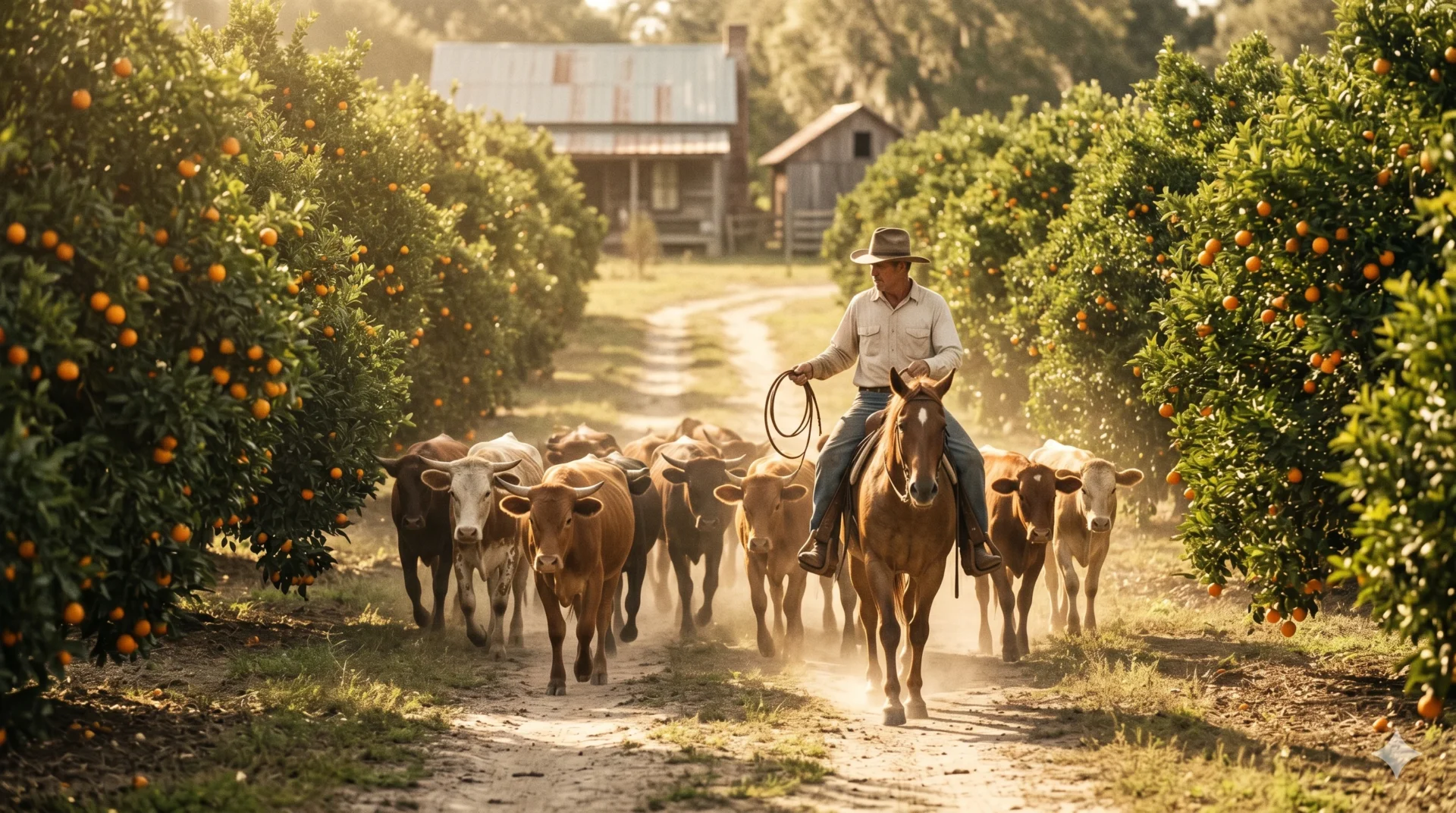
Long before tourists flocked to central Florida for expensive theme park tickets, the local economy was entirely driven by heavy agriculture and rough cattle ranching. During the late nineteenth century, Orlando was surrounded by endless, highly profitable orange groves and functioned as a massive hub for the booming citrus industry. Furthermore, the region was heavily populated by rugged Florida cracker cowboys, who used loud leather whips to herd wild cattle through the unforgiving, mosquito-infested wetlands. A devastating winter freeze in 1894 ultimately destroyed the citrus crops, forcing farmers to slowly abandon the region.
3. Swan Boats Have Ruled Lake Eola Since 1925
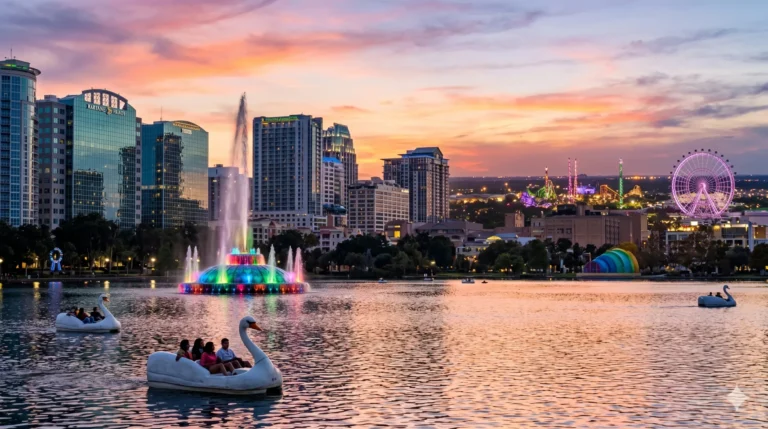
While modern tourists flock to the extreme, high-speed roller coasters on the outskirts of the city, Orlando’s oldest continuous recreational ride is incredibly peaceful. In 1925, a local businessman introduced a small fleet of graceful, pedal-powered swan boats to the dark waters of Lake Eola in downtown Orlando. These charming wooden boats instantly became a massive hit with affluent winter vacationers looking for a romantic afternoon activity. Nearly a century later, the city still operates a modernized fleet of these iconic swan boats, preserving one of the oldest tourism traditions in Central Florida.
4. A City Built on Giant Sinkholes
Orlando is geographically situated directly over a highly porous limestone aquifer, meaning the entire city is essentially built on a massive, active sinkhole zone. The region contains over one hundred uniquely named lakes that beautifully dot the urban and suburban landscape, providing highly sought-after waterfront real estate. However, the vast majority of these serene bodies of water, including the famous Lake Eola located right in the heart of downtown, are actually just giant, ancient sinkholes that eventually collapsed and filled with groundwater. Lake Eola itself plunges to a surprising depth of eighty feet.
5. Walt Disney’s Secret Land Grab
When Walt Disney decided to build his massive second theme park in the 1960s, he knew that publicly announcing his intentions would cause Central Florida land prices to immediately skyrocket. To prevent massive corporate extortion, Disney brilliantly utilized an army of lawyers to set up numerous fake dummy corporations with bizarre names like the Ayefour Corporation. These shadow companies quietly purchased over 27,000 acres of remote, useless swampland around Orlando for literal pennies on the dollar. By the time the local press finally unmasked the true buyer, Disney had already secured his massive, cheap empire.
6. Gatorland Was the Original Attraction
More than two decades before Mickey Mouse permanently changed the local landscape, adventurous tourists were already flocking to Central Florida for a much more dangerous thrill. In 1949, a man named Owen Godwin opened Gatorland, making it one of Orlando’s very first major roadside tourist attractions. Visitors paid a modest admission fee to walk safely across wooden boardwalks and gawk at thousands of massive, prehistoric reptiles resting in the swampy enclosures. This iconic, family-owned alligator park somehow managed to survive the massive corporate theme park invasion and remains a highly beloved local institution today.
7. The Tragic Demolition of the 1890s Courthouse
During the mid-twentieth century, Orlando city planners embraced a highly aggressive modernization strategy that resulted in the permanent loss of the city’s most beautiful historic architecture. The original Orange County Courthouse, a stunning, ornate red-brick Romanesque Revival masterpiece constructed in the 1890s, stood as the absolute visual crown jewel of the downtown district. Shockingly, local officials ordered its complete demolition in the late 1950s to make room for a bland, modern concrete structure and expanded parking lots. Today, modern locals and historical preservationists still consider the careless destruction of this majestic building a massive architectural tragedy.
8. Lethal Weapon 3 Blew Up City Hall
When the city government decided they needed to construct a brand new municipal headquarters in 1991, they found an incredibly creative and lucrative way to demolish the old building. Warner Bros. Studios paid the city of Orlando for the unique privilege of using the scheduled implosion of the old City Hall for a massive Hollywood blockbuster. The spectacular, highly controlled demolition was filmed from multiple angles and used as the explosive opening sequence for the action movie Lethal Weapon 3. Actor Mel Gibson can famously be seen running away from the actual collapsing Orlando building.
9. The Surprising Origin of the MCO Airport Code
Millions of tourists fly into Orlando International Airport every single year, but very few passengers ever understand why their luggage tags are printed with the confusing letters MCO. Unlike most major airports that use a clear abbreviation of the city’s name, Orlando’s unique code is a direct historical nod to its military past. Before it was transformed into a massive commercial travel hub, the facility operated as McCoy Air Force Base, named in honor of Colonel Michael N.W. McCoy. The military facility closed in 1975, but the original three-letter McCoy designation permanently stuck.
10. The Lightning Capital of the Country
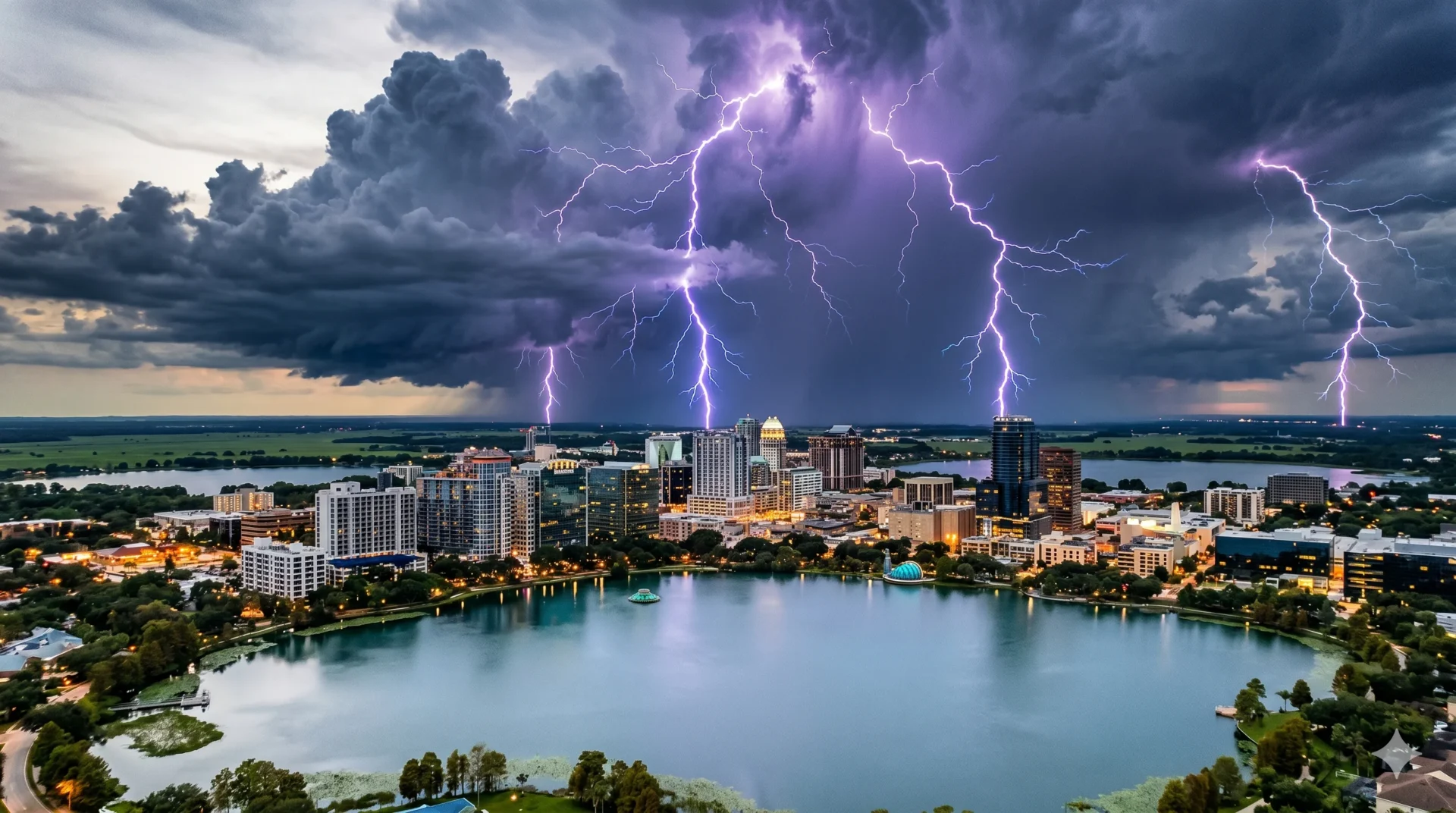
While visitors frequently associate Florida with endless sunshine and relaxing beaches, the central region harbors a highly volatile meteorological secret. Due to the unique collision of warm sea breezes moving inland from both the Atlantic Ocean and the Gulf of Mexico, Central Florida experiences an incredibly high frequency of violent summer thunderstorms. In fact, the area stretching from Orlando to Tampa is widely recognized as the Lightning Capital of the United States. The region experiences some of the highest numbers of lightning strikes in the entire country, forcing theme parks to constantly monitor the skies.
11. Eatonville’s Historic Cultural Legacy
Located just a few miles north of downtown Orlando sits the town of Eatonville, which holds a massively important place in the history of American civil rights. Incorporated in 1887, it was one of the very first all-black, self-governing municipalities in the entire United States. The historic town provided a safe, flourishing community for African Americans during the highly oppressive Jim Crow era of the Deep South. It is also famously known as the childhood home of legendary author Zora Neale Hurston, who heavily featured the unique cultural landscape of Eatonville in her classic American literature.
12. Colonial Drive Was Originally Paved With Bricks
Navigating modern Orlando requires driving on massive, congested multi-lane concrete highways, but the city’s original infrastructure was far more rustic and charming. The very first major highway designated in Central Florida was Colonial Drive, which served as the primary east-west artery connecting the isolated agricultural communities. When it was initially laid down in the early twentieth century, the entire lengthy road was meticulously paved using thousands of heavy red bricks. As the population rapidly exploded and automobile traffic intensified, the noisy brick surface was eventually paved over with smooth, modern asphalt.
13. The Largest Public Library in Florida
Despite its reputation as a city entirely devoted to loud amusement parks and mindless entertainment, downtown Orlando is home to a massive monument dedicated to literature and quiet study. The Orlando Public Library is officially the largest public library building in the entire state of Florida, occupying a staggering 290,000 square feet of real estate. Designed in the highly polarizing Brutalist architectural style, the massive, fortress-like concrete structure looks incredibly imposing from the outside. Inside, it features a sprawling, state-of-the-art facility that includes recording studios, massive historical archives, and comprehensive educational community spaces.
14. The Bizarre Spouting Well of Lake Fairview
During the early 1900s, long before massive corporate entertainment arrived, eager tourists were easily entertained by a completely bizarre geological anomaly located on the shores of Lake Fairview. An industrial drainage pipe driven deep into the ground accidentally intersected with a pressurized underground cavern, creating a spectacular artificial geyser. Every six minutes, the trapped air pressure would violently force a massive column of water up to one hundred feet into the air. A local farm manager brilliantly capitalized on the geographical accident, charging curious spectators a small admission fee to watch the natural water show.
15. The Tourist Capital is Completely Landlocked
Because Florida is world-famous for its massive coastline and pristine ocean waters, many first-time domestic tourists mistakenly pack their surfboards when booking a trip to Orlando. Surprisingly, the undisputed tourism capital of the state is completely landlocked, sitting directly in the dead center of the Florida peninsula. The nearest ocean beaches are located roughly an hour’s drive away on the eastern Atlantic coast. However, this centralized, inland geography actually provides a massive logistical advantage, as it heavily protects the city’s billions of dollars of theme park infrastructure from the worst destructive impacts of coastal hurricane storm surges.
Sources and References