The Golden Railway: 15 Fascinating Facts About the Orient Express
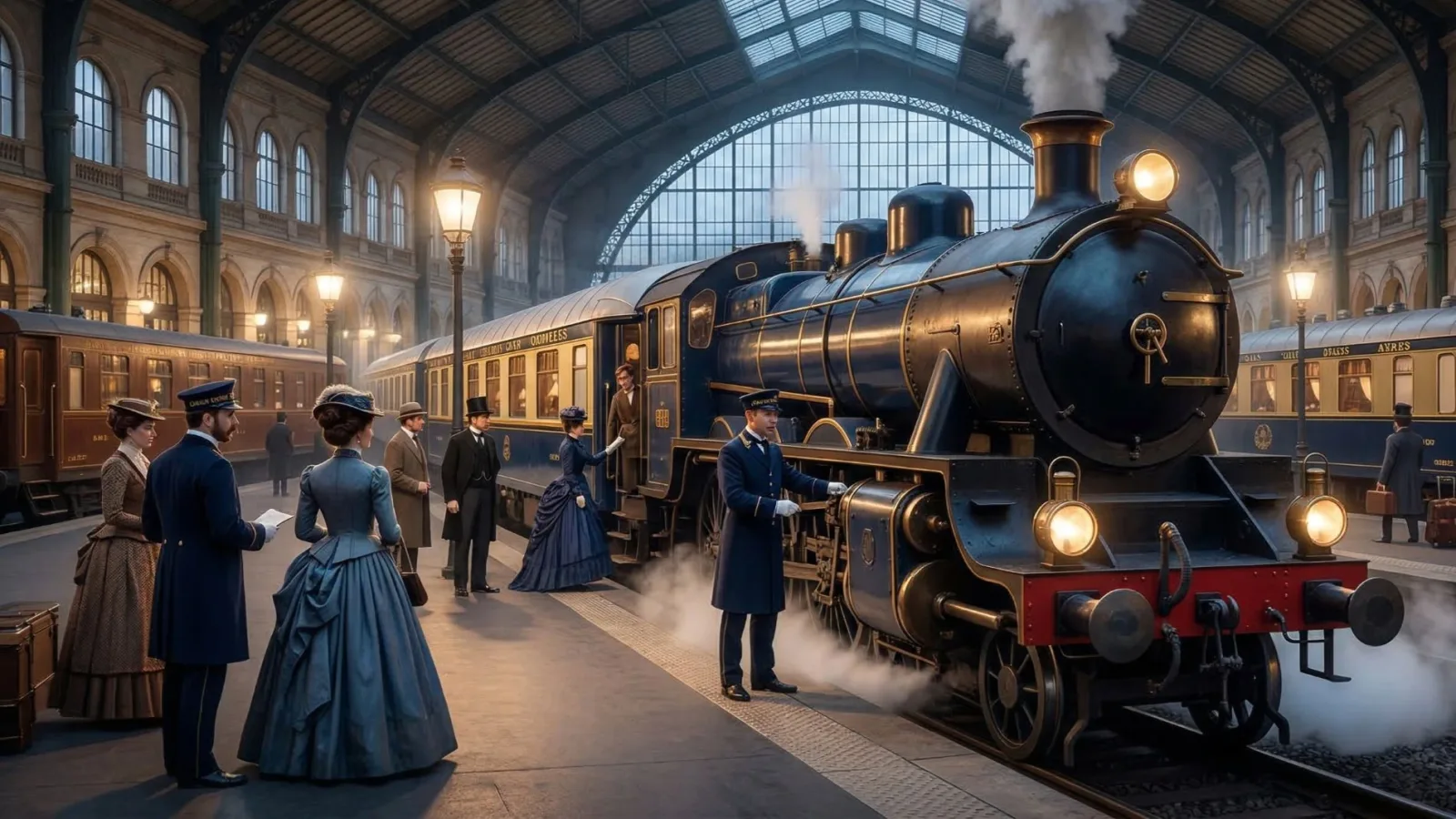
When the Orient Express made its inaugural journey in 1883, it did far more than connect Paris to Constantinople—it transformed railway travel into an art form. Conceived by a visionary Belgian banker who drew inspiration from American sleeping cars, the transcontinental luxury train redefined international tourism during an era of fragmented European borders. From gourmet dinners served on fine china to art deco glass panels crafted by world-famous artisans, the legendary express was a rolling palace for monarchs, diplomats, and spies. Discover the incredible engineering, geopolitical diplomacy, and pop-culture history behind the world's most famous luxury train.
1. A Belgian Banker Was Inspired by American Sleeping Cars
Georges Nagelmackers, a visionary Belgian banker, conceived the Orient Express after taking an extended trip to the United States in the late 1860s. During his travels across America, he was deeply impressed by George Pullman's luxurious sleeping cars designed for long-distance transcontinental travel. Nagelmackers realized that Europe, despite its rapidly growing network of local tracks, lacked a unified transcontinental luxury train service. Upon returning home, he founded the Compagnie Internationale des Wagons-Lits in 1872 to turn his ambitious dream into reality. His goal was not merely to transport passengers between European capitals, but to redefine railway travel into an extraordinary high-end experience.
2. It Created the World's First Seamless International Rail Route
Before the maiden voyage of the Orient Express in October 1883, long-distance European train travel was a notoriously chaotic ordeal. Passengers were forced to disembark at every national border, haul their heavy luggage across muddy platforms, and purchase entirely new tickets from competing regional rail operators. Nagelmackers solved this administrative nightmare by negotiating unprecedented international transit treaties across multiple sovereign nations. The Orient Express created the world's first seamless transcontinental rail corridor, allowing wealthy travelers to stay in one carriage throughout their journey. This revolutionary service laid the groundwork for modern international tourism as we know it today.
3. Solid Teak Wood Was Chosen for Acoustic Insulation
To shield elite travelers from the harsh, clanking noises of the nineteenth-century iron rail lines, the original Orient Express carriages were crafted out of solid teak wood. Teak was chosen deliberately because its dense organic composition offered superior acoustic insulation compared to standard industrial metals. Furthermore, engineers installed heavy-duty bogies beneath the carriages fitted with state-of-the-art hydraulic shock absorbers to eliminate track vibrations. These combined innovations ensured that affluent passengers could sleep soundly while hurtling across European railways at top speeds. The result was a surprisingly silent, peaceful cabin environment that rivaled the static bedrooms of world-class grand hotels.
4. Cabins Featured Unprecedented Heating and Modular Design
While conventional trains of the Victorian era were notoriously freezing, drafty, and dimly lit by flickering oil lamps, the Orient Express introduced state-of-the-art interior comforts. The carriages featured centralized steam heating systems piped directly from the locomotive to keep cabins consistently warm during brutal winter crossings. Soft, warm gas lighting lit the corridors and private compartments, creating an inviting, opulent glow throughout the train. During the daytime, private sleeping quarters functioned as spacious sitting rooms equipped with plush velvet sofas and polished mahogany tables. At night, attentive porters seamlessly transformed these sitting rooms into cozy bedrooms outfitted with crisp silk linens and feather pillows.
5. The Dining Cars Competed with Parisian Fine Restaurants
The dining cars of the Orient Express were designed to compete directly with the premier Michelin-caliber restaurants of Paris and Vienna. High-society passengers were treated to elaborate multi-course dinners that included fresh oysters, turbot served with delicate green sauce, roasted game hens, and rare grand cru wines. Preparing such exquisite cuisine on a moving train required remarkable feats of kitchen engineering. Gourmet chefs operated inside incredibly narrow galley spaces fitted with custom coal-fired stoves and massive insulated iceboxes. Despite the physical limitations of the rolling kitchen, the culinary team managed to deliver hot, perfectly timed courses to dozens of demanding guests simultaneously.
6. Waiters Were Trained to Walk with Military Precision
Serving haute cuisine and pouring vintage champagne inside a train hurtling over uneven tracks required extraordinary physical coordination from the dining staff. Waiters were subjected to rigorous training programs designed to teach them a distinct, fluid style of walking that naturally absorbed the swaying motion of the train. They learned to bend their knees subtly with every shift of the floor, maintaining absolute balance even during abrupt track transitions. This military precision ensured that not a single drop of red wine or warm soup ever spilled onto the pristine white tablecloths. Their flawless technique became an iconic hallmark of the overall luxury experience aboard the train.
7. Operating required Diplomatic Treaties Across Multiple Empires
Launching a continuous railway journey across Europe required navigating an intricate web of geopolitical relationships and shifting imperial borders. To establish the route between Paris and Constantinople, Nagelmackers had to secure complex passage rights from France, Germany, Austria-Hungary, Serbia, Romania, and the Ottoman Empire. Each sovereign power demanded specific customs procedures, safety standards, and financial compensation to allow foreign rolling stock across their borders. Maintaining these international rail agreements required constant diplomatic delicate balancing, particularly during times of intense regional tension. The train effectively operated as a neutral, flying diplomatic bridge across a deeply fragmented continent.
8. It Slashed Continental Travel Time Down to 80 Hours
When the original Orient Express debuted, it dramatically compressed the time required to travel across the European continent. Prior to its launch, journeying from Western Europe to the edge of Asia required a grueling, multi-week trek using horse-drawn carriages, coastal steamships, and scattered local train connections. The Orient Express reduced this exhausting journey to roughly eighty hours of continuous, uninterrupted luxury. Travelers could board in Paris and arrive at the gates of Constantinople in less than four days without ever compromising on comfort or safety. This dramatic acceleration of travel time fundamentally transformed business, diplomacy, and international trade in the late nineteenth century.
9. René Lalique Glass Panels Transformed Cars into Art Museums
During the Roaring Twenties, the Orient Express underwent a magnificent aesthetic redesign that turned its passenger cars into mobile art deco masterpieces. Renowned French glassmaker and jeweler René Lalique was commissioned to create custom decorative elements for the interior woodwork. Lalique crafted exquisite frosted glass panels, depicting graceful nymphs and grapes, which were embedded into rich mahogany and inlaid marquetry paneling. The train also introduced iconic blue-and-gold steel carriages, known as the Venice Simplon-Orient-Express era, elevating the ambiance to unprecedented levels of elegance. These artistic enhancements transformed every journey into an immersive, walking art exhibition.
10. The Train Double-Functioned as an Embassy for Spies
Because ticket prices were extraordinarily high, the Orient Express naturally attracted royalty, corporate tycoons, international statesmen, and top-secret intelligence operatives. The train quickly earned a worldwide reputation as a hotbed of international intrigue and espionage. Famous historical figures such as King Leopold II of Belgium, Tsar Ferdinand I of Bulgaria, and the notorious dancer-turned-spy Mata Hari were regular passengers. During World War I and the Cold War, secret agents frequently used the train's secluded private compartments to conduct clandestine meetings and cross heavily militarized borders undetected. Its reputation as a floating embassy of spies cemented its legendary status in modern political history.
11. The Railway Company Built Istanbul's Premier Grand Hotel
When passengers finally arrived at the end of the line in Constantinople (now Istanbul), the railway company faced a novel problem: the city lacked hotels that matched the train's ultra-luxurious standards. To solve this problem, the operating company financed and constructed the grand Pera Palace Hotel in Istanbul, which opened its doors in 1892. Designed by French-Ottoman architect Alexander Vallaury, the hotel featured the city's first electric elevator and hosted world leaders, artists, and royalty. By building its own five-star accommodations at major destinations, the railway company ensured an unbroken chain of high-end hospitality from departure to final destination.
12. A Real 1929 Snowstorm Incident Inspired Agatha Christie
In January 1929, the Orient Express was trapped in severe snowdrifts near Cherkeskeoy, Turkey, roughly sixty miles outside Istanbul, for six full days. Temperatures inside the stranded carriages plummeted, forcing staff to burn spare wooden furnishings and ration remaining gourmet food supplies to keep passengers alive. This dramatic real-life survival incident deeply captured the public imagination and directly inspired author Agatha Christie. Christie, who was a frequent traveler on the train, used the event as the backdrop for her world-famous 1934 detective novel, Murder on the Orient Express. Her classic whodunit forever immortalized the train in popular global culture.
13. The Inaugural 1883 Route Required Ferries and Steamships
Despite its famous association with seamless continuous rail travel, the original 1883 route could not actually complete the entire journey by train. Because railway bridges across the Danube River and through Bulgarian territory were still under construction, passengers had to take a train from Paris to Giurgiu, Romania. From there, travelers boarded a ferry across the Danube to Ruse, Bulgaria, took a local train to Varna, and finally boarded a steamship across the Black Sea to reach Constantinople. It was not until June 1889 that the complete, unbroken rail line connecting Paris directly to Constantinople was officially opened to the public.
14. Car No. 2419D Hosted Both WWI and WWII Surrenders
One specific carriage from the Orient Express fleet, known as Dining Car No. 2419D, played a central role in two major twentieth-century world conflicts. In November 1918, Allied Supreme Commander Ferdinand Foch chose this luxury dining car as the secret mobile headquarters where German officials signed the WWI Armistice. Twenty-two years later, in June 1940, Adolf Hitler retrieved the exact same carriage from a French museum and forced France to sign its WWII surrender inside it. Hitler subsequently ordered the historic car destroyed near the end of World War II to prevent it from ever being used for another German defeat.
15. It Revolutionized the Philosophy of Modern Hospitality
The Orient Express did far more than move wealthy travelers from Paris to Istanbul; it fundamentally revolutionized the entire concept of luxury travel. Prior to its establishment, transportation was viewed merely as a grueling physical necessity to reach a geographic destination. The Orient Express shifted this perspective by making the journey itself the ultimate, highly sought-after destination. Its legacy established modern hospitality standards that continue to inspire high-end luxury trains, ocean liners, and boutique hotels around the globe today.
Sources & References
This AI-assisted post was rigorously curated and fact-checked for accuracy by:
 Martin Roháček
How fun was this article? 🤔
Tap a star to rate it
🧠 Quiz: How closely were you paying attention?
10 questions — all answers are in the article above!
Enjoyed these facts? There's more! 💌
Fresh fun facts in your inbox. No spam, ever.