The Unstoppable Thrill of March Madness: 15 Fascinating Facts About College Basketball's Biggest Tournament
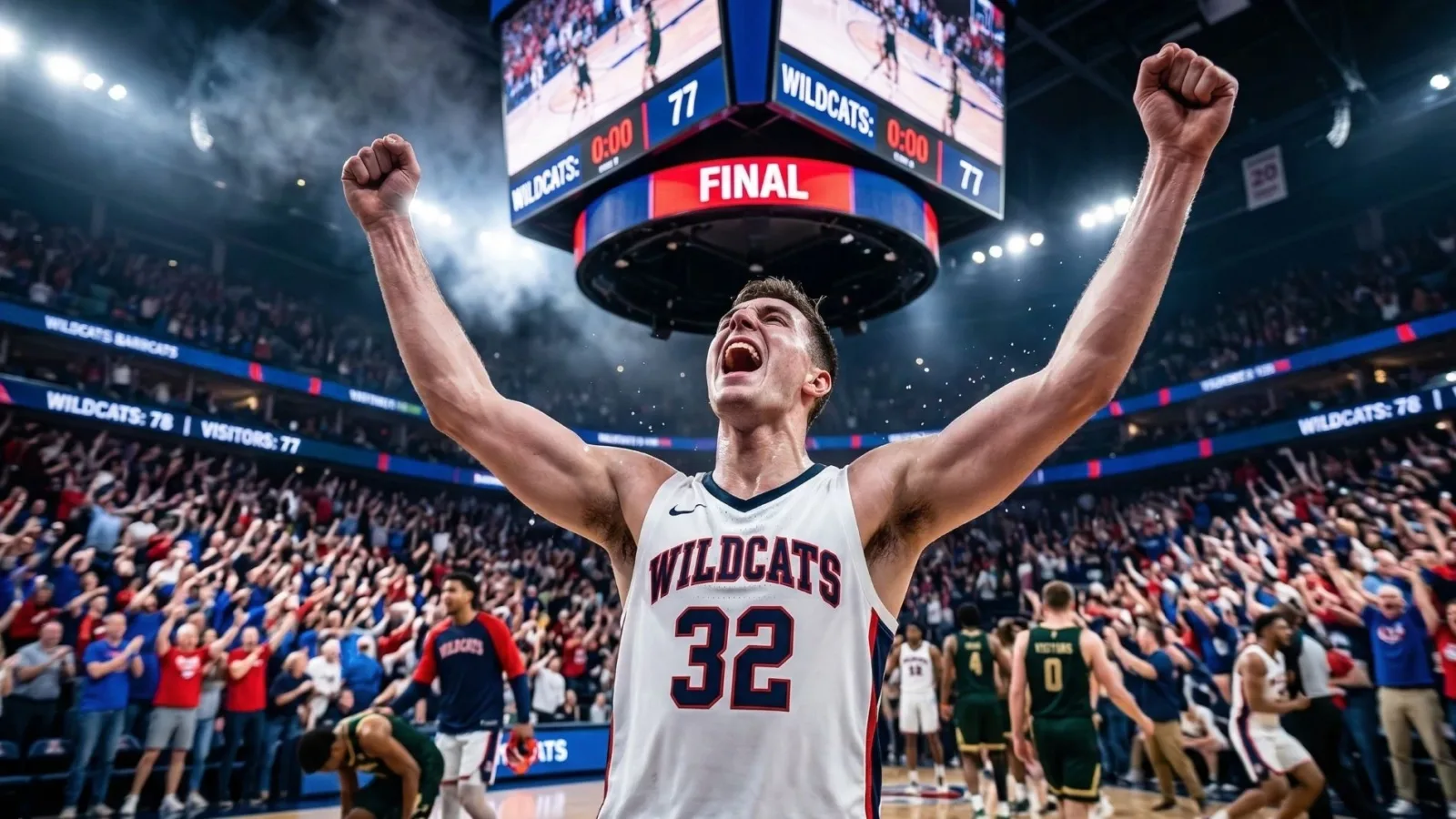
Every spring, millions of sports fans across the globe are swept up in the thrilling chaos of March Madness. From jaw-dropping double-digit seed upsets to late-night buzzer beaters, the NCAA Men's Division I Basketball Tournament is one of the most unpredictable spectacles in modern athletic history. Behind the brackets and office pools lie incredible stories of secret committee meetings, astronomical mathematical odds, and decades of unexpected traditions. Here are 15 fascinating facts about college basketball's signature tournament that reveal how this cultural phenomenon came to be.
1. The Term "March Madness" Was Coined for High School Basketball
Long before college athletes dominated television screens, the phrase "March Madness" was coined to describe high school basketball in the Midwest. In 1939, Henry V. Porter, an official with the Illinois High School Association, wrote an essay using the term to describe the wild enthusiasm surrounding the state's high school tournament. The NCAA did not actually embrace or popularize the term for its own tournament until broadcaster Brent Musburger brought it to national television during the 1982 tournament. A legal battle over trademark rights eventually forced the NCAA and the Kentucky High School Athletic Association to form a joint entity to share commercial rights to both "March Madness" and "Sweet Sixteen."
2. The Odds of Predicting a Perfect Bracket Are Up to 1 in 9.2 Quintillion
Filling out a college basketball bracket is an annual rite of spring, but crafting a flawless bracket is mathematically near-impossible. If you were to randomly flip a coin for all 63 games in the main tournament bracket, your chances of picking every winner correctly are 1 in 9.2 quintillion. Even when applying deep basketball expertise, seeded trends, and analytics, statisticians estimate the realistic odds only improve to roughly 1 in 120 billion. In 2014, billionaire Warren Buffett famously offered a $1 billion reward for anyone who could submit a perfect bracket, but no official contestant has ever verifiably completed one online.
3. The Inaugural 1939 Tournament Featured Only Eight Teams
Today's tournament features 68 teams battling across multiple rounds, but the very first NCAA Men's Division I Basketball Tournament in 1939 included just eight schools. Organized by the National Association of Basketball Coaches, the tournament was designed to rival the older National Invitation Tournament held at Madison Square Garden. The Oregon Webfoots—now known as the Ducks—defeated Ohio State 46-33 in Evanston, Illinois, to become the inaugural national champions. Surprisingly, the inaugural event was a financial failure, losing over $2,500 before the NCAA agreed to take over official sponsorship the following year.
4. Only Three People Have Won Titles as Both Player and Head Coach
While many legendary figures have spent decades in college basketball, achieving ultimate victory on the court and from the sidelines is an extremely exclusive club. Only three men in history have won an NCAA Division I championship as both a player and a head coach: Bob Knight, Dean Smith, and Joe B. Hall. Knight won as a reserve player for Ohio State in 1960 before leading Indiana to three national titles as head coach. Smith won as a guard with Kansas in 1952 before coaching North Carolina to two titles, while Hall won as a player at Kentucky in 1949 and later coached the Wildcats to a national championship in 1978.
5. The Net-Cutting Tradition Was Started by a North Carolina Coach
One of the most iconic post-game rituals in sports occurs when championship players and coaches climb ladders to snip away pieces of the woven basketball nets. This beloved tradition was invented in 1947 by Everett Case, the head coach of the North Carolina State Wolfpack. After winning the Southern Conference tournament, Case wanted a memorable souvenir to celebrate his team's triumph and persuaded arena staff to bring out a ladder. Today, the NCAA provides custom ladder sponsor setups and presents every player and staff member with an individual strand of the net to keep forever.
6. UCLA Set a Record of Seven Consecutive Championships
Under the guidance of legendary head coach John Wooden, the UCLA Bruins established a reign of dominance that remains unprecedented in American college sports. Between 1967 and 1973, UCLA won seven consecutive national titles, beating opponents by an average margin of over 14 points per game. During a broader stretch, Wooden's teams captured 10 national championships in 12 seasons, including an astounding 88-game winning streak. Modern roster turnover and transfer portal rules make it virtually impossible for any modern program to replicate such sustained championship dominance.
7. Number 16 Seeds Were Winless for Decades Until a Historic Upset
For decades, top-seeded teams entered the first round with an unbelievable 135-0 record against 16th-seeded underdogs. That unbroken streak ended in stunning fashion on March 16, 2018, when the University of Maryland, Baltimore County Retrievers shocked the top-overall seed Virginia Cavaliers with a 20-point victory. Five years later, Fairleigh Dickinson University repeated the unthinkable feat by defeating top-seeded Purdue in 2023. These historic upsets proved that in the single-elimination intensity of March Madness, even the most dominant teams in the country are vulnerable to early exits.
8. Selection Sunday Involves Complete Lockdown in a Secure Hotel
Determining which 68 teams enter the tournament bracket is a highly confidential operation conducted by a 12-member Selection Committee. The committee meets in a secure hotel boardroom over several days leading up to Selection Sunday, with all mobile phones and electronic communications confiscated to prevent leaks. Committee members analyze advanced metrics, strength of schedule, and team performance, using a complex computerized system to rank every team from 1 to 68. Members associated with specific schools must leave the room whenever their own institution is discussed or evaluated to eliminate bias.
9. The Tournament Triggers an Annual Spike in Vasectomy Appointments
Medical professionals across the United States regularly experience an unusual boom in business right before the tournament begins. Urologists report that scheduled vasectomies surge by up to 50 percent during the opening week of March Madness compared to typical calendar months. Known informally among doctors as "Vasectomy Fortnight," many male patients deliberately schedule their minor surgeries to align with the first two days of non-stop daytime games. The procedure requires a mandatory couple of days of bed rest, giving recovering fans the perfect excuse to sit on the couch and watch basketball uninterrupted.
10. The Theme Song "One Shining Moment" Was Written for Football
The emotional anthem "One Shining Moment," which plays over the iconic video montage following the championship game, was not originally intended for college basketball. Singer-songwriter David Barrett composed the ballad in 1986 after watching a bartender in Michigan and initially pitched it to CBS for Super Bowl XXI. However, when the football broadcast ran long, CBS saved the track and debuted it at the conclusion of the 1987 NCAA Men's Basketball Tournament instead. The song resonated so powerfully with players and viewers that it has remained the tournament's emotional closing tradition ever since.
11. Unproductive Hours Cost Businesses Billions in Corporate Losses
March Madness is widely recognized as the single biggest threat to workplace productivity in corporate America. Human resource analysts estimate that American businesses suffer upwards of $4 billion to $13 billion in lost productivity each year due to tournament-related distractions. Millions of workers spend working hours streaming daytime games, checking score updates, and managing office bracket pools. Rather than fighting the trend, many major corporations now embrace the event by encouraging casual dress, hosting authorized office pools, or setting up game monitors in breakrooms to boost employee morale.
12. Champion Teams Can Purchase and Keep the Actual Wooden Court
The basketball courts used during the Final Four are not standard arena floors; they are custom-crafted, highly painted portable wooden surfaces manufactured specifically for the event. Following the title game, the winning university is given the exclusive right to purchase the court from the manufacturer, Robbins Sports Surfaces. Many winning programs choose to buy the court, install it in their home arena, or chop it into commemorative pieces to sell to alumni and donors. Players and coaches often receive cut-out sections of the floor center logo as permanent keepsakes of their victory.
13. Sports Betting on March Madness Far Outpaces the Super Bowl
While major single-day events draw massive audiences, March Madness actually attracts far higher overall wager totals than single games. According to estimates from the American Gaming Association, sports fans legally and illegally bet over $15 billion on the NCAA tournament each spring. The sheer volume of 67 games spread across three weeks generates far more wagering action than a single championship matchup. The dramatic expansion of legal mobile sports betting across the United States has driven these gambling figures to record highs in recent years.
14. Broadcasters Paid Over $8.8 Billion for Multi-Year Rights
The immense popularity of March Madness makes it one of the most lucrative broadcasting properties in global sports entertainment. CBS and Turner Sports entered a massive 14-year broadcast agreement with the NCAA in 2010 worth $10.8 billion, which was later extended through 2032 for an additional $8.8 billion. This broadcasting agreement accounts for roughly 85 to 90 percent of the NCAA's entire annual budget, funding championships across dozens of other collegiate sports. The massive media revenues are distributed back to member universities and conferences based on their tournament performance.
15. Cinderella Runs Generate a Surge in College Applications
Underdog stories are the heart of March Madness, and double-digit seeded dream runs can completely transform a university's national profile. When lower-seeded "Cinderella" schools make deep runs into the tournament, they experience a dramatic spike in visibility known in higher education as the "Flutie Effect." Universities like George Mason, VCU, and Butler saw undergraduate applications jump by 20 to 40 percent following their surprising Final Four appearances. These dramatic runs demonstrate how success on the basketball court can yield tens of millions of dollars in free marketing and long-term academic growth for small institutions.
Sources & References
This AI-assisted post was rigorously curated and fact-checked for accuracy by:
 Martin Roháček
How fun was this article? 🤔
Tap a star to rate it
🧠 Quiz: How closely were you paying attention?
10 questions — all answers are in the article above!
Enjoyed these facts? There's more! 💌
Fresh fun facts in your inbox. No spam, ever.