The Unlikely Triumph: 15 Fascinating Facts About Cinco de Mayo
Cinco de Mayo is widely celebrated across North America, yet its true historical origins remain surprisingly misunderstood. Contrary to popular belief, the holiday does not mark Mexican Independence Day, nor is it widely observed as a major national holiday in Mexico. Instead, the date honors a historic military defense against European invasion that reverberated through the American Civil War and modern civil rights movements.
1. It Is Not Mexican Independence Day
The most widespread misconception about Cinco de Mayo is that it marks Mexico's Independence Day. In reality, Mexico declared its independence from Spain more than fifty years earlier on September 16, 1810. That historic moment, known as the Grito de Dolores, remains Mexico’s true national independence holiday celebrated with nationwide festivities. Cinco de Mayo actually commemorates a singular military engagement fought decades later in 1862. Confusing the two events overlooks the complex nineteenth-century history that brought European powers back to North American soil.
2. The War Was Sparked by International Debt
The Battle of Puebla did not begin over territorial disputes, but rather a severe financial crisis. Following years of exhausting internal wars, the Mexican treasury was completely bankrupt. President Benito Juárez was forced to issue a temporary moratorium on paying foreign debt in 1861. In response, Britain, Spain, and France dispatched joint naval forces to Veracruz to collect their money by force. While Britain and Spain negotiated settlements and withdrew, Emperor Napoleon III used the opportunity to invade.
3. The Battle Was a Massive Military Upset
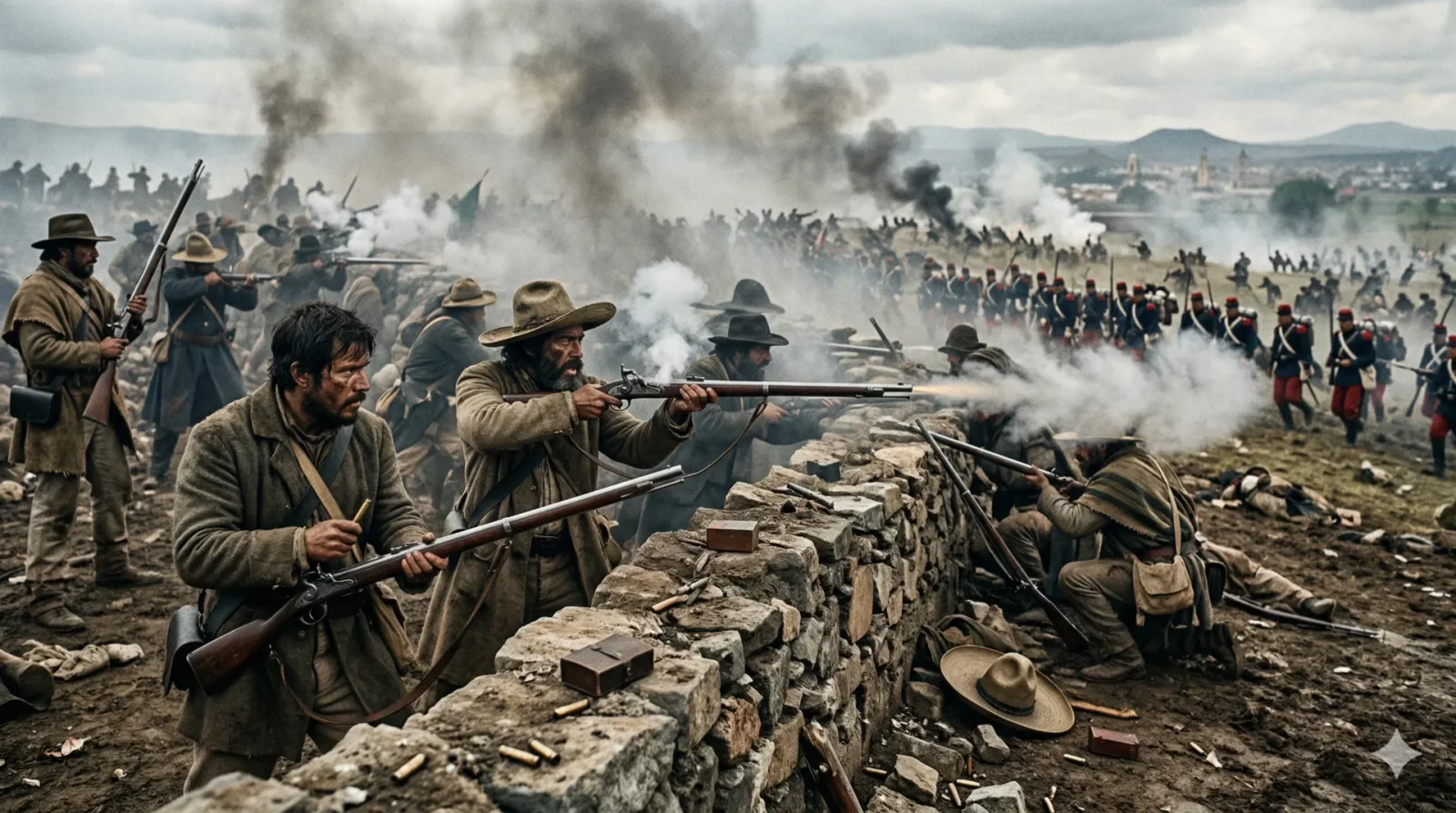
On May 5, 1862, around 2,000 to 4,000 Mexican troops defended the fortified city of Puebla against roughly 6,000 heavily armed French soldiers. The French army was considered the premier military power in the world at the time, having not lost a major battle in nearly fifty years. Despite being vastly outnumbered and equipped with outdated weaponry, the Mexican defenders repelled repeated French charges. By the end of the day, the French army suffered heavy casualties and was forced to retreat. The unexpected triumph provided an immense boost to Mexican national morale.
4. General Ignacio Zaragoza Was Born in Modern-Day Texas
The brilliant military commander who led Mexican forces to victory at Puebla was born on American soil. General Ignacio Zaragoza was born in 1829 in the village of Goliad, located in present-day Texas. At the time of his birth, the region was part of the Mexican state of Coahuila y Tejas. Zaragoza engineered the clever defensive tactics that crushed the advancing French units near Forts Loreto and Guadalupe. Today, Zaragoza is honored as a transnational hero on both sides of the U.S.-Mexico border.
5. The Holiday Is Barely Celebrated in Most of Mexico
Outside of the state of Puebla, Cinco de Mayo is actually a relatively minor day on the Mexican calendar. It is not a federal holiday in Mexico, meaning public offices, banks, and businesses remain open as usual. Most celebrations inside Mexico are concentrated in Puebla, where locals hold military parades and detailed historical reenactments. For the majority of Mexicans, September 16 is the primary national holiday that commands major civic celebrations. The widespread holiday enthusiasm known today is overwhelmingly an American cultural phenomenon.
6. The First Recorded Celebrations Took Place in California
Historical records indicate that the earliest organized Cinco de Mayo celebrations occurred in the United States, not Mexico. In May 1862, news of the Mexican victory at Puebla reached immigrant communities across California. Mexican-Americans living in Gold Rush towns reacted with spontaneous public celebrations and patriotic speeches. These early gatherings served as a display of solidarity with the democratic Mexican republic fighting foreign aggression. This grassroots response laid the foundational roots for the holiday's long-standing tradition in North America.
7. California Gold Miners Fired Rifles to Celebrate
One of the most famous early celebrations took place in the Gold Rush town of Columbia, California. When Mexican miners received news of the victory, they were overwhelmed with joy and patriotism. They spontaneously fired rifle shots into the air, set off fireworks, and sang patriotic songs. Community leaders gave passionate speeches celebrating democracy and freedom over European imperialism. The event became an annual tradition in the mining camps, cementing the holiday's early presence in the American West.
8. The Mexican Victory Derailed Napoleon III’s Plans in the U.S. Civil War
The Battle of Puebla had major geopolitical consequences for the ongoing American Civil War. Emperor Napoleon III was eager to support the Confederacy in order to divide the United States and weaken its global influence. By defeating the French army at Puebla, Mexican forces severely delayed France’s military timeline in North America. By the time France established control over Mexico a year later, the Union had gained a decisive advantage in the American Civil War. Historians argue that the Mexican victory effectively prevented France from supplying critical arms to the Southern forces.
9. FDR’s Good Neighbor Policy Boosted Its U.S. Popularity
Cinco de Mayo’s transition into the American mainstream received a major diplomatic boost during the 1930s. President Franklin D. Roosevelt instituted the Good Neighbor Policy to improve political and cultural relations with Latin American nations. As part of this diplomatic initiative, public schools and cultural institutions across the United States began promoting Mexican traditions. Cinco de Mayo was highlighted as a positive symbol of pan-American unity and democratic solidarity. This government-supported cultural exchange helped familiarize the broader American public with the historical date.
10. The Chicano Movement Transformed It into a Civil Rights Symbol
During the 1960s and 1970s, Mexican-American activists dramatically reshaped the cultural meaning of Cinco de Mayo. Leaders of the Chicano Movement adopted the historical event as a powerful emblem of identity and civil rights resistance. The victory of an underdog, indigenous-led army against a European imperial power resonated deeply with activists fighting racial inequality. University campuses and urban neighborhoods hosted celebrations featuring political speeches, art, and traditional folk dancing. The holiday became a cornerstone of Mexican-American pride and community empowerment across the Southwest.
11. Corporate Marketing Commercialized the Holiday in the 1980s
The modern, party-centric nature of Cinco de Mayo was largely engineered by corporate advertising campaigns. During the 1980s, major American alcohol and beer companies recognized the rapid growth of the Hispanic demographic. Marketing firms spent millions of dollars rebranding Cinco de Mayo as an all-American drinking holiday. Aggressive promotional campaigns in bars, supermarkets, and television commercials successfully reshaped public perception. What was once a subtle cultural commemoration became a multi-billion-dollar commercial engine for the beverage industry.
12. It Outperforms the Super Bowl in U.S. Beer and Tequila Sales
Today, Cinco de Mayo ranks among the most lucrative days of the year for the U.S. alcohol industry. According to market research, Americans purchase more beer on Cinco de Mayo than on Saint Patrick's Day or during the Super Bowl. Sales of imported Mexican beer and premium tequila experience massive spikes in the first week of May. Industry reports estimate that Americans spend hundreds of millions of dollars on alcohol during the single-day holiday. The dramatic retail shift underscores how thoroughly commercial interests transformed a nineteenth-century military anniversary.
13. Mole Poblano Is the Holiday's True Signature Dish
While modern celebrations in the United States often center on tacos and nachos, the traditional culinary heart of the holiday is Mole Poblano. Originating in the state of Puebla, Mole Poblano is a rich, complex sauce that requires hours of painstaking preparation. The recipe combines dozens of ingredients, including dark chocolate, roasted chili peppers, nuts, seeds, and aromatic spices. Traditionally served over turkey or chicken, the dish represents a blend of indigenous Mexican and Spanish culinary traditions. Eating Mole Poblano on May 5 remains a cherished cultural honor in Puebla and authentic Mexican culinary circles.
14. The Largest Celebration in the World Is in Los Angeles
Given the holiday's unique history, the largest Cinco de Mayo celebration on Earth takes place in California. Known as Fiesta Broadway, the massive festival in downtown Los Angeles draws hundreds of thousands of attendees every year. Spanning multiple city blocks, the event features live Latin music, traditional dancing, authentic food vendors, and cultural exhibits. The massive turnout in Los Angeles eclipses any single gathering held in Mexico on the same date. It serves as a striking testament to how deeply the holiday became embedded in Mexican-American culture.
15. France Actually Won the War Despite the Puebla Defeat
A frequently overlooked historical detail is that the heroic victory at Puebla did not end the French invasion. Emperor Napoleon III responded to the defeat by sending 30,000 additional troops to Mexico under a new commander. Just one year later, in 1863, French forces captured Puebla and successfully took control of Mexico City. France installed the Austrian Archduke Maximilian as the puppet Emperor of Mexico, ruling until 1867. Mexican republicans under Benito Juárez eventually ousted the French, but the famous May 5 battle was only a temporary setback for the invaders.
Sources & References
This AI-assisted post was rigorously curated and fact-checked for accuracy by:
 Martin Roháček
How fun was this article? 🤔
Tap a star to rate it
🧠 Quiz: How closely were you paying attention?
10 questions — all answers are in the article above!
Enjoyed these facts? There's more! 💌
Fresh fun facts in your inbox. No spam, ever.