1. It Was the First National Park in the World
When President Ulysses S. Grant signed the Yellowstone National Park Protection Act into law in 1872, he created a completely unprecedented global precedent for land conservation. Long before the National Park Service even existed, this massive tract of wilderness was officially set aside for the benefit and enjoyment of the people rather than for private industrial development. This revolutionary American concept eventually sparked a global conservation movement, inspiring countries across the entire world to begin protecting their own natural treasures.
2. The Park Sits Atop an Active Supervolcano
Beneath the serene forests and grazing bison lies one of the most terrifying and massive geological forces on the planet. The entire park rests directly over the Yellowstone Caldera, a colossal active supervolcano measuring roughly 45 miles across that has experienced three world-altering eruptions over the last two million years. While a catastrophic eruption is highly unlikely to happen anytime soon, this massive underground magma chamber is exactly what violently powers the thousands of bubbling thermal features scattered across the surface.
3. It Holds Half of the World’s Hydrothermal Features
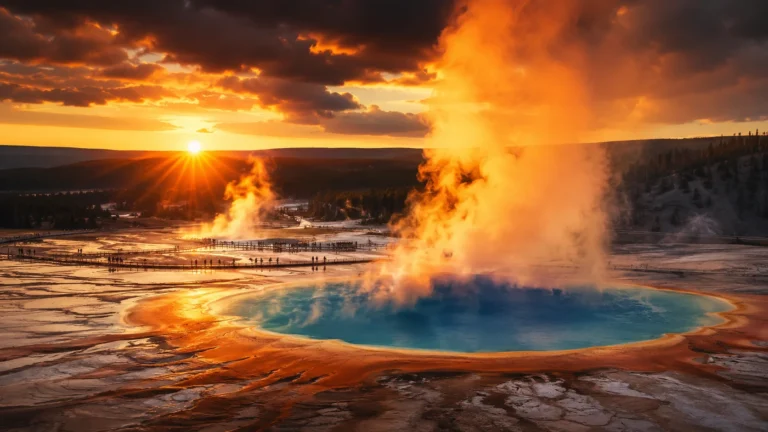
Visitors traveling to the park are stepping into the most highly concentrated geothermal landscape on earth. Yellowstone contains over 10,000 distinct hydrothermal features, including violently boiling mud pots, vibrant hot springs, and steaming fumaroles that constantly hiss gas into the atmosphere. Most astonishingly, the park is home to more than 500 active geysers, meaning this single geographic area contains more than half of all the geysers currently known to exist across the entire globe.
4. Its Bacteria Completely Revolutionized Modern Medicine
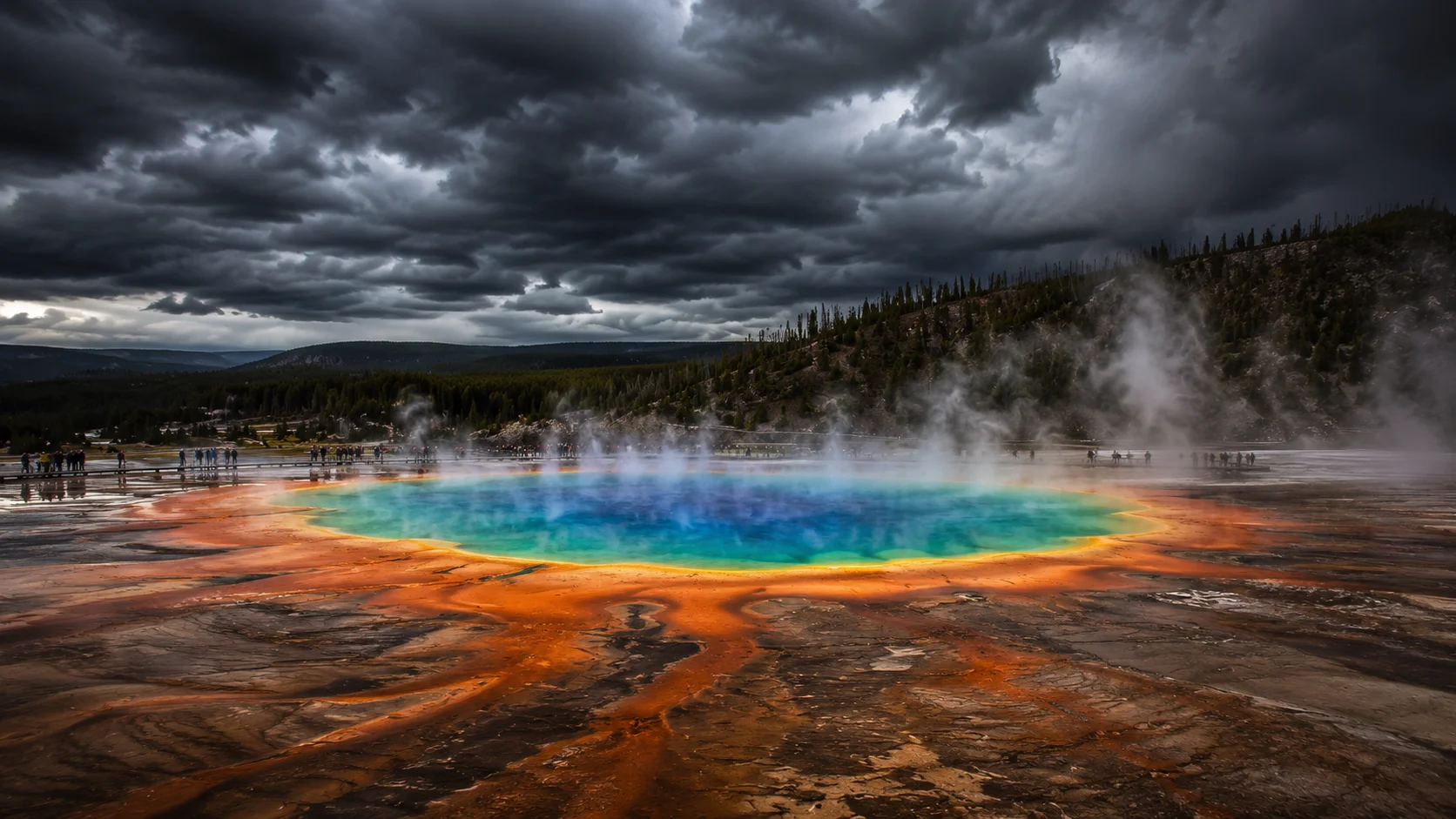
The vibrant colors seen in pools like the Grand Prismatic Spring are created by trillions of microscopic, heat-loving organisms called thermophiles. In the 1960s, a scientist discovered a specific bacteria named Thermus aquaticus thriving in a boiling park hot spring, which contained an enzyme that could withstand extreme heat without breaking down. This exact enzyme became the foundational biological component required for the PCR testing process, completely revolutionizing modern DNA analysis, criminal forensics, and global viral testing.
5. There is a Constitutional Loophole Called the Zone of Death
Because the park’s massive boundaries cross state lines while remaining under exclusive federal jurisdiction, a bizarre legal loophole exists in a remote 50-square-mile section overlapping into Idaho. Legal scholars have pointed out that the Sixth Amendment guarantees a jury drawn from the state and district where a crime is committed, but nobody actually lives in this specific Idaho portion of the park to form a jury. While theoretically making it a zone where major crimes cannot be constitutionally prosecuted, lawmakers have strongly warned that they would still absolutely find a way to convict offenders.
6. The Park Experiences Thousands of Earthquakes Every Year
While tourists are typically focused on watching bears and waiting for geysers to erupt, the ground beneath their feet is almost constantly shaking. Because the landscape is incredibly geologically active, the region experiences anywhere from 1,000 to 3,000 recorded earthquakes every single year. The vast majority of these seismic tremors are so incredibly small that human beings cannot even feel them, but they serve as a constant scientific reminder of the massive tectonic pressure moving deep within the earth’s crust.
7. Steamboat Geyser is the Tallest in the World
While Old Faithful receives the vast majority of the tourist attention, it is not actually the most powerful thermal feature in the region. That title belongs to Steamboat Geyser in the Norris Geyser Basin, which is officially recognized as the world’s tallest currently active geyser. During its highly unpredictable major eruptions, Steamboat can violently blast scalding water well over 300 feet into the air, completely dwarfing Old Faithful and terrifying any unprepared hikers standing nearby.
8. It Harbors the Oldest Public Bison Herd in America
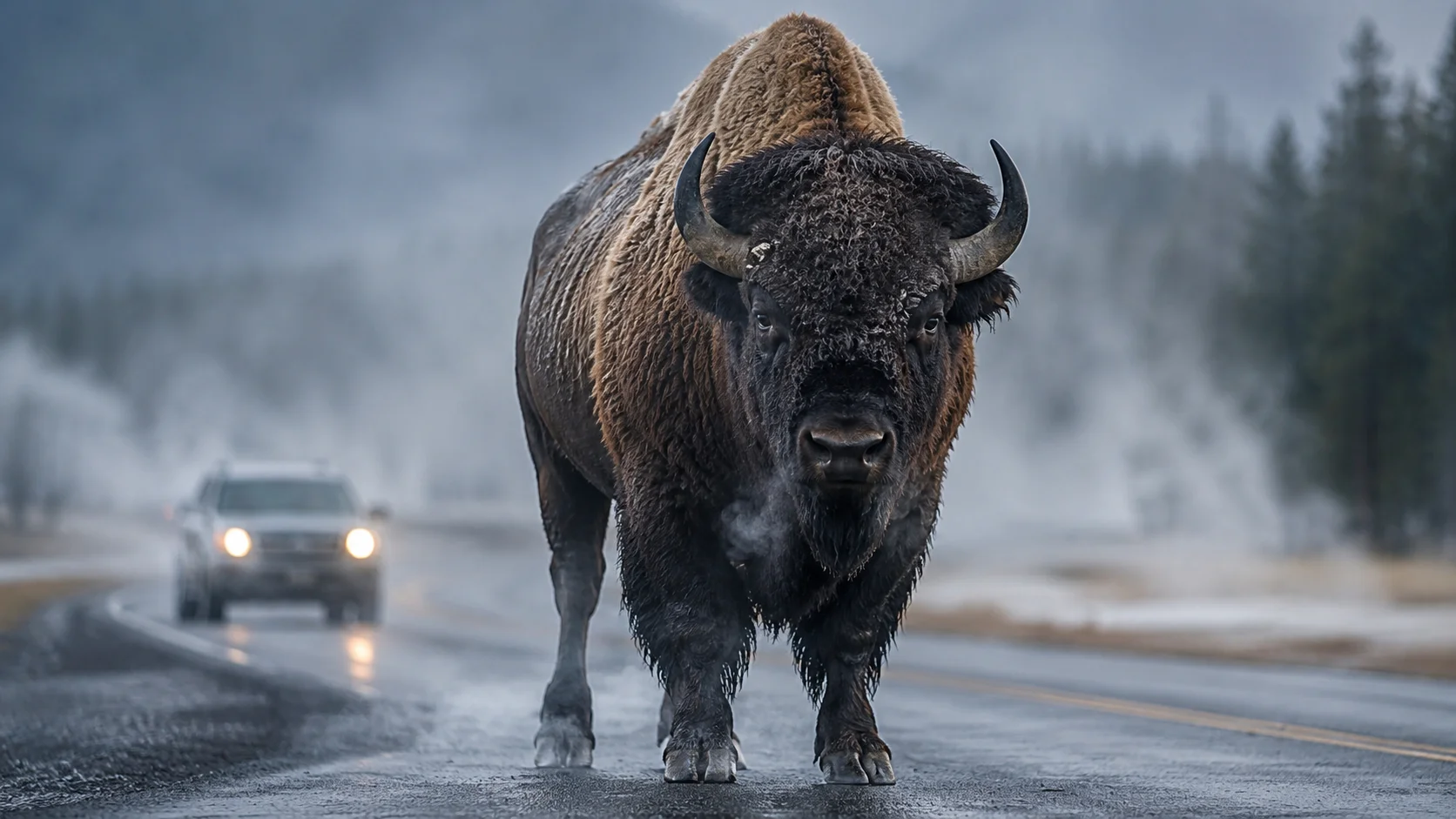
Yellowstone is the absolute only place in the entire United States where bison have lived continuously since prehistoric times. Unlike other herds that were completely wiped out and later reintroduced, this specific group managed to survive the massive national slaughter of the 19th century by hiding deep within the park’s harsh, mountainous terrain. Today, the park population has rebounded to roughly 5,000 individuals, representing the largest and most genetically pure conservation herd of wild plains bison in existence.
9. The Park Spans Across Three Different States
The sheer physical magnitude of the protected wilderness is often difficult for first-time visitors to fully comprehend. Covering roughly 3,472 square miles, the immense park is actually larger than the entire states of Rhode Island and Delaware combined. While the vast majority of the landmass is located within the borders of Wyoming, the northern and western edges bleed significantly into Montana and Idaho, requiring complex cooperation for wildlife management and road maintenance.
10. Reintroducing Wolves Completely Changed the Landscape
By the 1920s, gray wolves had been completely eradicated from the park by human hunters, which caused the local elk population to explode and severely overgraze the landscape. When federal biologists finally reintroduced 41 wild wolves in the mid-1990s, it triggered a miraculous ecological chain reaction known as a trophic cascade. The wolves naturally reduced the elk herds, which allowed decimated willow and aspen trees to quickly regrow, subsequently bringing back massive populations of songbirds, beavers, and healthy river ecosystems.
11. Yellowstone Lake is a High-Elevation Monster
Situated at a breathtaking altitude of 7,733 feet above sea level, Yellowstone Lake is officially the largest high-elevation lake on the entire North American continent. The massive body of water covers 136 square miles and contains completely freezing water year-round, making swimming incredibly dangerous even during the peak of summer. Astonishingly, the bottom of the lake features its very own hidden geothermal ecosystem, complete with underwater geysers, deep hot springs, and strange sponge-like aquatic plants.
12. It Contains a Massive Upright Petrified Forest
Tucked away in the northern range of the park is Specimen Ridge, which holds one of the most extensive and unique fossilized forests in the world. Millions of years ago, massive volcanic eruptions buried entire lush forests in deep layers of ash and mud, gradually replacing the organic wood with solid silica. Unlike most petrified wood that is found scattered on the ground, many of the ancient trees here are still standing perfectly upright exactly where they originally grew.
13. A Lost Explorer Inspired Its Preservation
During the famous 1870 Washburn expedition to explore the uncharted region, a banker named Truman Everts became hopelessly separated from his group without a horse or supplies. He spent 37 agonizing days completely lost in the harsh wilderness, surviving freezing snowstorms, severe burns from thermal vents, and starvation by eating thistle roots before finally being rescued. His highly sensationalized, published survival story captured the imagination of the American public and heavily influenced Congress to legally protect the mysterious landscape.
14. Old Faithful is Not the Most Predictable Geyser
Despite its legendary reputation and massive crowds, Old Faithful is actually not the most mathematically reliable geyser in the park. Its eruptions can vary significantly, currently occurring anywhere from 60 to 110 minutes apart depending entirely on the duration of its previous blast. Geysers like Riverside and Daisy are actually much more predictable for park rangers to track, but Old Faithful remains the undisputed crowd favorite because its frequent eruptions still guarantee a spectacular, towering show.
15. The Grand Canyon of the Yellowstone is Rusting
Carved violently by the rushing waters of the Yellowstone River, the park features its own magnificent canyon that stretches for 20 miles and drops over 1,000 feet deep. The incredibly vibrant pink, yellow, and red colors staining the massive canyon walls are not merely dirt, but rather hydrothermally altered rhyolite rock. The geothermal vents essentially cooked the iron compounds within the stone over thousands of years, meaning the breathtakingly colorful walls of the canyon are quite literally rusting away in plain sight.
Sources and References