1. The Forest Actually Creates Its Own Rain
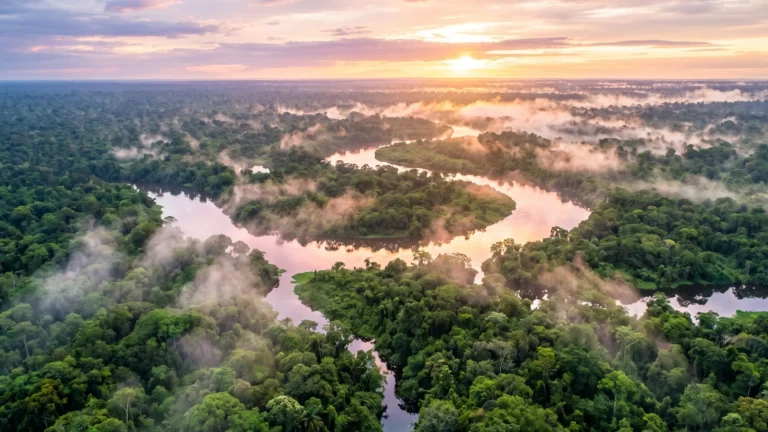
The Amazon is so incomprehensibly massive and biologically active that it has effectively engineered its own localized weather system. Through a biological process known as transpiration, billions of broad-leafed trees continuously suck up groundwater and release massive plumes of water vapor directly into the atmosphere. This colossal, invisible “flying river” above the canopy generates daily, torrential thunderstorms, meaning the rainforest literally waters itself to sustain its own lush, tropical existence.
2. It is Fertilized by Dust From the Sahara Desert
In one of the most astonishing examples of global ecological connectivity, the lush Amazon relies on the barren Sahara Desert for its survival. Every year, massive transatlantic wind currents carry millions of tons of nutrient-rich dust from the desiccated Bodélé Depression in Chad all the way across the ocean. This airborne dust contains vital phosphorus, continuously fertilizing the nutrient-poor Amazonian soil and replacing the essential minerals that are constantly washed away by the heavy tropical rains.
3. A Terrifying Fungus Turns Ants Into Mind-Controlled Zombies
Deep within the humid undergrowth lies a microscopic nightmare that sounds like pure science fiction, known scientifically as Ophiocordyceps unilateralis. When this parasitic fungus infects a carpenter ant, it completely hijacks the insect’s central nervous system, forcing the zombified host to climb to a specific, optimal height and bite down on a leaf. Once the ant is firmly secured and slowly dies, the fungus gruesomely sprouts a long stalk directly out of the ant’s head to rain highly infectious spores onto the colony below.
4. Bizarre Pink Dolphins Swim Through the Flooded Forests
During the torrential rainy season, the Amazon River fiercely overflows its banks, transforming millions of acres of jungle into a deeply flooded aquatic forest. Navigating seamlessly between the submerged tree trunks are the Botos, a highly unique species of freshwater dolphin famous for their striking, bubblegum-pink coloration. Unlike their oceanic cousins, these highly intelligent mammals possess unfused neck vertebrae, allowing them to turn their heads a full 90 degrees to hunt elusive fish hiding in the tangled underwater roots.
5. One Tiny Frog Contains Enough Toxin to Kill Ten Humans
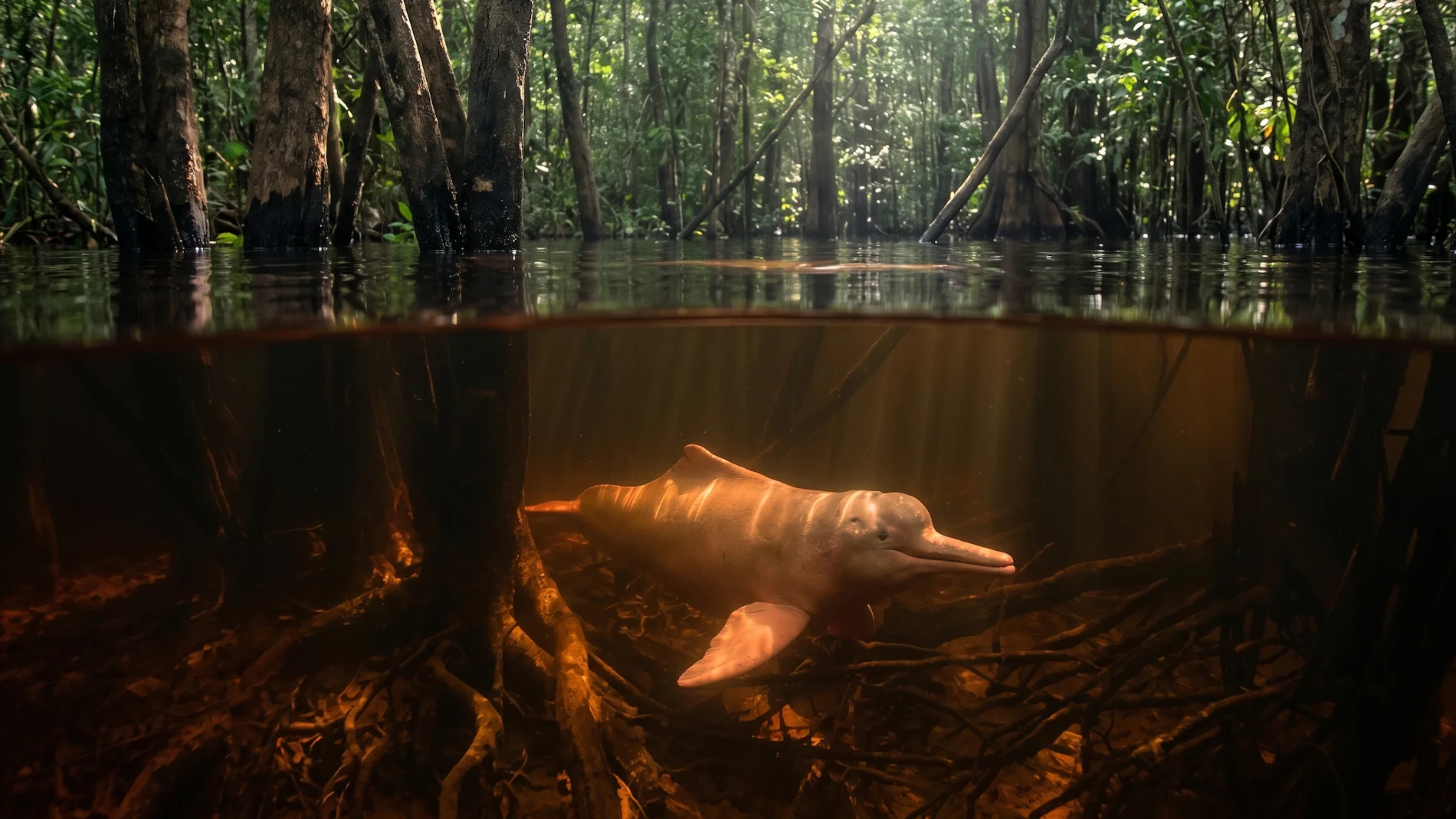
The Amazon is fiercely guarded by some of the most deceptively beautiful killers on the planet, most notably the vibrant Golden Poison Dart Frog. Measuring less than two inches long, this brightly colored amphibian secretes a lethal, fast-acting neurotoxin known as batrachotoxin through its skin to deter apex predators. A single wild frog carries enough of this terrifying venom to completely paralyze and kill up to ten fully grown adult humans within minutes of direct contact.
6. There Are Absolutely Zero Bridges Crossing the Amazon River
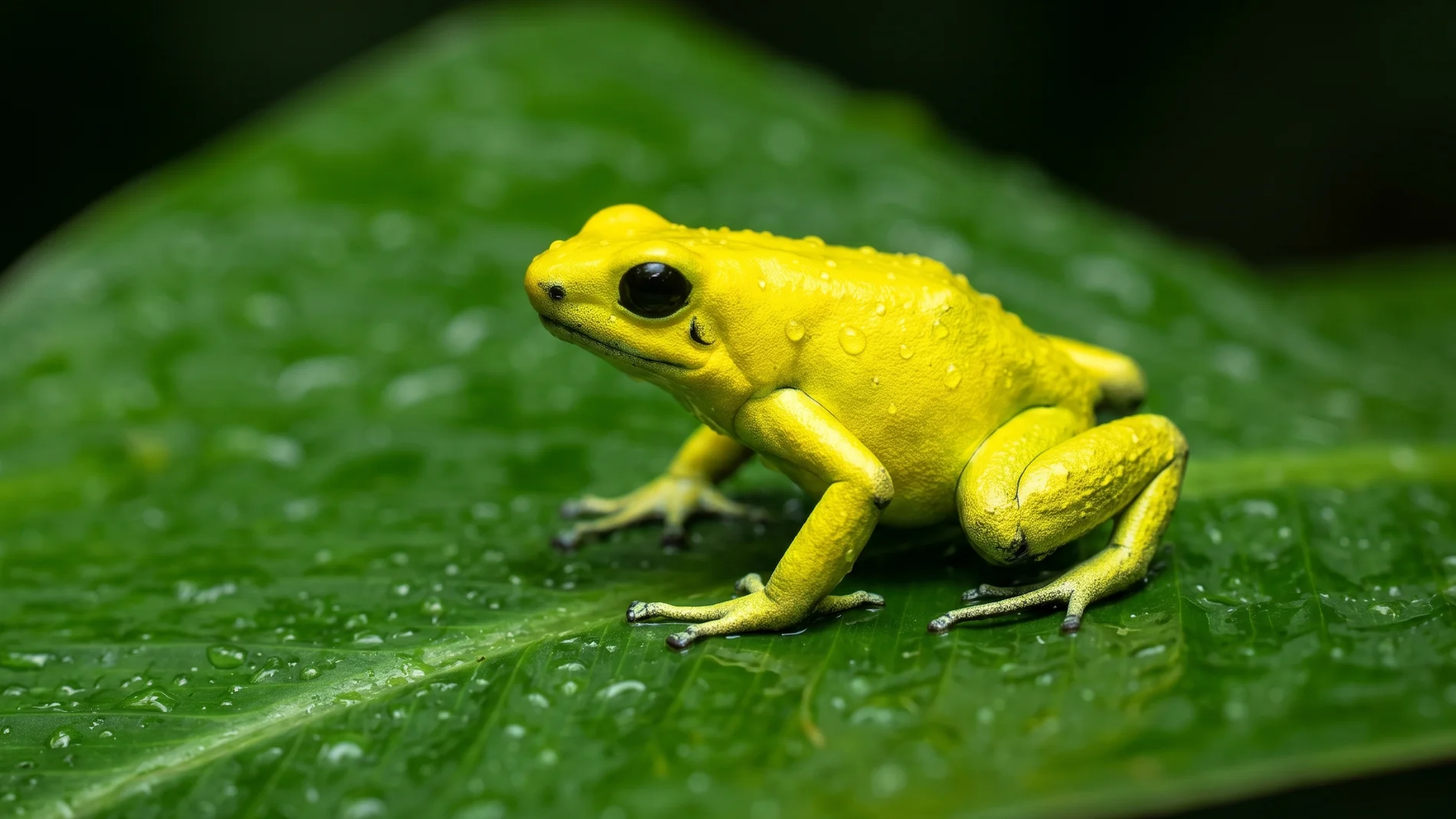
Despite being one of the longest and most historically significant waterways in human history, there is not a single structural bridge crossing the main stem of the Amazon River. Spanning over 4,000 miles from the Andes to the Atlantic, the river experiences such extreme seasonal flooding that its width can dramatically swell from two miles to over thirty miles wide. Constructing a permanent bridge across such violently shifting, marshy banks is considered an absolute logistical nightmare, forcing locals to rely entirely on boats and ferries.
7. The Shanay-Timpishka River Can Boil Animals Alive
Hidden deep within the Peruvian Amazon is a geographical anomaly so lethal that locals believed it was summoned by powerful river spirits. Known as Shanay-Timpishka, or the “Boiling River,” this four-mile stretch of geothermal water reaches blistering temperatures up to 200°F (93°C). Because it is not located near any active volcanoes, geologists believe ancient fault lines allow deep, superheated groundwater to violently erupt to the surface, instantly cooking any unfortunate animal or insect that accidentally falls into the steaming current.
8. It Discharges More Water Than the Next Seven Rivers Combined
To truly grasp the sheer, unrelenting hydraulic power of the Amazon River, one must look at the immense volume of water it physically pushes into the Atlantic Ocean. The river is so unfathomably massive that it discharges approximately 209,000 cubic meters of fresh water every single second. This torrential outflow is actually greater than the combined output of the next seven largest independent rivers in the world, holding roughly 20 percent of the entire planet’s flowing freshwater supply.
9. Glass Frogs Have Completely Translucent Bellies
Evolution in the rainforest has produced some incredible camouflage, but the tiny Amazonian Glass Frog takes the concept of invisibility to the extreme. When viewed from above, these nocturnal amphibians are a standard, leafy green, but their undersides feature highly specialized, completely translucent skin. If you look at the frog’s belly from below, you can clearly see its tiny beating heart, pumping liver, and entire digestive tract, a bizarre evolutionary trait designed to prevent casting a solid shadow on sunlit leaves.
10. The Forest Canopy is So Thick That Rain Takes Ten Minutes to Fall
The highest layers of the Amazonian foliage create a tightly woven, biological ceiling that heavily shields the dark forest floor from the outside world. This dense, overlapping canopy is so remarkably thick that it permanently blocks out roughly 99 percent of all incoming sunlight, leaving the understory in perpetual twilight. Furthermore, during a torrential tropical downpour, the leaves are so tightly packed that it can take a raindrop up to ten full minutes to successfully navigate the maze and hit the ground.
11. The Meeting of the Waters Creates a Massive Unmixed River
Near the city of Manaus, Brazil, two massive rivers violently collide but absolutely refuse to blend together, creating a stunning visual phenomenon known as the “Meeting of the Waters.” The dark, acidic, and slow-moving Rio Negro runs side-by-side with the sandy, fast-paced, and warmer Amazon River for nearly four miles without mixing. The stark contrast between the black water and the pale brown water creates a distinct, perfectly defined dividing line in the river caused entirely by differing temperatures, speeds, and water densities.
12. Uncontacted Indigenous Tribes Still Live Deep in the Jungle
While modern technology has mapped nearly every inch of the globe, the Amazon remains one of the last true frontiers for isolated human existence. Deep within the most impenetrable and remote sectors of the Brazilian and Peruvian rainforests, anthropologists have confirmed the existence of over 100 “uncontacted” indigenous tribes. These deeply resilient communities actively avoid all integration with the modern world, relying on ancient hunter-gatherer traditions and deep botanical knowledge to survive completely independently in the harsh jungle environment.
13. The Giant Water Lilies Can Support a Human’s Weight
The calm, shallow oxbow lakes of the Amazon basin are home to the Victoria amazonica, the largest and most structurally impressive species of water lily on Earth. Their massive, circular leaves can grow up to ten feet in diameter and feature an intricate, rib-like architectural support system underneath. Because of this brilliant biological engineering, a single lily pad effectively displaces water like a boat and can easily support the weight of a small human child without sinking.
14. The Basilisk Lizard Can Literally Sprint Across Water
Fleeing from terrifying predators requires a serious evolutionary advantage, and the Common Basilisk lizard has developed the miraculous ability to run directly over the river’s surface. Earning it the famous nickname of the “Jesus Christ Lizard,” this reptile possesses specialized flaps of skin on its toes that unroll in the water to create tiny air pockets. By furiously cycling its legs and slapping the surface, it can sprint upright across the water at five feet per second to successfully escape hungry snakes and jaguars.
15. The Peanut Head Bug Uses a Fake Reptilian Head for Defense
In a jungle full of deadly hunters, the bizarre Peanut Head Bug relies on an elaborate, highly comical optical illusion to survive. The insect features a massive, bulbous protrusion on the top of its head that perfectly resembles an unshelled peanut to the human eye, but acts as a terrifying deterrent to predators. Biologists believe the bizarre, hollow structure evolved to mimic the head and fake eyes of a dangerous lizard, successfully scaring off hungry birds searching for an easy insect meal.
Sources and References