1. It Was the Largest Battleship Ever Built by Germany
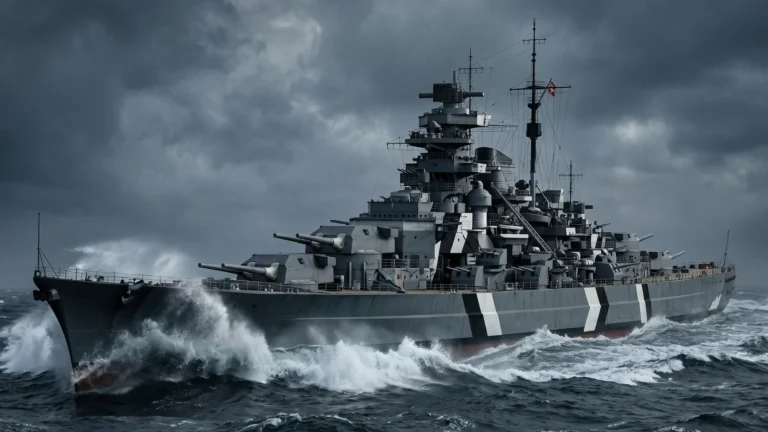
At the time of its commissioning, the Bismarck was a technological marvel and the absolute largest battleship ever constructed by the German military. Displacing roughly 50,000 tons when fully loaded and stretching over 820 feet in length, it was an incredibly imposing steel leviathan. To ensure its survivability in brutal high-seas engagements, the massive warship was wrapped in incredibly dense Wotan armor plating that was more than 12 inches thick along its main waterline belt. This heavy, state-of-the-art protection allowed it to absorb a staggering amount of punishment that would have easily crippled or sunk older, less advanced capital ships of the era.
2. It Annihilated the Pride of the Royal Navy in Minutes
When the Bismarck was intercepted in the Denmark Strait on May 24, 1941, it faced off against the HMS Hood, the beloved and legendary pride of the British Royal Navy. The engagement was shockingly brief and brutally decisive, showcasing the terrifying accuracy of German naval gunnery. A 15-inch armor-piercing shell from the Bismarck plunged directly through the Hood’s thinly armored upper deck and detonated deep inside its aft ammunition magazine. The resulting catastrophic explosion broke the massive British battlecruiser entirely in half, sinking it in a matter of minutes and leaving only three miraculous survivors out of a crew of 1,418 men.
3. Winston Churchill Issued a Famous Order for Absolute Destruction
The shocking and sudden destruction of the HMS Hood sent shockwaves of grief, panic, and sheer outrage completely across the British Empire. Recognizing the existential threat the German battleship posed to vulnerable Atlantic supply convoys, British Prime Minister Winston Churchill issued his famously ruthless, uncompromising order: “Sink the Bismarck!” This frantic command immediately mobilized every available British warship, aircraft carrier, and submarine in the region, pulling them away from their standard escort duties to hunt down the fleeing German leviathan. The entire operational focus of the Royal Navy temporarily shifted to exacting vengeance and eliminating this single, terrifying vessel at absolutely any cost.
4. An Obsolete Canvas Biplane Sealed the Battleship’s Fate
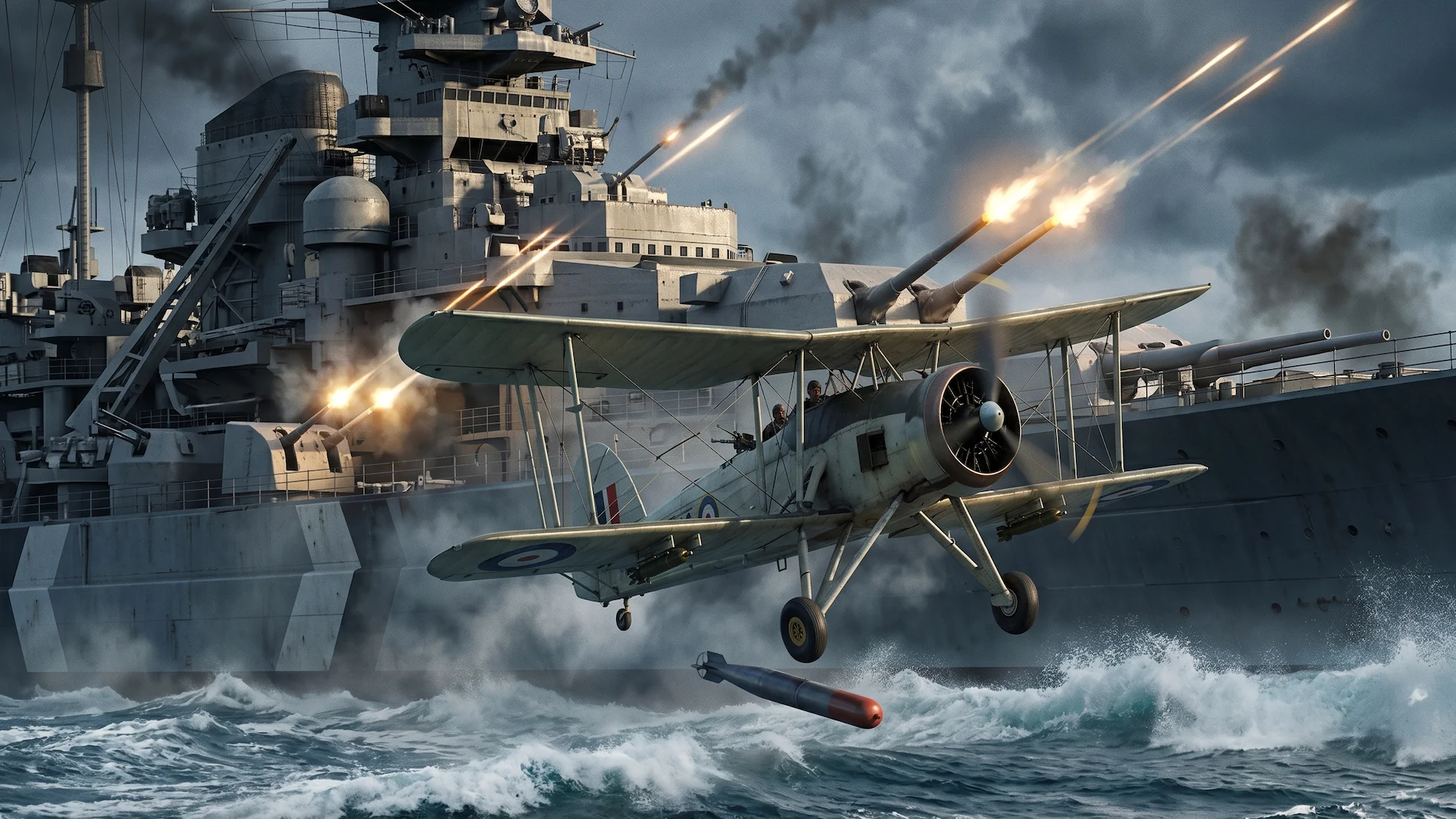
In a stunning twist of historical irony, the highly advanced, heavily armored German dreadnought was ultimately brought down by completely obsolete aviation technology. The British aircraft carrier HMS Ark Royal launched a desperate strike using Fairey Swordfish torpedo bombers, which were notoriously slow, open-cockpit biplanes constructed of wood and canvas fabric. The archaic planes flew so incredibly slowly that the Bismarck’s highly sophisticated anti-aircraft targeting computers could not accurately track them, allowing one plane to drop a lucky torpedo that ultimately jammed the battleship’s steering gear. Locked into a continuous, uncorrectable port turn, the pride of the German navy was left hopelessly crippled and waiting for the British fleet to arrive.
5. A Ship’s Cat Famously Survived the Wreckage
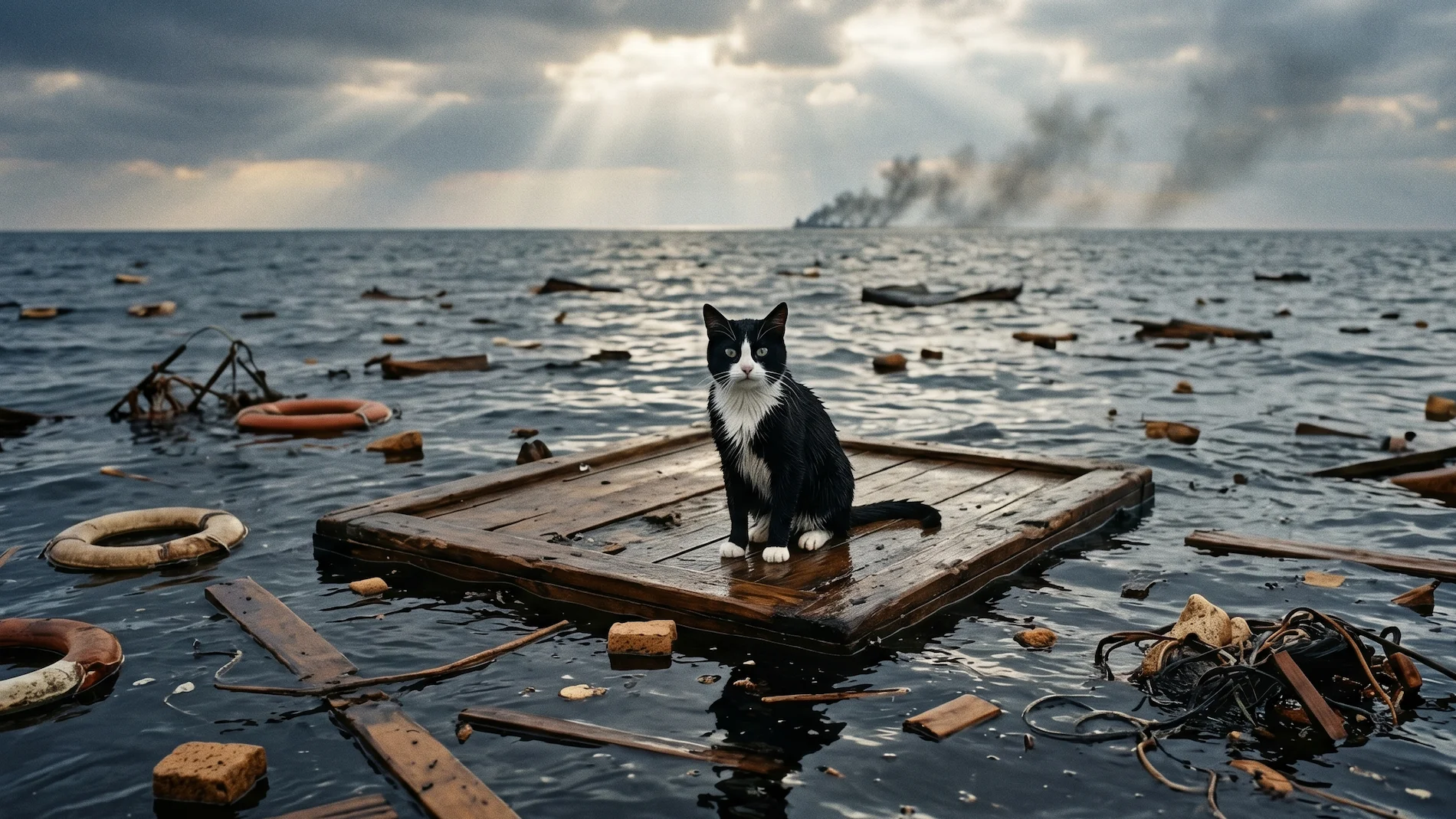
Amidst the horrific carnage and icy waters of the Atlantic, a legendary story of animal survival miraculously emerged from the sinking warship. A black-and-white tuxedo cat named Oskar, who had been brought aboard the Bismarck as a mascot, was found floating on a wooden board and rescued by the British destroyer HMS Cossack. The incredibly resilient feline, later renamed “Unsinkable Sam,” became one of the most famous after he went on to survive the subsequent torpedoing of the Cossack and the sinking of the HMS Ark Royal. His astonishing ability to escape three separate catastrophic shipwrecks earned him a comfortable, land-based retirement at a seaman’s home in Belfast.
6. It Was Destroyed on Its Very First Offensive Mission
Despite years of incredibly expensive construction, rigorous sea trials, and massive propaganda campaigns celebrating its might, the Bismarck had an astonishingly short operational lifespan. The massive hunt and subsequent sinking occurred during Operation Rheinübung, which was the battleship’s very first and only offensive sortie into the Atlantic Ocean. The German High Command had meticulously planned for the vessel to spend months raiding merchant convoys and starving Britain of crucial war supplies. Instead, its combat career lasted a mere eight days from the moment it left the Baltic Sea to its fiery demise at the bottom of the ocean.
7. The Wreck Was Discovered by the Man Who Found the Titanic
For nearly five decades, the exact resting place of the mighty German battleship remained a complete mystery hidden deep within the abyssal plains of the Atlantic. In 1989, legendary oceanographer Dr. Robert Ballard successfully located the wreck sitting upright at a crushing depth of over 15,000 feet. This was an incredible historical triumph for Ballard, as he was the exact same deep-sea explorer who had discovered the haunting, rusted remains of the Titanic just four years earlier. His robotic camera footage revealed that the Bismarck’s heavy guns were still pointed upward, and the ship’s hull remained remarkably intact despite the sheer violence of its sinking.
8. Its Threat Mirrored the Panic of Early Submarine Warfare
The deployment of the Bismarck was a calculated attempt by the German Navy to completely sever the transatlantic lifeline keeping the British war effort alive. The sheer psychological terror it invoked among civilian merchant sailors was eerily reminiscent of the unrestricted U-boat warfare campaigns of the previous global conflict. Just as the infamous sinking of Lusitania the proved that no civilian passenger vessel was ever truly safe, the Bismarck proved that massive, heavily escorted convoys could be completely obliterated by a single surface raider. The British Admiralty knew that if this battleship reached the open Atlantic shipping lanes, the logistical devastation would be almost impossible to recover from.
9. Its Design Defied the Harsh Restrictions of the First World War
The construction of this massive leviathan was a highly visible, aggressive violation of international naval treaties established decades prior. Following the devastating conclusion of the First World War, the Treaty of Versailles severely restricted the defeated German military, strictly prohibiting them from building heavy battleships. When Adolf Hitler formally renounced these restrictions in the 1930s, the Bismarck was specifically designed to surpass the strict tonnage limits imposed by the subsequent Anglo-German Naval Agreement. The resulting warship was a massive, heavily armored symbol of German rearmament and a direct challenge to the historical maritime supremacy of the British Royal Navy.
10. A Crucial Refueling Error Doomed the Escape Attempt
Naval warfare often hinges on mundane logistical decisions, and a simple lack of fuel ultimately played a massive role in the battleship’s tragic downfall. During its initial breakout through the Norwegian Sea, Fleet Commander Admiral Günther Lütjens surprisingly declined to top off the Bismarck’s heavy oil bunkers in the port of Bergen. When the ship later sustained a hit from the HMS Prince of Wales that ruptured a forward fuel tank and caused a massive oil leak, the Bismarck simply did not have enough reserve fuel to evade the British fleet. This critical shortage forced the crippled ship to make a desperate, slow-speed dash toward the safety of occupied France, ultimately sealing its fate.
11. It Absorbed Hundreds of Shells During the Final Battle
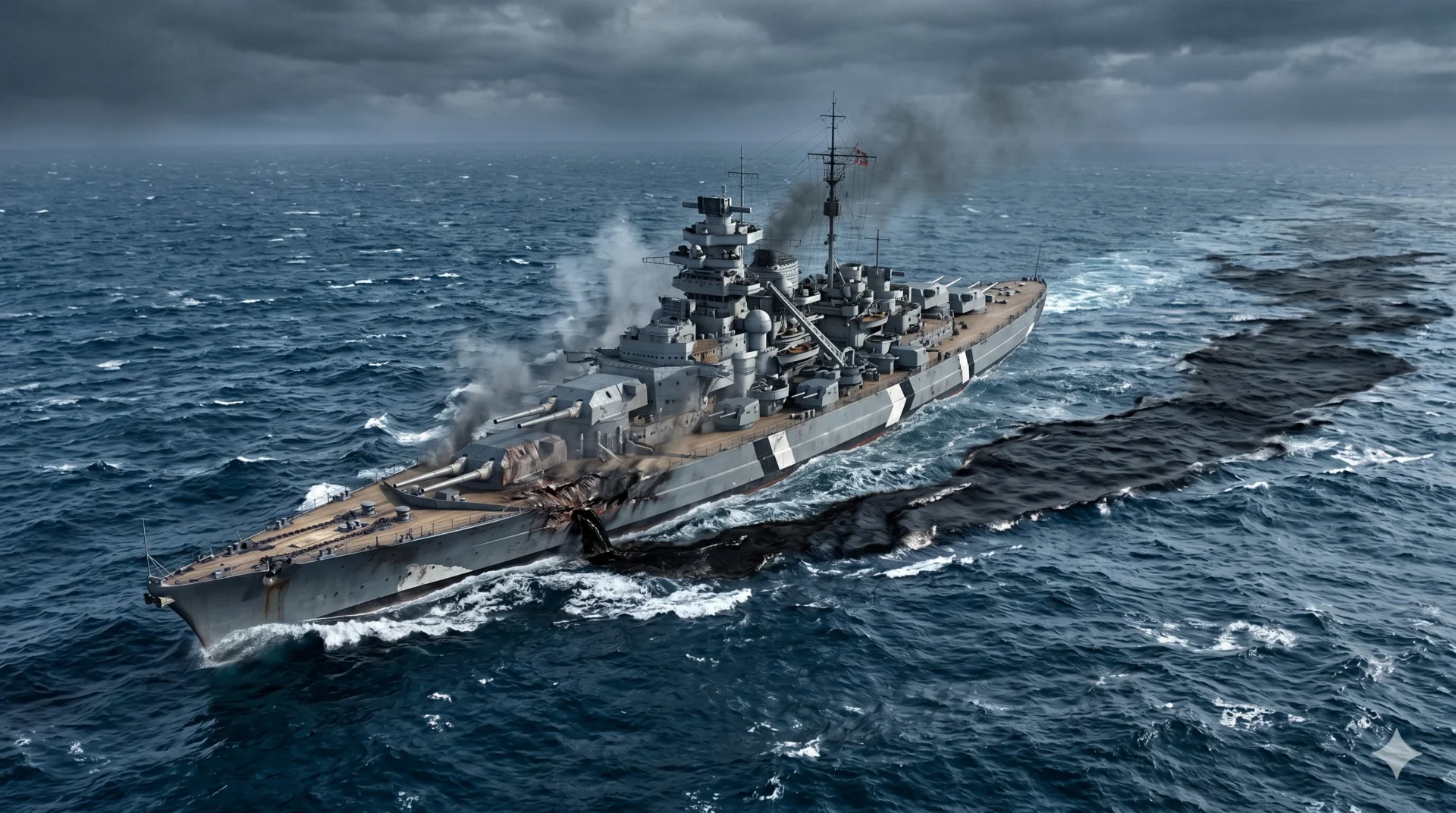
The final, decisive battle on the morning of May 27, 1941, was an incredibly brutal, one-sided execution that tested the absolute limits of the German ship’s legendary armor. The British battleships HMS King George V and HMS Rodney closed the distance and relentlessly pounded the crippled Bismarck with over 2,800 heavy artillery shells for nearly two hours. Despite having its upper superstructures completely obliterated and all of its main guns silenced, the ship’s incredibly resilient main armored hull stubbornly refused to sink beneath the waves. This astonishing structural integrity forced the British cruisers to fire multiple point-blank torpedoes into the burning wreckage to finally send it to the bottom.
12. German Survivors Claim the Ship Was Actually Scuttled
While British naval history proudly records that their torpedoes ultimately sank the Bismarck, the surviving German crew members vehemently maintain a very different narrative. Because the ship was entirely ablaze, heavily listing, and completely incapable of returning fire, the German engineering officers realized capture was imminent and allegedly initiated scuttling procedures. Survivors claimed that they deliberately opened the watertight doors and detonated internal scuttling charges to ensure the British could not tow the prized battleship back to port. Modern underwater expeditions exploring the wreck have noted that the torpedo damage does not entirely explain the sinking, suggesting that both enemy fire and intentional scuttling ultimately sank the leviathan.
13. The Crew Suffered an Exceptionally Horrific Casualty Rate
When the burning, shattered battleship finally capsized and slipped beneath the icy waves of the Atlantic, it took a horrific human toll with it. Out of the massive crew of roughly 2,200 sailors and officers stationed aboard the Bismarck, only 114 men were successfully pulled from the freezing, oil-slicked waters. The rescuing British vessels, HMS Dorsetshire and HMS Maori, were forced to abruptly abandon hundreds of drowning German sailors and flee the area due to unconfirmed reports of a prowling U-boat. This terrifying abandonment perfectly highlights the brutal, uncompromising, and deeply tragic nature of deep-ocean naval warfare during the conflict.
14. Codebreakers Helped Track the Fleeing Battleship
While massive naval guns ultimately destroyed the ship, brilliant British intelligence officers working behind the scenes were crucial to actually finding it. The genius codebreakers stationed at Bletchley Park played a vital role in analyzing German radio traffic and deciphering encrypted Luftwaffe Enigma messages related to the Bismarck’s movements. When Admiral Lütjens mistakenly believed he was still being tracked by British radar and sent a lengthy, heavily encrypted radio transmission to Berlin, the Allies successfully triangulated his position. This crucial intelligence breakthrough allowed the British Admiralty to completely redirect their hunting fleets toward the French coast, perfectly setting the deadly trap.
15. The Sinking Effectively Ended the German Surface Fleet Threat
The shocking loss of their most powerful and celebrated battleship severely traumatized the German High Command and fundamentally altered their naval strategy. Infuriated by the disastrous outcome of the ship’s maiden voyage, Adolf Hitler permanently lost all faith in the Kriegsmarine’s expensive surface fleet and strictly forbade any further risky Atlantic breakouts. From that moment forward, the massive German battleships were largely relegated to hiding in Norwegian fjords as “fleet in being” deterrents. The strategic focus of the German Navy completely shifted to heavily prioritizing stealthy U-boat wolfpacks to hunt vulnerable merchant convoys for the remainder of the brutal war.
Sources and References
Imperial War Museums: https://www.iwm.org.uk/history/second-world-war/how-the-royal-navy-hunted-down-the-bismarck
Naval History and Heritage Command: https://www.history.navy.mil/research/library/online-reading-room/title-list-alphabetically/s/sinking-of-the-bismarck/the-cruise-of-the-bismarck.html
Britannica: https://www.britannica.com/topic/Bismarck-German-ship