1. It Holds the Record for the Hottest Air Temperature on Earth
On July 10, 1913, the aptly named Furnace Creek in Death Valley recorded a blistering, brain-melting air temperature of 134°F (56.7°C). To this day, this staggering measurement stands officially recognized by the World Meteorological Organization as the highest ambient air temperature ever reliably recorded on the surface of our planet. The valley’s extreme depth and steep mountain walls essentially act as a giant convection oven, trapping solar radiation and continuously circulating intensely superheated air.
2. The Lowest Point in North America is Here
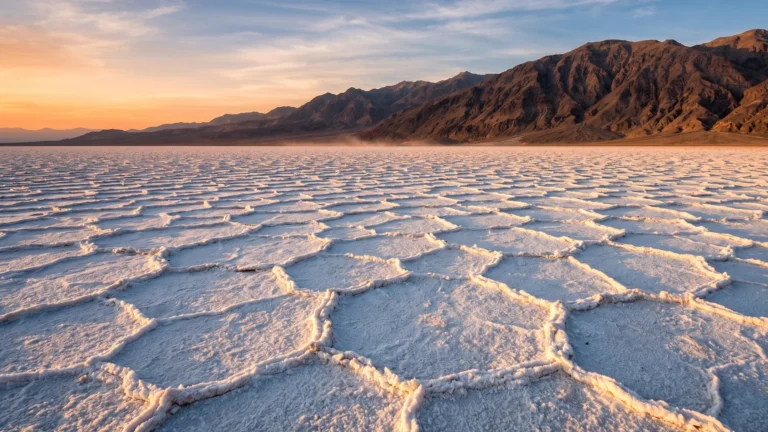
At a staggering 282 feet below sea level, the surreal, salt-crusted expanse of Badwater Basin claims the title of the lowest elevation point in North America. What makes this geographical extreme even more mind-boggling is its incredibly close proximity to the sky. Mount Whitney, the absolute highest peak in the contiguous United States towering at 14,505 feet, is located a mere 84 miles away, perfectly illustrating the violent tectonic forces that aggressively shaped this landscape.
3. The Mysterious Sailing Stones Actually Move Themselves
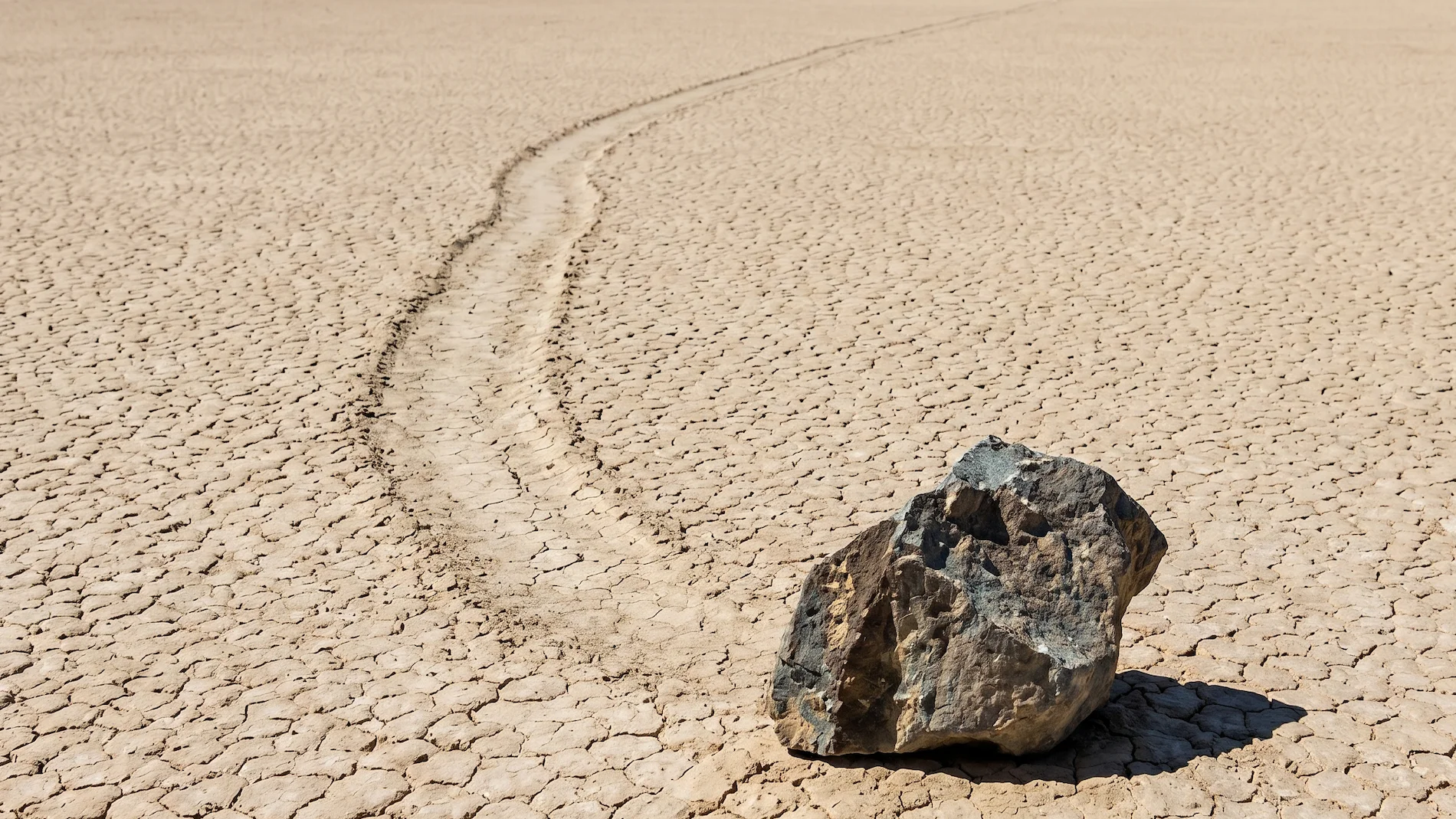
For decades, visitors to the remote Racetrack Playa were utterly baffled by heavy dolomite rocks that seemingly dragged themselves across the dry lakebed, leaving long, distinct trails in the mud. The creepy phenomenon remained an unsolved scientific mystery until researchers finally captured the movement on camera in 2013. They discovered that during rare winter freezes, paper-thin sheets of “windowpane ice” form on the playa and are gently pushed by light winds, acting like miniature bulldozers that slowly shove the massive stones across the slippery mud.
4. Rare Superblooms Turn the Desert Into a Vibrant Carpet
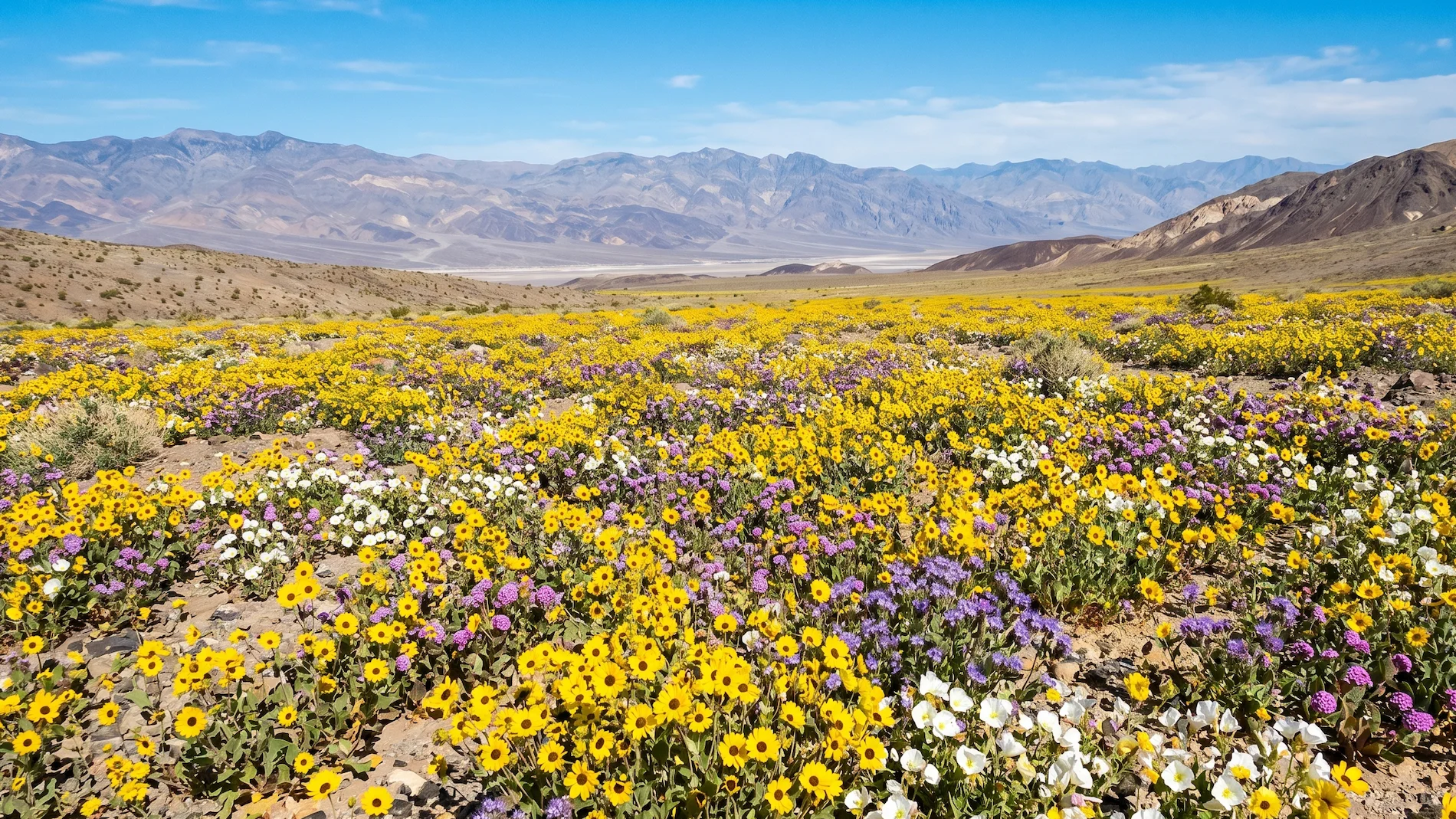
Despite its ominous name, Death Valley is far from a lifeless wasteland, hiding millions of dormant seeds just beneath its baked, cracked surface. When atmospheric conditions align perfectly to deliver heavy, soaking winter rains, the desert explodes into a rare, breathtaking botanical phenomenon known as a “superbloom.” The normally barren landscape is suddenly swallowed by a spectacular, vibrant carpet of yellow, purple, and white wildflowers, proving that life fiercely endures even in the harshest environments.
5. The Devils Hole Pupfish Survives in a Tiny Geothermal Pool
One of the rarest and most incredibly resilient vertebrate species on Earth lives entirely within a single, isolated water-filled cavern inside the park. The Devils Hole pupfish is an iridescent blue, inch-long fish that has miraculously survived in a 93-degree Fahrenheit (34°C) geothermal pool for over 10,000 years since the last ice age. Numbering only in the low hundreds, this critically endangered species survives on a tiny, shallow rock shelf, representing one of the most astonishing evolutionary success stories in marine biology.
6. It Served as the Real-World Filming Location for Tatooine
If the desolate, sun-scorched canyons and sweeping dunes of Death Valley look vaguely familiar to movie buffs, it is because they belong to a galaxy far, far away. Legendary director George Lucas used the park’s otherworldly, alien landscape as the primary real-world filming location for the desert planet Tatooine in the original 1977 Star Wars film. Iconic scenes featuring R2-D2 rolling through treacherous canyons and Luke Skywalker gazing across the desolate Jundland Wastes were actually shot directly in this iconic American national park.
7. It Was the Center of the Historic Borax Mining Industry
Long before it became a protected national park, Death Valley was a harsh industrial frontier famous for its massive deposits of borax, a valuable mineral known as “white gold.” In the late 1800s, mining companies extracted immense quantities of the mineral from the scorching valley floor. To transport the heavy cargo across 165 miles of brutal, waterless desert to the nearest railroad, they famously utilized legendary “20-mule teams,” a grueling logistical feat that forever cemented the valley’s rugged, frontier mythology.
8. It is the Largest National Park Outside of Alaska
When visualizing American national parks, massive forests like Yellowstone or Yosemite usually come to mind, but Death Valley dwarfs them in sheer geographic scale. Encompassing an astonishing 3.4 million acres of jagged peaks, salt flats, and sweeping dunes, it is the largest national park in the contiguous United States. This incomprehensibly vast wilderness is roughly the same size as the entire state of Connecticut, offering an endless, isolating expanse for the brave adventurers who choose to explore it.
9. The Massive Sand Dunes Actually Sing
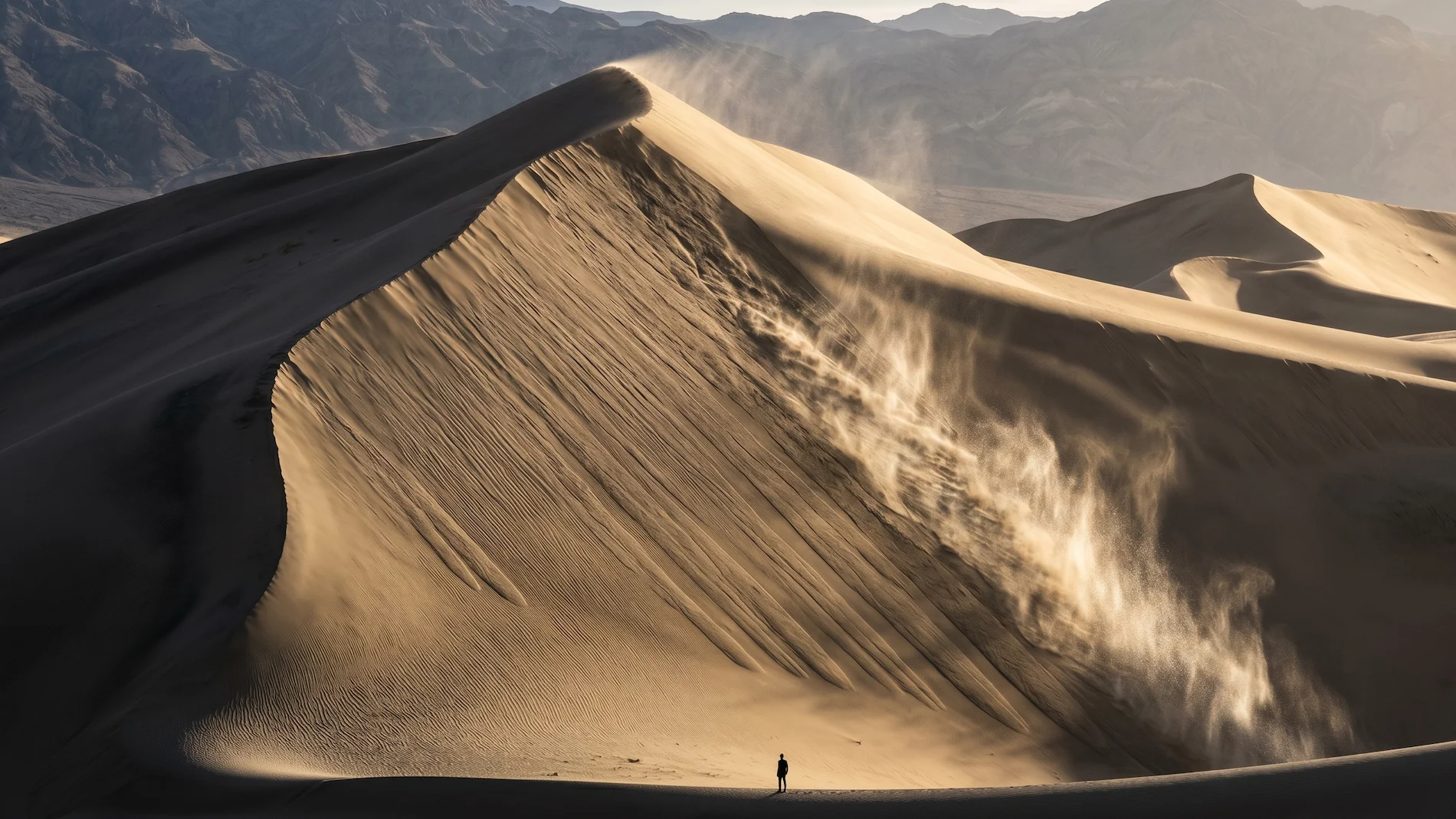
The towering Eureka Dunes, standing over 680 feet tall, are not only the highest sand dunes in California, but they also possess a bizarre, almost magical acoustic property. When the sand is completely dry and conditions are just right, avalanches of sand sliding down the steep dune faces produce a deep, resonating hum. This strange phenomenon, known as “singing sand,” sounds remarkably like a low-flying airplane or a pipe organ, caused by the extreme friction of perfectly spherical silica grains vibrating against one another.
10. The Timbisha Shoshone Have Lived Here for A Millennium
Long before European pioneers ever stumbled into this sweltering basin, the region was actively populated by indigenous peoples who mastered the art of extreme desert survival. The Timbisha Shoshone Native American tribe has continually inhabited the valley for over a millennium, migrating seasonally to the cooler mountains during the scorching summers. Today, they remain the only Native American tribe to actively live within the boundaries of a recognized United States national park, maintaining a deeply spiritual and historical connection to the land.
11. Ground Temperatures Can Practically Melt Your Shoes
While the record-breaking air temperatures are terrifying enough, the direct, radiant heat absorbed by the dark, rocky ground is completely unfathomable. Park rangers have recorded staggering ground temperatures soaring as high as 201°F (94°C) during the peak of summer, which is just mere degrees away from the boiling point of water. This searing surface heat is so dangerously intense that it can easily melt the rubber soles right off a hiker’s boots and cause fatal third-degree burns within seconds of a fall.
12. A Violent Volcanic Explosion Created Ubehebe Crater
The valley is scarred by violent geological history, most notably evidenced by the massive, half-mile-wide abyss known as Ubehebe Crater. Just over 2,000 years ago, rising magma deep beneath the surface violently collided with an underground pocket of groundwater, instantly flashing it into highly pressurized steam. The resulting massive hydrovolcanic explosion completely blew the roof off the earth, blasting millions of tons of pulverized rock into the sky and leaving behind a stunning, 600-foot-deep colorful crater that still mesmerizes geologists today.
13. Flash Floods Are a Constant and Deadly Threat
It is wildly paradoxical that one of the driest places on Earth is frequently ravaged by sudden, highly destructive walls of water. Because the sun-baked, rocky ground cannot quickly absorb moisture, even a brief, intense desert thunderstorm will cause water to instantly run off into the steep canyons. These violent flash floods can materialize out of nowhere on a perfectly sunny day, instantly transforming dry arroyos into churning, debris-filled rivers capable of obliterating paved roads and sweeping away heavy vehicles.
14. It is Designated as a Gold Tier Dark Sky Park
Because Death Valley is situated hundreds of miles away from major cities and suffocating light pollution, it offers some of the absolute best stargazing opportunities on the entire planet. The International Dark-Sky Association has officially recognized the park as a “Gold Tier” Dark Sky Park, their highest possible rating for nocturnal visibility. On a clear, moonless night, the sky above the valley explodes with billions of visible stars, meteor showers, and a perfectly clear, glowing view of the Milky Way galaxy.
15. The Ominous Name Came From a Single Tragic Expedition
Despite its incredibly morbid moniker, relatively few people actually died during the pioneer era of this desert crossing. The ominous name was officially bestowed during the California Gold Rush in 1849, when a group of lost pioneers, known as the Lost ’49ers, became stranded in the brutal basin for weeks. When they were finally rescued and managed to escape over the treacherous Panamint Mountains, one of the men famously turned around to look at the valley and said, “Goodbye, Death Valley,” cementing the legend forever.
Sources and References