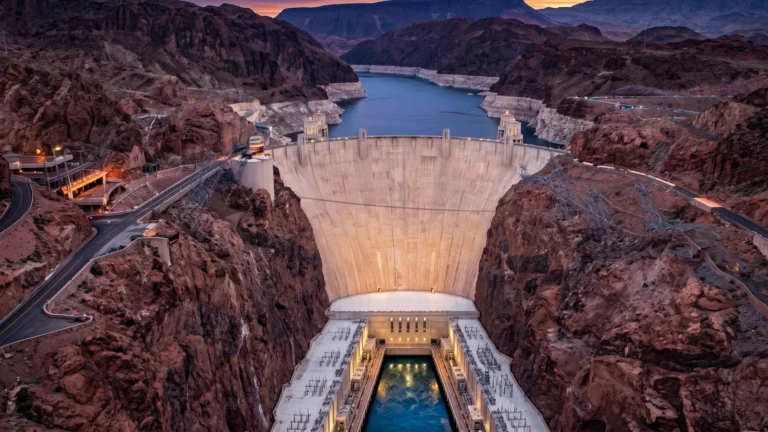
1. It Created the Largest Man-Made Lake in the Western Hemisphere
When the Colorado River was tamed behind the Hoover Dam, the water backed up to form Lake Mead, which held the title of the largest man-made lake in the world upon its completion. Spanning the borders of Arizona and Nevada, this colossal reservoir permanently altered the local United States geography by submerging deep canyons and pioneer settlements. Today, it serves as a critical lifeline providing drinking water to millions of residents, though its fluctuating shorelines vividly illustrate the delicate balance between human consumption and the unforgiving desert climate.
2. A Solid Pour Would Still Be Curing Today
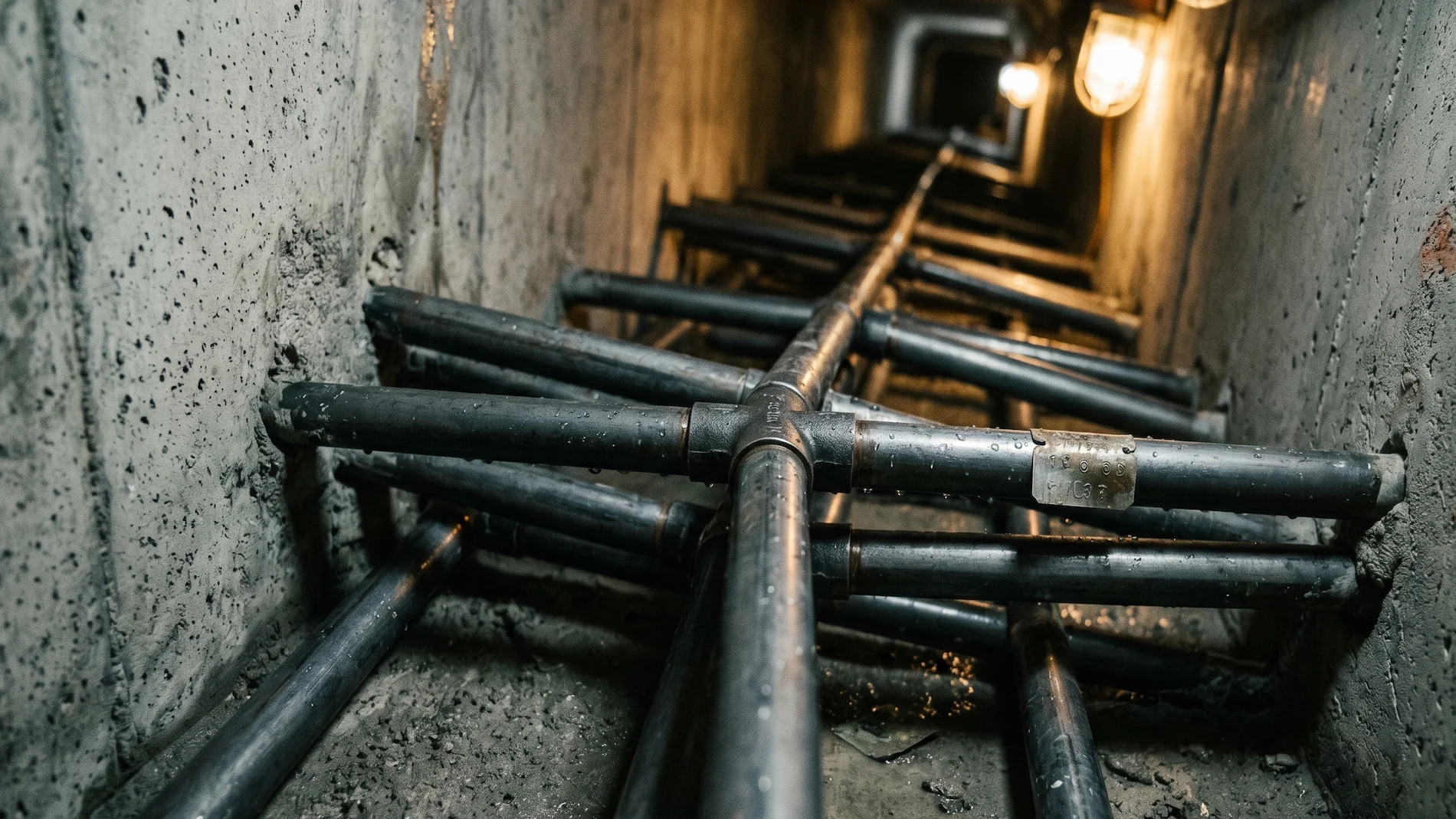
The unprecedented scale of the project required so much concrete that a single continuous pour would have taken over a century to cool. To prevent catastrophic structural cracks from the intense heat of curing, engineers designed an ingenious system using interlocking blocks and 580 miles of embedded steel pipes. They continuously circulated refrigerated river water through these pipes to accelerate cooling, eventually filling the labyrinth with pneumatic grout to solidify the entire monolithic wedge.
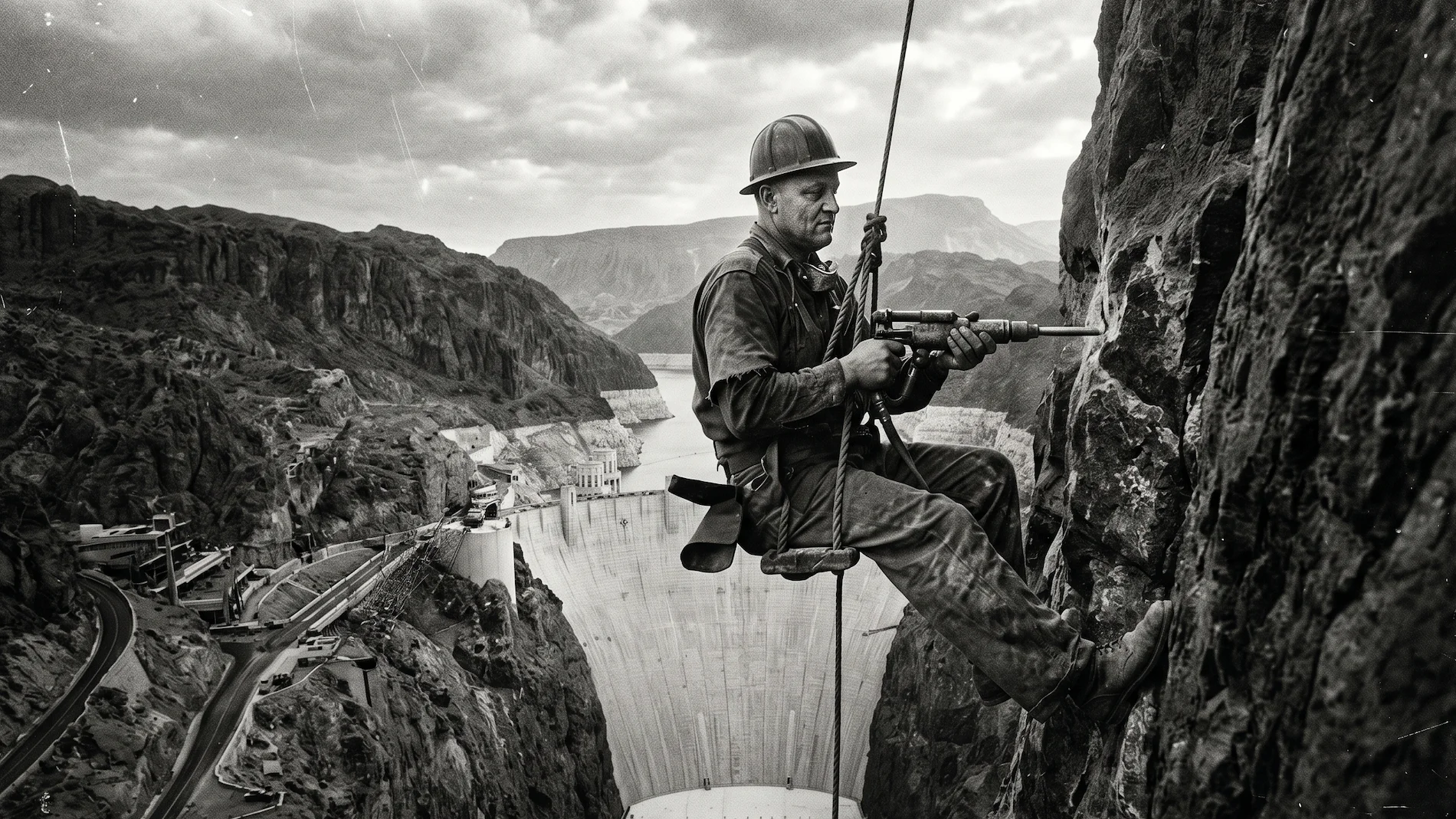
3. High Scalers Dangled Over the Canyon Walls
Before the massive base could be poured, a specialized group of laborers known as High Scalers had to strip the sheer vertical walls of the Black Canyon down to solid bedrock. Suspended by thin ropes hundreds of feet above the churning river, these men swung across the cliffs with heavy jackhammers and dynamite to clear loose debris. Earning their place among the greatest general engineering wonders, they performed this gravity-defying, perilous labor in brutal desert temperatures regularly exceeding one hundred degrees.
4. Its Mass Exceeds the Great Pyramid of Giza
The physical dimensions of the Hoover Dam are truly staggering, boasting a total mass of concrete that actually surpasses the volume of stone used to build the Great Pyramid of Giza. Constructing this immovable 726-foot-tall wedge required a ceaseless, round-the-clock operation utilizing custom railroads blasted directly into the canyon walls. A massive overhead cableway system ferried heavy buckets of wet concrete across the gorge, dropping their payloads with pinpoint accuracy to create a barrier that uses the earth’s geology to hold back the relentless river.
5. It Was a Top Sabotage Target During the Second World War
As global military tensions escalated in the late 1930s, the United States government recognized the dam as a critical vulnerability that would cripple Southwestern industry if destroyed. When World War II broke out, the facility was heavily fortified with anti-aircraft gun emplacements, continuous armed military patrols, and a strict suspension of all public access. Government officials restricted the dissemination of blueprints, and observant visitors exploring the rugged perimeter today can still spot hidden pillboxes left over from these extreme wartime security measures.
6. The Concrete Could Pave a Transcontinental Highway
To truly conceptualize the five million barrels of concrete utilized in the construction, you only need to look at modern transportation infrastructure. That precise volume of carefully mixed material is mathematically sufficient to construct a standard two-lane paved highway stretching 3,000 miles, easily connecting California directly to New York. Achieving this localized production required massive on-site batch plants and an unbroken, military-style supply chain of trucks that functioned flawlessly in extreme weather.
7. It Housed the Largest Hydroelectric Facility on Earth
While the primary objective of the dam was flood control and agricultural irrigation, its towering height provided an extraordinary opportunity to harness kinetic energy. From 1939 until 1949, the power plant operated as the largest hydroelectric facility on earth, directly powering the rapid expansion of wartime aviation factories in Southern California. Water drops hundreds of feet through massive penstocks at incredible speeds, slamming into enormous Francis turbines to convert the raw power of the river into a steady stream of clean electricity.
8. It Discharges Ice-Cold Water into a Scorching Desert
One of the most fascinating ecological anomalies created by the structure is the massive, constant flow of ice-cold water discharged directly into the sweltering Mojave Desert. This thermal inversion occurs because the intake towers draw water from deep beneath Lake Mead, where the reservoir remains frigid and unexposed to the sun. The permanent temperature shift eradicated native warm-water fish but allowed a bizarre new ecosystem to emerge, establishing thriving artificial trout fisheries right at the base of the dam.
9. It Drastically Altered the Ecology of the Gulf of California
The environmental impacts of this aggressive hydrological engineering extended hundreds of miles south, completely devastating the once-thriving estuarine ecosystems at the mouth of the Colorado River in Mexico. By trapping millions of tons of nutrient-rich silt behind its steel gates, the dam reduced the mighty river to a salty trickle and transformed a lush, dynamic delta into a desiccated mudflat. This sudden change led to the collapse of local indigenous fishing economies and the near-extinction of several endemic marine species.
10. The Legend of Buried Workers is a Persistent Myth
One of the most enduring urban legends is the grim assertion that several workers fell into the wet concrete and remain permanently entombed within the massive structure. This morbid scenario is physically impossible and strictly contradicts engineering protocols, as the concrete was poured in shallow increments of only a few inches at a time. While the construction project was undeniably tragic and claimed over one hundred lives, leaving any organic material inside the carefully calculated matrix would have created a catastrophic structural void.
11. An Architect Transformed It into an Art Deco Masterpiece
Initial governmental blueprints depicted a purely utilitarian, brutalist structure adorned with generic powerhouses that resembled ordinary industrial warehouses. Recognizing the symbolic importance of the project during the Great Depression, architect Gordon Kaufmann was hired to apply a sleek, elegant Art Deco styling to the entire complex. He streamlined the massive intake towers and collaborated with artists to integrate intricate Native American geometric motifs into the terrazzo floors, transforming a simple water barrier into an enduring American monument.
12. The Reservoir Induced Localized Earthquakes
The sudden accumulation of billions of tons of water within Lake Mead created an unprecedented geological phenomenon that deeply surprised the observing scientific community. The sheer concentrated weight of the massive reservoir actively pressed down on the Earth’s crust, reactivating deeply buried dormant fault lines and inducing a series of measurable, localized earthquakes. This fascinating process of reservoir-induced seismicity provided geologists with invaluable data regarding the profound ways human infrastructure can directly manipulate tectonic forces.
13. The Construction Shifted the State Border
The original geographic boundary separating Nevada and Arizona was defined by the meandering centerline of the Colorado River as it carved through the deep canyon floors. By erecting the dam and raising the water level hundreds of feet, engineers permanently submerged the original geological markers beneath the dark depths of the lake. Today, the dam itself serves as a tangible bridge between the two jurisdictions, featuring a gleaming brass marker where visitors can simultaneously stand in two different states.
14. It Prompted the Invention of the Industrial Hard Hat
The deadly rain of falling rocks dislodged by workers high above necessitated rapid advancements in worker safety, inadvertently leading to the creation of the modern industrial hard hat. A resourceful contractor named Edward Bullard took heavy cloth caps, painted them with industrial tar, and let them bake in the searing desert sun until they became rigid, protective helmets. These improvised hats proved incredibly effective at deflecting canyon debris and saving lives, prompting construction companies to mandate their strict use across the site.
15. The Inspection Tunnels Now House Rare Bat Colonies
Deep within the massive concrete shoulders of the structure, engineers blasted a complex labyrinth of inspection tunnels designed to monitor internal water seepage. Over the intervening decades, native desert bats have unexpectedly reclaimed some of the more remote drainage galleries as a secure, climate-controlled habitat. The Bureau of Reclamation now carefully monitors these elusive flying mammals, proving that even the most imposing man-made monoliths can eventually become an integrated, living part of the natural landscape.
Sources and References
- National Park Service: https://www.nps.gov/lake/learn/historyculture/hoover-and-davis-dams.htm
- PBS American Experience: https://www.pbs.org/wgbh/americanexperience/films/hoover/
- American Society of Civil Engineers: https://www.asce.org/about-civil-engineering/history-and-heritage/historic-landmarks/hoover-dam