1. Orcas Are Actually Dolphins, Not Whales
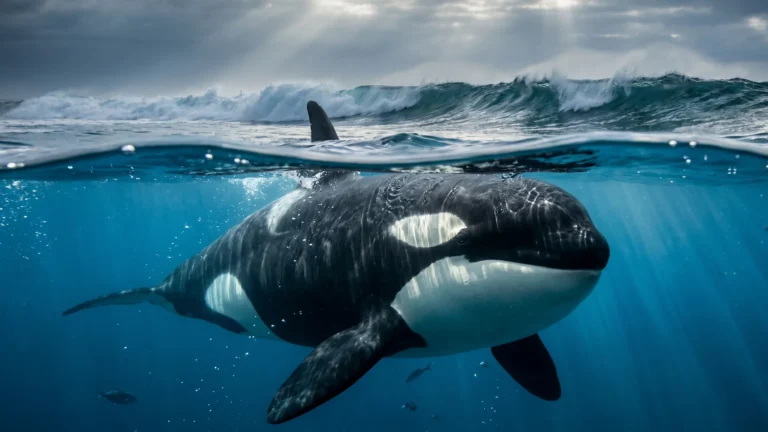
Despite their terrifying “killer whale” moniker, orcas are not actually classified as whales by marine biologists. They are entirely undisputed members of the Delphinidae family, making them the absolute largest species of oceanic dolphin on the planet. Their misleading common name actually originated from ancient sailors who witnessed these massive predators hunting larger cetaceans, initially dubbing them “whale killers” before the phrasing was eventually flipped.
2. They Hunt Great White Sharks for Their Livers
Orcas are the only known marine predators capable of actively hunting and slaughtering adult Great White Sharks. Displaying surgical precision, a pod will ram a shark and flip it upside down to induce tonic immobility, rendering the fearsome fish completely paralyzed. Once the shark is incapacitated, the orcas meticulously extract and consume only the calorie-dense, nutrient-rich liver, leaving the rest of the massive carcass to sink into the abyss.
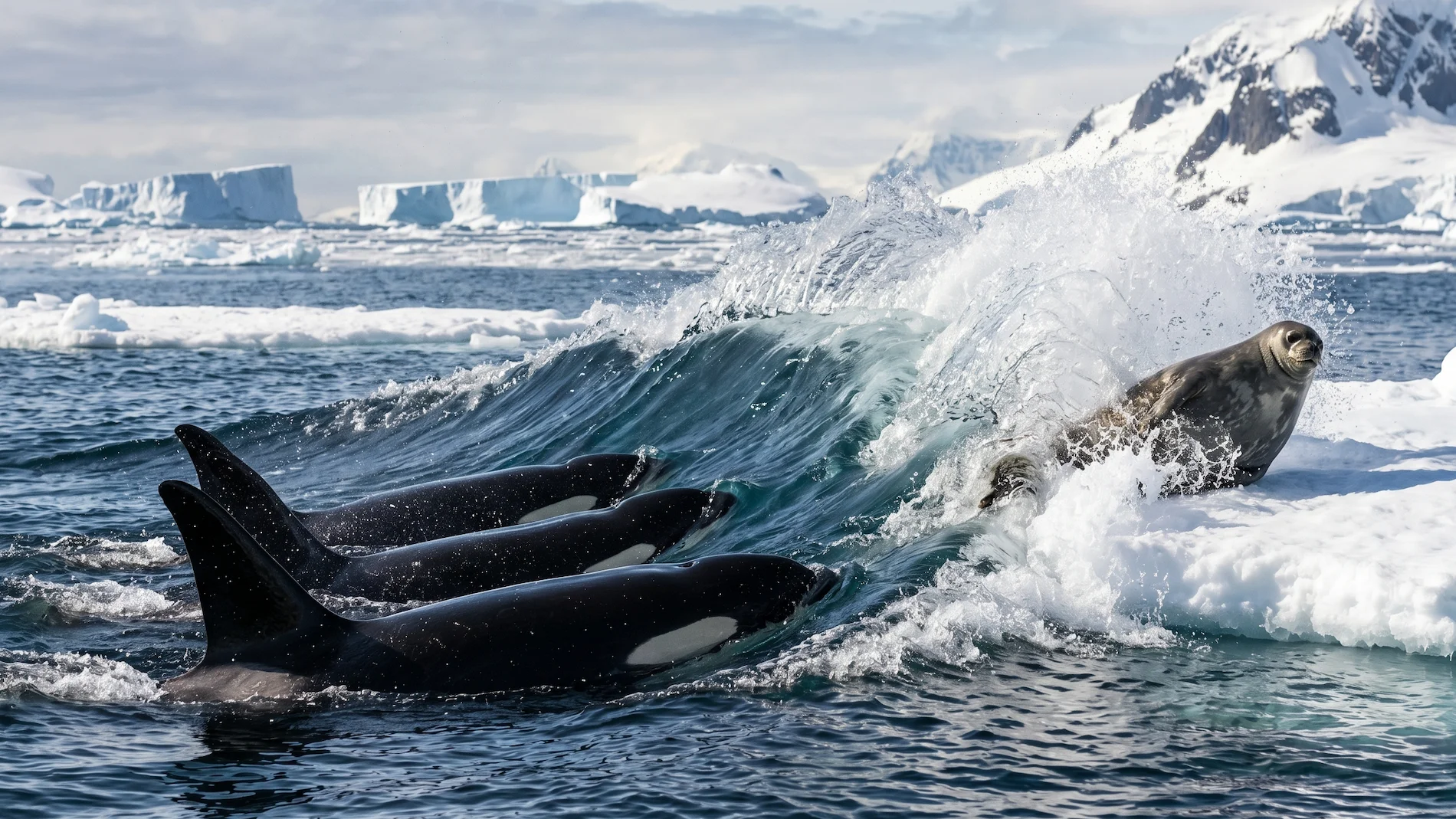
3. Antarctic Pods Create Coordinated Waves to Drown Prey
In the freezing waters of Antarctica, killer whales have engineered a brilliantly terrifying hunting strategy to catch seals resting on sea ice. A group of orcas will swim tightly in absolute unison toward an ice floe, diving at the very last second to generate a massive, perfectly timed displacement wave. This powerful wall of water brutally shatters the ice or violently washes the panicked seal directly into the waiting jaws of the pod.
4. Pods Are Led by Wise, Post-Menopausal Matriarchs
Killer whales are one of only a handful of species on Earth—alongside humans and a few other cetaceans—where females naturally go through menopause. Once a female orca stops reproducing, she assumes the crucial role of the pod’s leading matriarch, guiding her family through treacherous oceans for decades. Her accumulated lifetime of knowledge regarding hunting grounds, social diplomacy, and survival tactics becomes the ultimate lifeline for her offspring during times of environmental scarcity.
5. Different Pods Speak Completely Different Languages
Orca intelligence goes far beyond instinct; they possess deeply ingrained cultural traditions that are constantly passed down through generations. Different pods and distinct ecotypes have developed entirely unique vocal dialects, meaning a killer whale from the Pacific Northwest cannot properly communicate with one from the North Atlantic. These complex, localized languages help families stay connected in the dark ocean and strictly prevent catastrophic inbreeding between different groups.
6. There Are No Recorded Fatal Wild Attacks on Humans
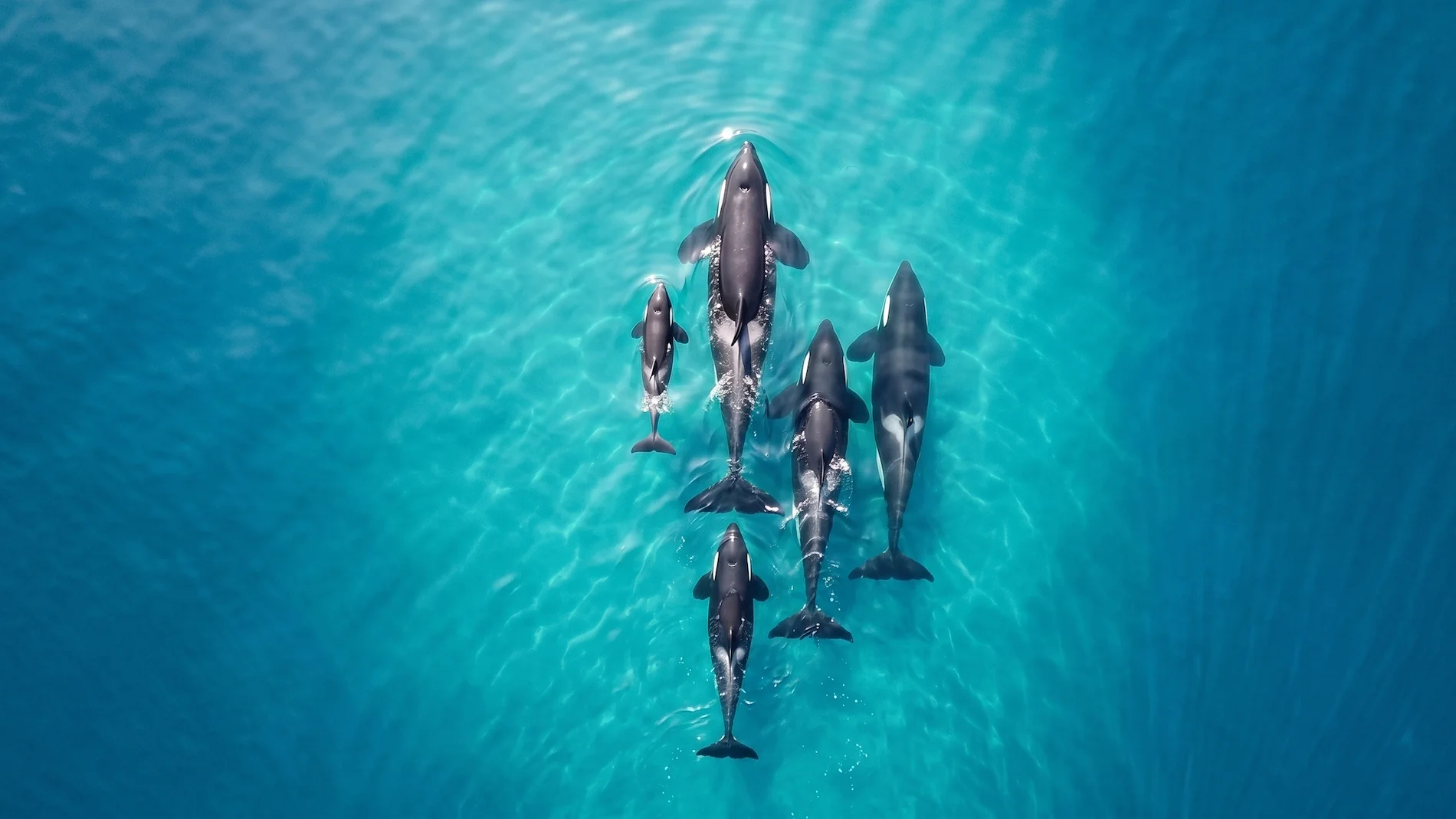
Despite their sheer power and capability to tear virtually any marine animal to shreds, orcas do not view humans as a food source. In all of recorded history, there has never been a single documented case of a wild killer whale fatally attacking a human being. While tragic fatalities have exclusively occurred in the highly stressful, confined environments of captivity, wild orcas seem to adhere to an unspoken, mysterious rule to leave humans completely alone.
7. Their Brains Are Highly Folded for Complex Emotion
The brain of a killer whale is an absolute biological marvel, weighing up to 15 pounds and heavily optimized for profound emotional processing. Their brains exhibit an incredible degree of gyrification, meaning they are exceptionally wrinkled and folded to pack in more cortical surface area than almost any other animal. Marine biologists believe this highly advanced neurological structure grants them a capacity for empathy, grief, and social bonds that rival human emotional intelligence.
8. They Use Flawless Echolocation to See With Sound
Because the ocean is often pitch black and murky, killer whales rely on an incredibly advanced biological sonar system called echolocation to hunt. They emit high-frequency clicks from their nasal passages that bounce off surrounding objects and return to the whale’s jawbone. This acoustic processing is so insanely precise that an orca can effortlessly distinguish between a chinook salmon and a sockeye salmon from hundreds of feet away in total darkness.
9. They Are Among the Fastest Marine Mammals on Earth
Built like heavily muscled torpedoes, killer whales are capable of reaching terrifying underwater speeds when pursuing agile prey. They can seamlessly cruise at nearly 35 miles per hour, easily outpacing almost everything else in the ocean. This extraordinary speed combined with massive body weight allows them to unleash devastating, bone-crushing kinetic impacts against giant whales during brutal open-water ambushes.
10. They Sleep With Only Half of Their Brain at a Time
Breathing is not an involuntary reflex for cetaceans like it is for humans; they must consciously decide to swim to the surface for air. To avoid drowning while resting, killer whales utilize a fascinating biological trick known as unihemispheric sleep. They shut down one hemisphere of their brain to deeply rest while the other half remains wide awake, keeping one eye open to watch for threats and coordinate crucial breathing.
11. Pods Can Successfully Hunt the Massive Blue Whale
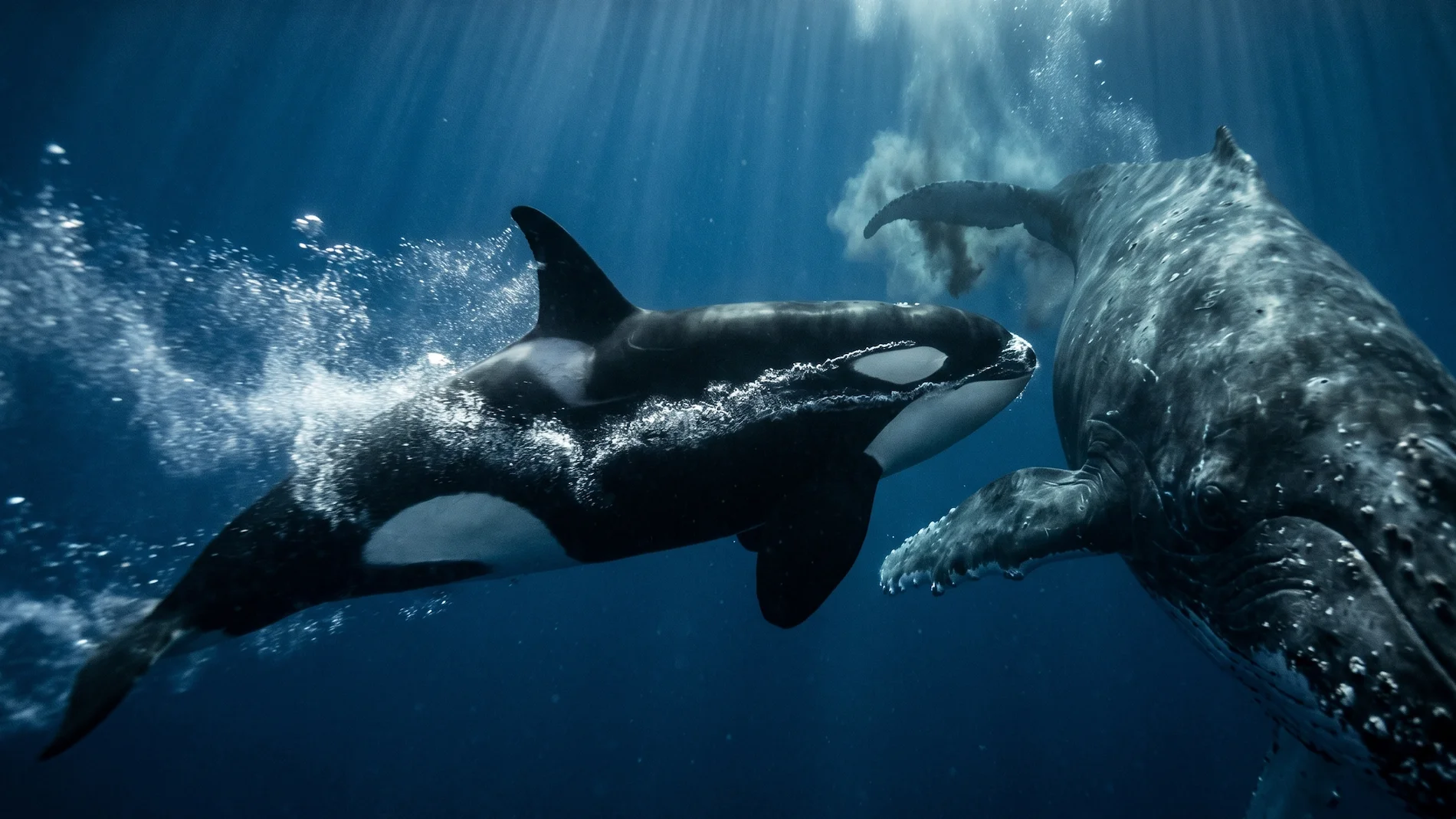
Nothing in the sea is safe from an organized pod of orcas, not even the absolute largest animal to ever exist on the planet. Coordinated groups of up to 70 killer whales have been documented relentlessly harassing and exhausting a colossal blue whale for hours. By biting the behemoth’s flippers and repeatedly forcing it underwater to deny it oxygen, the highly tactical predators can eventually drown and consume the massive creature.
12. A Male’s Dorsal Fin Can Grow Taller Than a Human
The easiest way to distinguish a mature male orca from a female is to look at the massive, sword-like appendage cutting through the waves. A fully grown adult male’s dorsal fin can reach an intimidating height of six feet, making it completely taller than the average human man. Since the fin lacks any bone or muscle and is entirely composed of fibrous connective tissue, it serves as an immense hydrodynamic stabilizer during high-speed aquatic maneuvers.
13. They Have Been Known to Hunt Swimming Moose
The dietary versatility of a killer whale knows almost no bounds, leading to some truly bizarre and unexpected predator-prey dynamics. In the coastal waters of the Pacific Northwest, marine biologists have recorded resident orcas ambushing fully grown moose swimming between islands. The sheer image of an oceanic dolphin dragging a massive terrestrial ungulate into the dark depths perfectly illustrates their undisputed status as nature’s ultimate opportunistic hunters.
14. They Are the Most Widely Distributed Mammals After Humans
From the freezing, ice-choked waters of Antarctica to the balmy, tropical coasts of the Caribbean, killer whales have successfully conquered the entire globe. They are officially recognized as the second most widely distributed mammal species on the planet, surpassed only by humans. This unparalleled adaptability means an apex predator is constantly patrolling almost every single marine ecosystem, effectively shaping the biological balance of the world’s oceans.
15. They Fling Prey Into the Air to Stun Them
Orcas are notoriously brutal and frequently engage in seemingly savage behavior by physically batting their prey around before consuming it. Pods have been frequently filmed using their powerful tail flukes to launch sea turtles, seals, and stingrays dozens of feet into the air. While this looks like a cruel game to humans, marine biologists theorize it is an incredibly effective strategy to violently stun and incapacitate dangerous prey, ensuring the whales avoid injury before moving in for the kill.
Sources and References
NOAA Fisheries: https://www.fisheries.noaa.gov/species/killer-whale
National Geographic: https://www.nationalgeographic.com/animals/mammals/facts/orca
Oceana (Marine Life Encyclopedia): https://oceana.org/marine-life/orca/