The Ecological Engineer: 15 Fascinating Facts About Beavers
Forget the myth that beavers eat solid wood; they actually dine on soft cambium and leaves. Far beyond building quaint dams, these keystone rodents single-handedly terraform entire landscapes, mitigate droughts, and fight climate change. Explore the astonishing biological adaptations and profound ecological impact of nature's most transformative architect.
1. Beavers have bright orange teeth because their tooth enamel is infused with iron rather than magnesium.
This biological adaptation gives them incredible gnawing strength, allowing them to fell massive trees without shattering their incisors. The iron replaces calcium in the enamel, making the front of the tooth highly resistant to wear while the softer white dentin in the back wears down faster, creating a constantly self-sharpening chisel edge.
2. Beavers do not live in the dams they build, but rather in separate structures called lodges.
A common misconception is that the dam itself is the beaver's home. In reality, the dam is constructed solely to flood a valley and create a deep, still pond. Once the water level is high enough, they build a freestanding or bank-side lodge with complex underwater entrances to keep predators like wolves and cougars out while they sleep dry inside.
3. Beavers have a set of transparent eyelids that function like natural built-in scuba goggles.
These specialized structures, known as nictitating membranes, sweep across the beaver's eyes the moment they submerge. This allows them to see clearly underwater while protecting their corneas from floating wood debris, silt, and rushing water as they navigate their flooded territories.
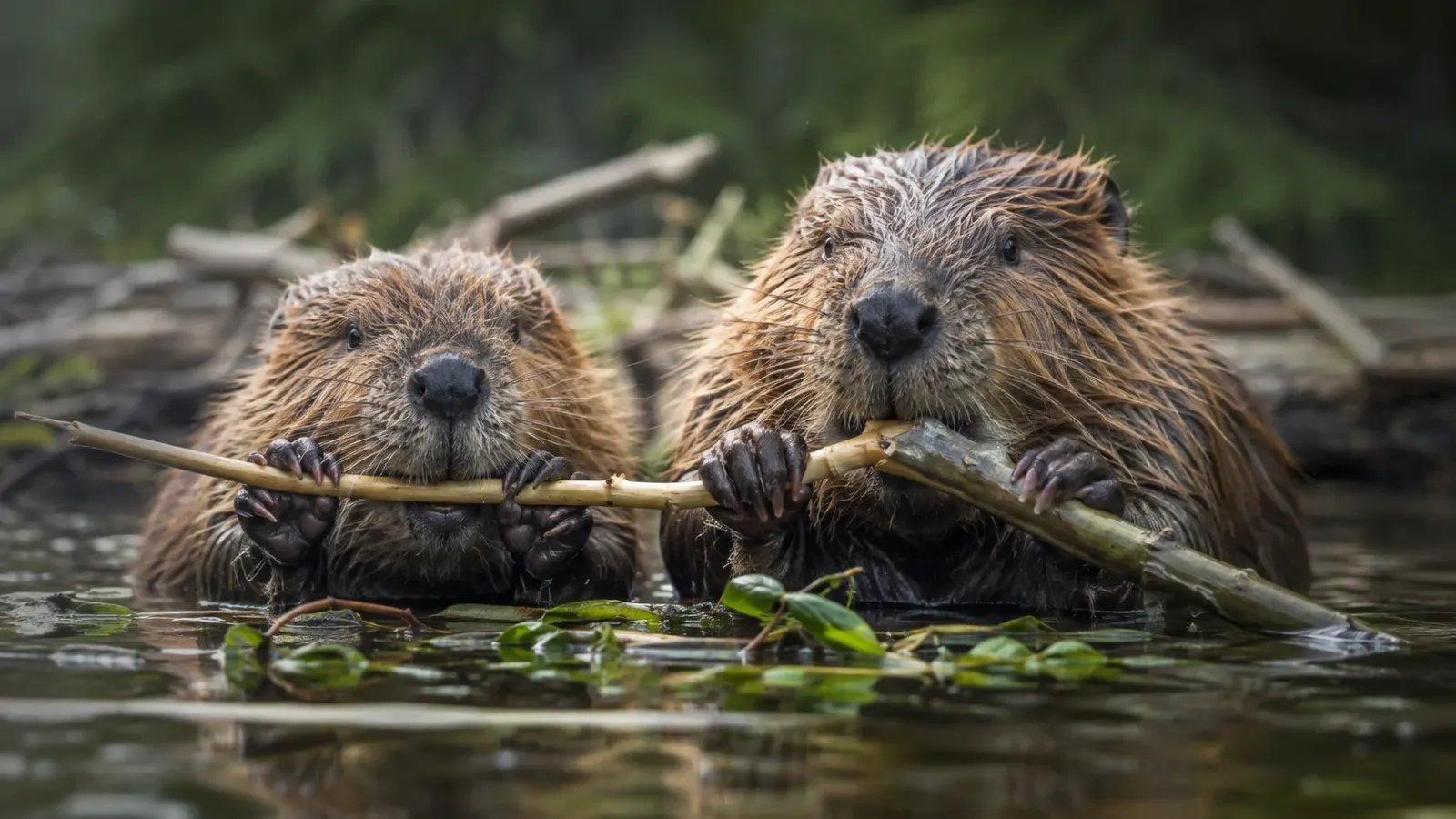
4. A beaver's lips can close completely behind its front teeth to prevent drowning while chewing underwater.
Because they frequently transport branches and harvest aquatic plants beneath the surface, beavers have a unique cranial anatomy. Their furry lips seal shut tightly behind their massive iron-rich incisors, blocking water from flowing down their windpipes and allowing them to carry building materials without swallowing half the pond.
5. The world's largest known beaver dam is located in northern Alberta and is visible from space.
Discovered by researchers examining satellite imagery in 2007, this colossal structure in Wood Buffalo National Park stretches over 2,790 feet long. Biologists believe multiple generations of beavers have been continuously expanding this mega-dam since at least the 1970s, creating an immense, thriving wetland sanctuary.
6. Beavers secrete a chemical compound that smells and tastes remarkably like vanilla.
Castoreum is a yellowish exudate produced in the beaver's castor sacs, located near the base of the tail, which they use to mark their territory. For decades, this musky, sweet-smelling substance was highly prized by the perfume industry and was even historically used as a natural flavoring additive in foods, though its use is exceptionally rare today.
7. The giant ancestors of modern beavers were the size of black bears and roamed North America during the Pleistocene.
Castoroides, or the giant beaver, weighed up to 220 pounds and measured over seven feet long. Unlike modern beavers, these extinct megafauna had broader, rounded front teeth and lacked the flat, paddle-like tail. They vanished around 10,000 years ago alongside mammoths and saber-toothed cats, likely due to climate shifts and habitat loss.
8. Beavers possess specialized split toenails on their hind feet that act as natural grooming combs.
To maintain their thick, waterproof fur, beavers must constantly groom themselves. The second toe on each of their webbed hind feet features a unique, hinged double claw. They use this specialized digit to comb through their pelt and distribute waterproofing oils from their glands, preventing them from freezing in icy waters.
9. A beaver's iconic flat tail functions as a fat storage reserve for surviving harsh winters.
While commonly known as a rudder for swimming, a prop for standing upright, and an alarm bell slapped against the water to warn of danger, the tail is also a vital biological battery. It is composed primarily of fat and dense tissue, storing crucial energy that sustains the beaver when ponds freeze over and food becomes scarce.
10. The sound of running water triggers an involuntary instinct in beavers to start building a dam.
Researchers once placed a speaker playing the sound of flowing water in a dry field, and nearby beavers instinctively buried it in sticks and mud. Their urge to dam is not driven by complex reasoning or visual cues, but primarily by an acoustic trigger; silencing the trickling sound is their fundamental motivation for construction.
11. Beaver dams significantly reduce the spread and intensity of catastrophic wildfires.
By trapping water and spreading it across floodplains, beavers create deeply saturated wetlands that act as natural firebreaks. Even when massive wildfires ravage a landscape, beaver-engineered zones often remain lush, green oases, providing critical emergency shelter for countless vulnerable wildlife species fleeing the flames.
12. Beavers feature a specialized digestive system that allows them to process pure cellulose.
Unlike most mammals, beavers can extract nutrients directly from the inner bark of trees. They manage this thanks to a massive cecum in their lower intestine filled with unique symbiotic bacteria that break down tough plant fibers. To absorb the maximum amount of nutrients, they practice coprophagy, consuming their own soft droppings a second time.
13. In 1948, the Idaho Department of Fish and Game relocated nuisance beavers by dropping them from airplanes with parachutes.
Faced with overpopulation in certain regions and a desire to repopulate remote wilderness areas, conservation officer Elmo Heter designed a specialized wooden box that opened upon impact. Over 70 beavers were successfully airdropped into the remote backcountry, a bizarre but highly effective conservation strategy that established thriving new colonies.
14. The Catholic Church once officially classified beavers as fish so they could be eaten on Fridays.
In the 17th century, the Bishop of Quebec petitioned the Vatican regarding the dietary rules of Lent, which forbade the consumption of meat on Fridays. Because the beaver was highly aquatic and possessed a scaly, fish-like tail, the Church declared it a fish, legally allowing hungry fur trappers and settlers to consume beaver meat year-round.
15. Beaver ponds function as highly effective carbon sinks that actively combat global warming.
The wetlands engineered by beavers accumulate vast amounts of organic sediment, trapping carbon dioxide that would otherwise be released into the atmosphere. By slowing down water flow and drowning decaying plant matter in oxygen-poor environments, beavers lock away thousands of tons of carbon, making them vital allies in climate change mitigation.
Sources & References
This AI-assisted post was rigorously curated and fact-checked for accuracy by:
 Martin Roháček
How fun was this article? 🤔
Tap a star to rate it
🧠 Quiz: How closely were you paying attention?
10 questions — all answers are in the article above!
Enjoyed these facts? There's more! 💌
Fresh fun facts in your inbox. No spam, ever.