The Virtuoso Visionary: 15 Fascinating Facts About Carlos Santana
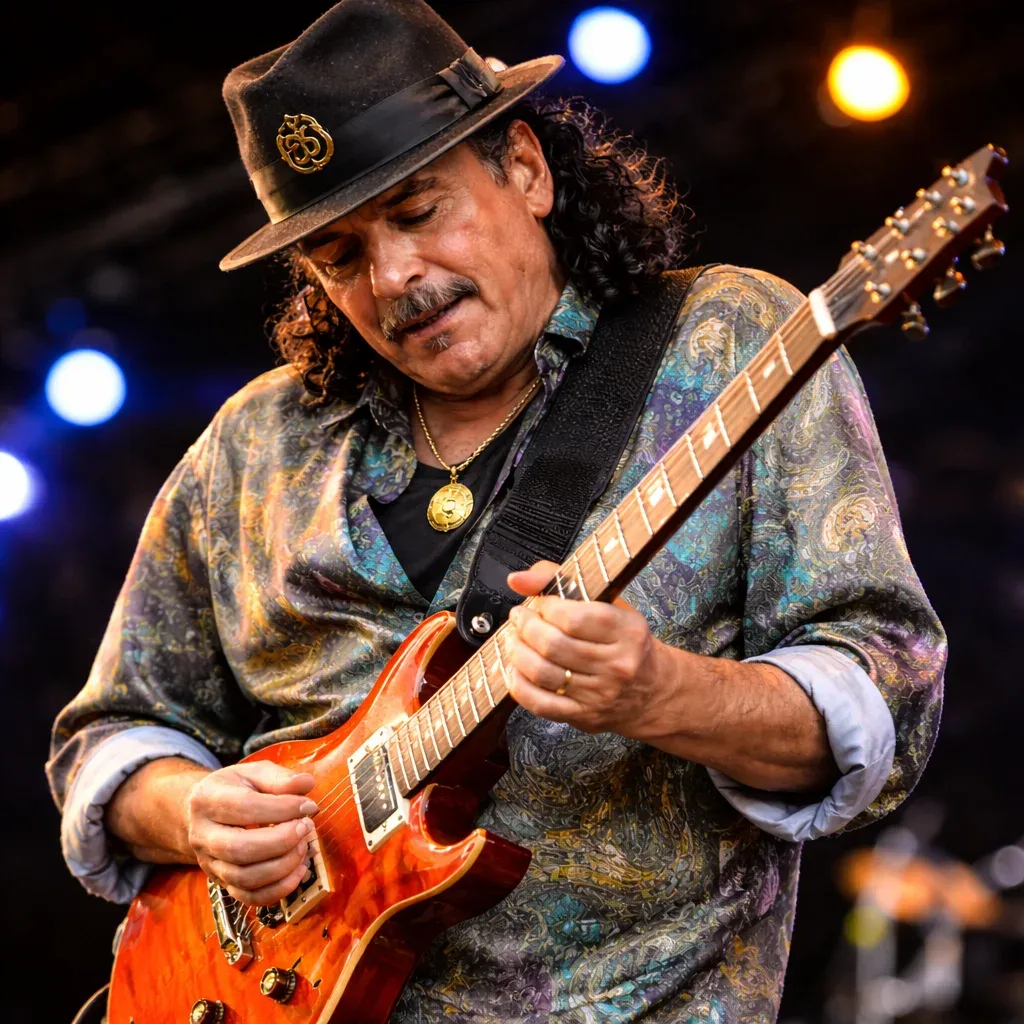
Carlos Santana revolutionized rock music by fusing traditional Latin rhythms, blues, and jazz into a sound that transcended cultural boundaries. From his legendary performance at Woodstock to his record-breaking comeback with the album Supernatural, Santana has consistently redefined music history over a career spanning six decades. Beyond his virtuosic guitar solos, his life is filled with surprising turns, including spiritual awakenings, successful entrepreneurial ventures, and profound philanthropic work. Discover the remarkable true stories behind the music, spiritual philosophy, and enduring legacy of this Latin rock icon.
1. Mariachi Roots and Early Violin Lessons
Carlos Santana’s signature guitar style was born long before he ever picked up a six-string. Raised in Autlán de Navarro, Mexico, he began studying the violin at age five under the tutelage of his father, José Santana, who was an accomplished mariachi musician. His father taught him traditional music theory, ear training, and phrase structure that emphasized emotional, vocal-like melodies. When the family moved to Tijuana, the young Santana picked up the guitar and shifted his focus to American blues and rock. However, he has consistently credited his father’s mariachi heritage and early violin instruction for the soaring, expressive phrasing that defines his guitar solos.
2. The Hallucinogenic Woodstock Performance
Santana’s legendary breakout performance at the 1969 Woodstock festival almost descended into chaos due to unexpected timing and strong psychedelics. Expecting to go on stage several hours later, Santana took a dose of mescaline given to him by fellow musician Jerry Garcia. However, the festival schedule was suddenly bumped up, forcing Santana to take the stage while fully experiencing the drug's peak effects. He famously recounted that the neck of his Gibson SG guitar looked like a slithering snake that was constantly shifting in his hands. To keep control, he squeezed the instrument tightly and prayed to keep his timing, producing one of the most iconic instrumental performances in rock history.
3. Designing a Successful Line of Women's Footwear
Beyond his legendary career in music, Santana expanded his creative endeavors into the fashion industry with a remarkably successful women's shoe brand. Launched in 2001, the "Carlos by Carlos Santana" line features stylish heels, boots, and sandals inspired by the passion, color, and rhythm of his music. Santana actively participates in design meetings, ensuring the collection reflects a vibrant, soulful aesthetic without using animal products whenever possible. A significant portion of the royalties earned from shoe sales is directed straight to charitable causes. This business venture proved so lucrative that it established Santana as a genuine design force outside the recording studio.
4. His Spiritual Rebirth as Devadip
During the 1970s, Santana entered a deeply spiritual phase of his life under the guidance of Indian spiritual master Sri Chinmoy. The guru gave the guitarist the spiritual name "Devadip," which translates roughly to "the lamp, light, and eye of God." Santana fully embraced this moniker, listing himself as Devadip Carlos Santana on several experimental jazz-fusion albums, including Illuminations with Alice Coltrane and Oneness: Silver Dreams – Golden Reality. The spiritual discipline involved wearing white clothing, meditating daily, and abstaining from drugs and alcohol for nearly a decade. Though he eventually parted ways with the guru in 1982, the spiritual themes introduced during this era remained central to his music.
5. Tying Michael Jackson’s Grammy Record
At the 42nd Annual Grammy Awards in 2000, Santana made history by tying one of the most elusive records in the music industry. His blockbuster album Supernatural picked up eight Grammy Awards in a single night, matching the record set by Michael Jackson with Thriller in 1984. Additionally, Santana won a ninth Grammy that same evening for "Smooth" as a songwriter and collaborator, bringing his total haul for the night to nine trophies. This unprecedented sweep capped off one of the most astonishing career comebacks in pop culture history. The record-breaking night cemented his status across multiple generations of music fans.
6. An On-Stage Marriage Proposal
In July 2010, Santana turned a live concert into a deeply personal celebration by proposing to his girlfriend, acclaimed jazz drummer Cindy Blackman. During a show in Tinley Park, Illinois, Blackman delivered a blistering drum solo during the song "Corazón Espinado." Right after the solo ended, Santana stopped the show, walked over to her drum kit, and asked her to marry him in front of thousands of cheering fans. Blackman immediately accepted, and the couple kissed to thunderous applause from the audience. They were married later that year in a romantic ceremony in Maui, Hawaii.
7. Dishwashing at a San Francisco Diner
Before gaining international stardom, Santana worked humble jobs to survive as an immigrant teenager in California. After his family relocated to San Francisco in the 1960s, he took a job scrubbing dishes at the Tic Tock Drive-In, a popular local diner. He spent long hours washing grease off plates for minimum wage while saving every spare dollar he earned. Most of his meager earnings went directly toward buying blues records by artists like B.B. King, Muddy Waters, and John Lee Hooker. Washing dishes helped instill a strong work ethic that served him well when he began gigging in local clubs.
8. Communication with Archangel Metatron
Santana has long held mystical beliefs about the origin of his music, maintaining that divine beings actively guide his artistic process. He has repeatedly stated in interviews that he receives direct spiritual messages and guidance from Archangel Metatron. According to Santana, Metatron communicated with him to encourage the creation of Supernatural, assuring him that the album would reach a global audience. He credits this spiritual link with giving him the confidence to collaborate with younger pop and rock artists. Whether listening for divine signals or setting a meditative atmosphere before shows, Santana views his guitar as a channel for higher consciousness.
9. "Black Magic Woman" Was Originally by Fleetwood Mac
One of Santana’s most recognizable hit songs was actually not written by him or his bandmates. "Black Magic Woman" was originally composed by guitarist Peter Green and released by the British blues-rock group Fleetwood Mac in 1968. Santana rearranged the track in 1970 by infusing it with Latin percussion, jazz chords, and a seamless transition into Gabor Szabo's instrumental song "Gypsy Queen." Santana’s vibrant, rhythmic version became a massive hit, peaking at number four on the Billboard Hot 100 chart. Today, many casual listeners are entirely unaware that the iconic track was originally a British blues record.
10. His Choice to Let the Guitar Sing
Despite being the namesake leader of his band, Carlos Santana rarely performs lead vocals on his tracks. He has always viewed his guitar as his primary voice, believing that its melodic tone can convey deeper emotion than spoken words. To handle vocal duties, Santana has hired a succession of talented lead singers throughout his band’s history, including Gregg Rolie, Alex Ligertwood, and external guest stars. During the late 1990s, this approach led to iconic collaborations with vocalists like Rob Thomas, CeeLo Green, and Eric Clapton. By stepping back from the microphone, Santana allows his distinctive guitar phrasing to remain the undisputed center of attention.
11. Shaped by San Francisco’s Mission District
Santana's revolutionary Latin-rock fusion was profoundly influenced by the multicultural environment of San Francisco's Mission District. After emigrating from Mexico, he attended Mission High School and spent his formative years immersed in the neighborhood’s diverse soundscape. The area was a vibrant melting pot of African American blues, Cuban salsa, Puerto Rican mambo, and counterculture rock. Santana blended these varied musical traditions together in local jam sessions, creating a groundbreaking sound that bridged cultural divides. The rhythms of the Mission District directly inspired the founding of the Santana Blues Band in 1966.
12. Launching a Cannabis Brand Rooted in Philosophy
In 2020, Santana entered the legal cannabis market by founding his own lifestyle brand named Mirayo. The brand name comes from a combination of Spanish words meaning "my ray," reflecting his view of light and personal spiritual awareness. Santana advocates for cannabis as a natural remedy that promotes peace, heightened consciousness, and artistic inspiration. Rather than focusing purely on commercial appeal, he designed the brand to align with his lifelong philosophical principles. A portion of sales supports social causes, continuing his trend of combining business endeavors with philanthropy.
13. The Extraordinary Commercial Surge of Supernatural
When Santana released Supernatural in 1999, he was 52 years old and had not scored a top-ten album in two decades. Record executives initially doubted whether an older rock guitarist could compete on mainstream radio alongside teen pop stars like Britney Spears and the Backstreet Boys. However, Supernatural shattered all industry expectations, selling over 30 million copies worldwide and staying at number one for 12 weeks. The album introduced his music to a completely new generation of listeners who were born decades after his Woodstock breakout. It remains one of the best-selling albums of all time and redefined what a mid-career artist could achieve.
14. Funding Global Youth Through the Milagro Foundation
Driven by a desire to give back, Santana established the Milagro Foundation in 1998 alongside his then-wife Deborah. The word "milagro" means miracle in Spanish, reflecting the organization's mission to bring hope and support to vulnerable youth worldwide. The foundation provides grants to community-based non-profits focusing on children's education, healthcare, and the arts. Funding comes directly from Santana's concert ticket sales, footwear royalties, and personal contributions. Over the decades, the organization has distributed millions of dollars to underserved children across dozens of countries.
15. The First Hispanic Rocker in the Hall of Fame
In 1998, Santana achieved a monumental historic milestone when he was inducted into the Rock and Roll Hall of Fame. He became the very first Hispanic artist to receive this prestigious honor, cementing his role as a trailblazer for Latin musicians in rock music. His induction recognized not only his revolutionary fusion of Latin rhythms and blues guitar but also his decades of artistic evolution. During his acceptance speech, Santana emphasized unity and the universal power of music to heal divisions. His induction opened doors for generations of Latin American artists to gain recognition in mainstream American rock.
Sources & References
This AI-assisted post was rigorously curated and fact-checked for accuracy by:
 Martin Roháček
How fun was this article? 🤔
Tap a star to rate it
🧠 Quiz: How closely were you paying attention?
10 questions — all answers are in the article above!
Enjoyed these facts? There's more! 💌
Fresh fun facts in your inbox. No spam, ever.