1. They Are Not Actually Cats
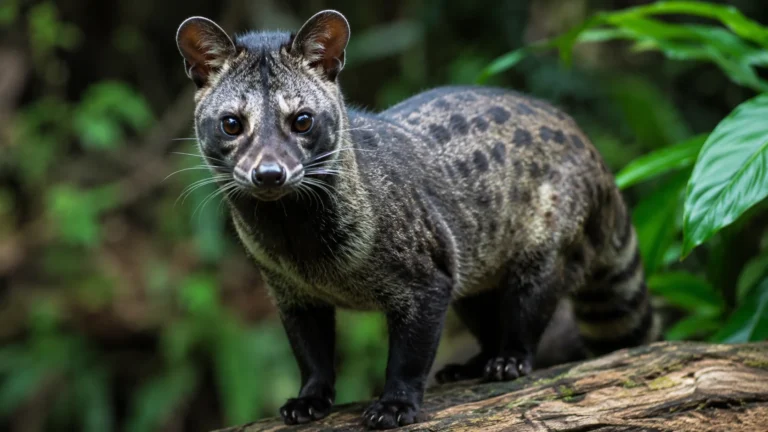
Despite their incredibly feline appearance, sharp retractable claws, and common nicknames like the civet cat, these animals are completely biologically distinct from all true felines. They belong entirely to their own unique scientific family called Viverridae. In the grand evolutionary tree of mammals, they are actually much more closely related to mongooses, meerkats, and hyenas than they are to any domestic cat or wild leopard.
2. Creators of the Worlds Most Expensive Coffee
The Asian palm civet is globally infamous for its highly bizarre role in the production of kopi luwak, which is widely considered the absolute most expensive coffee in the entire world. In the wild, the civet actively seeks out and consumes only the ripest, highest-quality coffee cherries. The beans pass through their digestive tract completely intact, where specialized stomach enzymes permanently alter their chemical structure. When the beans are finally excreted, they are washed and roasted to create a highly sought-after, incredibly smooth beverage.
3. The Secret Ingredient in Classic Perfumes
For centuries, the global cosmetic industry heavily relied on a highly pungent biological secretion produced by the African civet. The animal possesses specialized perineal glands that secrete a thick, yellowish paste called civetone, which they use to mark their territory. In its raw form, the paste smells completely putrid, but when heavily diluted with alcohol, it transforms into a highly complex, musky floral scent that was used as a massive foundational ingredient in world-famous perfumes, including the original formula for Chanel Number 5.
4. Reversible Ankles for Downward Climbing
Civets are highly specialized arboreal acrobats that spend the vast majority of their lives completely navigating the high forest canopy. To perfectly survive in the trees, they possess a massive biological advantage in their hind legs. Their ankle joints are completely reversible, meaning they can physically rotate their hind feet backward to firmly grip a tree trunk. This brilliant evolutionary trait allows the civet to climb completely straight down a vertical tree headfirst without falling.
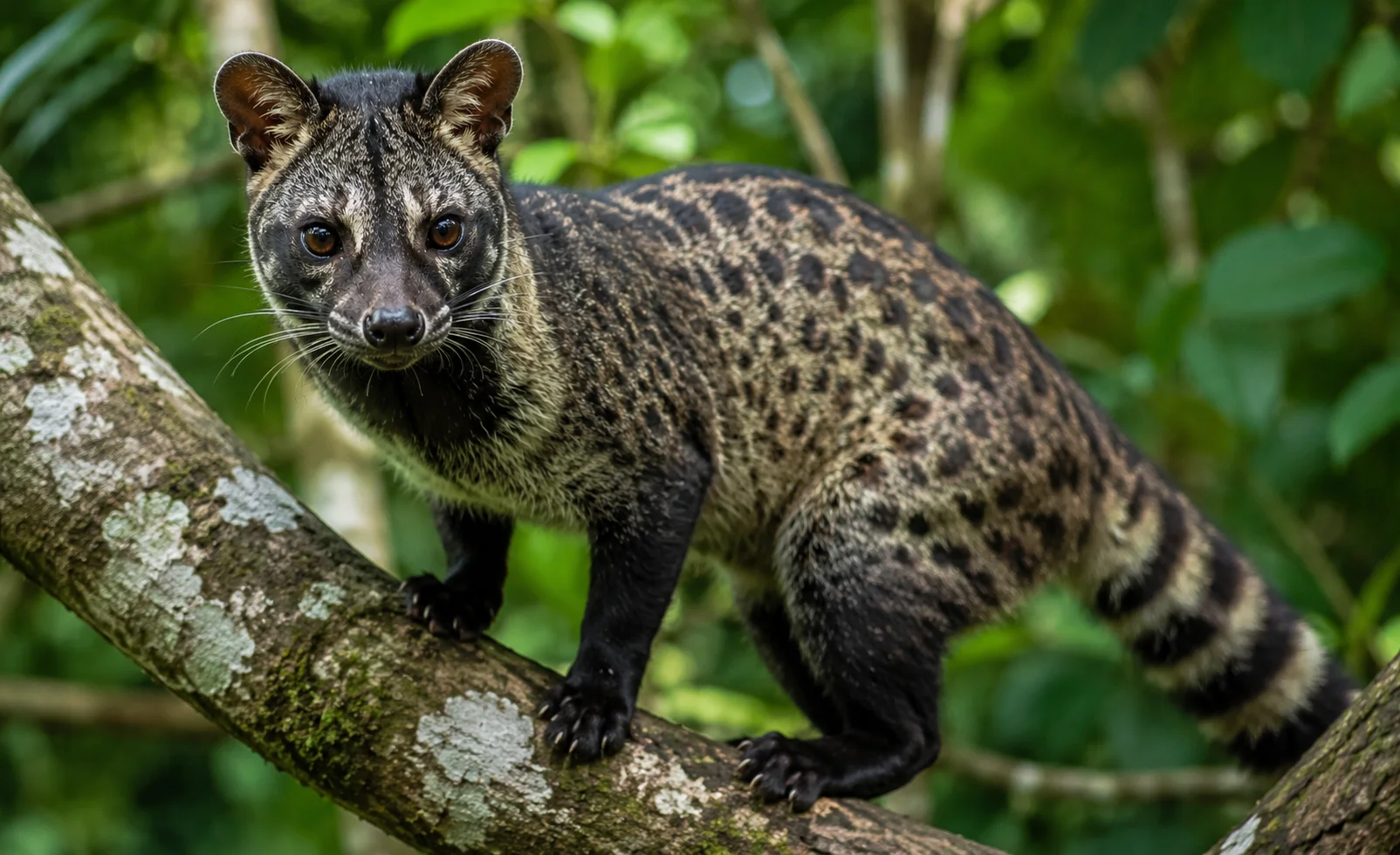
5. The Binturong Smells Like Buttered Popcorn
The binturong, frequently referred to as the bearcat, is a massive, highly unique species of civet native to Southeast Asia. Beyond their shaggy black fur and long prehensile tails, they are globally famous for a highly bizarre chemical quirk. The specific chemical compounds found directly in their urine emit a massive, highly distinct odor that smells exactly like hot, freshly buttered popcorn to the human nose, which they use to heavily mark the branches of their territory.
6. A Highly Varied Omnivorous Diet
While their sharp canine teeth are perfectly designed for tearing meat, civets are actually highly opportunistic omnivores. Their complex dietary habits completely change depending on the specific season and their geographical location. They will aggressively hunt small rodents, lizards, and insects in the dark, but they frequently completely abandon hunting to gorge themselves entirely on highly nutritious fallen fruits, flower nectar, and sweet palm sap.
7. They Were Linked to the First SARS Outbreak
The civet gained massive, highly negative global attention during the massive 2003 outbreak of severe acute respiratory syndrome, commonly known as SARS. Epidemiologists heavily traced the original source of the deadly virus directly to heavily crowded live-animal markets in China, where masked palm civets were frequently sold as exotic food. Scientists ultimately discovered that the civets did not originate the virus, but acted as a massive biological intermediate host that perfectly transmitted the disease from wild bats directly to humans.
8. Highly Adaptable Urban Dwellers
As human urbanization aggressively destroys their natural forest habitats, several species of civets have proven to be incredibly adaptable survivors. The Asian palm civet has completely learned to thrive entirely within massive, bustling human cities. Because they are highly skilled climbers and completely nocturnal, they frequently treat modern attics, roof spaces, and abandoned buildings exactly like hollow trees, safely sleeping above the human chaos during the day and aggressively scavenging for food at night.
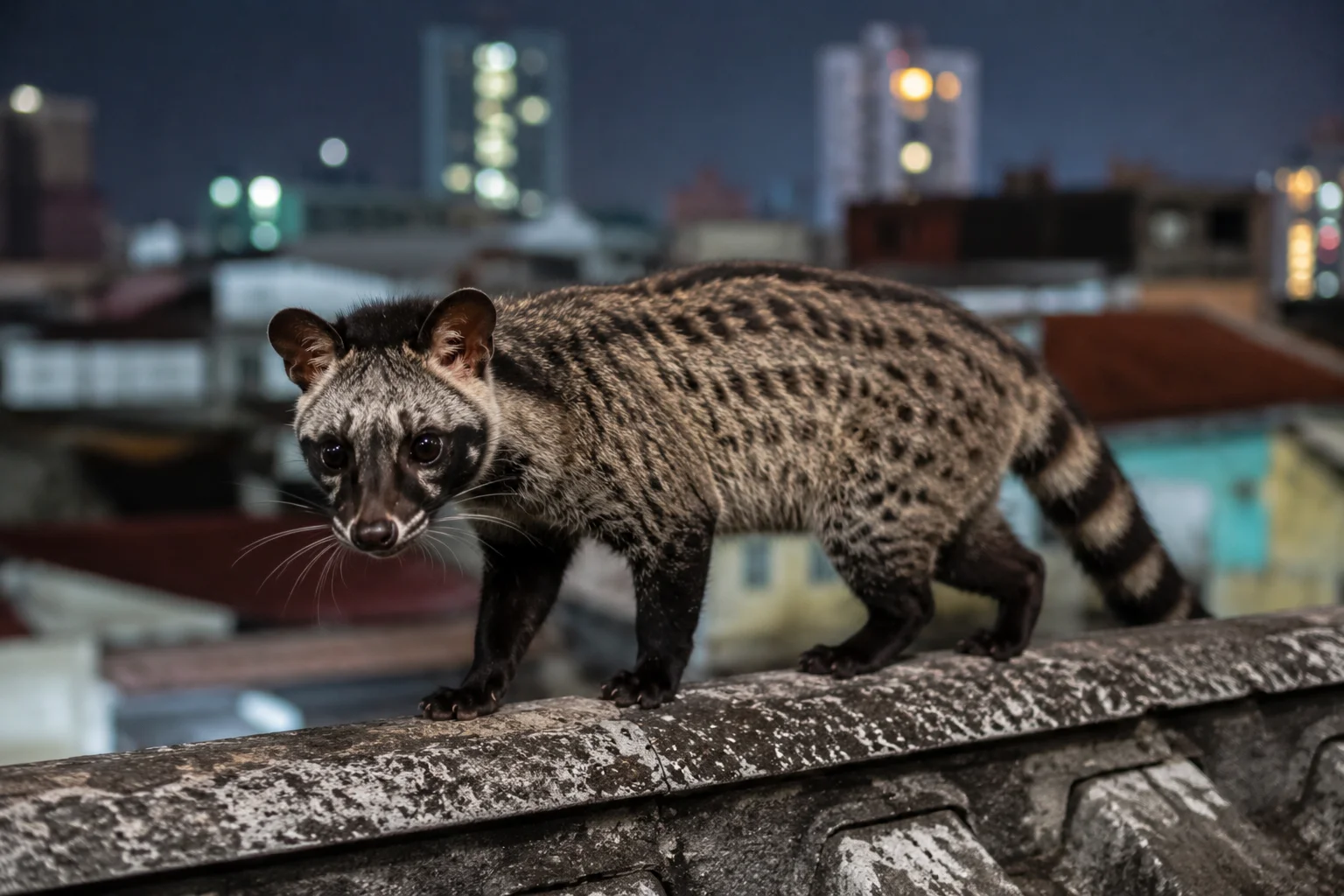
9. African Civets Possess Incredible Camouflage
The African civet is the absolute largest species in the entire civet family, frequently reaching the size of a medium dog. They possess an incredibly striking, highly complex coat pattern featuring bold black and white stripes across their neck and massive black spots down their sides. This chaotic coloration acts as brilliant disruptive camouflage in the wild, perfectly breaking up the physical outline of the animal as it slowly moves through the dappled, moonlit shadows of the African brush.
10. They Are Completely Nocturnal
Civets are incredibly elusive and highly difficult for wildlife researchers to study completely because they are strictly nocturnal. They possess incredibly large, highly sensitive eyes equipped with a tapetum lucidum, a highly reflective biological layer located completely behind their retinas. This brilliant anatomical feature effectively doubles the amount of light entering their eyes, granting them perfectly clear, incredibly sharp vision in almost absolute darkness.
11. They Communicate Through Coughs and Hisses
Unlike domestic cats that frequently meow or purr to communicate, civets are generally highly silent animals that rely almost entirely on chemical scent marking. However, when they are highly agitated, cornered by a predator, or actively defending their young, they possess a highly unique acoustic repertoire. They completely skip roaring and instead emit a series of deep, highly aggressive coughing sounds, followed immediately by incredibly sharp, threatening hisses.
12. They Have Highly Elongated Skulls
If you examine the skeletal structure of a civet, their cranial anatomy reveals their deep evolutionary split from true felines. While a domestic cat possesses a highly shortened, flat face that gives them incredible bite force, a civet possesses a highly elongated, narrow snout that looks much closer to the physical shape of a fox or a raccoon. This extended snout perfectly houses their massive olfactory receptors, granting them an incredibly powerful sense of smell to track rotting fruit in the dark.
13. The Malabar Civet is Critically Endangered
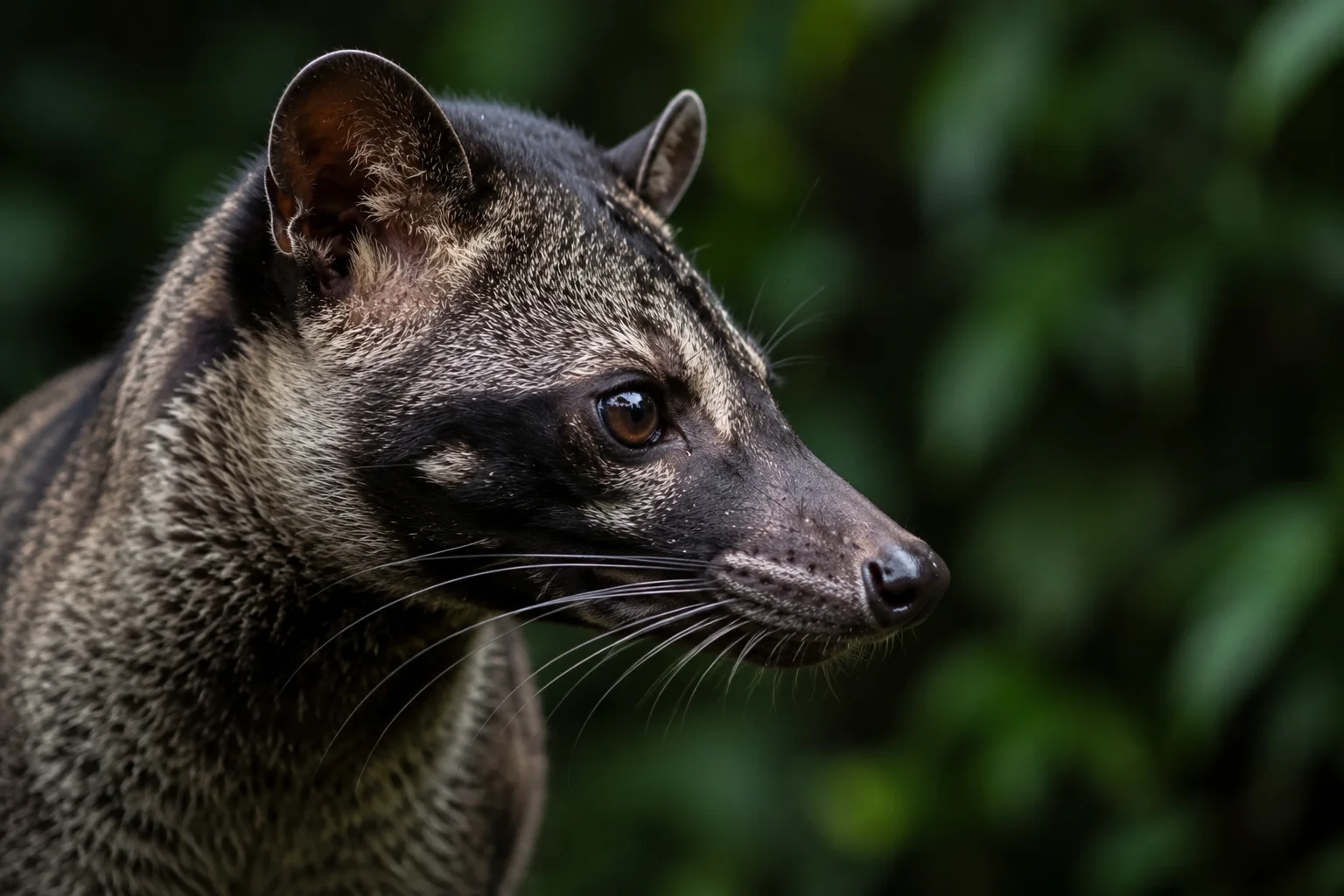
While many civet species easily thrive in the wild, the Malabar large-spotted civet is officially considered one of the absolute most critically endangered mammals on the entire planet. Completely endemic to the heavily deforested Western Ghats of India, this incredibly rare creature has completely vanished from the public eye. Extensive biological surveys over the last several decades have failed to produce a single verified photograph of a living specimen, leading many researchers to heavily fear it is already completely extinct.
14. They Possess Forty Razor-Sharp Teeth
To perfectly handle their highly diverse, omnivorous diet, civets are equipped with an incredibly impressive set of dental hardware. A fully grown adult civet possesses a massive total of forty distinct, highly specialized teeth. This complex dental formula includes massive, sharp canines completely designed for instantly killing small rodents, perfectly combined with completely flattened molars in the back of their jaw strictly designed for crushing hard seeds and tough fruit rinds.
15. Some Species Have Prehensile Tails
While the vast majority of civets use their long, heavy tails entirely as a massive biological counterweight to maintain perfect balance while running across narrow branches, the binturong is a highly specialized biological exception. They are one of the only carnivorous mammals in the entire Old World to possess a completely prehensile tail. They use the heavily muscled tip of their tail exactly like a fifth limb, firmly wrapping it around thick branches to completely anchor themselves while reaching for distant fruit.