15 Cool Facts About Cockatoos
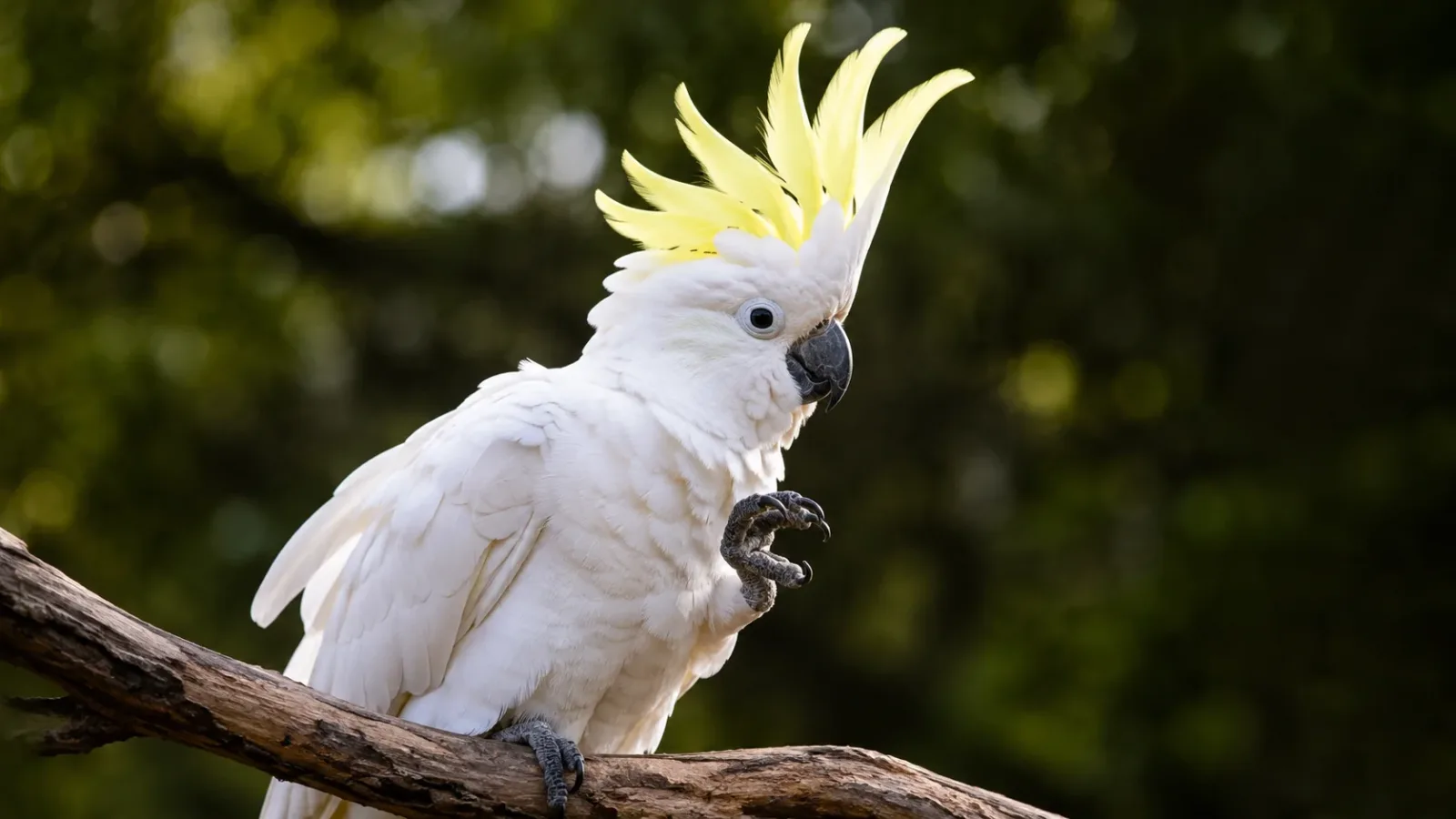
Cockatoos are some of the smartest, loudest, and most expressive birds on the planet. With their beautiful feather crowns and playful personalities, they are famous as both wild acrobats and highly demanding pets. However, behind their funny dances and loud screams lies a highly complex brain that rivals a human toddler. From crafting their own wooden tools to picking complicated locks, discover the highly trusted, fun truths behind these brilliant parrots.
1. They All Wear Feather Crowns
The easiest way to tell a cockatoo apart from a regular parrot is by looking at its head. Every single species of cockatoo has a crest—a special crown of feathers on top of their head. They can raise or lower these feathers like a flag to show exactly how they are feeling. A flat crest usually means the bird is calm, while a fully raised crest means they are excited, scared, or ready to defend their territory.
2. They Lack Blue and Green Feathers
When you think of a tropical parrot, you usually picture bright greens and rich blues. Cockatoos are entirely missing these colors. They lack a special physical texture in their feathers that other parrots use to reflect blue and green light. Because of this, cockatoos are limited to a color palette of solid black, bright white, soft pink, and yellow.
3. They Are Mostly Left-Handed
Just like humans, cockatoos have a clear preference for which hand they use to do heavy lifting. Studies have shown that the vast majority of cockatoos are “left-footed.” When a cockatoo reaches out to grab a piece of fruit or a puzzle toy, they will almost always use their left foot to hold it while they balance perfectly on their right leg.
4. They Have Feet Like Hands
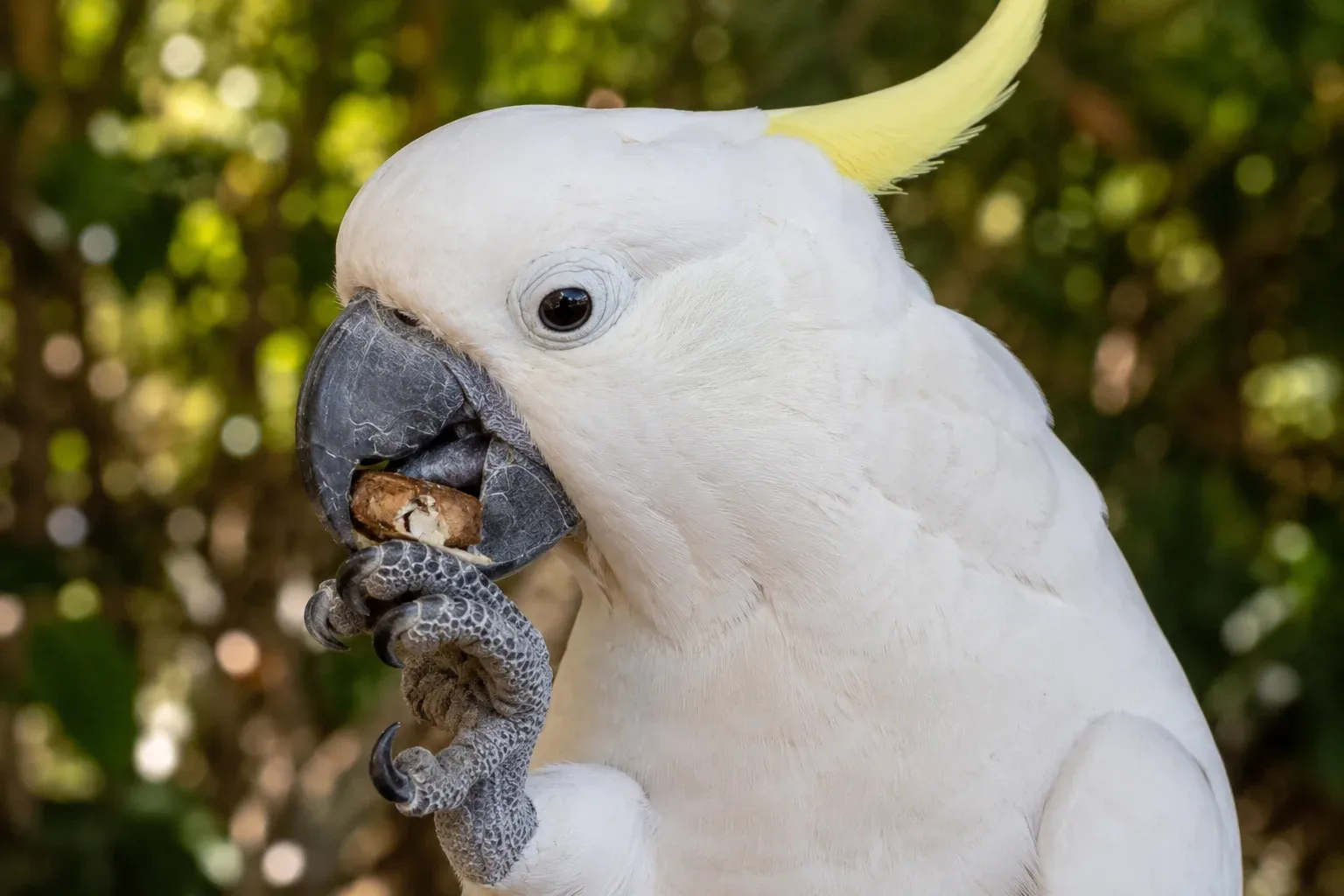
Cockatoos are amazing climbers because their feet are built entirely differently than a standard songbird. They have a special toe layout called “zygodactyl” feet. This means two of their toes point straight forward, and two toes point backward. This perfect X-shape allows them to grip branches tightly and grab food with the exact same grip strength as a human hand.
5. They Make Their Own Music Tools
The large, black palm cockatoo of Australia does something truly amazing: it builds its own musical instruments. To impress females, the male palm cockatoo will use his huge beak to snap off a thick stick and trim it down into a perfect drumstick. He then holds the stick in his foot and beats it against a hollow tree trunk to make a loud, rhythmic drumming sound.
6. They Are Covered in Special Powder
Most birds keep their feathers healthy by rubbing a waterproof oil over their bodies. Cockatoos do not have this oil gland. Instead, they grow special “powder down” feathers that constantly crumble into a super fine, white dust. The cockatoo spreads this powdery dust all over its body to keep its feathers clean and waterproof. If you pet a cockatoo, your hands will often be covered in this soft, chalky powder.
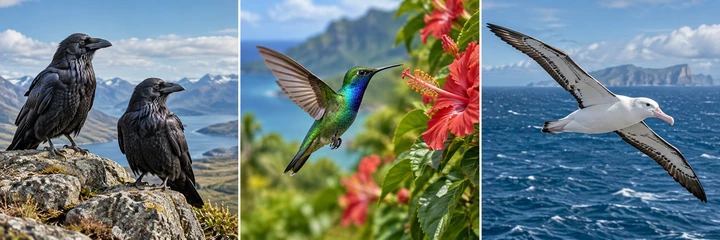 Birds of the World
From record-breaking aerial plunge-divers to massive flightless icons, the avian world is a marvel of evolutionary engineering. Discover the extraordinary intellects, specialized survival skills, and hidden superpowers of the planet's most fascinating birds.
See All Facts
Birds of the World
From record-breaking aerial plunge-divers to massive flightless icons, the avian world is a marvel of evolutionary engineering. Discover the extraordinary intellects, specialized survival skills, and hidden superpowers of the planet's most fascinating birds.
See All Facts
7. They Pick Locks and Open Trash Cans
Cockatoos are famous for their amazing problem-solving skills. In the city of Sydney, Australia, wild sulphur-crested cockatoos have learned how to open heavy plastic trash bins to steal food. Even cooler, scientists proved that the birds actually teach this trick to each other. When one bird figures out how to flip the lid, the other birds watch closely and copy the exact same moves.
8. They Have a Three-Way Bite
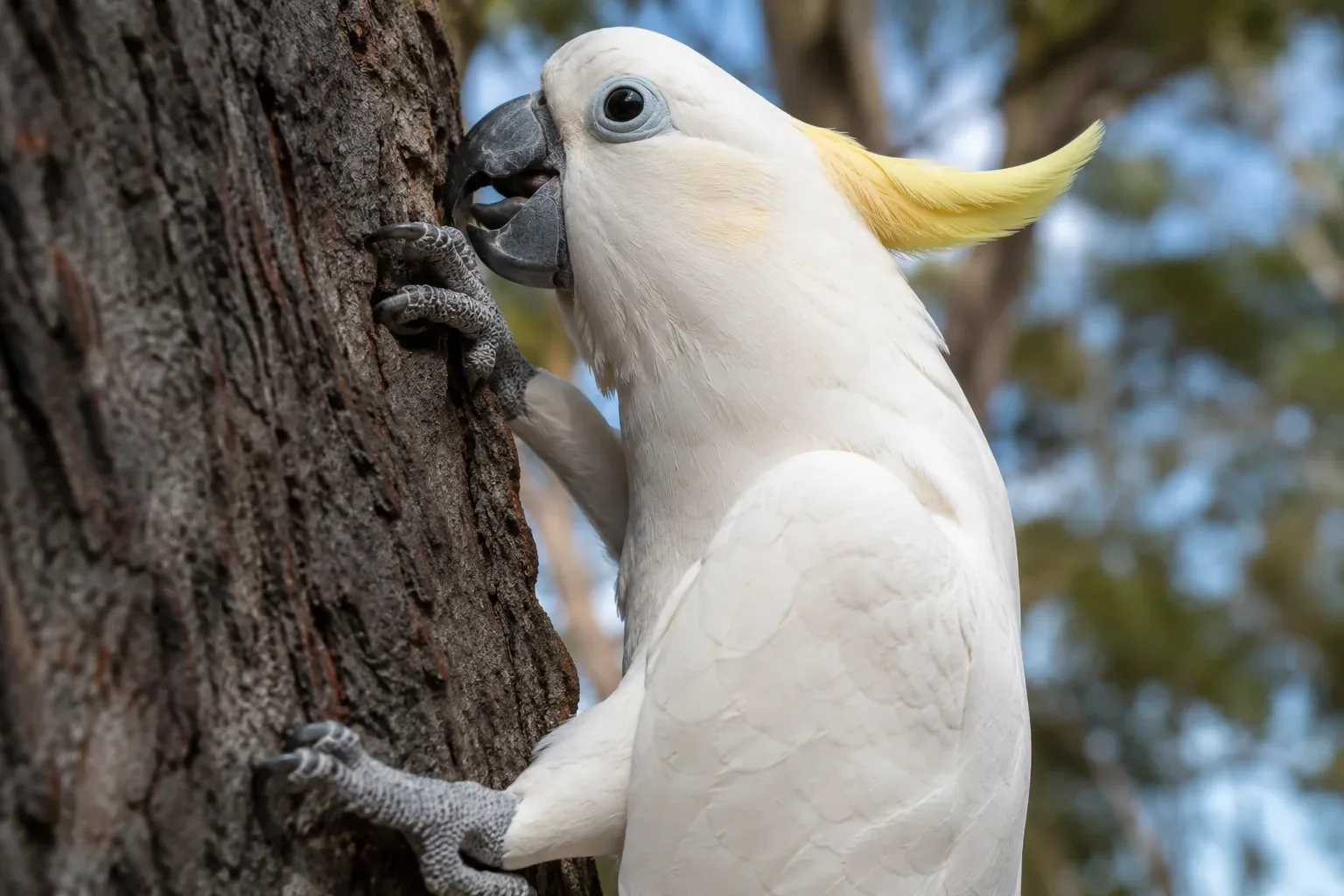
A cockatoo’s beak is not just a simple pair of scissors; it is a highly advanced cracking tool. Their lower beak has a special U-shape, and their upper beak has sharp edges that fit perfectly inside it. This creates a powerful, three-way bite that can easily snap thick tree branches, crush hard nuts, and chew right through heavy metal wire.
9. They Are Incredibly Loud
If you want a quiet pet, a cockatoo is the worst possible choice. In the wild, they need to communicate with their flock over massive distances across thick forests. Because of this, they are built to scream. A Moluccan cockatoo can scream at levels reaching up to 135 decibels. To put that in perspective, that is as loud as standing right next to a jet engine taking off!
10. They Can Outlive Their Owners
Getting a cockatoo is a true lifelong commitment because they have incredibly long lifespans. If they are kept safe and fed a healthy diet, a large cockatoo can easily live to be over 60 years old. In fact, a famous Major Mitchell’s cockatoo named “Cookie” lived at the Brookfield Zoo in Chicago until he was 83 years old.
11. They Suffer From Heartbreak
Because they are so incredibly smart and social, cockatoos have very complex feelings. If a pet cockatoo is left alone in a cage all day without toys or attention, it can suffer from severe boredom and depression. A sad or stressed cockatoo will often start pulling out its own feathers one by one until its chest is completely bald. They need constant love and mental games to stay happy.
12. They Mate for Life
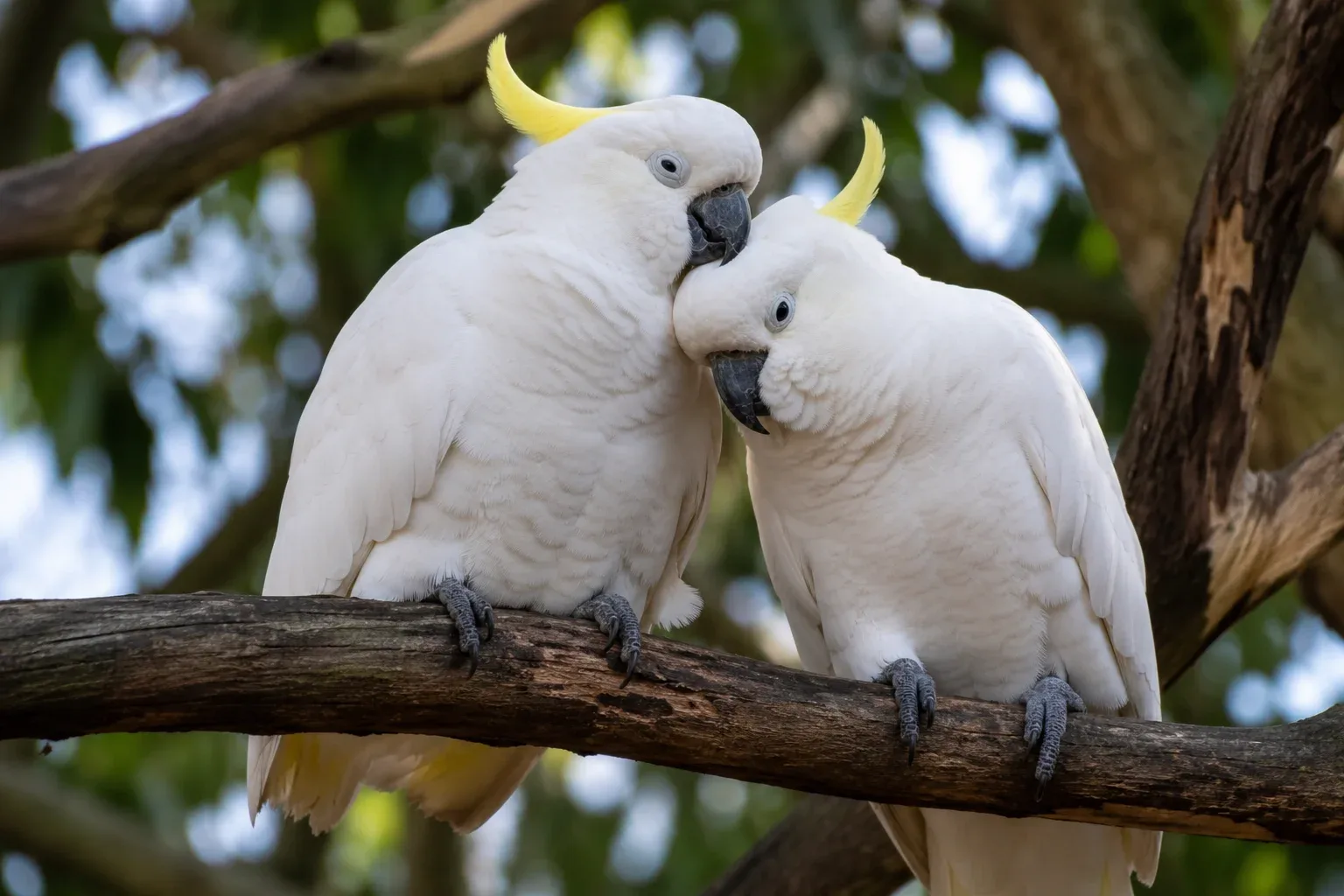
Cockatoos take their romantic relationships very seriously. They are strictly loyal birds that usually mate for life. A bonded pair of cockatoos will spend their entire lives together, preening each other’s feathers, sharing food, and raising babies year after year. If one partner dies, the surviving bird will often grieve deeply.
13. They Form Flocks That Look Like Snow
While some cockatoos live in small family groups, others love a huge crowd. Species like the little corella will form massive flocks in the wild. When thousands of these bright white birds land in a single field to eat seeds, the ground looks like it is completely covered in a fresh blanket of white snow.
14. The Name Means “Older Sibling”
The fun name “cockatoo” actually comes from the 17th century. It is based on the old Malay word “kakatua.” In the Malay language, “kaka” means older sibling, and “tua” means old. It is believed the locals gave them this respectful name because the highly intelligent birds acted like wise, older members of the family.
15. They Only Live in One Part of the World
You will not find wild cockatoos naturally flying around the jungles of South America or Africa. They are completely limited to a very specific corner of the globe. Wild cockatoos are only found in Australasia, which includes Australia, New Zealand, New Guinea, Indonesia, and the Solomon Islands.
Sources & References
This AI-assisted post was rigorously curated and fact-checked for accuracy by:
 Martin Roháček
How fun was this article? 🤔
Tap a star to rate it
🧠 Quiz: How closely were you paying attention?
10 questions — all answers are in the article above!
Enjoyed these facts? There's more! 💌
Fresh fun facts in your inbox. No spam, ever.