The Dolomite Pearl: 15 Fascinating Facts About Cortina d’Ampezzo
Nestled in the heart of the Italian Alps, Cortina d’Ampezzo is far more than a glitzy winter retreat for the global elite. Known as the 'Queen of the Dolomites,' this mountain enclave boasts a deep cultural heritage, ancient linguistic survival, and a geological history that stretches back hundreds of millions of years. From historic Olympic breakthroughs and Hollywood movie stunts to Triassic fossil discoveries and medieval forest management, Cortina is packed with extraordinary secrets. Discover the fascinating history and natural wonders that make this Italian town truly unique.
1. Cortina Hosted the First Televised Winter Olympics in History
The 1956 Winter Olympics in Cortina d’Ampezzo made history as the very first Winter Games broadcast live to an international television audience. Cameras were positioned along mountain courses, allowing sports fans across Europe to watch alpine skiing and figure skating live from their homes. This technological breakthrough forever transformed global sports consumption and put Cortina on the map as a premier international destination. To accommodate the historic event, the town constructed iconic infrastructure including the Ice Stadium and the Eugenio Monti bobsleigh track. Ultimately, the 1956 Games birthed the modern era of televised winter sports broadcasts.
2. An Olympic Torchbearer Tripped Live on Global Television
During the opening ceremony of the 1956 Winter Games, speed skater Guido Caroli made an infamous entrance carrying the Olympic flame into the ice stadium. As he skated gracefully toward the cauldron, his skate caught on a heavy television broadcast cable laid across the ice, sending him tumbling to the ground. Remarkably, Caroli managed to hold the torch aloft throughout his fall, preserving the flame without letting it touch the ice or extinguish. He scrambled back to his feet within seconds and completed his lap to light the Olympic cauldron to wild applause from the stadium audience. The unexpected stumble became one of the earliest viral moments in televised sports history.
3. James Bond Skied Down the Local Olympic Bobsleigh Run
For the 1981 James Bond thriller For Your Eyes Only, stunt double Rick Sylvester and Roger Moore's production team filmed an adrenaline-fueled chase sequence in Cortina. The high-speed scene featured Bond skiing directly down the steep ice walls of the Eugenio Monti bobsleigh track while pursued by motorbikes. Filming on the narrow ice chute required extraordinary precision, with stunt riders navigating banked turns at lethal speeds. Tragically, stuntman Paolo Rigon lost his life during the production when a bobsled overturned on the course. Despite the solemn incident, the sequence remains one of the most celebrated action scenes in cinema history.
4. Geologists Discovered the World's Oldest Triassic Amber Here
High in the peaks surrounding Cortina d’Ampezzo, geologists made a groundbreaking discovery when they found microscopic droplets of fossilized amber resin embedded in rock. Dating back roughly 230 million years to the Triassic period, this resin is among the oldest amber ever discovered on Earth. Trapped inside the tiny droplets were ancient microorganisms and plant molecules preserved from a time before dinosaurs dominated the continent. The finding proved that resin-producing coniferous trees existed far earlier in geological history than paleobotanists had previously estimated. These ancient resin drops continue to provide scientists with invaluable climate data from Earth's deep past.
5. The Town Bell Tower Sphere is Coated in Real Gold Ducats
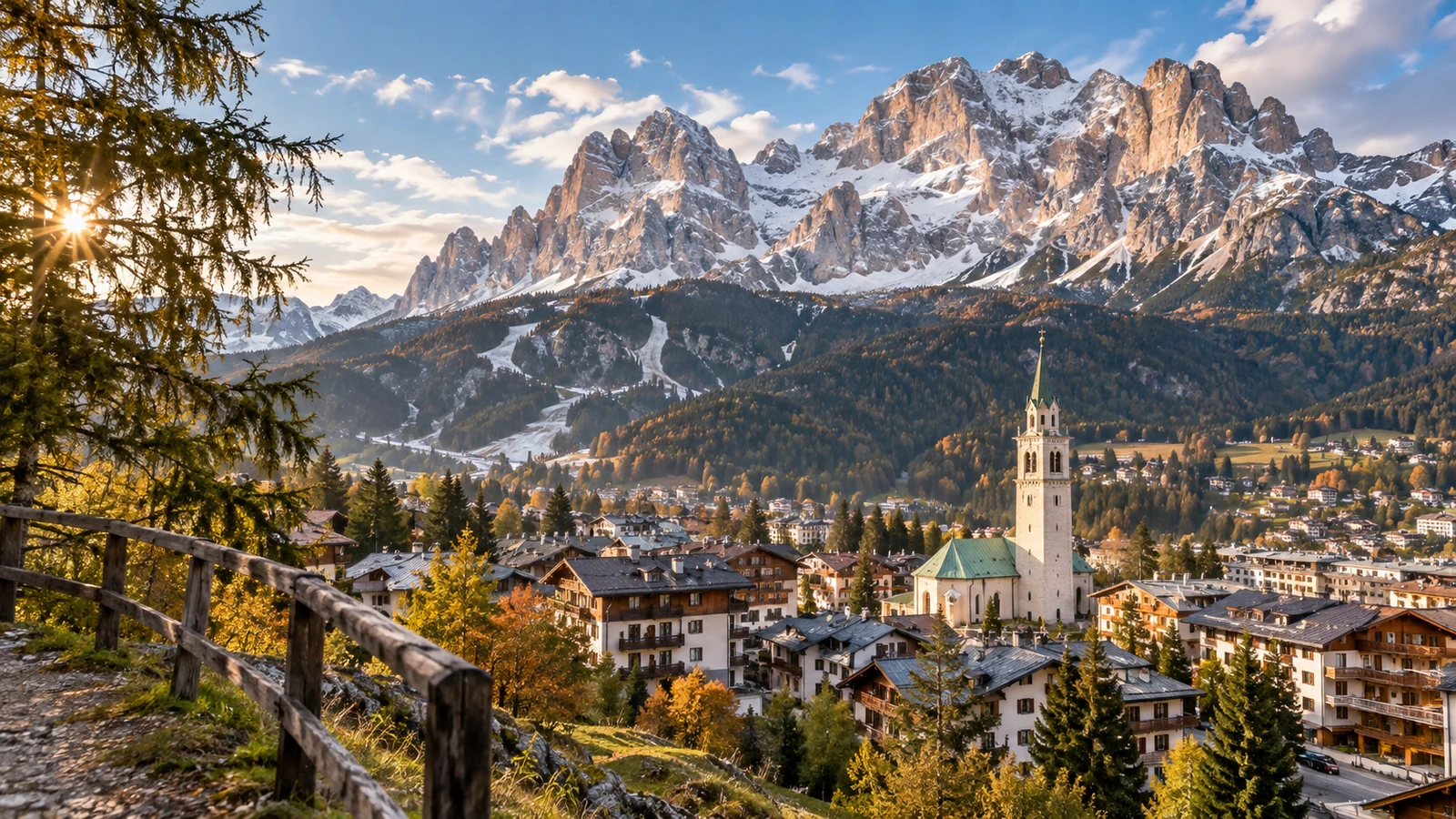
Soaring 73 meters above the town center, the majestic bell tower of the Basilica of Saints Philip and James serves as Cortina's primary architectural icon. Resting atop the stone steeple is a hollow copper sphere that glints brilliantly in the high-altitude sunlight. To achieve its intense glow, local craftspeople melted down sixty real gold ducats to gild the exterior of the copper globe during construction. The gold-encrusted sphere has weathered harsh alpine storms for over a century while retaining its luminous sheen. It remains a striking symbol of the valley's historical prosperity and artisanal craft.
6. Emperor Charles I Saved the Basilica Bells From Being Melted
During World War I, the Austro-Hungarian military routinely seized church bells across the empire to melt down their bronze for cannons and ammunition. When military officials arrived in Cortina to collect the basilica's beloved bells, local residents made a desperate plea to Emperor Charles I of Austria. The Emperor, who personally admired the acoustic quality and melody of Cortina's bells, issued a imperial decree ordering military officers to spare them. While thousands of historic church bells across Europe were destroyed in the conflict, Cortina's bells survived without damage. Today, their ringing remains a living symbol of historic preservation during wartime.
7. Cortina's Bell Tower Rings the Exact Chime Melody of Big Ben
Visitors walking through Cortina d’Ampezzo often experience a unexpected sense of familiarity when the town's bell tower marks the quarter-hour. The chime sequence played by the basilica's bells is mathematically and musically identical to the famous Westminster Quarters. This classic melody, best known worldwide for echoing from London's Big Ben, was deliberately selected for Cortina's tower during its 19th-century construction. The clock mechanism strikes four distinct notes in E major every fifteen minutes across the valley. This musical choice creates an intriguing cultural bridge between the Italian Alps and British heritage.
8. Stallone's *Cliffhanger* Used Cortina Peaks to Stand In for Colorado
The hit 1993 action film Cliffhanger, starring Sylvester Stallone, was ostensibly set in the rugged Rocky Mountains of Colorado. However, director Renny Harlin chose to film the movie's extreme rock-climbing stunts on the sheer cliffs of the Tofane group in Cortina. The jagged limestone spires of the Dolomites provided a far more dramatic background for high-altitude cinema than North American locations could offer. A wooden suspension bridge erected on Monte Cristallo for a key action sequence became so popular that it remained a local tourist landmark for years. The movie successfully exposed millions of worldwide moviegoers to Cortina's breathtaking vertical terrain.
9. Ernest Hemingway Drew Deep Literary Inspiration From the Town
Famed American author Ernest Hemingway frequented Cortina d’Ampezzo during the 1920s, staying at the historic Hotel de la Poste. He spent his time skiing nearby trails, trout fishing in the Boite River, and writing in the hotel bar while working on early manuscripts. Cortina provided the central backdrop for his short story "Out of Season," which captured the quiet atmosphere of the town during autumn. Hemingway also drew upon his experiences in the valley when describing the mountain setting of his classic war novel A Farewell to Arms. His stay established the Hotel de la Poste as a lasting pilgrimage site for literary enthusiasts.
10. Native Residents Still Speak the Ancient Ladin Language
While Italian is the official language of instruction, many native residents of Cortina d’Ampezzo regularly converse in Ladin. This ancient Rhaeto-Romance language developed directly from the Vulgar Latin spoken by Roman soldiers who conquered Alpine tribes two thousand years ago. Isolated in deep mountain valleys, the language retained unique grammatical structures that survived centuries of political rule. Today, Ladin is officially recognized as a protected minority language in northern Italy and is taught in regional schools. Hearing Ladin spoken in local shops offers visitors a rare connection to ancient Alpine culture.
11. The Surrounding Peaks Glow Bright Pink During Enrosadira
At dusk, the pale grey limestone walls surrounding Cortina undergo a natural transformation known locally as Enrosadira. The sheer rock faces shift from pale grey to vibrant shades of rose pink, magenta, and deep orange before fading into twilight. Geologically, this optical effect occurs because the rock contains high concentrations of calcium carbonate and magnesium carbonate. When low-angle sunlight strikes these minerals, atmospheric refraction reflects warmth into the stone faces. According to local Ladin legend, the reddish glow is the enchanted rose garden of a mythical mountain king revealing itself at nightfall.
12. A Medieval System Controls the Surrounding Wilderness
The pristine forests and mountain pastures surrounding Cortina are not owned by real estate developers or the state, but by a collective called the Regole d'Ampezzo. Originating in the Middle Ages, this governance model grants land stewardship rights exclusively to native families who have inhabited the valley for generations. Communal property cannot be divided, sold, or bought by outside developers, effectively preventing commercial sprawl. The Regole manages sustainable timber harvesting, alpine meadow grazing, and wilderness conservation across the entire valley. This unbroken collective tradition is widely praised for preserving Cortina's natural environment.
13. A Disused Railroad Was Converted into a Mountain Bike Path
For nearly fifty years, the narrow-gauge Dolomite Railway transported travelers between Cortina and surrounding alpine towns along steep cliffside tracks. After train operations permanently ceased in 1964, regional planners repurposed the abandoned rail corridor into a recreational trail. Known today as the "Lunga Via delle Dolomiti" (Long Road of the Dolomites), the path extends for over 60 kilometers through mountain passes. Cyclists and hikers travel through original railway tunnels, across high steel bridges, and past converted historic station buildings. The trail is recognized as one of Europe's premier rail-to-trail conversion success stories.
14. Cortina Will Co-Host the Winter Olympics Again in 2026
Cortina d’Ampezzo is set to welcome back the Olympic Games in 2026, co-hosting the Winter Games alongside the urban hub of Milan. This occasion marks exactly seventy years since Cortina hosted its historic 1956 Winter Olympics. The mountain venue will hold women's alpine skiing on the famous Olimpia delle Tofane slope, along with curling, bobsleigh, skeleton, and luge events. By utilizing modernized alpine infrastructure, the 2026 Games aim to set new benchmarks for environmental sustainability. The return solidifies Cortina's enduring prestige as a capital of international winter sport.
15. Scientists Found the Oldest Ancestor of Modern Lizards Here
Millions of years before the uplift of the European Alps, the geographical area of Cortina was a warm, tropical coastal environment during the Triassic period. In 2000, researchers uncovered an exceptionally preserved tiny reptile fossil in the rock formations near Cortina, naming it Megachirella wachtleri. Advanced high-resolution CT scans later revealed that this 240-million-year-old fossil is the oldest known relative of modern squamates—the evolutionary group that encompasses modern lizards and snakes. The discovery reshaped scientific consensus on reptile evolution by pushing back the origin of squamates by tens of millions of years. It proved that the high Dolomites hold key paleontological answers to ancient life on Earth.
Sources & References
This AI-assisted post was rigorously curated and fact-checked for accuracy by:
 Martin Roháček
How fun was this article? 🤔
Tap a star to rate it
🧠 Quiz: How closely were you paying attention?
10 questions — all answers are in the article above!
Enjoyed these facts? There's more! 💌
Fresh fun facts in your inbox. No spam, ever.