15 Curious Facts About Dugongs
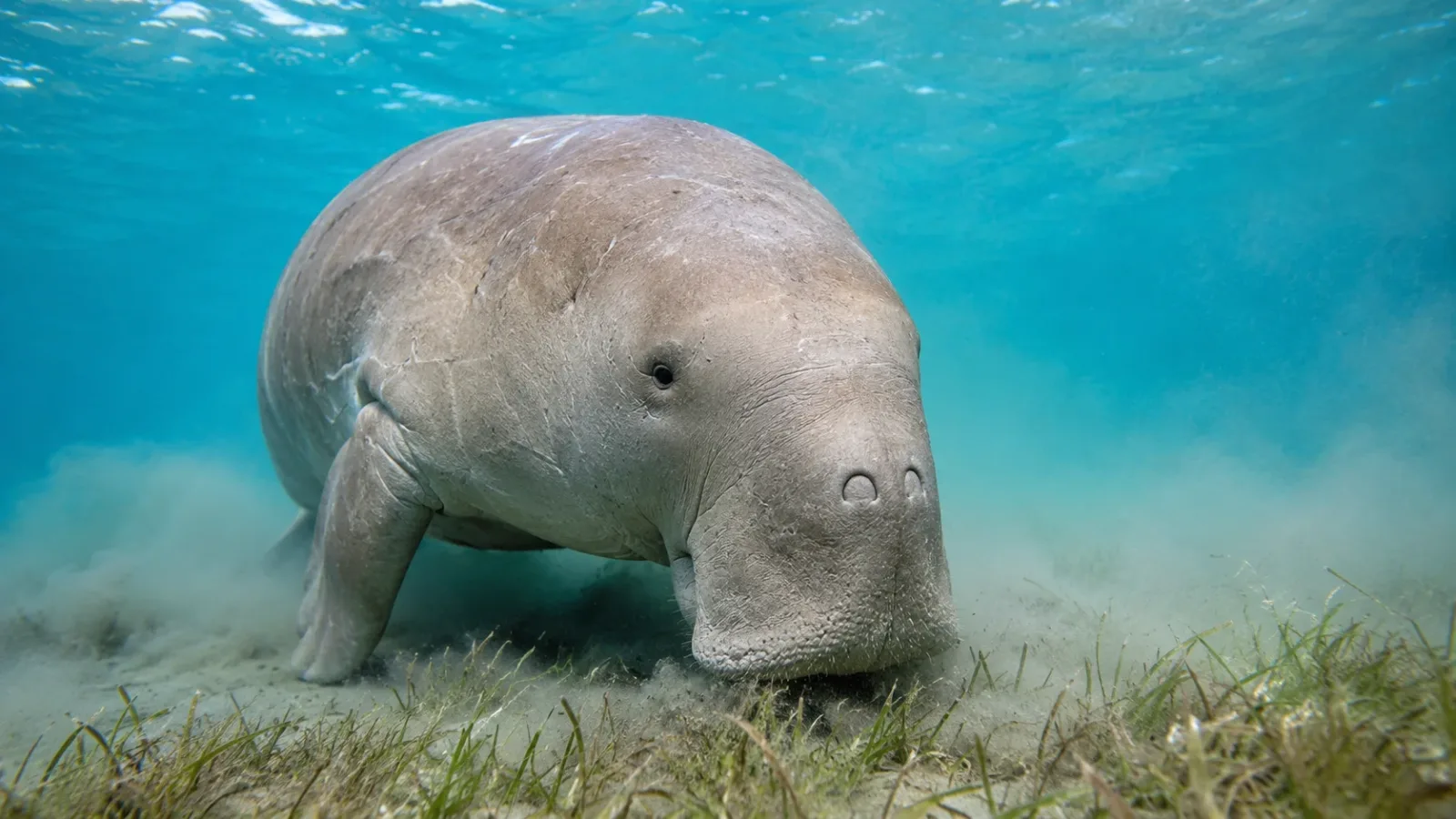
Dugongs are gentle, slow-moving marine mammals that graze peacefully along the shallow coastal waters of the Indian and western Pacific Oceans. Often overshadowed by their more famous relatives, the manatees, dugongs possess a distinct charm and a rich biological history all their own. With their plump bodies and friendly, downturned snouts, these animals are perfectly designed for a life spent quietly tending to underwater meadows. Discover the trusted, curious truths behind the sea’s original grazers.
1. They Are the Original Mermaids
For hundreds of years, lonely sailors navigating the high seas frequently reported spotting beautiful, half-human fish resting in the water. Historians widely believe that these mythical mermaid sightings were actually just glimpses of dugongs and manatees. The scientific name for their order, Sirenia, is a direct reference to the sirens of ancient Greek mythology, proving that this historical mix-up permanently shaped their biological classification.
2. They Have Whale-Like Tails
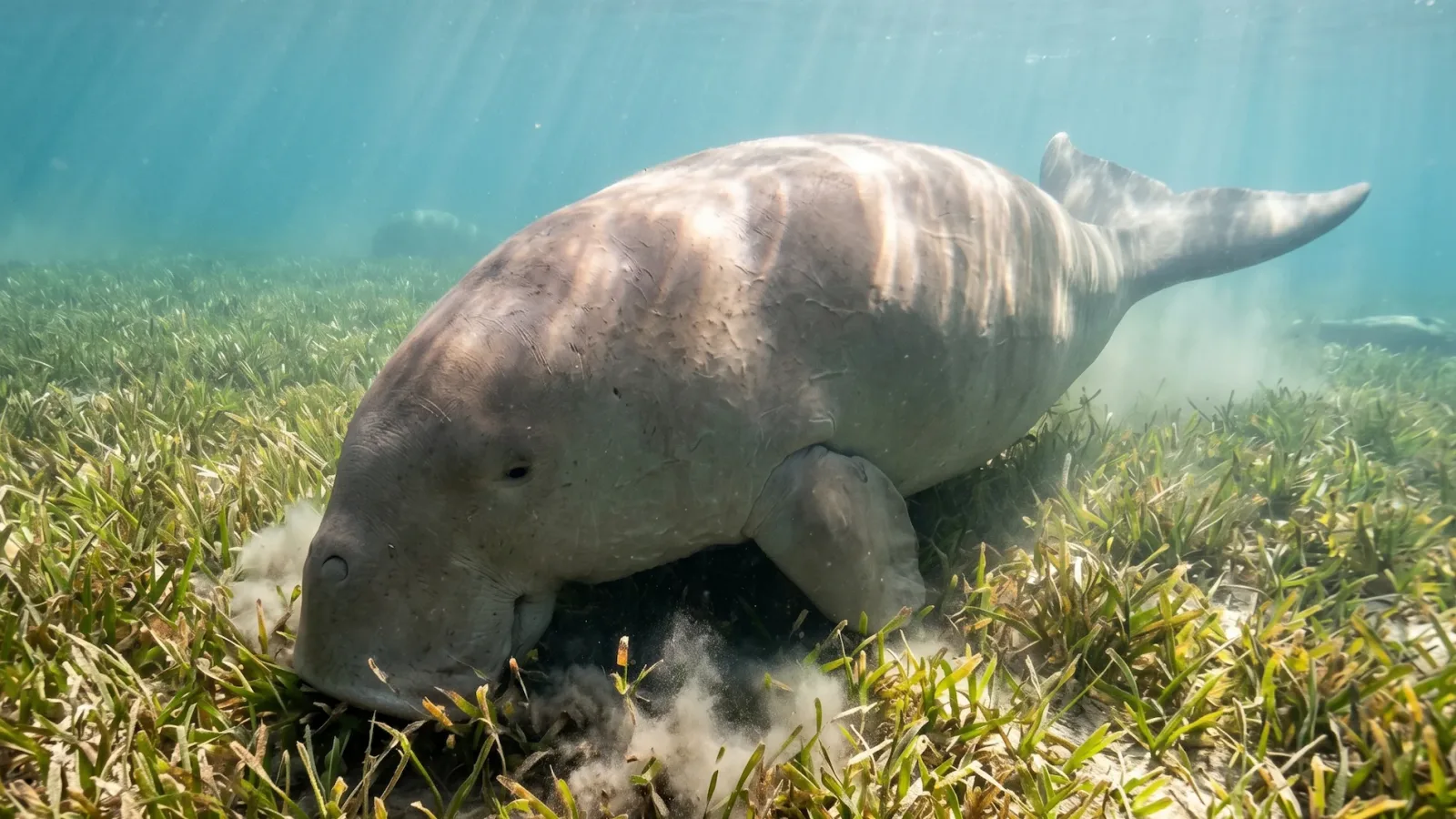
If you ever need to quickly tell the difference between a dugong and a manatee, you just need to look at the back of the animal. While manatees have broad, rounded tails that look like a large boat paddle, dugongs have distinctly fluked tails. Their tails fork into two separate points, making them look much more similar to a dolphin or a small whale, which helps them swim efficiently along the ocean floor.
3. They Are Strict Ocean Vegetarians
While many marine animals have varied diets, the dugong is the only marine mammal on Earth that is a strict herbivore. They do not eat fish, crabs, or jellyfish. Instead, they spend almost their entire waking lives grazing on underwater seagrass meadows. Because of this peaceful, plant-based diet, they have earned the widespread and very fitting nickname “cows of the sea.”
4. They Have Very Heavy Bones
Staying at the bottom of the ocean to eat grass can be difficult when your body naturally wants to float. To solve this problem, dugongs have developed a condition called pachyostosis. This means their bones are extremely thick, dense, and heavy compared to other mammals. This extra bone weight acts like a natural scuba diver’s weight belt, allowing them to easily sink and stay on the sea floor while they feed.
5. Their Closest Relatives Are Elephants
Even though they live their entire lives in the ocean and look a bit like plump dolphins, their family tree tells a different story. In the grand scheme of evolution, their closest living relatives are actually land animals. Dugongs share a common ancient ancestor with the modern elephant. You can even see a hint of this family tie in the male dugong, which grows small, ivory tusks just like an elephant.
6. You Can Age Them Like Trees
When scientists need to figure out the exact age of a wild dugong, they rely on a very clever natural record kept inside the animal’s mouth. Like the rings found inside a tree trunk, a dugong’s tusks grow in distinct layers over time. By counting these microscopic growth rings on the tusks of a deceased dugong, researchers can accurately determine its age. Many have been found to live for over 70 years in the wild.
 Marine and Freshwater Animals
Twenty-five animals of the sea and rivers, from the largest creature ever to exist to a seahorse dad, each linked to its full 15-fact article.
See All Facts
Marine and Freshwater Animals
Twenty-five animals of the sea and rivers, from the largest creature ever to exist to a seahorse dad, each linked to its full 15-fact article.
See All Facts
7. They Cultivate Their Own Gardens
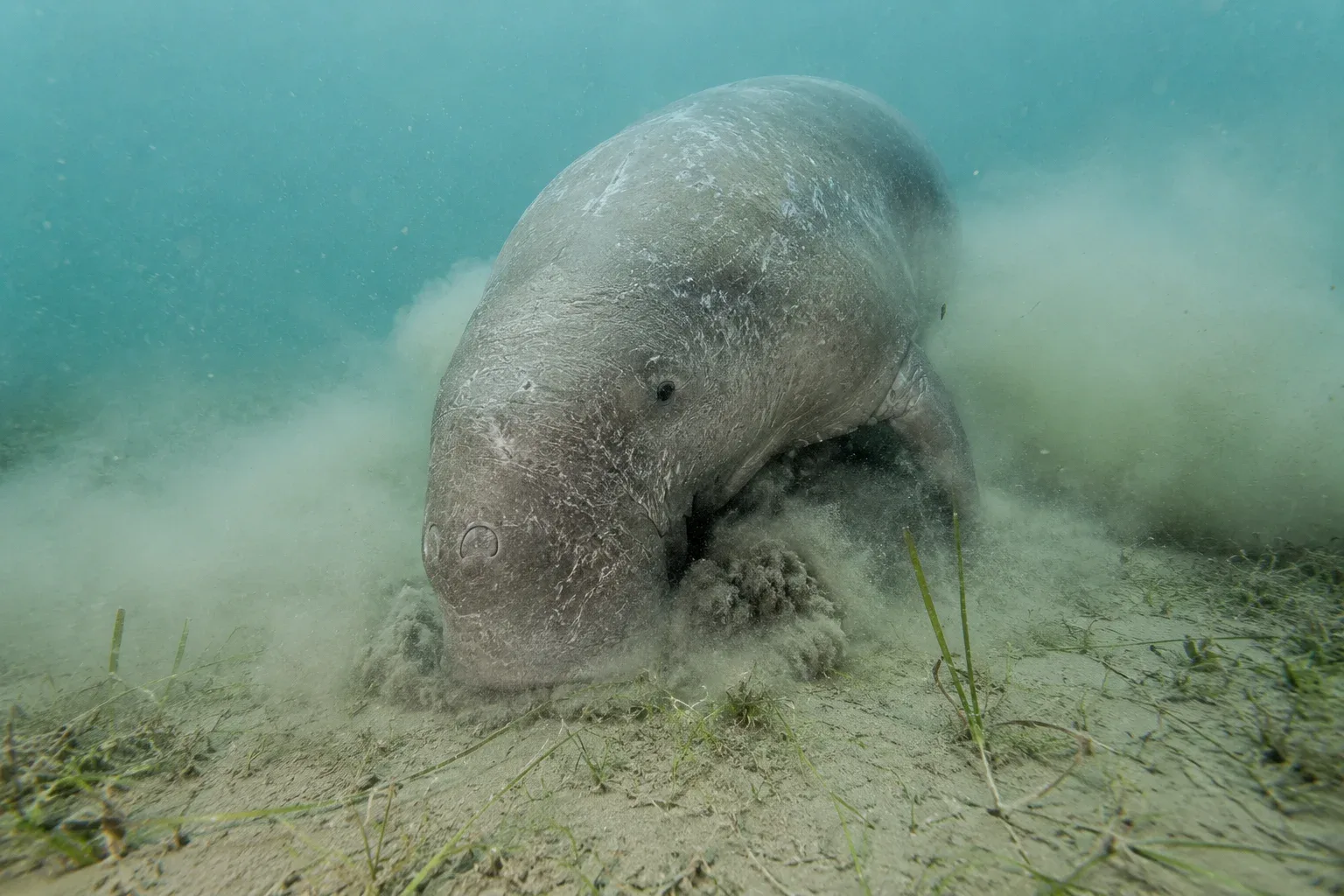
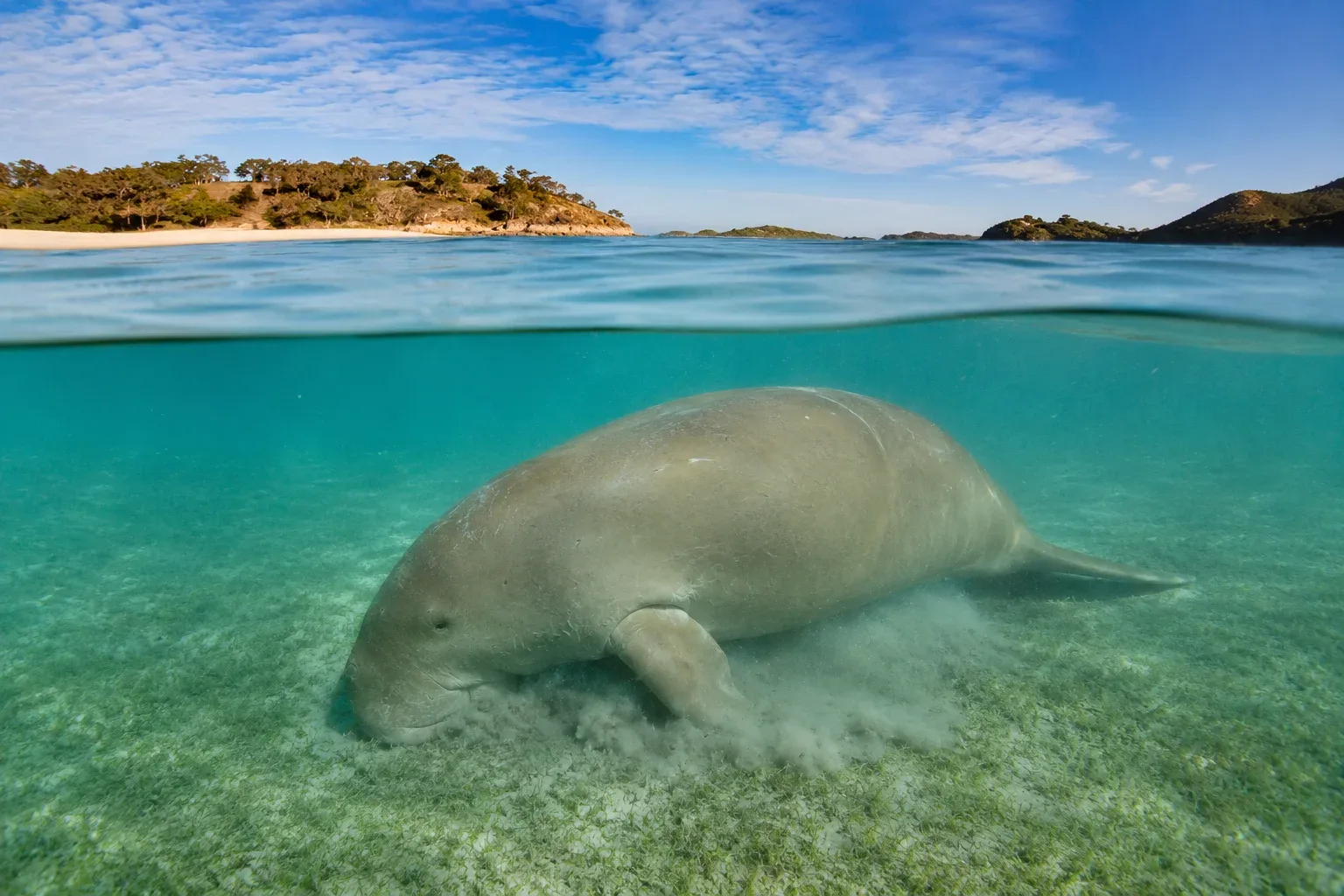
Dugongs do not just randomly eat whatever plants they find; they are actually active underwater gardeners. When they feed, they use their strong, muscular snouts to rip the seagrass up entirely by the roots. This digging behavior clears the area and encourages the growth of fresh, highly nutritious pioneer seagrass species. By constantly tending to these meadows, they make sure their future meals are healthy and plentiful.
8. They Have Very Poor Eyesight
The ocean waters where dugongs live are often murky and filled with shifting sand, which makes relying on vision very difficult. As a result, dugongs have quite small eyes and very poor eyesight. To navigate and find their food in the cloudy water, they rely heavily on their excellent hearing and the highly sensitive, stiff bristles covering their upper lip, which act like a cat’s whiskers to feel the environment.
9. They Breathe Through Nostrils on Top of Their Heads
Since they are mammals, dugongs cannot breathe underwater and must regularly return to the surface for fresh air. To make this process as easy as possible without interrupting their swimming, their nostrils are located near the very top of their snouts. This placement allows them to expose just a tiny fraction of their face above the water’s surface to take a deep breath before immediately sinking back down to the grass beds.
10. Mothers Keep Calves Close
Female dugongs are highly dedicated mothers that invest a lot of time and energy into raising their young. A mother experiences a long pregnancy of about 13 to 15 months and usually gives birth to just one calf. The baby will stay right by her side for up to 18 months, nursing and learning how to find the best seagrass. Sometimes, calves can even be seen playfully hitching a ride on their mother’s broad back.
11. They Are Quite Chatty
Despite their slow, peaceful nature, dugongs are far from silent animals. They use a wide range of vocalizations to communicate with each other through the water. Researchers listening with underwater microphones have recorded them using a complex mix of chirps, trills, barks, and whistles. These sounds are especially important for mothers and calves, helping them stay in constant contact when the water visibility drops.
12. Australia is Their Stronghold
While their historical range once covered vast stretches of the Indian and Pacific Oceans, dugong populations have dropped significantly in many regions due to hunting and habitat loss. Today, the coastal waters of northern Australia are their greatest safe haven. It is estimated that Australia is home to the largest remaining population of dugongs in the world, hosting tens of thousands of these gentle grazers.
13. They Swim Rather Slowly
Because they do not need to chase fast-moving prey to survive, dugongs generally take life at a very relaxed pace. Their normal cruising speed is a casual 6 miles per hour (10 kilometers per hour), which is just about the speed of a brisk human walk. However, if they are startled by a predator or a loud boat engine, they can use their strong tails to burst forward at speeds up to 14 miles per hour for short distances.
14. They Need Coastal Shallow Waters
You will never find a dugong swimming out in the deep, open ocean. Their survival is entirely dependent on the availability of sunlight. Because seagrass requires shallow, sunlit water to perform photosynthesis and grow, dugongs must stay close to the shoreline. They generally live in warm coastal waters, protected bays, and wide mangrove channels where the water is rarely deeper than 30 feet.
15. They Face Unique Modern Threats
Because they live so close to the shore, dugongs frequently share their waters with human activity, putting them in difficult situations. While large sharks and saltwater crocodiles occasionally hunt them, human impacts remain their biggest threat. Coastal pollution that kills seagrass beds removes their only food source, and their slow swimming speed makes them highly vulnerable to accidental collisions with fast-moving recreational boats.
Sources & References
This AI-assisted post was rigorously curated and fact-checked for accuracy by:
 Martin Roháček
How fun was this article? 🤔
Tap a star to rate it
🧠 Quiz: How closely were you paying attention?
10 questions — all answers are in the article above!
Enjoyed these facts? There's more! 💌
Fresh fun facts in your inbox. No spam, ever.