1. His Father Despised His “Effeminate” Hobbies
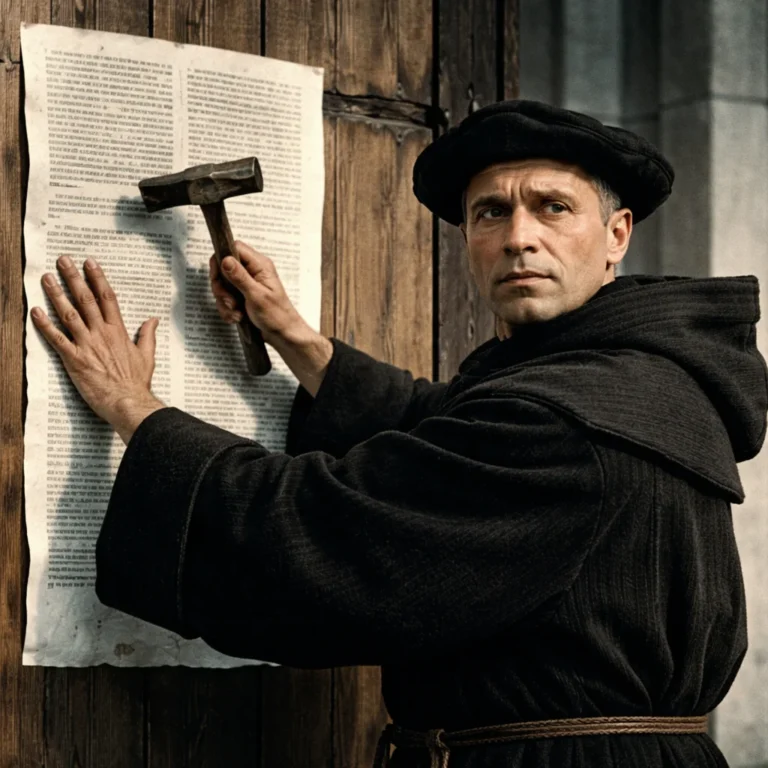
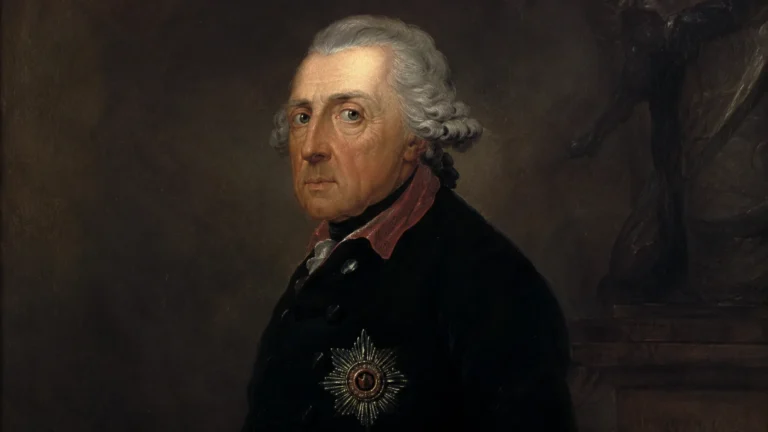
Frederick’s father, King Frederick William I (known as the “Soldier King”), was a rigid, militaristic autocrat who built up the Prussian army. He was infuriated by his son’s lack of interest in military matters. Young Frederick preferred playing the flute, reading French philosophy, and writing poetry—interests his father deemed “effeminate.” The king routinely beat Frederick in public and humiliated him in front of the army for these intellectual pursuits.
2. He Was Forced to Watch His Best Friend’s Execution
In 1730, an 18-year-old Frederick attempted to escape his father’s tyranny by fleeing to England with his closest friend (and possible lover), Lieutenant Hans Hermann von Katte. They were caught before crossing the border. Enraged, the king locked Frederick in solitary confinement and forced him to watch from his cell window as Katte was beheaded. The king even considered executing Frederick for military desertion but was talked out of it by his advisors.
3. He Transformed After the Execution
The trauma of Katte’s death fundamentally changed Frederick. He submitted to his father’s will, became ruthlessly cynical, and finally began studying military strategy and statecraft in earnest. Though he maintained his artistic interests in private, he publicly embraced the role of a stern Prussian leader, setting the stage for his future conquests.
4. He Started a Major War Almost Immediately
Frederick’s father died in May 1740. Just months after taking the throne at age 28, Frederick shocked Europe by launching a surprise invasion of Silesia, a wealthy province belonging to Habsburg Austria. This aggressive land grab sparked the War of the Austrian Succession. Though risky, the invasion was highly successful and immediately established his reputation as a bold military commander.
5. He Believed He Was the “First Servant of the State”
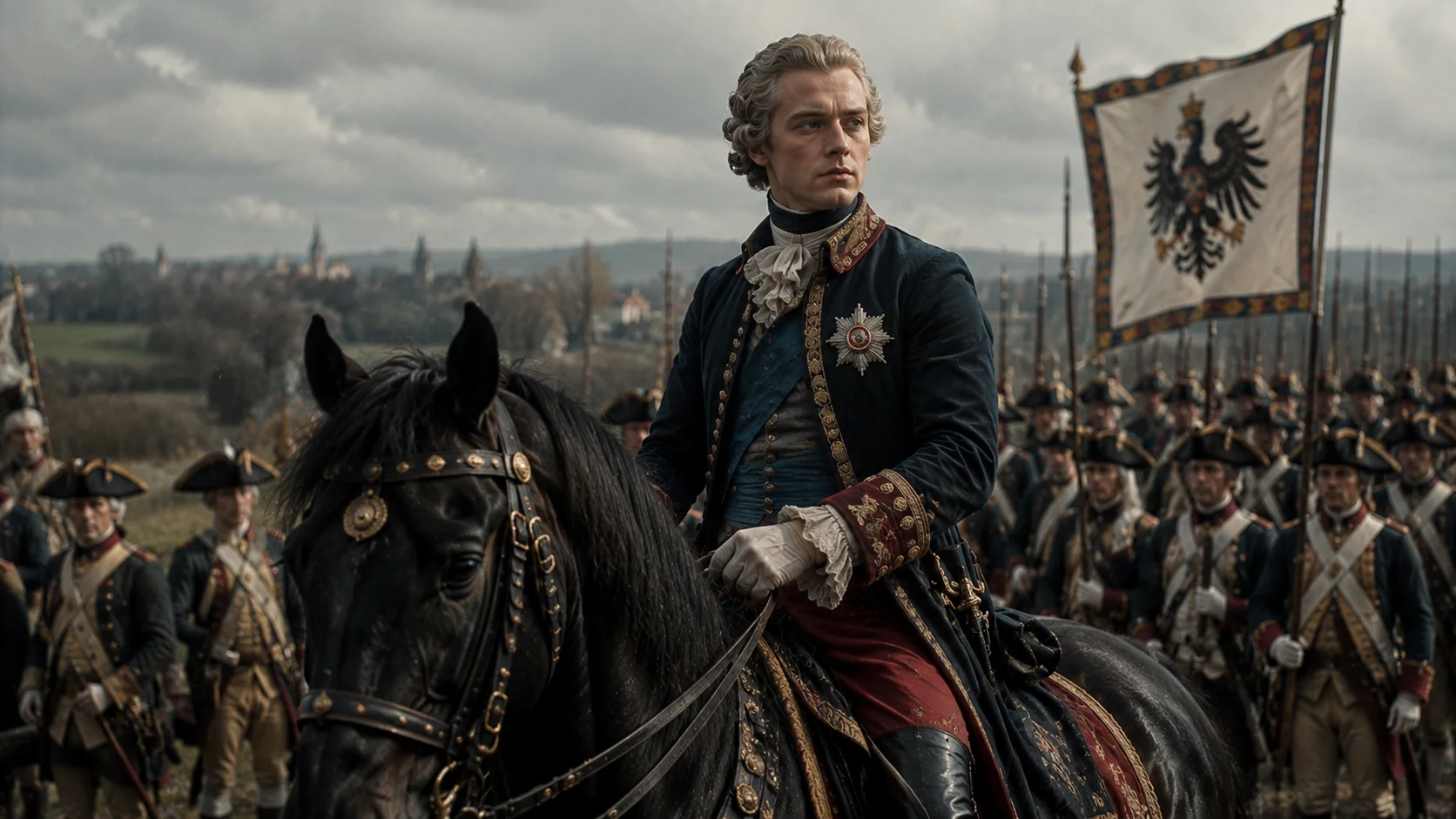
Unlike many absolute monarchs who believed the state existed to serve them, Frederick argued the opposite. In his political writings, he championed the concept of “enlightened despotism,” famously declaring that the ruler is merely the “principal servant of the State.” He believed his absolute power was justified only because he used it to efficiently manage and improve the lives of his subjects.
6. He Was a Prolific Musician and Composer
Frederick was a talented flutist and an accomplished composer. He wrote over 100 sonatas and four symphonies for the flute. He maintained a rigorous schedule, often waking at dawn to handle state affairs so he could dedicate his evenings to playing music with his court orchestra. He even hosted Johann Sebastian Bach in 1747, giving the master a complex musical theme that Bach later developed into The Musical Offering.
7. He Built a “Tearless” Palace
Seeking a private retreat away from the rigid protocol of Berlin, Frederick built a relatively modest, French Rococo-style summer palace in Potsdam. He named it Sanssouci, a French phrase translating to “without concerns” or “carefree.” The palace was designed as a sanctuary where he could focus entirely on his philosophy, music, and beloved greyhounds.
8. Women Were Rarely Allowed at His Court
The atmosphere Frederick cultivated at Sanssouci was notoriously masculine. He had an unhappy, arranged marriage to Princess Elisabeth Christine, whom he essentially banished to a separate palace as soon as he became king, visiting her only on state occasions. The philosopher Voltaire, a frequent guest, once noted that “neither women nor priests ever entered the palace.”
9. He Had a Volatile Friendship with Voltaire
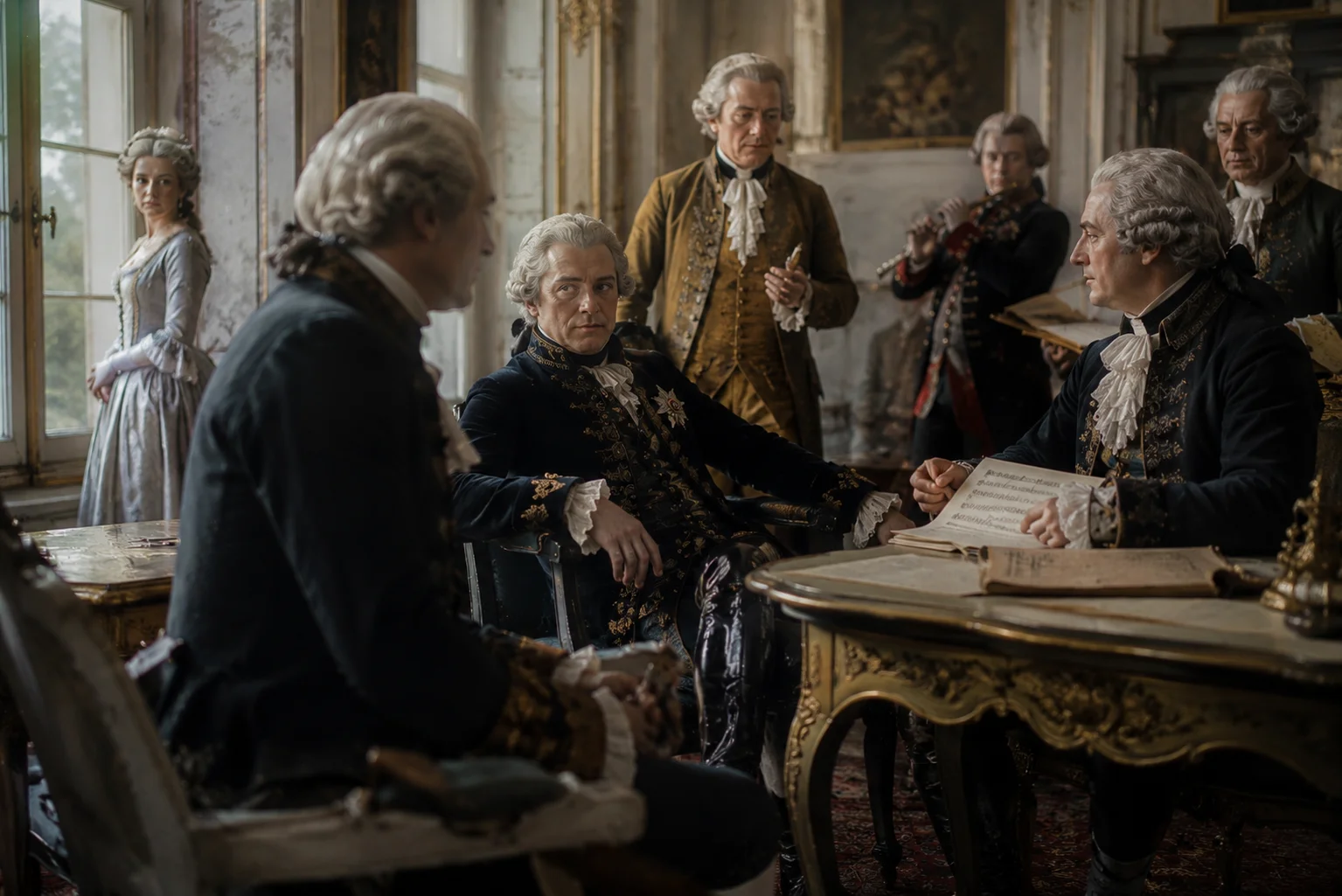
Frederick was deeply enamored with the French Enlightenment and invited its leading figure, Voltaire, to live at his court in 1750. For a time, they enjoyed a brilliant intellectual exchange. However, both men possessed massive egos, and their relationship soon deteriorated into bitter public squabbles. Voltaire fled Prussia in 1753, though the two men eventually resumed writing to each other years later.
10. He Fought Three Superpowers at Once
During the Seven Years’ War (1756–1763), Frederick found himself surrounded. A massive coalition of Austria, France, and Russia allied against him, aiming to crush the rising power of Prussia. Despite being heavily outnumbered, Frederick survived through sheer tactical brilliance—winning legendary battles like Rossbach and Leuthen—and by marching his army back and forth across the country to meet each invading force.
11. He Was Saved by the “Miracle of the House of Brandenburg”
By 1762, Frederick’s forces were decimated, Berlin had been briefly occupied, and he was contemplating suicide. Prussia was saved from total destruction only by a sudden stroke of luck: Empress Elizabeth of Russia died. She was succeeded by her nephew, Peter III, who happened to be a massive admirer of Frederick. Peter immediately withdrew Russian troops and signed a peace treaty, allowing Prussia to survive the war intact.
12. He Introduced the Potato to Prussia
Facing severe famines caused by crop failures, Frederick recognized the nutritional value and resilience of the potato, a crop native to the Americas. When his deeply conservative peasants refused to plant them—claiming not even dogs would eat them—legend says Frederick stationed guards around a royal potato field to make the crop seem highly valuable. The peasants, intrigued by the “guarded” food, began stealing and cultivating the potatoes themselves.

13. He Was a Champion of Religious Tolerance
In an era deeply fractured by religious conflict, Frederick promoted broad religious toleration. Though nominally Calvinist, he cared little for theology and allowed Catholics, Protestants, and even minor sects to practice freely within his borders. He famously declared that in his kingdom, “everyone can seek salvation in his own way.” This policy also cleverly encouraged skilled immigrants to move to Prussia.
14. He Greatly Expanded Prussian Territory
Frederick relied on both the sword and diplomacy to grow his nation. In addition to conquering Silesia, he orchestrated the First Partition of Poland in 1772 alongside Russia and Austria. By carving off a massive chunk of Polish territory, he physically linked the fragmented provinces of his kingdom together, creating a continuous, powerful Prussian state.
15. He Left His Country a Military Juggernaut
When Frederick inherited the throne, the Prussian army numbered 83,000 men. By the time he died in 1786, the standing army had swelled to 190,000 highly disciplined troops. Prussia had become known as “an army with a country,” setting a militaristic precedent that would influence German history through the unification of the German Empire and into the 20th century.